
Spain Travel Guide: Explore Barcelona, Madrid & Spanish Culture
Introduction
Spain offers a remarkable combination of passionate culture, monumental history, and breathtaking geographic diversity.
A trip to Spain can include:
- Exploring the surreal architectural masterpieces of Antoni Gaudí
- Tasting authentic tapas in bustling, centuries-old plazas
- Watching deeply emotional Flamenco performances
- Relaxing on the sun-drenched beaches of the Mediterranean
- Touring massive Moorish palaces and Gothic cathedrals
- Hiking the rugged peaks of the Pyrenees
- Walking the historic pilgrimage route of the Camino de Santiago
- Experiencing vibrant local fiestas and late-night culinary scenes
Every region presents a different side of the country, from the lush, green mountains of the Basque Country and the cosmopolitan energy of Madrid and Barcelona to the sun-baked, olive-covered hills of Andalusia.
Touratu helps travelers understand Spain before arrival through narrated destination guide videos and interactive destination maps. Travelers can compare attractions, understand travel routes, discover nearby experiences, and build efficient itineraries.
Why Visit Spain?
Spectacular Natural Landscapes
Spain is the second most mountainous country in Europe, offering surprisingly diverse scenery.
Visitors can explore:
- The jagged peaks of the Pyrenees and Picos de Europa
- The volcanic landscapes of the Canary Islands
- Lush green forests and cliffs in Galicia
- The arid, cinematic deserts of Almería
- Endless olive groves across the central Meseta
- Pristine Mediterranean coves and white-sand beaches
Authentic Culture and History
Spain is a complex mosaic of distinct regional cultures, languages, and deep-rooted traditions resulting from centuries of Roman, Visigoth, and Moorish rule.
Travelers can experience:
- The passion and rhythm of traditional Flamenco
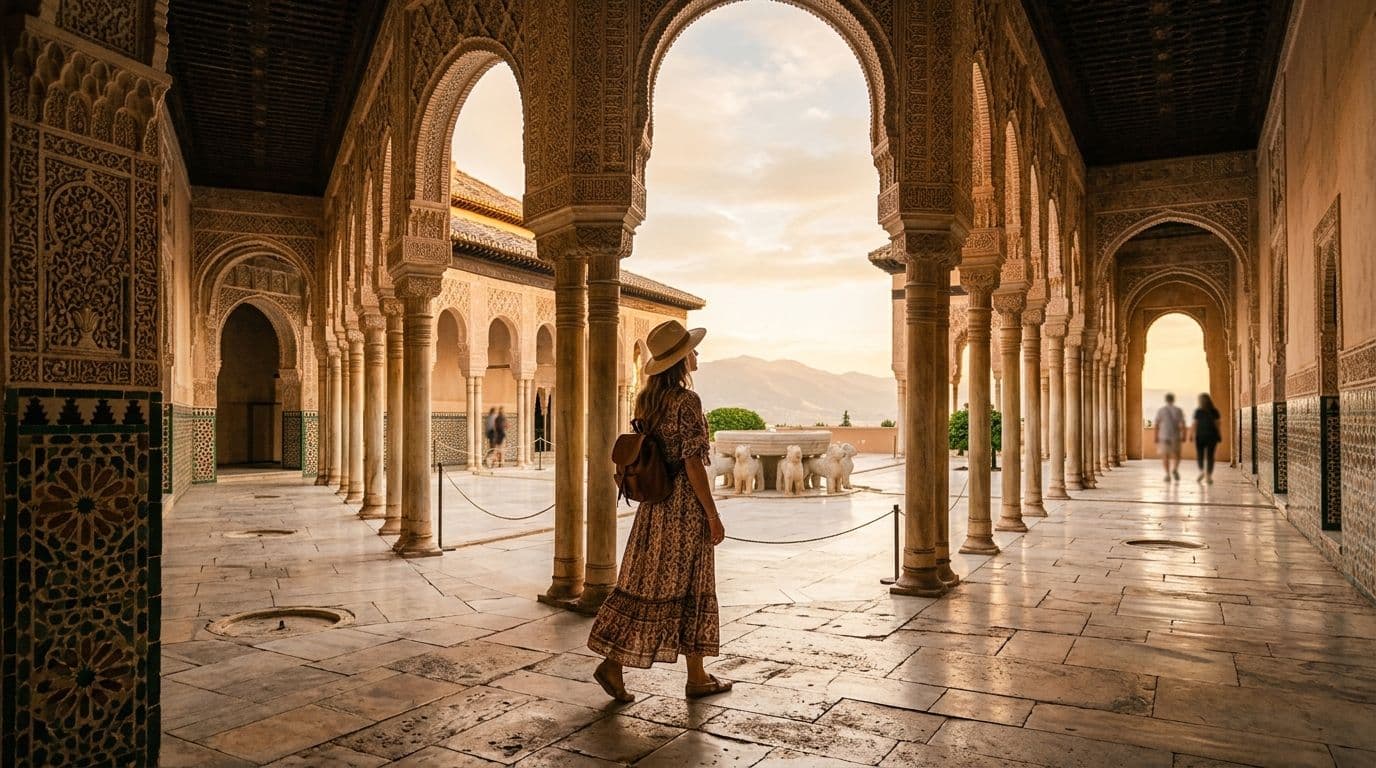
- The massive Moorish arches of the Alhambra and Mezquita
- Vibrant local festivals like La Tomatina and Las Fallas
- Historic Roman aqueducts and amphitheaters
- The unique distinct cultures of Catalonia and the Basque Country
Incredible Architecture and Art
The country is a global heavyweight in fine art and architectural innovation.
Popular activities include:
- Marveling at the unfinished Sagrada Família in Barcelona
- Viewing masterpieces by Velázquez and Goya at the Prado Museum
- Walking through the medieval fortified walls of Toledo or Ávila
- Exploring surrealist art at the Dalí Theatre-Museum in Figueres
- Admiring the futuristic City of Arts and Sciences in Valencia
Beautiful Coastlines and Islands
Spain is globally famous for its diverse, sun-soaked maritime regions.
Visitors can enjoy:
- The glamorous beach clubs of Ibiza and Marbella
- The rugged, hidden coves (calas) of the Costa Brava
- The pristine, turquoise waters of Menorca and Formentera
- Surfing the Atlantic waves in San Sebastián
- Relaxing on the vast, sandy stretches of the Costa del Sol
Adventure Opportunities
Adventure travelers can enjoy:
- Hiking the legendary Camino de Santiago (Way of St. James)
- Walking the thrilling Caminito) del Rey gorge trail
- Skiing in the Sierra Nevada (just hours from the beach)
- Scuba diving in the Medes Islands marine reserve
- Kitesurfing in Tarifa, where the Atlantic meets the Mediterranean
Perfect for Every Traveler
Spain is ideal for:
- Foodies and culinary explorers
- History and architecture buffs
- Sun seekers and beach lovers
- Families and multi-generational groups
- Art enthusiasts
- Nightlife seekers
- Road trip enthusiasts
- Active hikers and pilgrims
Explore Spain Before You Travel
Spain's attractions are spread across highly distinct autonomous communities, massive mountain ranges, and island archipelagos, making itinerary planning important.
Touratu helps travelers explore Spain visually before departure.
Interactive maps allow travelers to:
- Compare the distinct regions of Catalonia, Andalusia, and the Basque Country
- Understand the high-speed AVE train network
- Discover nearby historic castles and wine regions
- Find luxury resorts, historic Paradores, and boutique hotels
- Explore outdoor activities
- Build personalized itineraries
Narrated destination guide videos help travelers visualize:
- The intricate Moorish tilework of Andalusia
- The sprawling, tapas-filled plazas of Madrid
- The dramatic coastal cliffs of the Balearic Islands
- The surreal modernist architecture of Barcelona
- The serene, rolling vineyards of La Rioja
Instead of choosing destinations only through photos, travelers can better understand Spain before planning their journey.
Best Places to Visit in Spain
Barcelona
Barcelona is the vibrant, cosmopolitan capital of Catalonia, famously defined by its Mediterranean coastline and the whimsical, surreal architecture of Antoni Gaudí.
Why Visit
It seamlessly blends beach culture with world-class dining, Gothic history, and some of the most unique modernist architecture on the planet.
What You'll Experience
- La Sagrada Família (Gaudí's unfinished basilica)
- Park Güell and Casa Batlló
- Strolling down the bustling tree-lined Las Ramblas
- Getting lost in the narrow, historic alleys of the Gothic Quarter
- Relaxing on Barceloneta Beach
- Eating fresh seafood and tapas at Mercado de La Boqueria
Best Time to Visit
May to June, or September to October.
Best For
- Architecture and art lovers
- Foodies
- Beachgoers
- First-time visitors
Suggested Duration
3–4 days
Nearby Attractions
- Montserrat (dramatic mountain monastery)
- Sitges (coastal resort town)
- Costa Brava (rugged coastline to the north)
Practical Travel Advice
Book tickets for La Sagrada Família and Park Güell months in advance online; they frequently sell out and walk-up tickets are rarely available.
Madrid
Madrid is Spain's majestic, high-energy capital, located in the geographic center of the country and known for its elegant boulevards, expansive parks, and world-renowned art museums.
Why Visit
It offers the finest collection of Spanish art, royal history, incredibly vibrant nightlife, and a legendary tapas culture.
What You'll Experience
- The Prado Museum (featuring Velázquez, Goya, and El Greco)
- The massive Royal Palace of Madrid
- Relaxing or boating in the beautiful Retiro Park
- Eating churros con chocolate at Chocolatería San Ginés
- Tapas hopping in the La Latina neighborhood
- The lively atmosphere of Plaza Mayor and Puerta del Sol
Best Time to Visit
April to May, and September to October (summers are extremely hot).
Best For
- Art enthusiasts
- Nightlife seekers
- Urban explorers
- Food lovers
Suggested Duration
3 days
Nearby Attractions
- Toledo (medieval capital)
- Segovia (Roman aqueduct and fairytale castle)
- El Escorial (royal monastery)
Practical Travel Advice
Madrid operates on a very late schedule. Do not expect to eat a proper dinner before 9:00 PM; locals often head out for tapas around 10:00 PM.
Seville & Andalusia
Seville is the romantic, sun-drenched capital of Andalusia, the southern region that embodies classic Spanish stereotypes: Flamenco, bullfighting, tapas, and Moorish architecture.
Why Visit
It provides the most passionate and traditional Spanish experience, featuring incredible Mudéjar architecture, orange tree-lined streets, and fiery cultural performances.
What You'll Experience
- The Royal Alcázar of Seville (Moorish palace and gardens)
- The massive Seville Cathedral and Giralda Tower
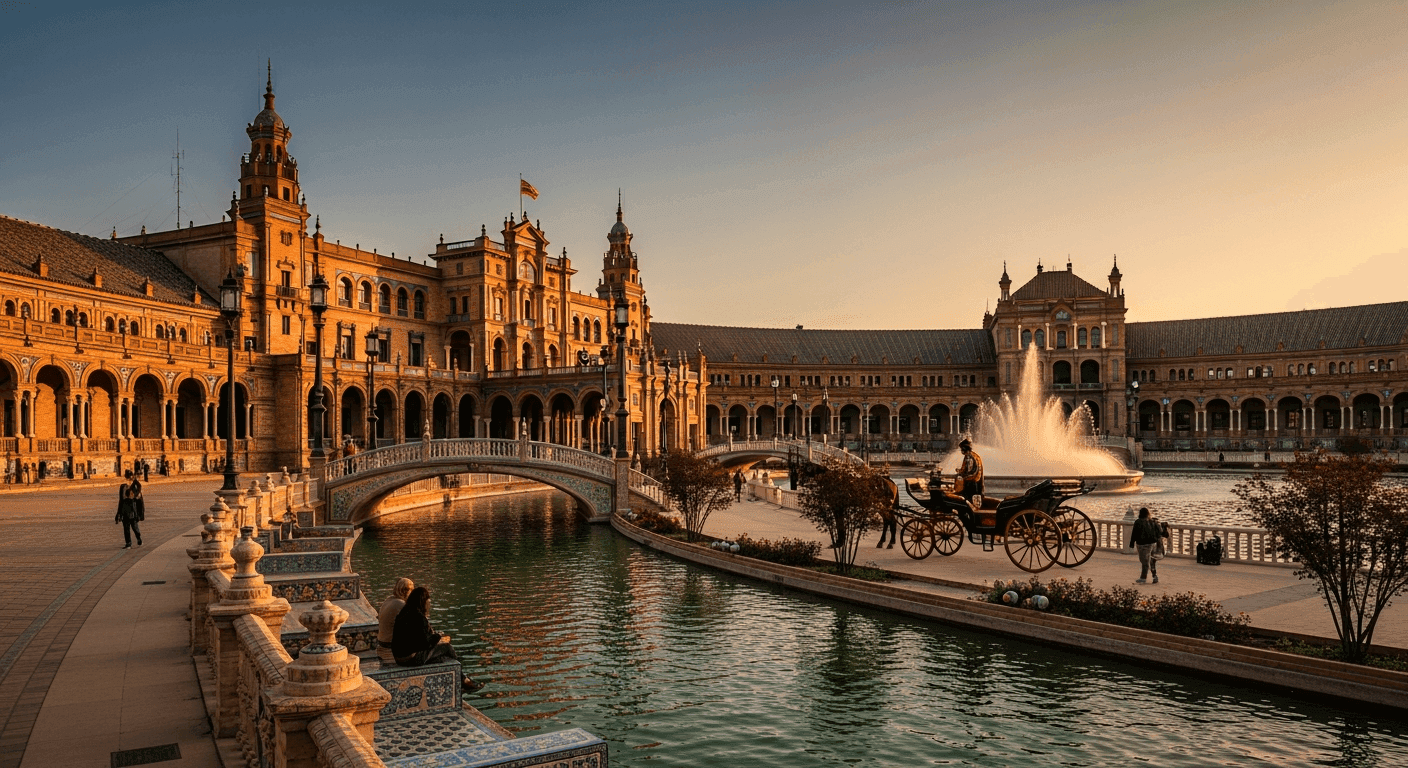
- The breathtaking Plaza de España
- Watching an intimate, authentic Flamenco show in the Triana district
- Wandering the narrow, whitewashed alleys of the Barrio Santa Cruz
- Eating traditional Andalusian tapas outdoors
Best Time to Visit
March to May (especially during the famous April Fair), or October.
Best For
- Romantic getaways
- Culture and history lovers
- Photographers
- Foodies
Suggested Duration
3 days
Nearby Attractions
- Granada (The Alhambra)
- Córdoba (The Mezquita)
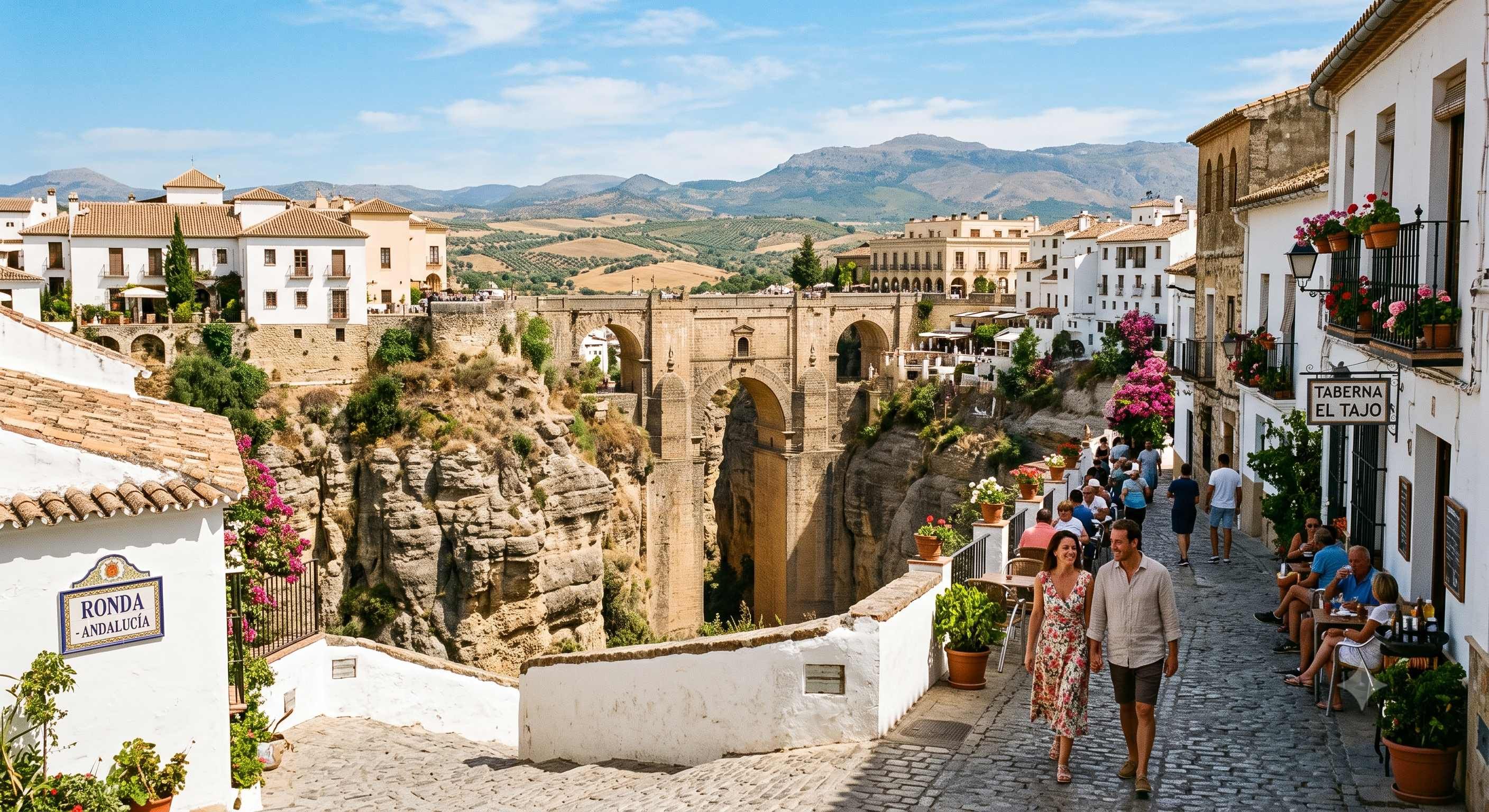
- The White Villages (Pueblos Blancos) and Ronda
Practical Travel Advice
Avoid visiting Andalusia in July and August; temperatures frequently exceed 40°C (104°F), making afternoon sightseeing physically exhausting.
Watch Before You Visit
A narrated destination guide helps travelers understand Spain's high-speed rail connections, late dining etiquette, regional language differences, and architectural highlights before arrival.
Explore on the Interactive Map
Compare nearby historic Paradores, Gothic cathedrals, coastal resorts, tapas streets, and high-speed train hubs while planning your stay.
Touratu Insight
While Barcelona and Madrid capture the most international attention, Spain's true magic is found in the ancient Moorish palaces of Andalusia, the culinary mecca of San Sebastián, and the quiet, dramatic cliffs of the northern coast.
Suggested Route
Madrid → Toledo → Córdoba → Seville → Granada → Barcelona creates one of Spain's most rewarding, historically rich, and perfectly rail-connected travel itineraries.
Best Places to Visit in Spain
Granada
Granada sits at the foothills of the Sierra Nevada mountains in Andalusia, carrying a deep, mystical Moorish legacy.
Why Visit
It is home to the Alhambra, arguably the most beautiful and complex Islamic palace in Europe, and maintains a famous culture of serving free tapas with every drink.
What You'll Experience
- The Alhambra Palace and Generalife Gardens (UNESCO World Heritage)
- Wandering the steep, historic Albaicín neighborhood
- Watching the sunset over the Alhambra from Mirador de San Nicolás
- Exploring the Sacromonte cave dwellings
- Authentic flamenco in traditional gypsy caves
- Enjoying the free tapas culture
Best Time to Visit
April to June, and September to October.
Best For
- History buffs
- Architecture lovers
- Photographers
- Budget travelers (free tapas!)
Suggested Duration
2 days
Nearby Attractions
- Sierra Nevada National Park (skiing and hiking)
- The Alpujarras (mountain villages)
Practical Travel Advice
Alhambra tickets are fiercely strictly limited and require passport identification. Book them online 2 to 3 months in advance to guarantee entry.
San Sebastián (Donostia)
Located in the lush, green Basque Country on the northern coast, San Sebastián is a picturesque coastal city globally renowned for its culinary excellence.
Why Visit
It boasts one of the highest concentrations of Michelin stars in the world, spectacular urban beaches, and a unique Basque culture.
What You'll Experience
- Pintxos (Basque tapas) hopping in the vibrant Old Town (Parte Vieja)
- Relaxing on the perfectly curved La Concha Beach
- Surfing at Zurriola Beach
- Riding the funicular up Mount Igueldo for panoramic bay views
- Exploring the striking modern architecture of the Kursaal
- World-class fine dining
Best Time to Visit
June to September (the northern coast receives more rain and has cooler summers than the south).
Best For
- Serious foodies
- Surfers
- Beach lovers
- Couples
Suggested Duration
2–3 days
Nearby Attractions
- Bilbao (Guggenheim Museum)
- Gaztelugatxe (Dragonstone from Game of Thrones)
- French border towns (Biarritz)
Practical Travel Advice
When eating pintxos, do not load up a large plate at one bar. The tradition is to have one or two specialty pintxos and a small drink at one bar, then move on to the next.
The Balearic Islands (Mallorca, Menorca, Ibiza)
This Mediterranean archipelago off the eastern coast of Spain offers some of Europe's most stunning maritime environments, ranging from mega-clubs to quiet pine forests.
Why Visit
The islands offer something for everyone: world-famous nightlife in Ibiza, dramatic mountain drives in Mallorca, and pristine, tranquil turquoise coves in Menorca.
What You'll Experience
- Exploring the massive Gothic Cathedral (La Seu) in Palma de Mallorca
- Driving the hairpin turns of the Serra de Tramuntana mountains
- Sunbathing on the untouched calas (coves) of Menorca
- World-class nightlife and bohemian beach clubs in Ibiza
- Cycling and sailing around the islands
- Historic Roman ruins and traditional stone villages
Best Time to Visit
May to September.
Best For
- Beach lovers
- Nightlife seekers (Ibiza)
- Cyclists and hikers (Mallorca)
- Families (Menorca)
Suggested Duration
4–7 days (depending on how many islands you visit)
Nearby Attractions
- Formentera (Caribbean-like sister island to Ibiza)
- Cabrera National Park
Practical Travel Advice
Rent a small car or scooter to explore the hidden, remote coves that public transportation does not reach, but book well in advance during peak summer.
Best Things to Do in Spain
Spain offers incredible historic monuments, culinary adventures, and coastal retreats.
| Category | Top Experiences |
|---|---|
| Culture | Flamenco shows, traditional fiestas, Basque pintxos tours |
| Nature | Pyrenees hiking, Sierra Nevada skiing, Canary Island volcanoes |
| History | The Alhambra, Roman Aqueduct of Segovia, Toledo’s medieval core |
| Architecture | Sagrada Família, Park Güell, City of Arts and Sciences |
| Food & Wine | La Rioja wine tasting, authentic Valencia paella, Jamón Ibérico |
| Photography | White villages of Andalusia, sunset over the Alhambra, colorful Gaudí mosaics |
Cultural and Historical Experiences
Spain’s history is a visible, layered clash of Roman, Islamic, and Christian empires.
Top experiences include:
- Walking through the red-and-white candy-cane arches of the Mezquita in Córdoba
- Exploring the massive, ornate Royal Alcázar in Seville
- Getting lost in the winding, medieval streets of Toledo, the "City of Three Cultures"
- Experiencing the solemn, massive scale of the Seville Cathedral (the world's largest Gothic church)
- Discovering ancient Roman engineering at the Aqueduct of Segovia
Best destinations:
- Andalusia (Seville, Granada, Córdoba)
- Central Spain (Toledo, Segovia, Salamanca)
- Catalonia (Barcelona's Gothic Quarter)
Coastal and Island Adventures
With the Atlantic to the west and north, and the Mediterranean to the east and south, Spain's maritime culture is vast.
Popular destinations:
- Costa Brava (Catalonia)
- The Balearic Islands
- The Canary Islands
- Costa del Sol (Andalusia)
Activities include:
- Exploring the volcanic lunar landscapes of Teide National Park in Tenerife
- Sailing between the hidden, pine-fringed coves of Menorca
- Surfing the rough, dramatic Atlantic breaks in the Basque Country
- Relaxing on the glamorous, sun-drenched beaches of Marbella
- Hiking the rugged coastal trails (Caminos de Ronda) along the Costa Brava
Photography Locations
Spain offers spectacular, sun-drenched photography opportunities.
Top photography spots:
- The Alhambra glowing red against the snow-capped Sierra Nevada mountains
- The interior stained glass and organic stone pillars of La Sagrada Família
- The massive, semi-circular tiled pavilions of the Plaza de España in Seville
- The white-washed houses of Ronda perched precariously over a massive, deep gorge
- The futuristic, reflecting white curves of Valencia’s City of Arts and Sciences
- The vibrant, multi-colored mosaics overlooking the city from Park Güell
- The dramatic stone bridge leading to the island hermitage of San Juan de Gaztelugatxe
The late Spanish sunsets create incredibly long golden hours, perfect for capturing the warm stone of historical plazas and cathedrals.
Family Experiences
Families visiting Spain can enjoy:
- Safe, shallow, family-friendly beaches along the Mediterranean coast
- Massive interactive science museums and aquariums (Valencia)
- Exciting cable car rides (Montjuïc in Barcelona, Mount Teide in Tenerife)
- Exploring real-life castles and knight fortresses (Segovia's Alcázar)
- Eating churros with thick dipping chocolate
- Massive city parks with rowboats and playgrounds (Retiro Park in Madrid)
Best Family Destinations
- Valencia (Beaches, Paella, and the Oceanogràfic)
- Costa del Sol (Family resorts and water parks)
- Madrid (Parks, museums, and easy transit)
- Menorca (Calm, safe waters and quiet towns)
Hidden Gems in Spain
Ronda
A breathtaking town in Andalusia split in two by a massive, 120-meter-deep gorge (El Tajo), connected by a stunning 18th-century stone bridge.
Cuenca
Famous for its Casas Colgadas (Hanging Houses), which dangle precariously over a sheer cliff edge, offering a dramatic medieval atmosphere just a high-speed train ride from Madrid.
Picos de Europa
A spectacular, jagged mountain range in northern Spain offering some of the country’s most dramatic hiking, deep gorges, and traditional mountain villages far away from the beach crowds.
Ávila
A beautifully preserved medieval city famous for its massive, imposing, and completely intact 11th-century defensive walls featuring 88 towers.
Cadaqués
A picturesque, white-washed fishing village on the rugged Costa Brava, famously loved by Salvador Dalí, accessible only by a winding mountain road.
Touratu Insight
Many visitors limit their journey to a quick shuttle between Barcelona and Madrid, but Spain's true spirit reveals itself when you rent a car to explore the perched White Villages of Andalusia, or take a slow walk through the cider-producing, green coastal hills of Asturias.
Suggested Itineraries
5-Day Spain Itinerary (The Two Capitals)
Day 1
- Arrival in Madrid, explore the Royal Palace, Plaza Mayor, and Retiro Park.
Day 2
- The Prado Museum and evening tapas in La Latina.
Day 3
- High-speed AVE train to Barcelona (2.5 hours). Walk the Gothic Quarter and Las Ramblas.
Day 4
- Explore Gaudí's masterpieces: La Sagrada Família and Park Güell.
Day 5
- Morning at Barceloneta Beach, last-minute shopping, and departure.
7-Day Spain Itinerary (Andalusian Highlights)
- Madrid (Art and royal history)
- High-speed train to Córdoba (Explore the Mezquita)
- Train to Seville
- Seville (2 days: Alcázar, Cathedral, and Flamenco)
- Train to Granada
- Granada (The Alhambra and Albaicín)
- Return flight or train to Madrid
10-Day Spain Itinerary (Classic Spain Route)
Add:
- Start in Madrid
- Include a day trip to Toledo from Madrid
- Travel south through Andalusia (Córdoba, Seville, Granada)
- Fly from Granada or Malaga to Barcelona
- Barcelona (3 days of Gaudí, beaches, and Catalan cuisine)
14-Day Spain Itinerary (The Grand Tour)
Complete route:
- Madrid (The majestic capital)
- Toledo (Medieval history)
- Córdoba (The Mezquita)
- Seville (Andalusian passion and Flamenco)
- Ronda & The White Villages (Dramatic gorges and scenic driving)
- Granada (The Alhambra)
- Flight to San Sebastián (Basque culinary excellence and surfing)
- Bilbao (The Guggenheim Museum)
- Flight to Barcelona
- Barcelona (Modernist architecture and Mediterranean finish)
This comprehensive itinerary showcases the stark contrast between the central plains, the Moorish south, the green culinary north, and the vibrant Catalan coast.
Explore Through Guided Videos
Spain's massive high-speed rail network, highly regulated ticketing systems for monuments, late-night culture, and regional dialects are best understood visually before arrival. Narrated destination guide videos help travelers discover train connections, tapas etiquette, museum scales, and coastal routes before planning their journey.
Touratu's verified destination videos help travelers:
- Compare the distinct vibes of Madrid, Barcelona, and Seville visually
- Understand the ease of navigating the AVE high-speed train system
- Discover remote mountain villages and hidden coastal coves
- Set realistic travel expectations for intense summer heat
- Build high-efficiency, multi-region rail and driving itineraries
Food to Try in Spain
Spanish cuisine is incredibly diverse, deeply regional, and relies heavily on high-quality olive oil, garlic, fresh seafood, and cured meats.
Must-Try Dishes
- Tapas / Pintxos – Small plates meant for sharing. In the Basque country, they are called pintxos and are typically served on small pieces of bread pierced with a toothpick.
- Paella – Originating in Valencia, this iconic saffron-infused rice dish is traditionally cooked in a wide, shallow pan with rabbit, chicken, or seafood.
- Jamón Ibérico – The crown jewel of Spanish gastronomy; incredibly rich, acorn-fed cured ham sliced paper-thin.
- Tortilla Española – A thick, comforting Spanish omelet made simply with eggs, potatoes, and olive oil (and often onions).
- Gazpacho & Salmorejo – Refreshing, cold tomato-based soups originating from the hot southern region of Andalusia.
- Churros con Chocolate – Deep-fried dough pastries dipped in a cup of thick, pudding-like hot chocolate.
- Gambas al Ajillo – Fresh prawns sizzling in hot olive oil, garlic, and chili flakes.
- Patatas Bravas – Crispy fried potato cubes topped with a spicy tomato sauce and garlic aioli.
- Sangria & Tinto de Verano – Refreshing red wine mixed with fruits or lemon soda, perfect for hot afternoons.
Seek out bustling, standing-room-only tapas bars filled with locals for the most authentic, energetic dining experiences.
Shopping in Spain
Spain offers excellent shopping for high-quality leather goods, traditional ceramics, artisanal foods, and world-class fast fashion.
Popular souvenirs include:
- Leather Goods – High-quality shoes, bags, and belts, particularly from regions like Andalusia and Menorca (famous for avarca sandals).
- Spanish Olive Oil – Spain is the world's largest producer of olive oil; buy high-quality extra virgin varieties.
- Saffron – Premium Spanish saffron (Azafrán), essential for making authentic paella back home.
- Ceramics and Pottery – Beautiful hand-painted plates and tiles, especially from Toledo, Seville, and Granada (Fajalauza pottery).
- Spanish Wine – Bottles of Rioja (red) or Cava (Spanish sparkling wine from Catalonia).
- Hand-Painted Fans (Abanicos) – Traditional, beautifully crafted wooden and fabric fans.
- Fashion – Spain is the home of global brands like Zara and Mango, but also offers incredible local boutique designers in Madrid and Barcelona.
Best shopping locations:
- Gran Vía and the Salamanca district (Madrid)
- Passeig de Gràcia and El Born (Barcelona)
- Calle Sierpes (Seville)
- Local food markets like Mercado de San Miguel (Madrid) or La Boqueria (Barcelona)
Best Time to Visit Spain
| Season | Experience |
|---|---|
| April–May & September–October | The absolute best times to visit. The weather is warm and sunny, perfect for sightseeing and avoiding the massive summer crowds. |
| June–August (Summer) | Expect extreme heat, especially in Madrid and Andalusia (often over 40°C/104°F). Best reserved for the beaches of the coast, islands, or the cooler northern Basque Country. |
| November–March (Winter) | Mild on the coast, cold in the center. Excellent for budget travel, visiting museums without crowds, and skiing in the Pyrenees or Sierra Nevada. |
Recommended: Spring (May) and Autumn (September) are the premier windows to visit, offering the most comfortable weather for exploring cities and monuments.
Where to Stay
Spain offers diverse accommodations catering to every style and budget, offering a unique system of historic state-run hotels.
Paradores de Turismo
Popular in:
- Toledo, Granada (inside the Alhambra grounds), Santiago de Compostela, Ronda
Best for:
- History lovers
- Couples and honeymooners
- Unique experiences (staying in restored 15th-century castles, monasteries, and palaces)
Luxury Urban and Boutique Hotels
Located in:
- Madrid (Salamanca district)
- Barcelona (Eixample)
- Seville (Santa Cruz)
Perfect for:
- City explorers
- Shoppers
- Architecture enthusiasts
Beach Resorts and Villas
Available in:
- The Balearic Islands (Mallorca, Ibiza, Menorca)
- Costa del Sol
- Costa Brava
Ideal for:
- Families
- Sun seekers
- Relaxation and nightlife
Budget Hostels and Guesthouses (Pensiones)
Options include:
- High-quality, award-winning backpacker hostels in Barcelona and Madrid
- Traditional, family-run pensiones offering simple, clean rooms
Available across all major cities and towns along the Camino de Santiago.
Getting Around Spain
Spain boasts one of the most advanced, extensive, and efficient high-speed rail networks in the world.
Transit Methods
- AVE (High-Speed Trains): The absolute best way to travel between major cities. The AVE connects Madrid to Barcelona in 2.5 hours, and Madrid to Seville in 2.5 hours. It is comfortable, punctual, and stress-free.
- Domestic Flights (Vueling/Iberia): The fastest way to travel from the mainland to the Balearic or Canary Islands, or for long jumps like Seville to Barcelona.
- Rental Cars: Highly recommended for exploring the White Villages of Andalusia, the coastal coves of Mallorca, or the northern Basque coast. Highways (Autovías) are excellent.
- Metro and Buses: Madrid, Barcelona, Valencia, and Bilbao have excellent, cheap, and easy-to-use underground metro systems.
Travel Tips
- Book AVE high-speed train tickets through Renfe up to 2-3 months in advance to secure steep promotional discounts, as last-minute tickets are very expensive.
- Do not rent a car if you are only visiting major cities (Madrid, Barcelona, Seville). Parking is incredibly expensive and historic centers are heavily restricted or pedestrian-only.
- Ride-hailing apps like Uber and Cabify are available in major cities, but traditional licensed taxis are heavily regulated, safe, and easily hailed on the street.
Travel Tips
- The Siesta Culture: While major department stores in big cities stay open, many small shops, churches, and businesses in smaller towns still close between 2:00 PM and 5:00 PM.
- Late Dining Hours: Adjust your stomach. Lunch is the main meal of the day, eaten between 2:00 PM and 3:30 PM. Dinner is light and rarely eaten before 9:00 PM or 10:00 PM.
- Tipping: Tipping is not strictly required. Locals generally leave small change (coins) at cafes or round up the bill in a restaurant. Leaving 5–10% is appreciated for exceptional service in high-end restaurants.
- Regional Languages: While Spanish (Castellano) is spoken everywhere, regions like Catalonia (Catalan), the Basque Country (Euskera), and Galicia (Gallego) are fiercely proud of their co-official languages. You will see dual signage in these areas.
- Pickpockets: Violent crime is incredibly rare, making Spain very safe. However, Barcelona and Madrid are notorious for highly skilled pickpockets in crowded tourist areas and on the metro. Keep your belongings secure and zipped.
- Free Tapas: In some regions (most famously Granada), you will receive a small, free plate of food (a tapa) with every alcoholic drink you order.
Frequently Asked Questions (FAQs)
Is Spain worth visiting?
Absolutely. Spain offers an unmatched combination of monumental historical architecture, vibrant and passionate street life, world-leading culinary scenes, and spectacular beaches.
Is it safe to travel in Spain?
Yes. Spain is one of the safest countries in Europe for travelers. The only major concern is petty theft (pickpocketing) in highly crowded tourist hotspots and on public transport.
How many days should I spend in Spain?
A minimum of 10 to 14 days is recommended to comfortably explore Madrid, take the high-speed train down through Andalusia (Seville/Granada), and finish in Barcelona.
Do people speak English?
English is widely spoken in major tourist areas, hotels, and among younger generations. However, in rural areas or smaller tapas bars, English may be limited.
Is the water safe to drink?
Yes. Tap water is safe to drink across Spain, though locals in some coastal areas (like Barcelona or Valencia) often prefer bottled water due to the taste of the tap water.
What is a Parador?
Paradores are a network of state-run luxury hotels located in historic buildings like ancient castles, fortresses, and monasteries. They offer a highly unique and cultural accommodation experience.
Why Explore Spain with Touratu?
Planning an intricate itinerary that spans high-speed rail lines, strictly timed palace entries, and regional cultural shifts becomes seamless when you can visually map your path before leaving home.
Touratu helps travelers:
- Chart out AVE high-speed train connections and driving routes using interactive destination maps
- Watch verified narrated destination guide videos detailing Gaudí's architecture and Andalusian palaces
- Compare vibrant city breaks, serene Mediterranean islands, and historic Parador stays side-by-side
- Discover hidden tapas streets and dramatic coastal hiking trails
- Construct smooth, realistic multi-region travel itineraries
- Make highly confident planning and booking decisions
Whether you are marveling at the Alhambra, eating pintxos in San Sebastián, relaxing on a cove in Menorca, or walking the halls of the Prado, Touratu ensures you experience Spain before your physical journey begins.
Final Thoughts
Spain stands out as one of Europe's most rewarding, deeply passionate, and culturally distinct destinations. Its greatest asset is its vibrant lifestyle—where you can spend your morning exploring a colossal Gothic cathedral, your afternoon relaxing under the Mediterranean sun, and your evening sharing plates of incredible food in a lively, crowded plaza until midnight.
Whether you are seeking a deep dive into world-class art and Moorish history, a culinary journey through the world's best restaurants, a relaxing escape to sun-drenched islands, or the thrill of a regional fiesta, the country delivers unmatched travel experiences defined by monumental beauty and infectious energy.
Utilizing Touratu's interactive maps and highly comprehensive narrated destination guide videos, you can smoothly navigate the complex high-speed rail network, secure the ultimate monument tickets, and craft the perfect Spanish itinerary long before you fly.
Loading activities…
Related Places
Related Blogs
Spain Travel Guide
Loading activities…
