
South Korea Travel Guide: Explore Seoul, Jeju & Korean Culture
Introduction
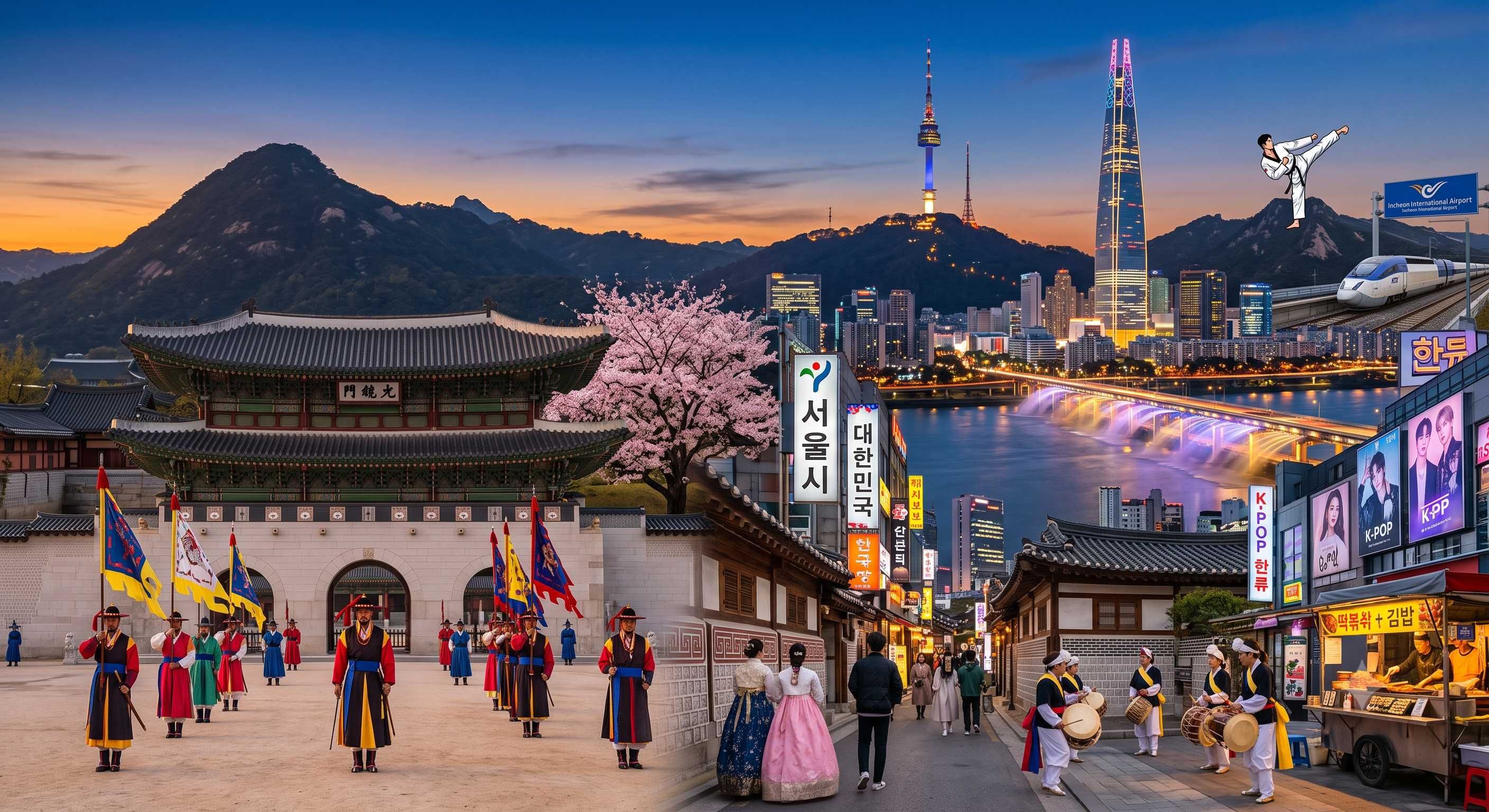
South Korea offers a remarkable combination of ancient traditions, cutting-edge technology, and stunning natural beauty.
A trip to South Korea can include:
- Exploring grand royal palaces in traditional hanbok
- Experiencing futuristic cityscapes and K-pop culture
- Hiking through vibrant, mist-covered national parks
- Relaxing on volcanic island beaches
- Tasting world-renowned street food and Korean BBQ
- Discovering ancient Buddhist temples and shrines
- Unwinding in a traditional jjimjilbang (bathhouse)
- Walking near the historic Demilitarized Zone (DMZ)
Every region presents a different side of the country, from the bustling, cosmopolitan energy of Seoul and the maritime charm of Busan to the ancient history of Gyeongju and the dramatic volcanic landscapes of Jeju Island.
Touratu helps travelers understand South Korea before arrival through narrated destination guide videos and interactive destination maps. Travelers can compare attractions, understand travel routes, discover nearby experiences, and build efficient itineraries.
Why Visit South Korea?
Spectacular Natural Landscapes
South Korea offers geographically diverse terrain far beyond its famous cities.
Visitors can explore:
- The volcanic craters and waterfalls of Jeju Island
- The jagged peaks of Seoraksan National Park
- The sweeping Boseong Green Tea Fields
- Lush, peaceful bamboo forests in Damyang
- Coastal cliffs and pristine beaches
- Scenic river valleys and dramatic coastlines
Authentic Culture and History
South Korea is a fascinating blend of thousands of years of dynastic history and rapid modern development.
Travelers can experience:
- Five grand royal palaces in Seoul
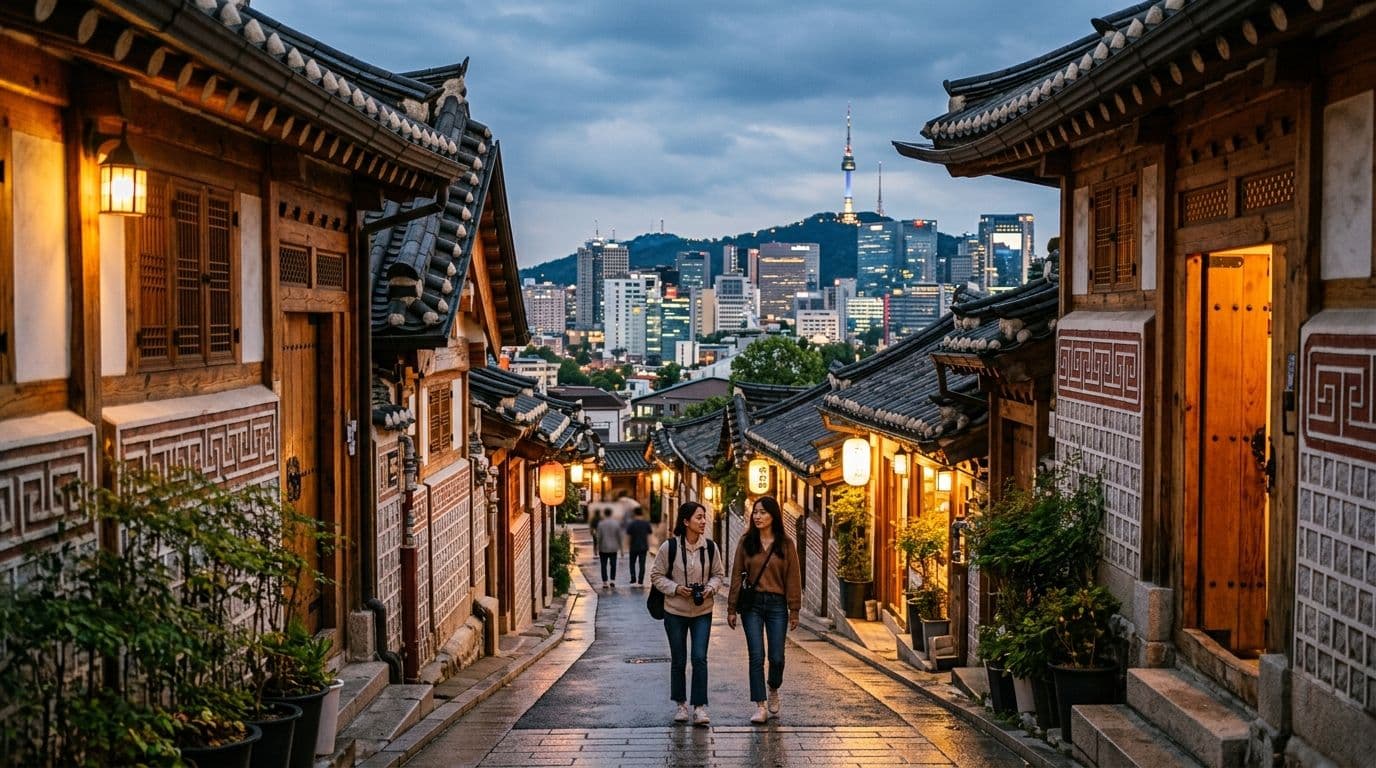
- Bukchon and Jeonju Hanok Villages (traditional houses)
- Immersive temple stays with Buddhist monks
- Historic fortress walls and gates
- Warm, communal dining culture
Incredible Entertainment and Technology
The country is a global powerhouse of pop culture, fashion, and innovation.
Popular activities include:
- Visiting K-pop agency neighborhoods and K-drama filming sites
- Experiencing ultra-fast internet and high-tech museums
- Exploring massive underground shopping malls
- Enjoying the dynamic nightlife in Hongdae or Gangnam
- Touring cutting-edge architectural marvels like the DDP
Beautiful Coastlines and Islands
South Korea boasts expansive, largely untouched coastlines along the East, West, and South Seas.
Visitors can enjoy:
- Surfing and relaxing on the beaches of Busan and Yangyang
- Exploring the dramatic volcanic coastline of Jeju Island
- Island hopping in the southern archipelago
- Beautiful coastal rail bike rides
- Fresh, vibrant seafood markets
Adventure Opportunities
Adventure travelers can enjoy:
- Hiking the country's thousands of mountainous trails
- Skiing and snowboarding in the winter resorts of Gangwon
- Exploring lava tubes in Jeju
- Ziplining to Nami Island
- Water sports along the eastern coast
Perfect for Every Traveler
South Korea is ideal for:
- K-culture and K-pop fans
- History and architecture buffs
- Food lovers and culinary explorers
- Shoppers and fashion enthusiasts
- Hikers and outdoor adventurers
- City-break travelers
- Families and solo travelers
Explore South Korea Before You Travel
South Korea's attractions are spread across vast high-tech cities, ancient capitals, remote mountains, and a distinct volcanic island, making itinerary planning important.
Touratu helps travelers explore South Korea visually before departure.
Interactive maps allow travelers to:
- Compare the distinct regions of Seoul, Busan, and Jeju
- Understand high-speed rail (KTX) and domestic flight routes
- Discover nearby national parks and historic temples
- Find traditional hanok guesthouses and modern luxury hotels
- Explore outdoor activities
- Build personalized itineraries
Narrated destination guide videos help travelers visualize:
- The massive scale of Seoul's royal palaces
- The colorful hillside houses of Busan's Gamcheon Culture Village
- The lush volcanic landscapes of Jeju Island
- The intricate wooden architecture of traditional hanoks
- The vibrant, bustling energy of traditional street food markets
Instead of choosing destinations only through photos, travelers can better understand South Korea before planning their journey.
Best Places to Visit in South Korea
Seoul
Seoul is South Korea's massive, dynamic capital, seamlessly blending deep historical roots with ultra-modern skyscrapers and distinct, trendy neighborhoods.
Why Visit
It is the heart of the country, offering world-class dining, immersive history at its grand palaces, legendary shopping, and endless entertainment.
What You'll Experience
- Gyeongbokgung Palace (watch the changing of the guard)
- Bukchon Hanok Village
- N Seoul Tower and Namsan Park
- Myeongdong shopping and street food district
- The futuristic Dongdaemun Design Plaza (DDP)
- Vibrant nightlife in Hongdae and Itaewon
Best Time to Visit
March to May (spring cherry blossoms) or September to November (autumn foliage).
Best For
- First-time visitors
- Urban explorers
- Shoppers and K-pop fans
- Food lovers
Suggested Duration
4–5 days
Nearby Attractions
- The DMZ (Demilitarized Zone)
- Nami Island
- Suwon Hwaseong Fortress
Practical Travel Advice
Rent a traditional hanbok before visiting the palaces—not only does it make for incredible photos, but it also grants you free admission to the major palace grounds.
Busan
Busan is South Korea’s vibrant second-largest city, a coastal metropolis known for its beautiful beaches, dramatic coastal temples, and incredible seafood.
Why Visit
It offers a more relaxed, maritime vibe than Seoul, featuring colorful hillside art villages, towering coastal cliffs, and lively traditional markets.
What You'll Experience
- Haeundae and Gwangalli Beaches
- Gamcheon Culture Village (the "Machu Picchu of Busan")
- Haedong Yonggungsa (a stunning temple built directly on the rocky coast)
- Jagalchi Fish Market (the largest seafood market in Korea)
- Taejongdae Resort Park cliffs
- Riding the Haeundae Blueline Park coastal train
Best Time to Visit
May to June, or September to October (summer months are busy with beachgoers).
Best For
- Beach lovers
- Seafood enthusiasts
- Photographers
- Families
Suggested Duration
2–3 days
Nearby Attractions
- Gyeongju (ancient capital, accessible by train)
- Oedo Botania (a beautiful botanical island)
Practical Travel Advice
Take the local bus up to Gamcheon Culture Village early in the morning to beat the crowds, and wear comfortable walking shoes for the steep, winding alleys.
Watch Before You Visit
A narrated destination guide helps travelers understand South Korea's high-speed train networks, subway navigation apps, dining etiquette, and modern districts before arrival.
Explore on the Interactive Map
Compare nearby traditional hanok stays, K-beauty shopping streets, coastal temples, KTX stations, and bustling night markets while planning your stay.
Touratu Insight
While the neon-lit streets of Seoul and the beaches of Busan capture global attention, South Korea's true historical magic is found in the ancient, museum-like city of Gyeongju and the traditional culinary heartland of Jeonju.
Suggested Route
Seoul → Jeonju → Gyeongju → Busan → Jeju Island creates one of South Korea's most rewarding and comprehensive travel itineraries, effortlessly connected by high-speed trains and short domestic flights.
Best Places to Visit in South Korea
Jeju Island
Jeju is a stunning volcanic island off the southern coast, often called the "Hawaii of South Korea," famous for its unique geological formations and relaxed atmosphere.
Why Visit
It offers dramatic volcanic landscapes, pristine beaches, incredible hiking trails, and a unique island culture distinct from the mainland.
What You'll Experience
- Seongsan Ilchulbong (Sunrise Peak volcanic crater)
- Manjanggul Cave (one of the world's longest lava tubes)
- Hallasan National Park (hiking South Korea's highest mountain)
- Beautiful beaches like Hyeopjae and Hamdeok
- The legendary Haenyeo (female free divers)
- Jeongbang Waterfall (falling directly into the ocean)
Best Time to Visit
April to June, and September to October.
Best For
- Nature and outdoor lovers
- Honeymooners
- Hikers
- Families
Suggested Duration
3–4 days
Nearby Attractions
- Udo Island
- Seogwipo city
Practical Travel Advice
Jeju's public transportation is limited compared to the mainland. Renting a car is highly recommended to explore the island's coastal roads and hidden natural wonders efficiently.
Gyeongju
Known as the "museum without walls," Gyeongju was the capital of the ancient Silla Kingdom for nearly a thousand years.
Why Visit
It is home to an unparalleled concentration of ancient tombs, temples, and rock carvings that showcase the golden age of Korean Buddhist art and history.
What You'll Experience
- Bulguksa Temple (UNESCO World Heritage)
- Seokguram Grotto
- Daereungwon Tomb Complex (massive grass-covered royal burial mounds)
- Donggung Palace and Wolji Pond (spectacular at night)
- Cheomseongdae (the oldest surviving astronomical observatory in Asia)
- Renting bicycles to explore the flat, historic city center
Best Time to Visit
April (for spectacular cherry blossoms) or October.
Best For
- History and archaeology buffs
- Photographers
- Families
- Slow-travel enthusiasts
Suggested Duration
1–2 days
Nearby Attractions
- Yangdong Folk Village
- Busan (a short train ride away)
Practical Travel Advice
Visit Donggung Palace and Wolji Pond just after sunset; the ancient pavilions are beautifully illuminated and reflect perfectly in the calm waters.
Jeonju
Jeonju is a city recognized as a UNESCO City of Gastronomy and the spiritual capital of traditional Korean food and architecture.
Why Visit
It is the birthplace of bibimbap and features one of the country's largest and most authentic traditional Hanok villages.
What You'll Experience
- Jeonju Hanok Village (over 800 traditional wooden homes)
- Tasting the original Jeonju Bibimbap
- Sampling diverse Korean street food
- Gyeonggijeon Shrine
- Staying overnight in a traditional hanok guesthouse
- Trying local makgeolli (rice wine) in a traditional tavern
Best Time to Visit
March to May, and September to November.
Best For
- Foodies
- Culture seekers
- Photographers
- Couples
Suggested Duration
1–2 days
Nearby Attractions
- Naejangsan National Park (famous for autumn leaves)
- Maisan Provincial Park
Practical Travel Advice
Skip the western-style hotels and book a night in a traditional hanok guesthouse to experience sleeping on heated ondol floors for a truly authentic cultural experience.
Best Things to Do in South Korea
South Korea offers a wide range of cultural, technological, and outdoor experiences.
| Category | Top Experiences |
|---|---|
| Culture | Palaces in hanbok, hanok villages, temple stays, tea ceremonies |
| Nature | Jeju volcanic craters, Seoraksan hiking, Nami Island tree avenues |
| Entertainment | K-pop dance classes, K-drama filming sites, Hongdae street performances |
| History | DMZ border tours, Gyeongju royal tombs, Hwaseong Fortress |
| Food | Korean BBQ, street food markets, chimaek (fried chicken and beer) |
| Photography | Bukchon Hanok Village, Gamcheon alleys, Starfield Library |
Cultural and Entertainment Experiences
South Korea seamlessly blends deep ancient traditions with a global pop culture phenomenon.
Top experiences include:
- Watching the colorful Royal Guard Changing Ceremony at Gyeongbokgung Palace
- Participating in a meditative overnight Temple Stay with Buddhist monks
- Exploring the massive, futuristic architecture of the Dongdaemun Design Plaza
- Relaxing and detoxing in a traditional jjimjilbang (Korean public bathhouse)
- Experiencing the high-energy fan culture and cafes dedicated to K-pop idols
Best destinations:
- Seoul
- Jeonju
- Gyeongju
Mountain and Coastal Adventures
Over 70% of South Korea is mountainous, offering incredible hiking and dramatic coastlines.
Popular destinations:
- Seoraksan National Park
- Hallasan National Park (Jeju)
- Bukhansan National Park (Seoul)
- Yangyang (Surf coast)
Activities include:
- Hiking among vibrant autumn foliage in the granite peaks of Seoraksan
- Trekking to the summit crater lake of Hallasan on Jeju Island
- Surfing the waves at Surfyy Beach in Yangyang
- Taking a scenic coastal rail bike ride along disused ocean-facing train tracks
- Walking the suspension bridges over the dramatic gorges of Daedunsan
Photography Locations
South Korea offers spectacular photography opportunities.
Top photography spots:
- The towering bookshelves of the Starfield Library in Seoul
- The vibrant, multi-colored houses of Gamcheon Culture Village in Busan
- The grass-covered royal tombs of Daereungwon in Gyeongju
- Sunrise Peak (Seongsan Ilchulbong) surrounded by canola flowers on Jeju Island
- The dramatic coastal setting of Haedong Yonggungsa Temple
- The juxtaposition of traditional hanok roofs against modern skyscrapers in Bukchon
- The perfectly lined tree avenues of Nami Island in autumn
The transition between seasons provides distinct photography opportunities, from soft pink spring cherry blossoms to fiery red and yellow autumn leaves.
Family Experiences
Families visiting South Korea can enjoy:
- Massive indoor and outdoor theme parks like Lotte World and Everland
- Safe, high-tech interactive museums and trick-eye art galleries
- Renting bikes to explore the flat, open parks along the Han River
- Dressing up the whole family in beautiful traditional hanbok
- Fun and approachable street food like twisted donuts and sweet pancakes
- Interacting with friendly animals in unique themed cafes
Best Family Destinations
- Seoul (Lotte World, Grand Park, interactive museums)
- Jeju Island (Beaches, lava tubes, and quirky museums)
- Busan (Aquariums and coastal trains)
Hidden Gems in South Korea
Suwon (Hwaseong Fortress)
Located just outside Seoul, this impressive late-18th-century fortress features massive, completely walkable stone walls that encircle the entire historic city center.
Andong (Hahoe Folk Village)
A UNESCO World Heritage site, this riverside village preserves traditional Joseon-era architecture and is famous for its unique wooden mask dance festivals.
Seoraksan National Park
Located in the northeast, it offers some of the most dramatic, jagged mountain scenery in the country, especially spectacular during the autumn foliage season.
Boseong Green Tea Fields
Rolling, incredibly photogenic green hills covered in perfectly manicured tea bushes, located in the southern Jeolla province.
Damyang Bamboo Forest (Juknokwon)
A massive, peaceful forest featuring soaring bamboo stalks and tranquil walking trails, offering a serene escape from the urban hustle.
Touratu Insight
Many visitors only focus on the neon lights and shopping of Seoul, but South Korea's true beauty reveals itself when you take a high-speed train to the ancient coastal temples of Busan, or fly to Jeju Island to explore volcanic craters and hidden waterfalls.
Suggested Itineraries
5-Day South Korea Itinerary
Day 1
- Seoul: Gyeongbokgung Palace, Bukchon Hanok Village, and Insadong
Day 2
- Seoul: N Seoul Tower, Myeongdong shopping, and Hongdae nightlife
Day 3
- Day trip to the DMZ (Demilitarized Zone)
Day 4
- KTX high-speed train to Busan, Haeundae Beach, and Gamcheon Culture Village
Day 5
- Busan: Jagalchi Fish Market, Haedong Yonggungsa Temple, and departure
7-Day South Korea Itinerary
- Seoul (Palaces, shopping, and street food)
- Day trip to the DMZ or Nami Island
- KTX to Gyeongju
- Gyeongju (Ancient royal tombs and nighttime palaces)
- KTX to Busan
- Busan (Coastal temples, culture villages, and seafood)
- Return to Seoul
10-Day South Korea Itinerary
Add:
- Domestic flight from Busan to Jeju Island
- Jeju Island (2-3 days exploring Sunrise Peak, lava tubes, and waterfalls)
- Flight from Jeju back to Seoul
14-Day South Korea Itinerary
Complete route:
- Seoul (Modern capital and ancient palaces)
- Suwon (Hwaseong Fortress wall walk)
- Jeonju (Hanok village and traditional cuisine)
- Andong (Hahoe Folk Village)
- Gyeongju (Silla Kingdom capital)
- Busan (Maritime city and coastal sights)
- Flight to Jeju Island (Volcanic landscapes and relaxation)
- Return flight to Seoul
This comprehensive itinerary showcases South Korea's high-tech modern cities, ancient dynastic capitals, traditional food centers, and dramatic natural islands.
Explore Through Guided Videos
South Korea's massive metropolitan transit systems, ancient palace grounds, mountainous national parks, and vibrant market districts are best understood visually before arrival. Narrated destination guide videos help travelers discover subway navigation apps, dining etiquette, shopping hotspots, and cultural practices before planning their journey.
Touratu's verified destination videos help travelers:
- Compare the ancient history of Gyeongju with the modern skyline of Seoul
- Understand the efficient KTX high-speed rail connections
- Discover hidden mountain temples and vast tea fields
- Set realistic travel expectations for seasonal weather and crowds
- Build high-efficiency, multi-city travel itineraries
Food to Try in South Korea
Korean cuisine is deeply flavorful, highly communal, and heavily focuses on fermented vegetables, rich broths, grilled meats, and bold spices like gochugaru (red chili flakes).
Must-Try Dishes
- Korean BBQ (Samgyeopsal & Galbi) – Thick slices of pork belly or marinated beef short ribs grilled at your table, wrapped in lettuce with garlic and spicy paste.
- Kimchi – The quintessential side dish made from fermented cabbage and spicy chili; a staple at every Korean meal.
- Bibimbap – A beautifully arranged bowl of rice topped with sautéed vegetables, meat, a fried egg, and spicy gochujang sauce.
- Chimaek (Korean Fried Chicken & Beer) – Incredibly crispy, double-fried chicken often coated in sweet and spicy glazes, perfectly paired with local beer.
- Tteokbokki – Chewy, cylindrical rice cakes simmered in a vibrant, spicy, and slightly sweet red chili sauce; the ultimate street food.
- Bulgogi – Thin, tender slices of beef marinated in a sweet and savory soy sauce mixture, grilled or stir-fried.
- Samgyetang – A comforting, whole young chicken stuffed with ginseng, garlic, and rice, boiled into a restorative, nutritious soup.
- Naengmyeon – Cold, chewy buckwheat noodles served in an icy, tangy broth, perfect for cooling down during the humid summer.
- Hotteok – A popular winter street food; sweet, pan-fried dough pancakes filled with a molten syrup of brown sugar, cinnamon, and nuts.
Seek out local street food markets like Gwangjang Market in Seoul or Jagalchi Market in Busan for highly authentic and affordable meals.
Shopping in South Korea
South Korea is a global shopping mecca, famous for its innovative beauty products, cutting-edge fashion, and unique pop culture merchandise.
Popular souvenirs include:
- K-Beauty Products – High-quality, innovative skincare (like snail mucin serums and sheet masks) and makeup from global leading brands.
- Korean Snacks – Iconic treats like Choco Pies, Pepero sticks, honey butter almonds, and uniquely flavored instant ramen.
- Hanbok Accessories – Traditional hairpins, small embroidered pouches, and bookmarks inspired by historic Korean clothing.
- Korean Red Ginseng – A highly prized traditional health supplement known for boosting energy and immunity.
- K-Pop Merchandise – Albums, light sticks, and official apparel for fans of Korean pop music and dramas.
- Metal Chopsticks – Unique to Korea, flat metal chopsticks make for an authentic and durable culinary souvenir.
- Traditional Tea and Ceramics – High-quality green, plum, or barley teas, often paired with beautiful celadon tea sets.
Best shopping locations:
- Myeongdong and Olive Young flagship stores (Seoul - for skincare and cosmetics)
- Dongdaemun (Seoul - for 24-hour fashion and accessories)
- Insadong (Seoul - for traditional crafts and teas)
- Goto Mall (Express Bus Terminal Underground Mall for trendy, affordable clothes)
- Lotte Mart or Daiso (for snacks, household goods, and affordable gifts)
Best Time to Visit South Korea
| Season | Experience |
|---|---|
| March–May (Spring) | Mild, pleasant weather. Famous for spectacular cherry blossoms and vibrant spring flowers; a peak tourist season. |
| September–November (Autumn) | Crisp, cool air and clear skies. Offers incredible, fiery red and yellow autumn foliage, especially beautiful in the national parks. |
| June–August (Summer) | Hot, highly humid, and prone to monsoon rains (July). Best for coastal beach trips or escaping to air-conditioned urban malls. |
| December–February (Winter) | Very cold and dry with occasional snow. Ideal for skiing, snowboarding, and visiting winter light festivals. |
Recommended: Spring (April) and Autumn (October) are the absolute best times to visit South Korea, offering the most comfortable weather and stunning natural colors for sightseeing and photography.
Where to Stay
South Korea offers accommodations ranging from high-tech luxury skyscrapers to centuries-old traditional wooden guesthouses.
Luxury and Modern Hotels
Popular in:
- Gangnam and Myeongdong (Seoul)
- Haeundae Beach (Busan)
- Jungmun Tourist Complex (Jeju Island)
Best for:
- Luxury travelers
- Business travelers
- Shoppers
Traditional Hanok Guesthouses
Available in:
- Bukchon Hanok Village (Seoul)
- Jeonju Hanok Village
- Andong (Hahoe Folk Village)
Perfect for:
- Cultural immersion
- History lovers
- Unique, authentic experiences (sleeping on heated ondol floors)
Temple Stays
Located in:
- Major Buddhist temples across the mountains and countryside
Ideal for:
- Wellness and meditation
- Solo travelers
- Spiritual explorers
Budget-Friendly Guesthouses and Hostels
Options include:
- Modern backpacker hostels in Hongdae and Itaewon
- Clean, affordable guesthouses near major transit hubs
Available across all major cities for budget-conscious and youth travelers.
Getting Around South Korea
South Korea boasts one of the most advanced, efficient, and clean public transportation systems in the world.
Transit Methods
- KTX & SRT (High-Speed Trains): The fastest and most comfortable way to travel between major cities (e.g., Seoul to Busan in under 2.5 hours).
- Subway Systems: Seoul and Busan have incredibly extensive, clean, and cheap subway networks that connect almost all tourist attractions.
- Domestic Flights: Essential for traveling from the mainland (Seoul or Busan) to Jeju Island.
- Buses: Express and intercity buses are highly comfortable, affordable, and cover routes that trains do not reach.
- Rental Cars: Highly recommended for exploring Jeju Island, but generally unnecessary and stressful in the heavy traffic of Seoul or Busan.
Travel Tips
- Purchase a T-money card at any convenience store upon arrival. This rechargeable smart card works on subways, buses, and taxis nationwide.
- Google Maps does not provide walking or driving directions in South Korea due to local security laws. Download Naver Map or KakaoMap for highly accurate navigation.
- Taxis are safe, affordable, and plentiful. Use the Kakao T app to easily hail rides without a language barrier.
Travel Tips
- No Tipping: Tipping is not customary in South Korea and may even cause confusion. Excellent service is standard and included in the price.
- Dining Etiquette: Wait for the oldest person at the table to start eating before you begin. Never leave your chopsticks sticking vertically into a bowl of rice.
- Trash Cans: Public trash cans are surprisingly rare on the streets of Seoul. You may need to carry your trash with you until you find a subway station or convenience store.
- Language: While English is widely understood in major tourist areas, hotels, and transit hubs, learning basic phrases like Annyeonghaseyo (Hello) and Gamsahamnida (Thank you) goes a long way.
- Safety: South Korea is incredibly safe. Violent crime is extremely rare, and it is generally very safe to walk alone at night in the cities. You will often see locals leaving their phones or laptops on cafe tables to reserve their spots.
- Connectivity: South Korea has some of the fastest internet in the world. Public Wi-Fi is everywhere, but picking up a tourist SIM card or eSIM ensures seamless navigation.
Frequently Asked Questions (FAQs)
Is South Korea worth visiting?
Absolutely. South Korea offers a fascinating contrast between perfectly preserved ancient palaces and hyper-modern cities, along with incredible food, stunning natural landscapes, and exceptional public safety.
Do I need to speak Korean to travel there?
No. English signage is prevalent on all public transportation, major streets, and tourist sites. However, downloading a translation app (like Papago) is very helpful for reading menus at local restaurants.
How many days should I spend in South Korea?
A minimum of 7 to 10 days is recommended to comfortably explore Seoul, take a day trip to the DMZ, and ride the high-speed train down to explore the coastal city of Busan.
Is South Korea expensive?
South Korea is reasonably priced. While luxury hotels and high-end dining can be expensive, public transportation is very cheap, and you can eat incredibly well on a budget at street food markets and local restaurants.
Can I visit the DMZ?
Yes, but you cannot visit the Demilitarized Zone independently. You must book a guided tour through an official agency. Note that tours to the JSA (Joint Security Area) are subject to sudden cancellations based on military tensions.
What is a Jjimjilbang?
A jjimjilbang is a traditional Korean bathhouse and sauna. They are often open 24 hours, highly affordable, and feature various heated rooms, cold pools, and relaxation areas. They are a quintessential Korean cultural experience.
Why Explore South Korea with Touratu?
Planning an intricate itinerary across high-tech mega-cities, ancient dynastic capitals, and volcanic islands becomes seamless when you can visually organize your path before leaving home.
Touratu helps travelers:
- Map out KTX high-speed rail lines and subway routes using interactive destination maps
- Watch verified narrated destination guide videos detailing palace etiquette and street food markets
- Compare modern luxury hotels, traditional hanok guesthouses, and Jeju beach resorts side-by-side
- Discover hidden mountain temples and bustling neon-lit shopping districts
- Construct smooth, realistic multi-city travel itineraries
- Make highly confident planning and booking decisions
Whether you are trying on hanbok at Gyeongbokgung Palace, eating fresh seafood in Busan, hiking the volcanic craters of Jeju, or shopping for K-beauty in Myeongdong, Touratu ensures you experience South Korea before your physical journey begins.
Final Thoughts
South Korea stands out as one of Asia's most dynamic, efficient, and culturally rich travel destinations. Its greatest asset is the seamless harmony between its ancient past and its futuristic present—where you can spend your morning meditating in a tranquil, centuries-old mountain temple, and your evening surrounded by the neon lights, K-pop beats, and sizzling barbecue grills of a modern metropolis.
Whether you are seeking a high-energy urban adventure, a deep dive into rich dynastic history, a culinary journey through world-famous street food, or a relaxing escape to a volcanic island, the country delivers unmatched travel experiences defined by safety, convenience, and profound cultural pride.
Utilizing Touratu's interactive maps and highly comprehensive narrated destination guide videos, you can smoothly navigate the high-speed transit networks, pick the ultimate cultural experiences, and craft the perfect Korean itinerary long before you fly.
Loading activities…
Related Places
South Korea Travel Guide
Loading activities…
