South Korea

The Touratu Guide to

South Korea

17 States to Explore in South Korea

UPDATED JUNE 11, 2026

Explore South Korea Travel Map & Highlights

South Korea Brief

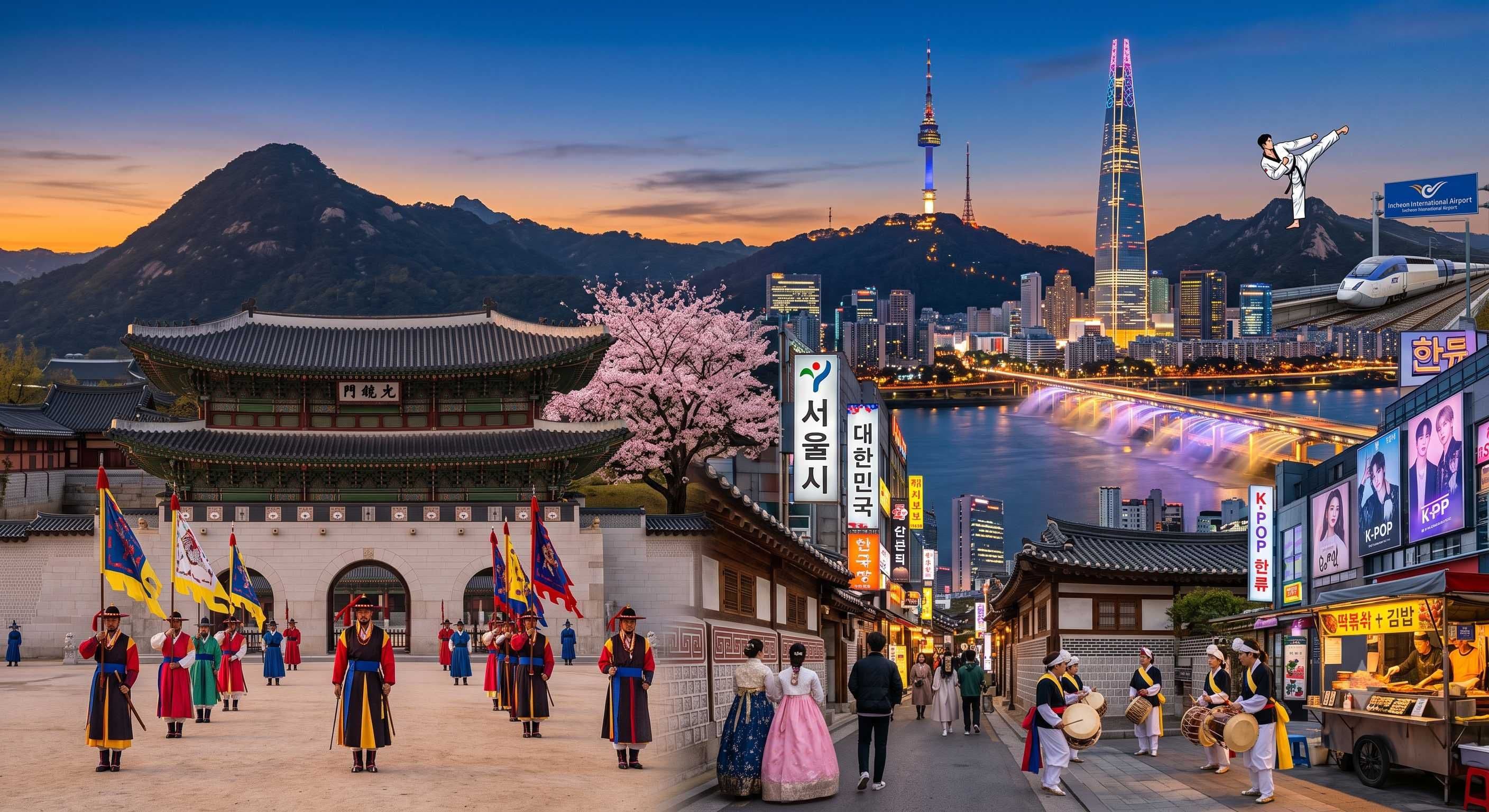
South Korea seamlessly blends cutting-edge technology and ancient tradition, making it an ideal destination for diverse travelers. The country offers bustling metropolitan centers like Seoul, serene temple stays, coastal beaches, and unique cultural experiences. Whether you're interested in Korean pop culture, traditional hanok villages, or world-class cuisine, South Korea delivers memorable experiences year-round.

  • Capital: Seoul
  • Currency: South Korean Won (KRW)
  • Official Language: Korean
  • Main Religion: Buddhism, Christianity
  • Best Months to Visit: April-May (spring), September-October (autumn)
  • Average Weather: Winters (-5°C to 5°C), Summers (20°C to 30°C)
  • Famous Tourist Cities: Seoul, Busan, Gyeongju, Incheon, Jeju Island
  • Time Zone: Korea Standard Time (UTC+9)
  • Visa Note: Many nationalities eligible for 90-day visa-free entry
  • Popular Experiences: Temple stays, DMZ tours, street food, K-pop sites, hiking, traditional markets

South Korea Travel Guide, Tips & Tour Links

Data provided by Touratu - South Korea

Activities

GYG Activities List

Loading activities…

Viator South Korea

Loading Viator activities…

Hotel Deals

Agoda South Korea

Loading activities…

Popular Destinations near South Korea

Frequently Asked Questions About South Korea

Everything you need to know before visiting South Korea

South Korea is one of Asia's safest destinations with low violent crime rates. Seoul and major tourist areas have visible police presence. Petty theft exists in crowded markets and public transport. Avoid political protests. Women travelers generally report feeling safe. Natural disasters like typhoons occur seasonally.

Budget travelers spend $40-60 USD daily (hostels, street food, public transport). Mid-range travelers budget $80-150 USD for guesthouses, restaurant meals, and activities. Seoul and Busan cost more than regional cities. Food is affordable; accommodation and flights represent major expenses. Seasonal pricing affects January and summer rates.

Five to seven days covers Seoul, Busan, and one regional destination. Two weeks allows temple stays, Jeju Island, and slower exploration. Three days minimum for Seoul alone. First-time visitors typically allocate 10 days to experience multiple regions and cultural sites without constant movement.

Spring (April-May) offers mild weather and cherry blossoms; autumn (September-October) provides clear skies and comfortable temperatures. Winter (December-February) suits skiing and budget travel but brings harsh cold. Summer (June-August) is hot, humid, with typhoon risks. Avoid monsoon season (June-July) for better visibility.

The subway and bus system in Seoul is efficient, affordable, and English-signed. KTX high-speed trains connect major cities affordably and quickly. Domestic flights work for Jeju Island and distant destinations. Taxis are cheap but require Korean language or translation apps. Rental cars suit rural exploration.

Remove shoes before entering homes and some restaurants. Bowing shows respect. Don't write names in red ink or stick chopsticks upright in rice—both signal death. Tipping isn't expected. Respect elders and avoid touching strangers. Photography in temples requires permission. Learn basic Korean phrases for better local interactions.

Gyeongju showcases Buddhist temples and ancient Silla Kingdom history without Seoul crowds. Jeonju's hanok village preserves traditional architecture and local food culture. Seorak Mountain offers dramatic hiking and autumn colors. Busan's beach neighborhoods provide coastal charm. Nami Island's tree-lined paths attract photographers seeking quieter natural settings.

Temple stays offer meditation and traditional meals in mountain monasteries. DMZ tours explore the Korean border's complex history. Street food markets in Seoul provide authentic culinary experiences. K-pop cultural sites appeal to fans. Jeju Island's volcanic landscapes and hiking trails showcase natural beauty. Traditional jjimjilbang spas blend relaxation with culture.

Three to four days suffice for Seoul and day trips. Seven to ten days allow exploring Seoul, Busan, Jeju Island, and regional temples. Two weeks enable slower travel, temple stays, and less-touristy regions. Three weeks let you experience multiple seasons' worth of activities and develop deeper cultural understanding.

Touratu maps Instagram photos and YouTube travel videos to real South Korea destinations, helping you discover authentic locations beyond guidebooks. Browse tagged temples, markets, hiking trails, and coastal spots with exact coordinates. Find trending K-pop sites, street food vendors, and scenic viewpoints that real travelers have documented and visited.