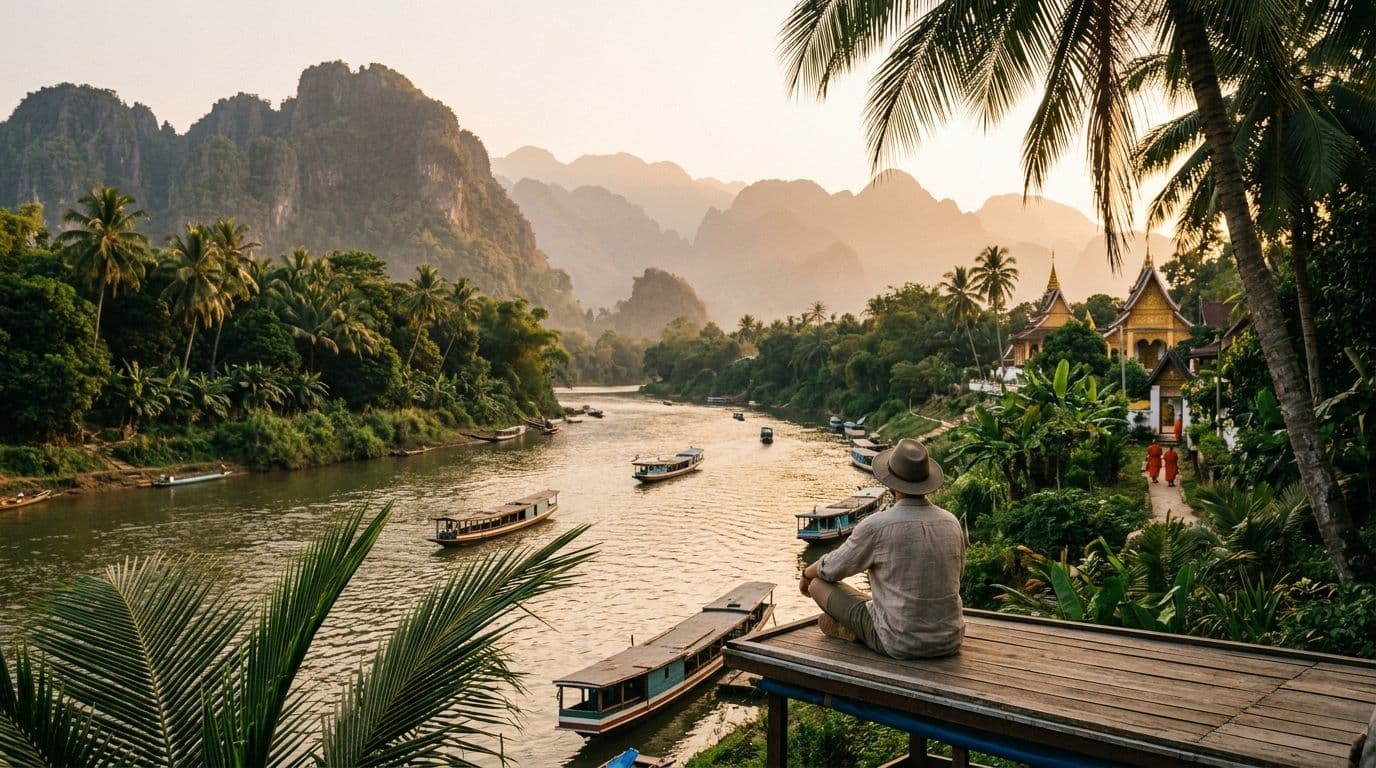
Vientiane: Discover Temples, Culture & Riverside Charm
Introduction
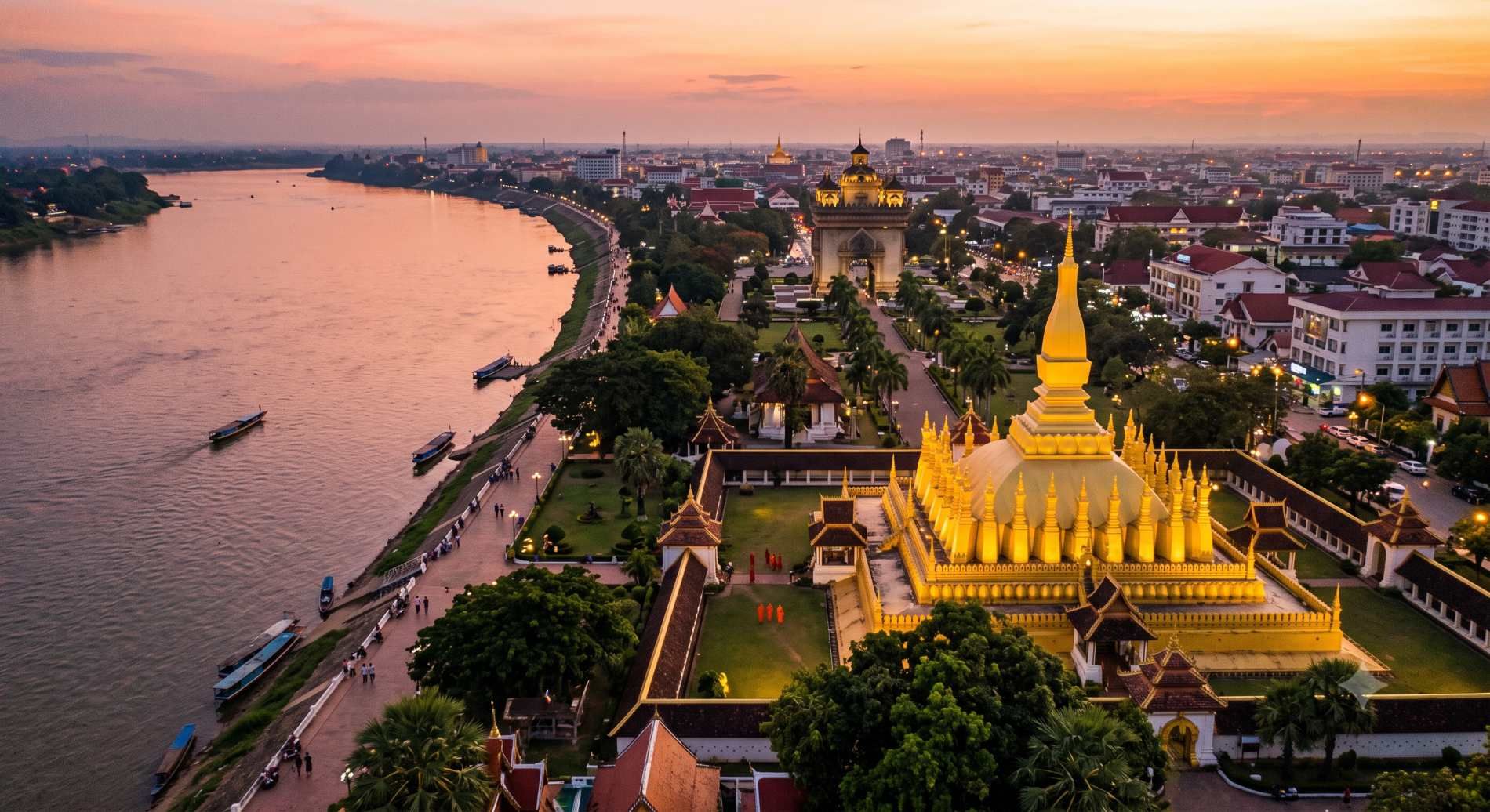
Vientiane is the laid-back capital of Laos, located along the Mekong River near the country's border with Thailand. Unlike many Southeast Asian capitals, Vientiane has a relatively relaxed pace, making it well suited to travelers who prefer temples, Buddhist culture, riverside walks, local food, markets, architecture, and slow-paced city exploration.
The city's identity combines traditional Lao culture with French colonial influences and modern development. Visitors can explore ornate Buddhist temples, historic monuments, quiet lanes, cafés, markets, and the Mekong waterfront within a compact urban area.
Among Vientiane's best-known attractions are Pha That Luang, Patuxai, Wat Si Saket, Haw Phra Kaew, Buddha Park, and the Mekong Riverside.
Vientiane works particularly well as a 2–3 day city break or as part of a longer Laos itinerary connecting Luang Prabang, Vang Vieng, and southern Laos.
Before booking, travelers can use Touratu's interactive maps and narrated destination guide videos to explore Vientiane's temples, landmarks, neighborhoods, hotels, restaurants, markets, routes, and nearby attractions.
Quick Facts
| Category | Information |
|---|---|
| Country | Laos |
| Region | Southeast Asia |
| Capital | Vientiane |
| River | Mekong River |
| Famous For | Buddhist temples, Lao culture, Patuxai, That Luang, and relaxed atmosphere |
| Iconic Landmark | Pha That Luang |
| Famous Monument | Patuxai |
| Historic Temple | Wat Si Saket |
| Famous Day Trip | Buddha Park |
| Currency | Lao kip (LAK) |
| Languages | Lao; English used in tourist areas |
| Main Travel Style | Culture, temples, food, history, markets, and relaxation |
| Ideal Stay | 2–3 days |
Why Visit Vientiane?
- Explore important Buddhist temples.
- See the golden Pha That Luang.
- Photograph Patuxai.
- Visit Wat Si Saket.
- Explore Haw Phra Kaew.
- Walk beside the Mekong River.
- Visit Buddha Park.
- Try traditional Lao cuisine.
- Explore local markets.
- Experience Vientiane's French colonial influence.
- Enjoy relaxed cafés and restaurants.
- Watch the sunset over the Mekong.
- Shop for Lao handicrafts and textiles.
- Experience Lao Buddhist culture.
- Use Vientiane as an introduction to Laos.
Main Attractions in Vientiane
Pha That Luang
Pha That Luang is one of Laos's most important national and religious monuments.
The large golden stupa is a powerful symbol of Lao identity and Buddhist tradition.
Its distinctive architecture makes it one of the most recognizable landmarks in the country.
The surrounding complex includes temples and open spaces that can be explored during a visit.
Best for: Culture, Buddhism, architecture, history, and photography.
Patuxai
Patuxai is Vientiane's most famous monument.
Often compared visually with the Arc de Triomphe because of its monumental arch form, Patuxai incorporates traditional Lao decorative elements.
Visitors can climb to higher levels for views across central Vientiane.
The surrounding park is also pleasant for an evening visit.
Best for: Photography, architecture, city views, and first-time visitors.
Wat Si Saket
Wat Si Saket is one of Vientiane's most historically significant temples.
The temple is known for its extensive collection of Buddha images and its distinctive architectural style.
Its quiet atmosphere makes it particularly rewarding for visitors interested in Buddhist art and history.
Best for: History, religion, architecture, and photography.
Haw Phra Kaew
Haw Phra Kaew is a historic religious building that now houses a collection of Buddhist art and religious objects.
The architecture and surrounding grounds make it an important cultural stop in central Vientiane.
Best for: Buddhist art, culture, history, and architecture.
Wat Si Muang
Wat Si Muang is an important Buddhist temple with strong local religious significance.
The temple is active rather than simply functioning as a historic monument, giving visitors a chance to observe aspects of contemporary Lao religious life.
Visitors should behave respectfully and dress appropriately.
Best for: Culture, Buddhism, local life, and spiritual experiences.
Buddha Park
Buddha Park, also known as Xieng Khuane, is located outside central Vientiane.
The park contains a large collection of Buddhist and Hindu-inspired sculptures.
Its unusual sculptures and open-air setting make it one of the most distinctive excursions from the capital.
One of its most recognizable structures is a large symbolic sculpture representing different realms of existence.
Best for: Photography, families, art, and unusual cultural experiences.
Mekong Riverside
The Mekong waterfront is one of Vientiane's most popular areas for an evening walk.
The river separates Laos from Thailand, and the waterfront becomes especially lively toward sunset.
Visitors can enjoy:
- Walking
- Street food
- Restaurants
- Markets
- River views
- Sunset photography
Best for: Couples, families, food, walking, and sunsets.
Vientiane Night Market
The riverside night market is a popular evening attraction.
Travelers can browse:
- Clothing
- Handicrafts
- Souvenirs
- Accessories
- Local products
- Food
It is a good place to combine shopping with an evening walk along the Mekong.
Best for: Shopping, food, families, and evening sightseeing.
COPE Visitor Centre
The COPE Visitor Centre provides educational information about the continuing impact of unexploded ordnance in Laos and the work being done to support affected communities.
It offers important historical and humanitarian context for understanding modern Laos.
Best for: History, education, and responsible travel.
Lao National Museum
The Lao National Museum provides an introduction to the country's history and political development.
It can help visitors place Vientiane's monuments and cultural heritage within a broader national context.
Best for: History and first-time visitors.
Cultural Attractions
Buddhist Temples
Vientiane has numerous temples, ranging from major monuments to smaller neighborhood monasteries.
Travelers can observe:
- Buddhist architecture
- Religious ceremonies
- Monk life
- Decorative murals
- Buddha images
- Temple courtyards
Lao Buddhist Culture
Buddhism remains an important part of Lao cultural life.
Visitors should avoid disturbing religious ceremonies and should dress respectfully when entering temples.
French Colonial Architecture
Vientiane contains buildings and streets influenced by its French colonial history.
The combination of French architectural elements and traditional Lao design creates a distinctive urban atmosphere.
Lao Handicrafts
Travelers can find textiles, woven products, woodwork, baskets, and other traditional crafts.
Local Markets
Markets provide a more everyday view of Vientiane and are useful places to discover local ingredients, snacks, clothing, and household products.
Nature & Outdoor Experiences
Mekong River
The Mekong is the defining natural feature of Vientiane.
The riverside is particularly enjoyable around sunset.
Buddha Park
The sculpture park provides an outdoor cultural experience beyond central Vientiane.
Chao Anouvong Park
This riverside park is a convenient place for an evening walk.
Nong Sa Phang Len
Smaller local parks and ponds around the capital can provide quieter outdoor experiences away from the main tourist attractions.
Food Experiences
Vientiane is an excellent place to experience Lao cuisine, including dishes built around sticky rice, herbs, vegetables, grilled meats, freshwater fish, and spicy sauces.
Laap
Laap is one of Laos's best-known dishes.
It is generally prepared with minced meat or fish, herbs, spices, and other fresh ingredients.
Sticky Rice
Sticky rice is central to Lao food culture and is commonly eaten by hand alongside other dishes.
Tam Mak Hoong
This Lao-style green papaya salad is spicy, sour, salty, and flavorful.
Or Lam
Or Lam is a traditional Lao stew associated especially with northern Laos, but Lao cuisine can be found throughout the country.
Mok Pa
Mok pa is fish seasoned with herbs and wrapped in leaves before being steamed.
Grilled Fish
Freshwater fish is common in Lao cuisine.
Khao Piak Sen
Khao piak sen is a comforting Lao noodle soup.
French-Influenced Food
Vientiane's colonial history and international population mean travelers can also find baguettes, pastries, cafés, and French-influenced dishes.
Lao Coffee
Coffee from southern Laos is increasingly popular and can be found in cafés around Vientiane.
Shopping Experiences
Vientiane Night Market
Best for inexpensive souvenirs, clothing, crafts, and evening browsing.
Talat Sao
Talat Sao is a major traditional shopping area where visitors can find clothing, textiles, handicrafts, jewelry, and everyday products.
Lao Textiles
Handwoven textiles make distinctive souvenirs.
Handicrafts
Look for:
- Woven baskets
- Wood carvings
- Handmade decorations
- Traditional fabrics
- Jewelry
Lao Coffee
Packaged coffee can make a practical souvenir.
Local Food Products
Tea, spices, dried foods, and other packaged products can also be found in local markets.
Family Travel in Vientiane
Vientiane can be a comfortable destination for families because the city is relatively relaxed and several attractions are suitable for children.
Best Family Experiences
- Buddha Park
- Mekong Riverside
- Night Market
- Patuxai
- Temple visits
- Chao Anouvong Park
- Local cafés and restaurants
Family Tips
- Keep temple visits short for younger children.
- Visit outdoor attractions earlier or later in the day.
- Carry water and sun protection.
- Use transport for attractions outside central Vientiane.
- Combine cultural sightseeing with relaxed activities.
- Check food spice levels when ordering for children.
Couple Travel in Vientiane
Vientiane's relaxed pace makes it particularly suitable for couples who prefer a quiet city break.
Romantic Experiences
1. Mekong Sunset
Watch the sun go down over the river.
2. Riverside Dinner
Enjoy Lao food beside the Mekong.
3. Temple Walk
Explore historic temples together.
4. Patuxai at Sunset
Visit the monument and surrounding park in the late afternoon.
5. Night Market
Browse local products and enjoy street food.
6. Café Hopping
Explore Vientiane's relaxed café culture.
7. Bicycle Exploration
Cycling around quieter parts of the city can be an enjoyable way to explore.
Suggested Vientiane Travel Route
One-Day Route
Stop 1 — Wat Si Saket
Begin with one of the city's historic temples.
Stop 2 — Haw Phra Kaew
Explore Buddhist art and architecture.
Stop 3 — Patuxai
Visit the city's famous monument.
Stop 4 — Pha That Luang
See Laos's national religious symbol.
Stop 5 — Local Lunch
Try laap, sticky rice, noodles, or another Lao specialty.
Stop 6 — Chao Anouvong Park
Relax beside the Mekong.
Stop 7 — Riverside Night Market
Explore the market around sunset.
Stop 8 — Mekong Dinner
Finish the day beside the river.
Two-Day Route
Day 1 — Temples & City
- Wat Si Saket
- Haw Phra Kaew
- Patuxai
- Pha That Luang
- Local cafés
- Mekong sunset
Day 2 — Culture & Local Life
- Buddha Park
- COPE Visitor Centre
- Local market
- Lao food experience
- Riverside evening
Three-Day Route
Day 1
Explore Vientiane's major temples and monuments.
Day 2
Visit Buddha Park and explore local markets and food.
Day 3
Enjoy a slower day with cafés, shopping, parks, museums, and additional temples.
Accommodation Areas
| Traveler Type | Best Area | Experience |
|---|---|---|
| First-time visitors | Riverside / central Vientiane | Convenient for attractions and restaurants |
| Families | Central / riverside | Restaurants, parks, and easy sightseeing |
| Couples | Riverside | Sunset, restaurants, and relaxed atmosphere |
| Budget travelers | Central Vientiane | Guesthouses and affordable dining |
| Culture travelers | Central / Old Quarter | Temples and historic attractions |
| Luxury travelers | Riverside / central | Upscale hotels and restaurants |
| Food travelers | Riverside / central | Markets, cafés, and restaurants |
| Longer stays | Central Vientiane | Services and convenient transportation |
For first-time visitors, staying around the central area or Mekong riverside makes it easy to combine temples, restaurants, markets, and evening activities.
Transportation Tips
Getting Around Vientiane
Central Vientiane is relatively easy to explore, particularly around the main temple and riverside districts.
Tuk-Tuks
Tuk-tuks are a common way to travel short distances.
Agree on the fare before starting the trip when appropriate.
Taxis and Ride-Hailing
These can be convenient for longer journeys and airport transfers.
Bicycles
Cycling can be enjoyable around quieter streets and central areas.
Walking
Many central attractions can be combined into walking routes, although heat and humidity should be considered.
Airport
Wattay International Airport serves Vientiane and provides domestic and international connections.
Travel to Thailand
Vientiane is close to Thailand across the Mekong.
The Thai–Lao Friendship Bridge connects the Vientiane area with Thailand and makes cross-border travel possible for travelers continuing their journey.
Best Time to Visit
Cool and Dry Season
The cooler, drier months are generally the most comfortable for sightseeing.
This is particularly useful for temple visits and walking around the city.
Hot Season
Temperatures can become high, especially around the middle of the day.
Plan outdoor activities earlier or later in the day.
Rainy Season
Rain can be heavy at times, but the city remains accessible and the landscape becomes greener.
Carry rain protection and maintain flexibility for outdoor activities.
Travel Tips
- Visit temples respectfully.
- Dress modestly at religious sites.
- Remove shoes when required.
- Carry water during daytime sightseeing.
- Plan outdoor activities around the heat.
- Try traditional Lao food.
- Spend an evening beside the Mekong.
- Visit at least one major temple complex.
- Allow time for Buddha Park if interested in unusual cultural attractions.
- Use tuk-tuks or taxis for longer distances.
- Carry some local currency for markets and small vendors.
- Check opening hours for museums and attractions.
- Keep some flexibility during rainy weather.
- Respect monks and religious ceremonies.
- Use a map to group attractions and reduce unnecessary travel.
Common Mistakes to Avoid
1. Treating Vientiane Like Bangkok
Mistake: Expecting a huge, fast-paced Southeast Asian metropolis.
Solution: Appreciate Vientiane for its slower pace and relaxed atmosphere.
2. Visiting Only the Main Monuments
Mistake: Rushing between Patuxai and That Luang without experiencing local life.
Solution: Spend time in markets, cafés, temples, and riverside areas.
3. Ignoring Buddhist Etiquette
Mistake: Entering temples without appropriate clothing or behavior.
Solution: Dress respectfully and follow local customs.
4. Underestimating the Heat
Mistake: Planning long walks in the middle of the afternoon.
Solution: Sightsee early, rest during the hottest period, and explore again later.
5. Missing Lao Food
Mistake: Eating only international dishes.
Solution: Try laap, sticky rice, tam mak hoong, mok pa, grilled fish, and Lao noodles.
6. Skipping the Mekong
Mistake: Treating Vientiane as an inland city.
Solution: Spend an evening along the river.
7. Trying to Do Too Much
Mistake: Filling every hour with sightseeing.
Solution: Vientiane rewards a slower itinerary.
8. Forgetting Buddha Park
Mistake: Assuming all attractions are inside central Vientiane.
Solution: Consider a half-day excursion to Buddha Park.
Touratu Insight
Vientiane is best understood as a slow-paced cultural capital rather than a major urban spectacle.
Its appeal comes from the combination of Buddhist temples, Lao traditions, French colonial influences, Mekong scenery, local markets, food, and relaxed city life.
A first-time visitor can explore Wat Si Saket and Haw Phra Kaew, photograph Patuxai, visit Pha That Luang, enjoy Lao food, and finish the day watching the sunset beside the Mekong.
The city also works well as a transition point between different parts of Laos.
Travelers can combine Vientiane with Vang Vieng and Luang Prabang for a classic northern and central Laos itinerary, or continue south toward destinations such as Pakse, Champasak, and the 4,000 Islands.
For most travelers, 2–3 days is enough to experience Vientiane without rushing.
Frequently Asked Questions
1. What is Vientiane famous for?
Vientiane is famous for its Buddhist temples, Pha That Luang, Patuxai, Mekong River, Lao cuisine, relaxed atmosphere, and French colonial influences.
2. What are the best places to visit in Vientiane?
Important attractions include:
- Pha That Luang
- Patuxai
- Wat Si Saket
- Haw Phra Kaew
- Wat Si Muang
- Buddha Park
- Mekong Riverside
- COPE Visitor Centre
- Vientiane Night Market
3. Is Vientiane worth visiting?
Yes. It is particularly worthwhile for travelers interested in Buddhist culture, temples, food, history, and relaxed Southeast Asian city experiences.
4. How many days are enough for Vientiane?
2–3 days is a good amount of time for a first visit.
5. Is Vientiane good for families?
Yes. Families can enjoy Buddha Park, parks, markets, the Mekong Riverside, and several accessible cultural attractions.
6. Is Vientiane good for couples?
Yes. The riverside, temples, cafés, markets, and relaxed pace make it suitable for couples.
7. What food should I try in Vientiane?
Try laap, sticky rice, tam mak hoong, mok pa, grilled fish, khao piak sen, and Lao coffee.
8. Is Vientiane expensive?
Compared with many major Southeast Asian capitals, Vientiane can be relatively affordable, although accommodation and dining prices vary considerably.
9. Can I visit Buddha Park from Vientiane?
Yes. Buddha Park is located outside central Vientiane and can be visited as a half-day excursion.
10. Can Vientiane be combined with Vang Vieng?
Yes. Vientiane and Vang Vieng are commonly combined in a Laos itinerary.
11. Can Vientiane be combined with Luang Prabang?
Yes. Vientiane, Vang Vieng, and Luang Prabang can form a convenient multi-stop Laos itinerary.
12. What is the best area to stay in Vientiane?
The central area and Mekong riverside are generally convenient for first-time visitors because they provide access to restaurants, markets, temples, and evening activities.
13. Is Vientiane walkable?
Parts of central Vientiane are walkable, but heat, distance, and traffic mean that tuk-tuks or taxis can be useful for attractions farther apart.
14. What should I wear when visiting temples?
Wear modest clothing covering the shoulders and knees, and follow individual temple rules. Remove shoes where required.
15. Is the Mekong worth visiting?
Yes. The riverside is one of the most enjoyable places in Vientiane for sunset, food, walking, and evening atmosphere.
16. Why should travelers explore Vientiane before booking?
Understanding where the temples, riverside, markets, museums, hotels, and attractions are located helps travelers choose accommodation and build a more efficient itinerary.
17. How can Touratu help plan a Vientiane trip?
Touratu helps travelers explore Vientiane through interactive maps and narrated destination guide videos, compare temples and attractions, discover accommodation areas, explore restaurants and markets, understand routes, and build a personalized itinerary before booking.
Key Takeaways
- Vientiane is the relaxed capital of Laos.
- The city combines Buddhist culture, Lao traditions, French colonial influences, and Mekong scenery.
- Pha That Luang is one of the country's most important national symbols.
- Patuxai is Vientiane's most recognizable monument.
- Wat Si Saket and Haw Phra Kaew are essential cultural attractions.
- Buddha Park is one of the city's most unusual excursions.
- The Mekong Riverside is ideal for evening walks and sunsets.
- Lao food includes laap, sticky rice, tam mak hoong, mok pa, grilled fish, and khao piak sen.
- Vientiane is suitable for families, couples, food travelers, culture enthusiasts, and slow travelers.
- 2–3 days is enough for a good introduction.
- Vientiane can be combined with Vang Vieng, Luang Prabang, and southern Laos.
- The cooler and drier months are generally most comfortable for sightseeing.
- Touratu can help travelers explore Vientiane's temples, neighborhoods, attractions, accommodation areas, routes, food, and experiences before booking.
Loading activities…