The World's Most Beautiful Places, Explored Video by Video on a Live Map
The Way We Discover the World Is Changing
For generations, travelers discovered destinations through guidebooks, postcards, travel magazines, and recommendations from friends. Later came blogs, review websites, and social media, giving people access to millions of travel stories from around the world.
Today, another transformation is taking place.
Travelers no longer want to simply read about a destination. They want to experience it before they arrive. They want to watch someone walk through a narrow street in Kyoto, hear the sound of waves beneath a cliff in Bali, witness the Northern Lights over Iceland, or experience the atmosphere of a bustling night market in Bangkok.
Video has become one of the most trusted forms of travel research because it captures movement, sound, scale, and emotion—elements that photographs and text cannot fully convey.
But while videos have changed how we discover destinations, they also reveal a new challenge.
Most travel videos exist in isolation.
You watch an incredible video of a hidden beach, a mountain viewpoint, or a local café, yet you're left wondering:
- Where exactly is this?
- What else is nearby?
- How do I include it in my itinerary?
- Is it close to other attractions?
- Can I spend an entire day exploring this area?
The problem isn't a lack of inspiring content.
The problem is that travel videos rarely provide geographic context.
At the Touratu Research Desk, we believe the future of travel discovery lies in connecting videos directly to the places they represent.
From Watching Videos to Exploring the World
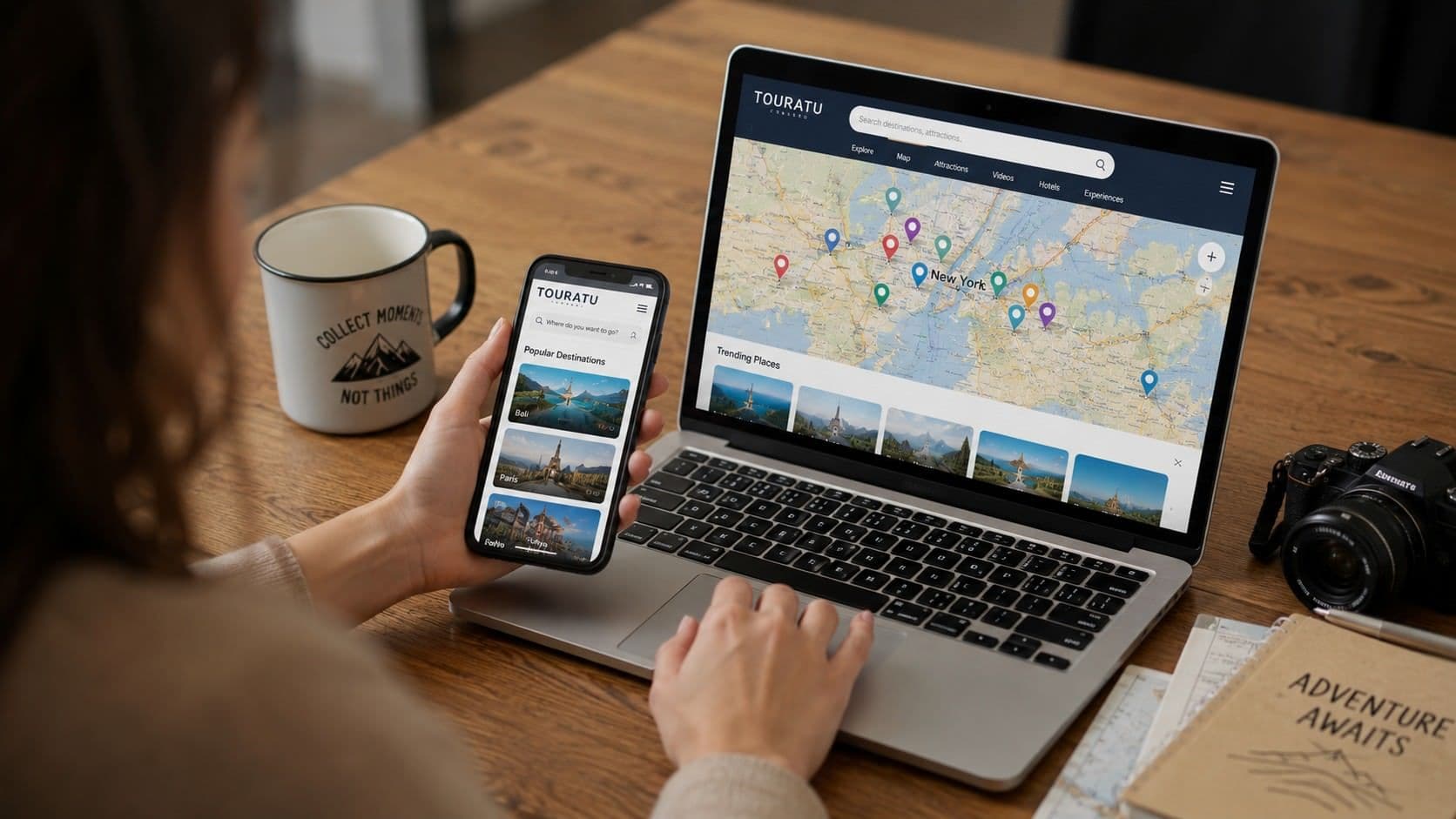
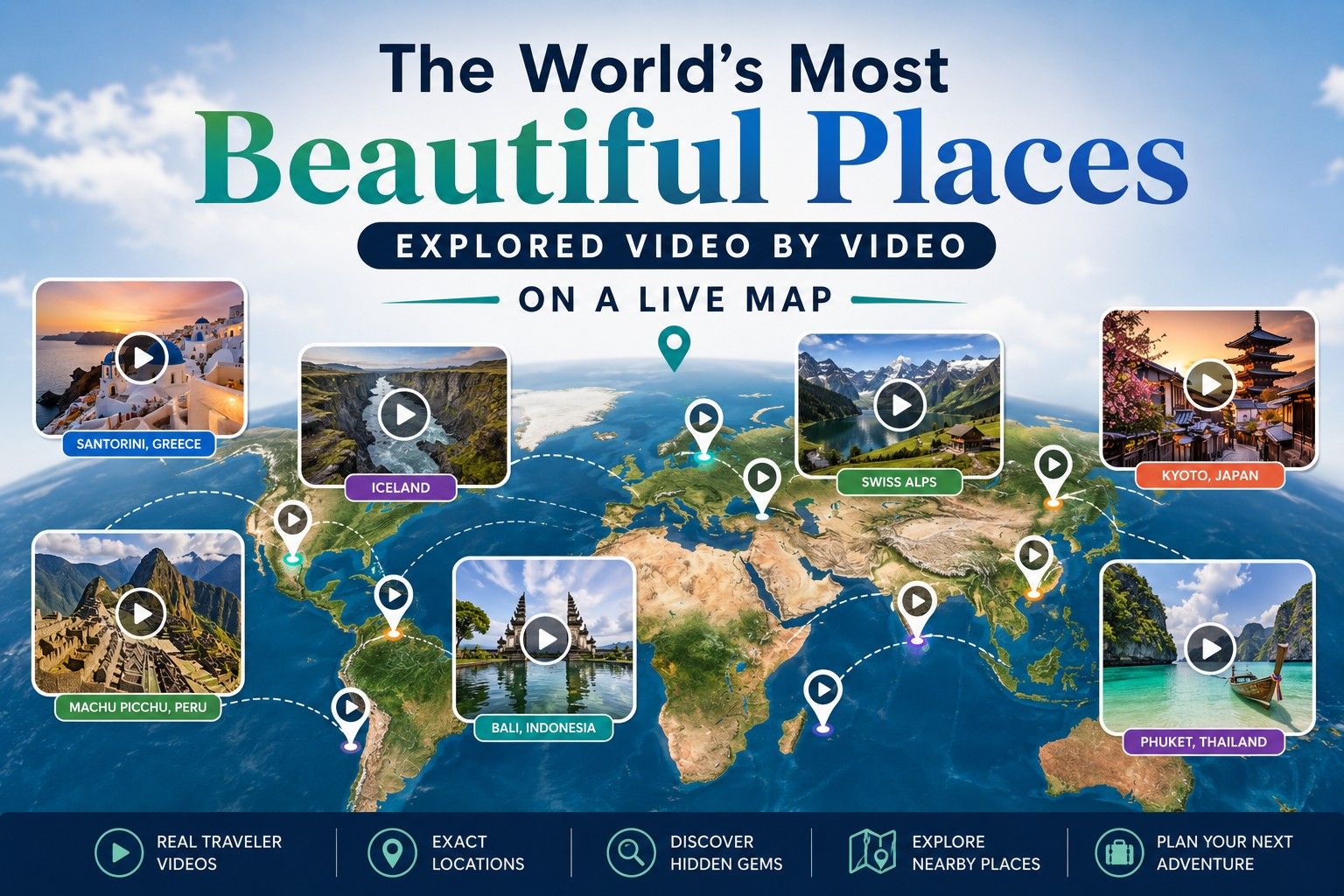
Imagine discovering the world's most beautiful places not through endless scrolling, but by exploring an interactive world map.
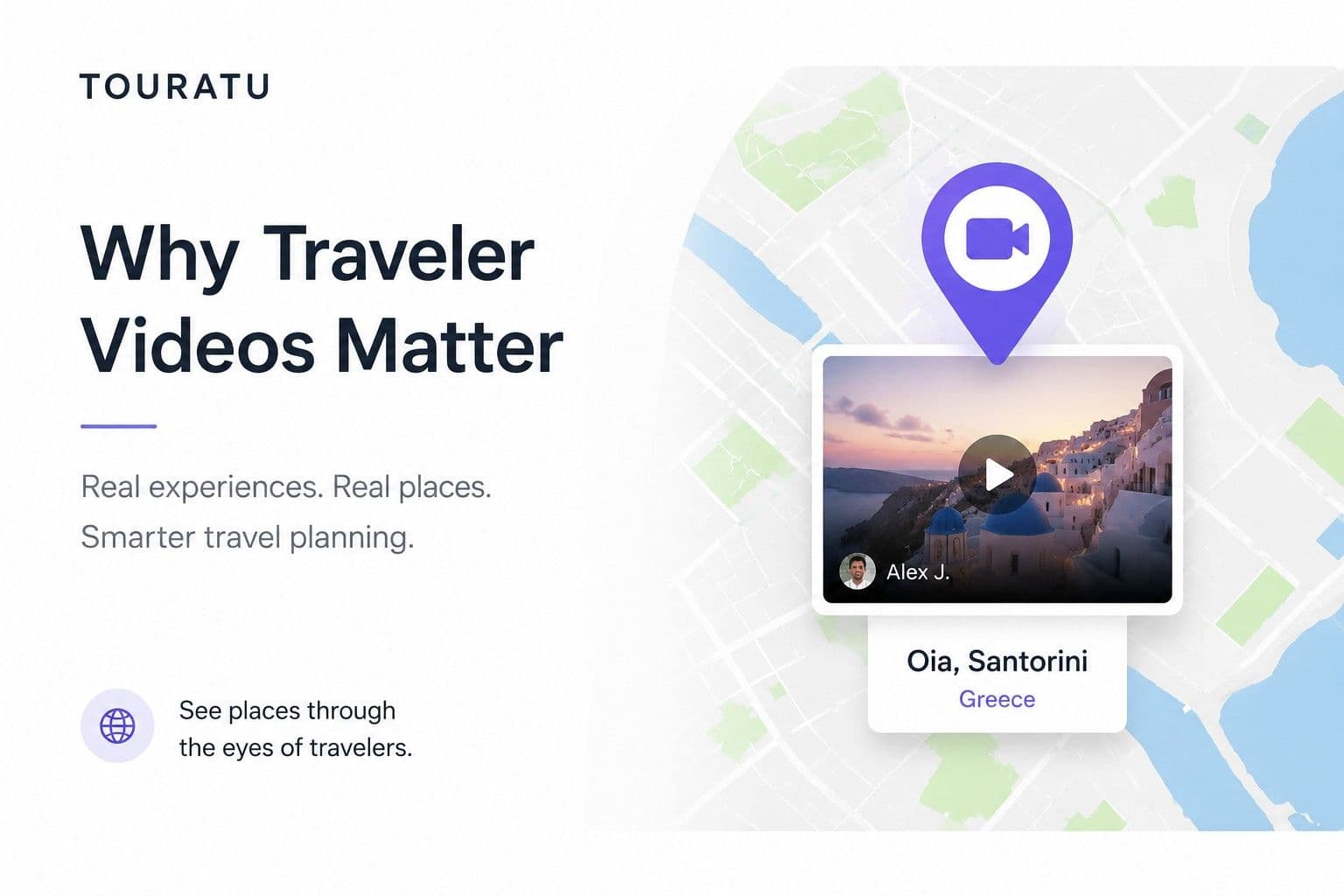
Instead of searching for individual videos, you zoom into a country, city, or neighborhood and instantly discover authentic traveler videos pinned exactly where they were filmed.
Each video becomes a gateway to a destination rather than an isolated piece of content.
Rather than asking,
"What should I watch next?"
travelers begin asking,
"What should I explore next?"
This subtle shift transforms travel planning from passive viewing into active discovery.
Why Beautiful Places Deserve Geographic Context
Every destination tells a story that extends beyond a single viewpoint.
A spectacular waterfall may be only minutes from a hidden temple.
A famous viewpoint may overlook a village filled with local cafés and artisan shops.
A popular beach may sit beside a quiet coastal trail that few visitors ever discover.
Without geographic context, travelers often experience destinations one attraction at a time.
With a live map, they begin to understand how places connect.
Instead of isolated recommendations, they see complete travel landscapes.
This creates opportunities for richer and more meaningful journeys.
Seeing the World Through Real Travelers
Professional travel photography inspires.
Traveler videos build confidence.
Unlike carefully staged promotional content, traveler-generated videos reveal destinations as they truly are.
They show:
- Walking routes
- Crowd conditions
- Weather
- Local atmosphere
- Scenic viewpoints
- Transportation access
- Street life
- Unexpected discoveries
This authenticity helps travelers set realistic expectations before they visit.
More importantly, it allows people to connect emotionally with destinations long before they arrive.
A Live Map Changes the Discovery Experience
Traditional travel research usually follows a familiar pattern.
Search.
Read.
Watch.
Repeat.
Information becomes scattered across dozens of browser tabs.
A live map simplifies this process by bringing everything together visually.
Instead of searching for attractions individually, travelers can explore an entire destination in context.
Imagine zooming into Bali and immediately seeing videos from:
- Rice terraces
- Hidden waterfalls
- Cliffside temples
- Surf beaches
- Sunset viewpoints
- Local cafés
- Markets
- Hiking trails
Each location becomes part of a larger travel story.
Exploration becomes intuitive rather than fragmented.
Discovering Hidden Gems Naturally
Many travelers intentionally search for hidden gems.
Ironically, hidden gems are often discovered by accident.
When exploring a destination on a map, curiosity naturally leads beyond famous landmarks.
A traveler watching a video from a popular attraction may notice another pin just a short walk away.
That second pin might reveal:
- A quiet beach
- A scenic viewpoint
- A traditional village
- A local market
- A family-run café
- A walking trail
Instead of searching for hidden gems directly, travelers uncover them through exploration.
This creates a more authentic sense of discovery.
The Touratu Map Experience
Touratu was designed around a simple idea:
Every destination becomes easier to understand when videos, attractions, and locations exist together on a live interactive map.
Instead of separating travel content into different platforms, Touratu connects:
- Countries
- States and regions
- Cities
- Tourist attractions
- Traveler videos
- Hotels
- Activities
- Experiences
- Nearby places
Every video is pinned to its exact geographic location, allowing travelers to understand not only what a place looks like, but also how it connects to everything around it.
Watching a video becomes the beginning of a journey rather than the end of a search.
Planning Trips Through Exploration
Traditional itineraries often begin with lists.
Top 10 attractions.
Best beaches.
Must-see landmarks.
While useful, lists rarely explain how destinations fit together geographically.
Map-based exploration encourages a different approach.
Travelers can:
- Build routes naturally
- Group nearby attractions
- Discover places between major landmarks
- Reduce unnecessary travel time
- Create more flexible itineraries
This approach allows each day to feel less rushed and more connected.
Beautiful Places Are More Than Famous Landmarks
The world's beauty isn't limited to iconic destinations.
Some of the most memorable places are small, quiet, and largely unknown.
A mountain road in the Alps.
A fishing village in Greece.
A waterfall hidden within a tropical forest.
A street musician performing in a historic square.
These moments rarely appear on traditional travel lists.
Yet they often become the memories travelers cherish most.
By exploring destinations video by video on a live map, travelers begin to appreciate places that might otherwise remain invisible.
Travel Discovery Is Becoming Visual
Travel planning is evolving from keyword searches to visual exploration.
Instead of asking:
"What are the best places to visit?"
Travelers increasingly ask:
"What does this place feel like?"
Video answers this question more effectively than text.
Maps answer where.
Together, they create a richer understanding of a destination before the journey begins.
The Future of Travel Discovery
The next generation of travel platforms will not simply organize information.
They will organize experiences.
Maps will become interactive travel guides.
Videos will become location-aware.
Artificial intelligence will help personalize exploration.
Travelers will spend less time switching between websites and more time understanding destinations.
The result is a planning process that feels more natural, visual, and inspiring.
Final Thoughts
The world's most beautiful places deserve to be experienced in context.
A waterfall is more meaningful when you know the village nearby.
A temple becomes richer when you understand its surroundings.
A beach becomes more memorable when you discover the hidden viewpoint just beyond it.
Video brings destinations to life.
Maps reveal how they connect.
Together, they transform travel research into travel discovery.
Touratu brings these elements together by allowing travelers to explore destinations video by video on a live interactive map, helping them move beyond simply finding places to truly understanding them before they travel.
The future of travel planning isn't just about seeing the world.
It's about exploring it—one location, one story, and one video at a time.
Loading activities…