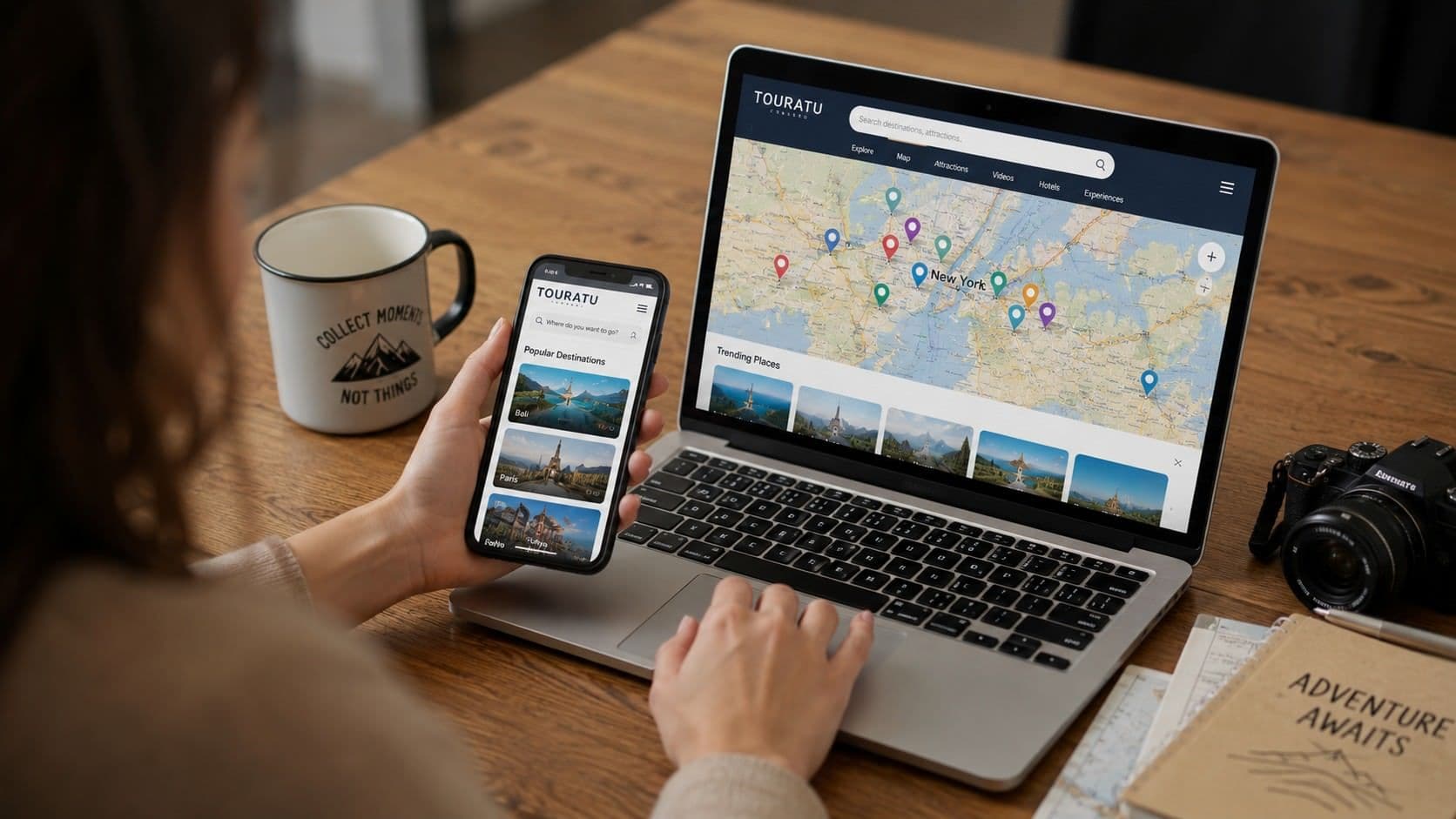
Why Traveler Videos Matter: How Real Experiences Are Transforming Travel Planning
The Way We Research Travel Has Changed
Not long ago, planning a trip meant reading guidebooks, browsing travel magazines, or asking friends for recommendations. Today, the first thing many travelers do is search for videos.
Before deciding whether to visit a destination, book an activity, or explore an attraction, travelers increasingly want to see it with their own eyes.
Questions like these have become common:
- What does the place actually look like?
- Is it as beautiful as the photos suggest?
- How crowded is it?
- What's the walk to the attraction like?
- Is it worth spending half a day there?
- What can I expect when I arrive?
Static photos and written descriptions can answer some of these questions, but videos provide context, movement, atmosphere, and perspective that text alone cannot.
At the Touratu Research Desk, we believe traveler-generated videos have become one of the most valuable sources of destination research because they reduce uncertainty before a trip begins.
The Rise of Visual Travel Research
Travel planning has shifted from text-first research to visual-first discovery.
Today's travelers often combine:
- Search engines
- Interactive maps
- Travel blogs
- Social media
- Traveler reviews
- Short-form videos
- Long-form travel guides
Each source serves a different purpose.
Travel blogs explain.
Maps organize.
Reviews evaluate.
Videos demonstrate.
Together, they create a more complete understanding of a destination.
Why Videos Build Traveler Confidence
Every travel decision involves a degree of uncertainty.
Will the attraction match expectations?
Is the scenery as impressive as advertised?
Is the area suitable for families?
Are the viewpoints easy to access?
Videos help answer these questions by showing real experiences rather than carefully selected promotional images.
Traveler-generated videos often reveal:
- Walking routes
- Crowd conditions
- Local atmosphere
- Scenic viewpoints
- Accessibility
- Weather conditions
- Time required to explore
For many travelers, watching a few authentic videos before visiting a destination provides greater confidence than reading multiple reviews.
The Context Problem
Despite their value, travel videos have one major limitation.
They often exist without geographic context.
A traveler might watch an excellent video but still wonder:
- Where exactly is this place?
- Which city is it in?
- What attractions are nearby?
- Can I visit it on the same day as another attraction?
- How far is it from my hotel?
This disconnect forces travelers to switch between video platforms, maps, blogs, and booking websites to piece together the full picture.
The research process becomes fragmented.
The Touratu Location-Pinned Video Framework™
At Touratu, we believe videos become significantly more valuable when they are connected to the places they represent.
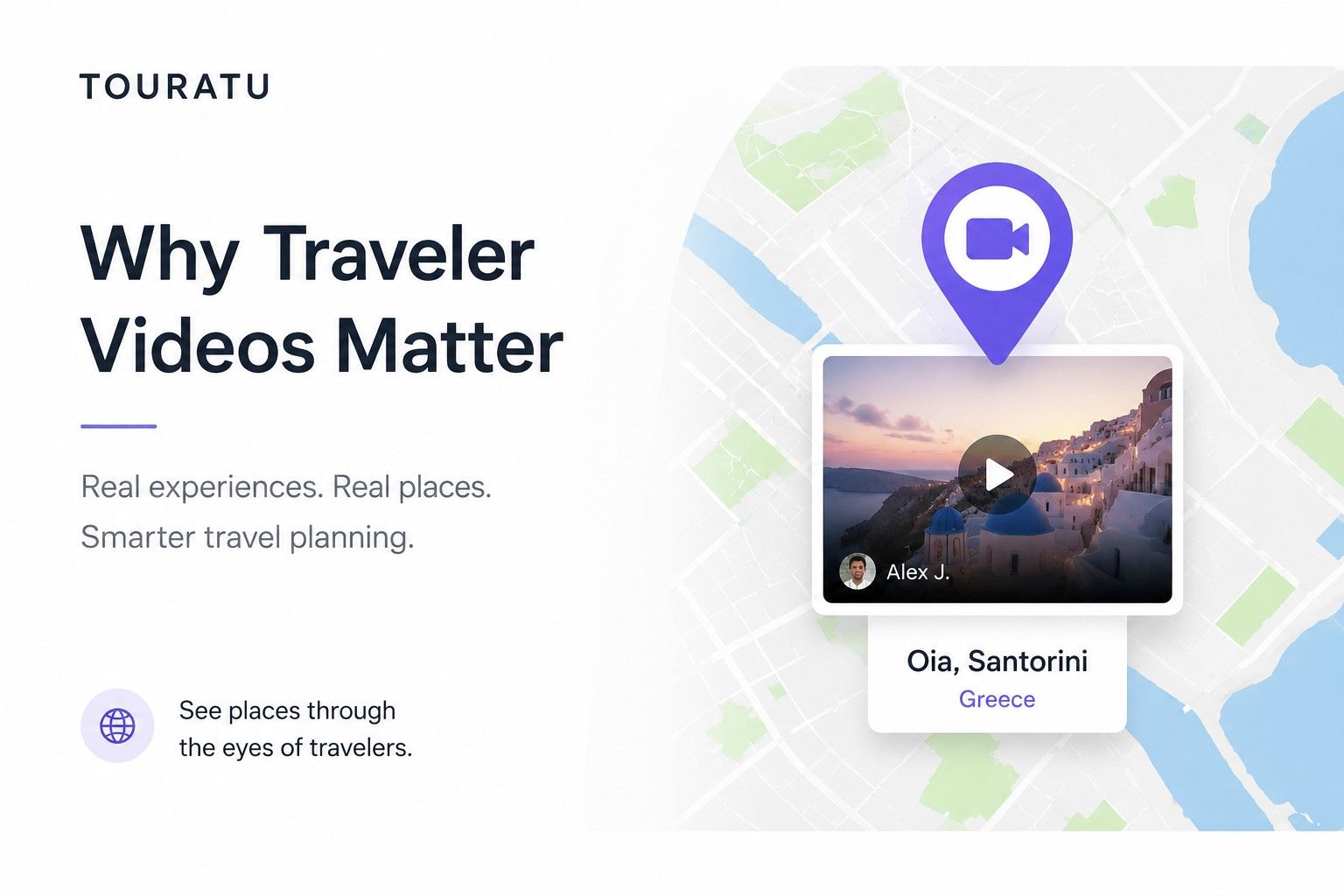
Instead of treating videos as isolated content, Touratu pins each travel video to its exact geographic location on an interactive map.
This creates a more intuitive way to explore destinations.
When travelers browse a city or attraction, they are not just reading about a place—they can also discover videos created at that exact location.
This approach combines visual storytelling with geographic context.
Why Exact Map Location Matters
Knowing where a video was recorded is just as important as watching the video itself.
By pinning videos to their precise locations, travelers can:
- Understand where an attraction is located
- Explore nearby places worth visiting
- Discover attractions within walking distance
- Build more efficient itineraries
- See how destinations connect geographically
For example, a traveler exploring a historic square can immediately see videos from that square, then discover nearby museums, viewpoints, markets, restaurants, and activities without leaving the map.
This transforms travel research into destination exploration.
From Watching Videos to Exploring Destinations
Traditional travel videos often follow a linear format.
You watch the content and then search separately for more information.
Location-pinned videos change that experience.
Instead of ending with the video, the journey continues.
A traveler can move naturally from:
- Watching a video
- Viewing the attraction on the map
- Exploring nearby places
- Learning about the destination
- Discovering local experiences
- Planning an itinerary
The video becomes the starting point rather than the final destination.
Discovering Hidden Gems Through Video
Many memorable travel experiences are not found in "Top 10" lists.
They are discovered while exploring nearby places.
Because Touratu connects videos with exact map locations, travelers often uncover:
- Scenic viewpoints
- Quiet walking streets
- Local cafés
- Cultural landmarks
- Lesser-known attractions
- Parks and gardens
- Markets
- Photography spots
This creates opportunities for spontaneous discovery that traditional travel research may overlook.
Traveler Videos vs Traditional Travel Content
| Information Source | Best For | Limitations |
|---|---|---|
| Travel Blogs | Detailed planning | Limited visual context |
| Photos | Inspiration | Static perspective |
| Reviews | Opinions | Little geographic context |
| Maps | Navigation | Limited storytelling |
| Traveler Videos | Real experiences | Often disconnected from location |
| Touratu Location-Pinned Videos | Real experiences with geographic context | Requires mapped destination data |
The future of travel research is likely to combine all of these resources rather than relying on a single format.
The Future of Travel Discovery
Travel discovery is becoming increasingly interactive.
Several trends are shaping how travelers research destinations:
- Video-first exploration
- Interactive travel maps
- AI-assisted itinerary planning
- Personalized destination recommendations
- Geographic discovery through connected content
Rather than searching for isolated pieces of information, travelers increasingly expect destinations, attractions, videos, and planning tools to work together.
Location-aware travel content represents an important step in that evolution.
Final Thoughts
Videos have changed how people discover the world.
They provide authenticity, atmosphere, and confidence that traditional travel content cannot always capture.
Yet their true value increases when they are connected to the places they represent.
By pinning traveler videos to exact map locations, Touratu helps transform passive viewing into active exploration.
Instead of asking, "What does this place look like?" travelers can begin asking more meaningful questions:
- What else can I discover nearby?
- How does this fit into my itinerary?
- Which experiences are within walking distance?
- What hidden gems am I missing?
Travel planning is no longer just about watching destinations.
It is about understanding them.
And understanding begins with seeing places in their real geographic context.
Loading activities…