
Red Sea Egypt: Best Places & Hidden Gems
The Red Sea: What Egypt's Underwater World Teaches You About Patience
The moment your fins break the surface, you understand why people spend their entire lives studying coral reefs. Not because of the colors—though they're impossible to ignore—but because of the intelligence behind them. A parrotfish grazes on coral like it's been assigned this job for millennia. A grouper watches you with the casual confidence of something that belongs here far more than you do. And somewhere in the blue distance, a reef shark glides past without bothering to acknowledge your existence.
This is what draws people to the Red Sea. Not Instagram moments, though they happen. Not the luxury resorts, though they're genuinely comfortable. People come because the Red Sea operates on a different scale than most travel destinations. It's one of those places where you can't fake your way through the experience. Either you're present, or you're not.
What Makes This Place Genuinely Memorable
The Red Sea occupies an unusual geographic position that, as it turns out, creates ideal conditions for coral growth. The warm water, the particular salinity levels, the nutrient patterns—they all align in a way that supports one of the world's healthiest reef systems. If you've snorkeled in Caribbean reefs or the Great Barrier Reef, you'll notice the difference immediately. The Red Sea feels more densely populated. Coral densities are higher. Fish populations move with a particular intensity.
The real gift, though, is accessibility. You don't need to be an experienced diver to encounter this world meaningfully. A decent pair of fins and a snorkel can get you 15-20 meters down in clarity so complete that you feel like you're flying. The water is warm enough that a rash guard is usually your only thermal protection. The reef systems start close enough to shore that you're not spending four hours on a boat to reach them.
There's also something about the Red Sea's particular isolation. It's not connected to the Indian Ocean or the Mediterranean in a way that invites casual marine traffic. The ecosystem here developed somewhat independently, which means you'll encounter fish species and coral formations that feel distinct from other reef systems you might have experienced.
What to Expect: Walking Through the Experience
The First Plunge
Most visitors experience the Red Sea from resort towns—Sharm El-Sheikh, Hurghada, or Dahab being the main entry points. Your first snorkel usually happens from a beach or a short boat ride away. The water at first feels surprising in its warmth. Then your eyes adjust to the visibility, and you stop noticing temperature altogether.
The reef wall drops away more steeply than you anticipated. Your brain processes depth differently underwater. Twenty meters feels like it could be forty. You learn to control your breathing because every panicked exhale sends a cascade of bubbles that makes you float upward faster than intended.
The fish ignore you initially. A school of fusiliers moves past like you're part of the landscape. A Napoleon wrasse—enormous, confident, with a permanent expression of mild disdain—sweeps past at eye level. You start to relax because the reef is so visually dense that you realize you're not the point here. You're just allowed to visit.
The Rhythm of Days
Most visitors book boat trips that follow predictable patterns. Morning reef trips are crowded but the light is exceptional—colors that barely exist in your vocabulary become visible. Afternoon trips are less crowded. Night snorkeling, if you attempt it, reveals an entirely different reef system. Nocturnal fish emerge. Creatures you've never heard of become active. The darkness beyond your light becomes genuinely disorienting because you can't judge scale or distance anymore.
Beach resorts vary considerably. The expensive ones cluster around Sharm El-Sheikh, where you're paying for manicured beaches and cosmopolitan dining. Dahab attracts a different crowd—younger travelers, divers, people who've decided to stay longer than planned. Hurghada is the middle path, busier but less pretentious than Sharm, less bohemian than Dahab.
The Desert Context
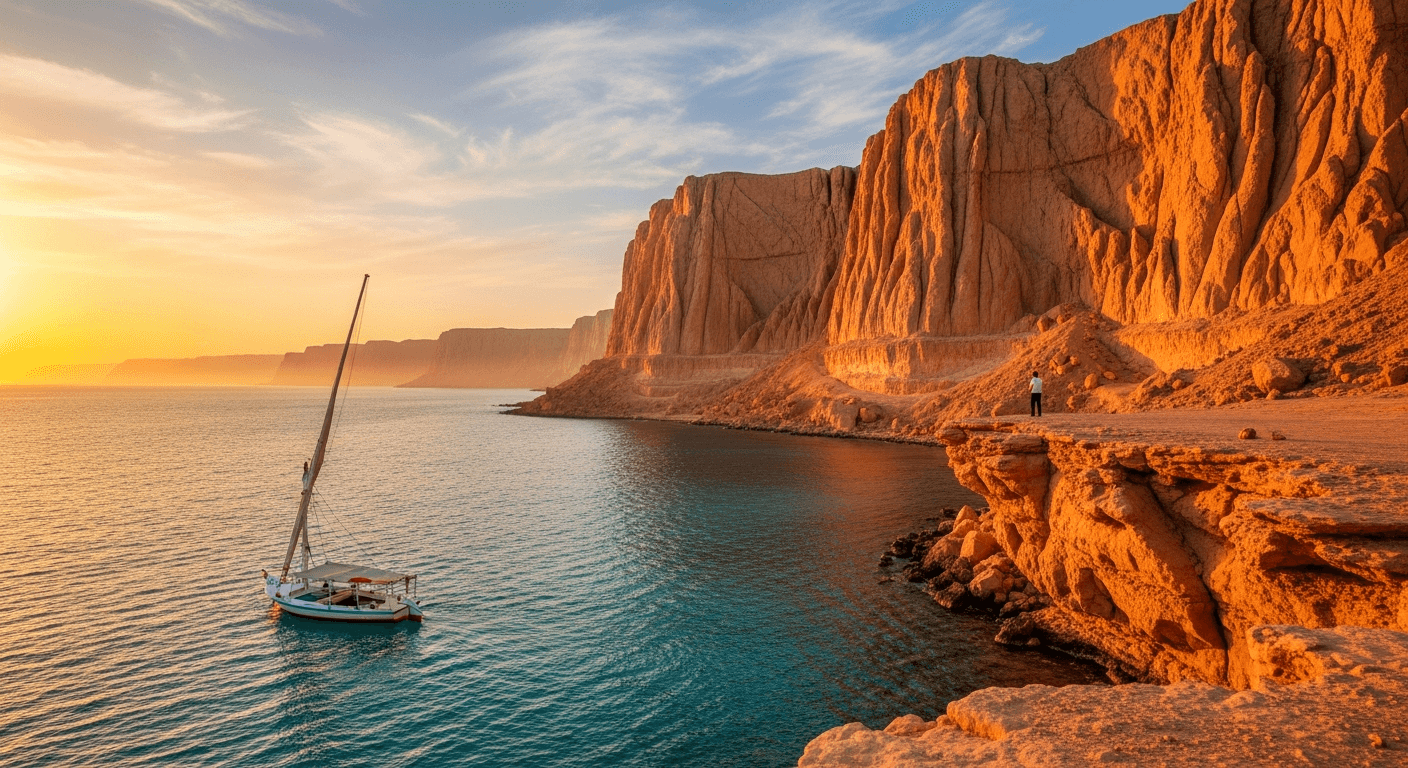
A practical detail people often overlook: the Red Sea exists in a desert. The hinterland is barren mountains and empty sand. This creates a strange psychological effect. You're surrounded by absolute natural abundance in the water and absolute natural emptiness on land. Some travelers find this contrast clarifying. Others find it unsettling.
The towns themselves have an unfinished quality. Sharm El-Sheikh feels like a resort that grew too fast. Hurghada has the infrastructure of a city built for tourism rather than organic development. Dahab maintains a more village-like character, though that's changing. This matters because it affects how you experience being there. You're never quite convinced the place existed before tourism arrived.
Planning Your Visit: The Practical Reality
When to Go
The Red Sea works year-round, but shoulder seasons—October to November and March to April—offer the best balance. Summer temperatures regularly exceed 35°C (95°F), and the heat actively discourages movement. Winter is cooler but the water temperature drops to around 20°C (68°F), requiring a proper wetsuit for extended snorkeling. December through February is busy with European tourists escaping winter, so expect crowds and premium prices.
The real question is: what are you trying to experience? If you want maximum reef activity and optimal visibility, April and October are ideal. If you're primarily interested in heat and don't mind crowds, summer works. If you're a diver, winter brings better light penetration at depth.
Duration and Logistics
Three days is the minimum to feel like you've had an actual experience rather than a box-checked tour. One day is enough to snorkel the reef and feel some awe. Two days is long enough to realize there's more to learn. Three or four days lets you develop a genuine relationship with particular reef systems. You notice that certain fish appear at certain times. You recognize individual coral formations. You stop thinking about snorkeling as an activity and start thinking about it as a place you're visiting.
Getting there depends on your budget. Sharm El-Sheikh has the most direct international connections, including flights from Europe. Hurghada is a close second. Dahab requires a drive from Sharm or Hurghada but rewards the effort with a less commercialized experience. If you're already in Egypt, ground transport from Cairo or other cities is straightforward, though flights are preferable unless you have substantial time.
The Reality of Crowds
The Red Sea's popularity has created real crowding issues. Popular snorkel sites during peak hours host dozens of boats, which means dozens of groups touching coral, stirring up sediment, and generally disrupting the ecosystem. This isn't fear-mongering—the impact is measurable. Some reef sections show visible stress from overuse.
The honest solution is unfashionable: go during shoulder seasons or weekdays, book private guides if possible, and select less-famous reef sites. Ras Muhammad, the park that anchors Sharm El-Sheikh, is crowded precisely because it's exceptional and well-known. Less famous sites north of Hurghada or in the Dahab area receive fewer visitors but often feature equally impressive coral and marine life.
Nearby Places Worth Your Time
Dahab's Blue Hole
About two hours south of central Hurghada, the Blue Hole is essentially a sinkhole in the reef that drops to a depth that makes even experienced divers uncomfortable. It's famous enough to attract divers specifically seeking its challenge, which means you should visit if you're interested in advanced diving and skip it if you're a casual snorkeler. The surrounding reef compensates for the Blue Hole's vertical difficulty with excellent shallow snorkeling. Many people visit for the dive site, discover the surrounding area is equally worth exploring, and spend an extra day.
Ras Abu Galum
North of Dahab, Ras Abu Galum offers a combination of reef access and desert landscape that feels less trodden than the main resort areas. You can snorkel or dive the reef, then walk inland and see what centuries of isolation have created. It's not crowded with infrastructure—bring supplies—but it rewards the effort with a sense of encountering the area more directly.
Wadi Gemal National Park
Further south along the Red Sea coast, Wadi Gemal combines desert landscape, wadis, and reef systems in a way that requires commitment to reach. It's genuinely remote, which means smaller fish populations in some areas but also reef systems that feel less impacted by tourism. The experience is more wilderness-oriented than resort-oriented.
Is It Worth Visiting? The Honest Assessment
The Red Sea is worth visiting if you understand what you're actually going for. If you want perfect resort comfort and occasional snorkeling, you'll find that, but you're mostly paying for beach infrastructure. If you're a serious diver or snorkeler seeking genuine reef ecology, you'll find that too, though you'll need to work around the crowds.
The experience is diminished by commercialization compared to what the Red Sea was before mass tourism. You'll encounter crowded reef sites during peak hours. You'll see people standing on coral despite signs telling them not to. You'll witness enough ecosystem stress to make you wonder about sustainability.
But here's what persists: on a quiet morning before boats arrive, or on an afternoon when you've traveled slightly off the beaten path, the Red Sea still operates on a scale that reminds you of the ocean's actual dominance over human concerns. That's valuable. That's worth traveling for. It's just not automatic—it requires intentionality about when you go and where you direct your attention.
Quick Facts
- Best Time to Visit: October–November, March–April
- Duration: 3–4 days minimum for meaningful experience
- Main Towns: Sharm El-Sheikh (resort-focused), Hurghada (mixed), Dahab (bohemian)
- Primary Activity: Snorkeling and diving on coral reefs
- Water Temperature: 20–28°C depending on season
- Visibility: Generally 15–30 meters, exceptional for reef environments
- Cost: Budget $50–100 per snorkel trip; resorts range $100–1000+ per night
Before You Go: Final Thoughts
The Red Sea teaches you something useful about travel: abundance doesn't require isolation. The most visited reef sites in the world remain extraordinary places, even when crowded. Your job as a visitor is simply to approach with attention rather than entitlement. Watch the fish. Notice how the coral grows in patterns that make sense if you look long enough. Understand that you're a temporary guest in a system that will continue long after you've returned to your regular life.
That perspective shift—from consumer of experiences to observer of natural systems—is what stays with you after you've rinsed the salt water from your hair.
Ready to plan your Red Sea adventure? Explore detailed routes, hidden snorkel sites, and travel videos on Touratu's interactive map to discover exactly where and when to visit this remarkable destination. Our maps show real snorkeling conditions, crowd patterns, and lesser-known reef systems that most travelers miss.
Loading activities…
