
Belgium Travel Guide: Cities, Culture & Practical Tips
Belgium: A Country That Rewards the Unhurried Traveler
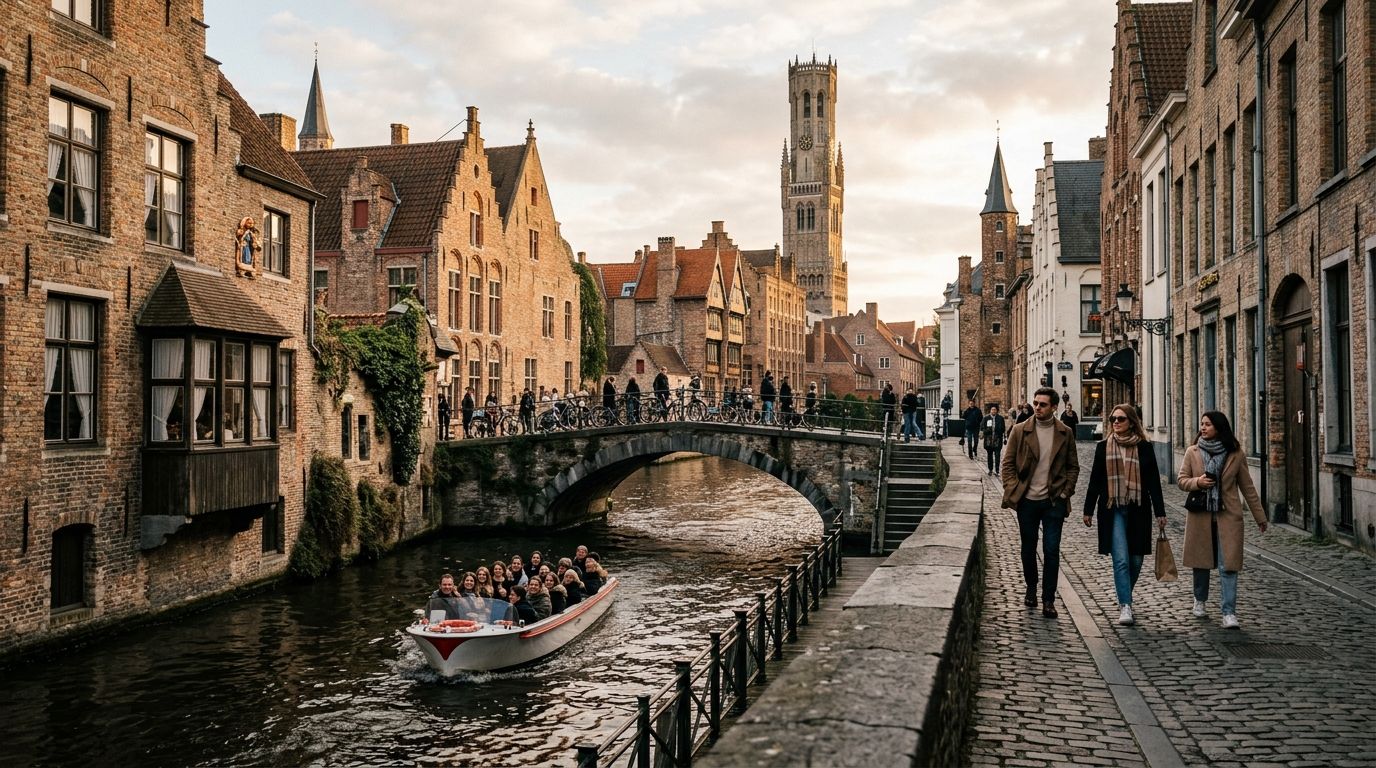
The light changes everything in Belgium. I noticed this first in Bruges, where afternoon sun catches the canal water and somehow softens the medieval brick—not in a romantic postcard way, but in the way that makes you actually stop walking and look. There's something about northern Europe's slanted light that exposes truth. And in Belgium, the truth is both harder and more beautiful than most travel writing suggests.
Belgium gets positioned as Europe's convenient pit stop: grab some chocolate in Brussels, photograph Bruges' canals, tick it off. But spending real time here—moving beyond the Instagram angles—reveals a country that's quietly sophisticated about living well. It's not dramatic. It doesn't shout. You have to pay attention.
What Makes Belgium Genuinely Compelling
Belgium's appeal isn't about singular must-do landmarks. It's about how the country approaches everyday things with stubborn excellence. Take beer. Belgian breweries don't make beer to get drunk; they make beer to contemplate. Trappist monks developed styles that take 45 minutes to properly pour. That's not marketing—that's philosophy encoded into fermentation.
The same applies to food culture. Belgium invented the waffle and French fries, but locals don't treat these as tourist souvenirs. A proper Belgian waffle from a neighborhood stand is a breakfast item, casual and perfect. Frites—served in a paper cone with sauce—are street food executed so well that they've become something else entirely.
Architecture tells the story of a small country at history's crossroads. Walk through Brussels' Grand Place and you're seeing Baroque facades rebuilt after French bombardment. The Jewish Museum in Antwerp is housed in four connected townhouses. Ghent's Sint-Baafskathedraal contains a 15th-century altarpiece that's been hidden, stolen, restored, and admired so many times it's practically a character in a novel. Nothing stands alone. Everything connects.
What to Expect: The Actual Experience
Brussels: Start here, but adjust your expectations. The capital is functional and sometimes ugly—particularly the EU district with its brutalist office parks. But the medieval core around Grand Place is genuinely worth a morning walk. The square's scale surprises you; it's smaller than you'd expect, ringed by guild houses with ornate facades that look airbrushed but aren't.
The city's real character emerges in neighborhoods like Saint-Gilles and Ixelles, where you'll find decent coffee shops (Belgian coffee culture is improving), vintage bookstores, and restaurants where people actually eat, not perform. Take the metro to Sablon for antique markets and the quieter energy of a neighborhood living its own life.
Museums here are strong. The Magritte Museum offers a concentrated view of the surrealist mind without the overwhelming fatigue of larger institutions. The Royal Museums of Fine Arts require more time but reward it—Belgian art movements matter more than most travelers realize.
Bruges and Ghent: These medieval cities are Belgium's primary attractions, and yes, they're crowded. Bruges especially gets overwhelmed by tour groups, particularly mid-morning. The solution isn't to avoid these cities—it's to be strategic about timing. Stay overnight. Arrive early morning before 9 AM or wander after 6 PM when day-trippers leave. Walk beyond the obvious canal loops into residential areas where families actually live in those beautiful old buildings.
Ghent is less overrun and arguably more interesting. It has the same medieval charm as Bruges but feels inhabited rather than preserved. The city's excellent museums (Contemporary Art, Design Museum) mean you can spend meaningful time here beyond photo collecting.
Antwerp: This port city is where to understand Belgium as a working place rather than a museum. The diamond district, the fashion schools, the museums packed with Flemish masters—Antwerp moves with purpose. It's grittier, less polished than Bruges, and more honest about what it is.
Planning Your Visit: Practical Realities
Duration: Three to four days is minimum to avoid the "rushing through highlights" exhaustion. You can technically see Brussels, Bruges, and one other city in 48 hours, but you'll spend the whole time feeling behind schedule.
Best time: May-June or September-October. July-August brings peak crowds and heat (though neither is extreme). Winter is quiet but genuinely cold. April carries rain and unpredictability.
Getting around: Trains are efficient and affordable. Brussels is the hub; traveling between cities takes 30-60 minutes. The main cities are small enough to explore on foot. Rent a bike if you want to move beyond walking.
Crowds: This isn't a secret anymore. Bruges gets 2+ million visitors annually in a city of 120,000 people. Morning visits and evening walks help, but "escape the crowds" isn't realistic. Accept the tourism instead of fighting it.
Budget: Belgium is moderately expensive by European standards. A decent meal costs €15-25. Museum entry is typically €10-15. Accommodation ranges from €40-150 depending on location and season. Beer is cheap (€2-4 per quality pint). Food is expensive compared to Eastern Europe, reasonable compared to Nordic countries.
What to avoid: The Manneken Pis statue in Brussels is genuinely underwhelming—literally a small boy statue. Don't waste energy. Skip overly touristy restaurants in Bruges' main square (paying 40% premiums for worse food). Avoid traveling on Friday and Sunday afternoons when the roads are congested with leisure traffic.
Nearby Worth Considering
Antwerp (30 minutes from Brussels by train): More authentic than Bruges, with excellent museums and genuine street culture. It's where you understand Belgium as a contemporary place, not just medieval backdrop.
Waterloo (30 minutes south of Brussels): The battle site is significant for history buffs, but the monument and museum are moderately interesting. It's worth a half-day if 19th-century military history engages you; otherwise, skip it.
Dutch Limburg (90 minutes east): Just over the Dutch border, the rolling landscape around Maastricht offers a complete tonal shift from Belgian cities. If you want countryside contrast, this is easier than Ardennes and less touristy than the wine regions.
Is Belgium Worth Your Time?
Honestly: Belgium rewards close attention more than it rewards casual visiting. If you're after dramatic landscapes, intense history, or singular iconic sights—go elsewhere. But if you appreciate cities built on human scale, food taken seriously, and cultural complexity without pretension, Belgium is valuable.
The country is genuinely good at things that don't photograph: conversation in cafés, quality of life, managing urban density with livability. It's a place where you understand why people choose to live in medieval buildings not as tourists but because the buildings remain the best housing in the city.
You won't have a transformative revelation. You'll develop appreciation instead, which lasts longer.
Quick Facts
- Capital: Brussels
- Population: 11.5 million
- Languages: Dutch (Flanders), French (Wallonia), both official
- Currency: Euro
- Visa: Schengen zone (EU citizens free movement, US/Canada/Australia 90 days visa-free)
- Getting there: Trains from Amsterdam, Paris, London; flights to Brussels
- Electricity: 230V, Type E/F plugs
- Best region: Flanders (north) for cities, Wallonia (south) for countryside
Belgium works best when you stop treating it as a side dish to a larger European tour. Give it real time. Sit in a café for two hours with coffee and a newspaper. Take the train between cities and actually watch the landscape. Eat multiple meals at neighborhood restaurants where locals eat.
To explore Belgium more deeply—mapping efficient routes, discovering less-obvious connections between regions, and finding activities that match your interests—check out Touratu's interactive map and travel videos. You'll find detailed route options, real-time transportation planning, and bookable activities that go beyond standard tourist circuits. The map lets you build your own Belgium itinerary rather than following predetermined paths.
Loading activities…
