
Belgium: 20 Places That Keep Travelers Returning
Belgium: Twenty Reasons Travelers Return Again and Again
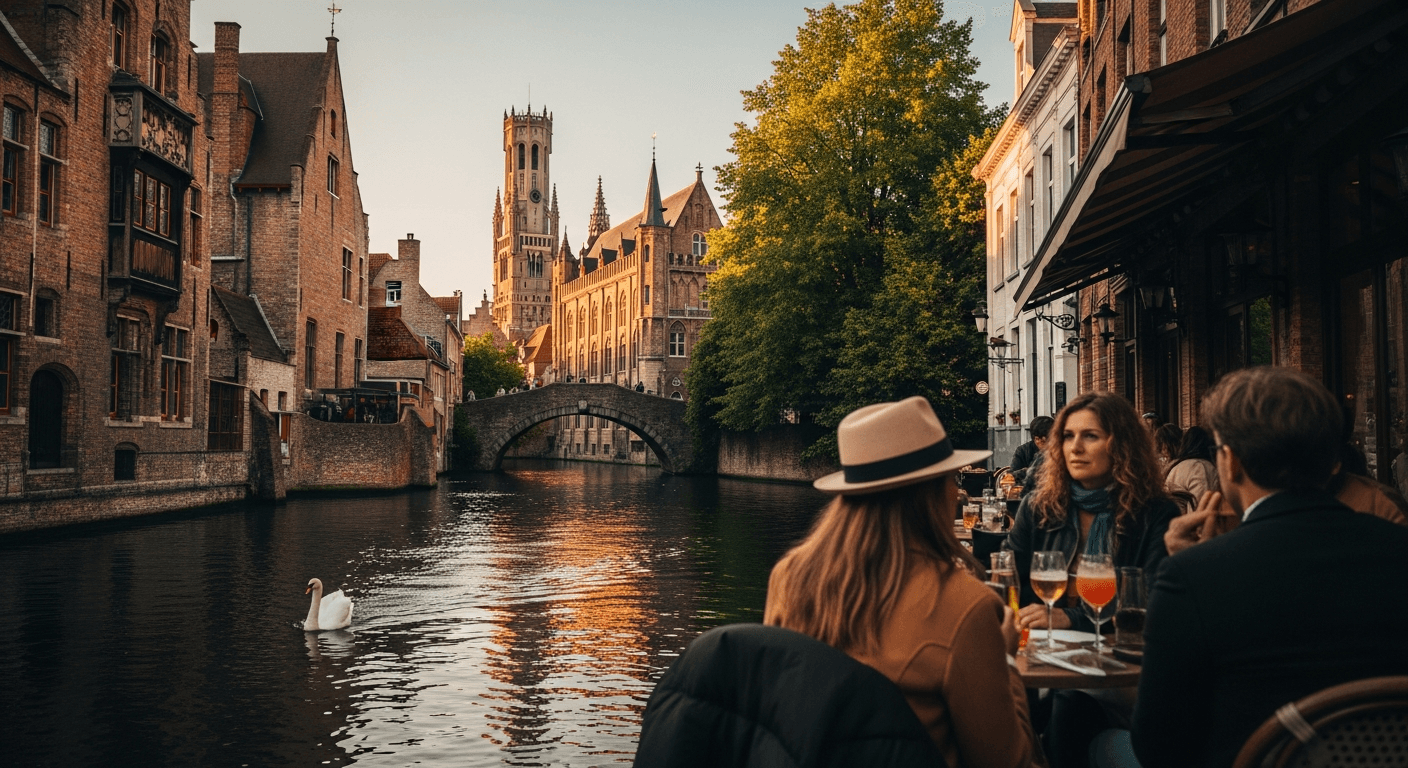
There's something about Belgium that defies the quick weekend away. You arrive thinking you'll tick off a few medieval squares, sample some chocolate, and leave. Instead, you find yourself lingering in a corner café at dusk, watching the light hit centuries-old stonework at angles that make you question whether photographs ever do places justice. Perhaps it's the smallness of it all—you can drive across the entire country in half a day—that invites a kind of deep looking. Or maybe it's that Belgians themselves seem unbothered by the tourism machinery, more interested in their beer, their art, their quietly accumulated traditions. Whatever it is, travelers don't just visit Belgium. They return to it, again and again, like people returning to a favorite novel.
This is not a country that announces itself. There are no mountain vistas to gasps at from tour buses. The architecture doesn't demand your awe in the way a cathedral in Rome might. Instead, Belgium whispers. It reveals itself through accumulated moments: the sound of medieval bells at dusk, the taste of a particular beer no one outside this region quite replicates, the feeling of being genuinely welcomed in a neighborhood café where you begin to recognize faces. It's a country built for the traveler who has learned that the deepest satisfactions come not from checking boxes, but from slow attention.
The Twenty Places That Bring Travelers Back
1. Bruges's Beguinage: Where Silence Still Holds Weight
The Begijnhof is perhaps the most serene quarter in all of Bruges, and yet most visitors never find their way here. You enter through a gate and step out of the tourist machinery entirely. Low whitewashed houses ring a garden courtyard, and the silence is almost audible. These were homes for Beguines—women living in spiritual community without taking full monastic vows—and something of that contemplative intentionality lingers. The light here is particular: soft, filtered through the leaves of ancient trees, landing on the facades of 17th-century houses that seem to be holding their breath. Visit in late afternoon when the tour groups have departed and the space belongs to residents and wanderers. The photography here teaches restraint: the most powerful images are often the simplest—a doorway, a window, the play of shadow on whitewashed walls.
2. Antwerp's Fashion District: Where Creation Actually Happens
Skip the glossy flagship stores and instead walk the Nationalestraat and the surrounding streets where Antwerp's actual design community works. This isn't a curated neighborhood; it's a lived one. You'll find experimental boutiques next to fabric suppliers, vintage dealers next to studios where emerging designers draft next season's collections. There's an intellectual rigor here that feels distinctly Belgian—not interested in hype, interested in craft. Spring and autumn are best, when new collections launch and the streets feel genuinely energized. The insider secret: the best conversations happen in the small bars tucked between shops, where designers, pattern-makers, and fabric merchants actually gather.
3. Liège's La Boverie Museum: Art in a Landscape
This museum is not famous enough, which is precisely why it's worth the journey. Housed in a Belle Époque building on the banks of the Meuse, La Boverie holds excellent collections of both classical and contemporary work in a setting that feels unhurried. Walk through, then sit in the surrounding park where the light on the water and the trees creates something close to what the Impressionists were chasing. The visitor experience here remains small-scaled and meditative. Weekday mornings are golden: you might have entire galleries to yourself.
4. Ghent's Sint-Baafskathedraal: The Altarpiece Moment
Everyone comes for the Cathedral and its van Eyck altarpiece—one of the most significant paintings in Western art. But the shock of encountering it in person, in the space it was meant for, still lands. The intricate detail, the luminous figures, the overwhelming technical ambition of it: standing before it, you're not looking at a photograph from an art history textbook. You're experiencing something centuries old that required the full intelligence of human craft. Go early, before school groups arrive. The moment of private encounter with greatness is what keeps people returning.
5. Tournai Cathedral: Romanesque Revelation
Most Belgium itineraries skip Tournai, which is why it feels like discovery. This cathedral is older than Chartres, older than Notre-Dame, and the Romanesque architecture has a solidity and grace that feels almost understated compared to later Gothic elaboration. The five towers are visible from across the city and have a kind of noble restraint. Enter and feel the weight of nearly a thousand years of human devotion held in stone. The town itself is charming and undervisited—perfect for an afternoon where you can move without crowds.
6. Brussels's Sablon Quarter: Where Art and Neighborhood Intertwine
The Sablon—divided into upper and lower sections—feels like Brussels allowing itself to be genuinely interesting. It's anchored by an elegant church, filled with galleries and antique dealers, and ringed with restaurants that actually serve food instead of tourists. Unlike other Brussels neighborhoods that can feel either touristy or corporate, the Sablon maintains something human-scaled. Sunday mornings bring an antiques market. The neighborhood rewards aimlessness—wander into courtyards, discover small galleries, find a café where locals actually sit.
7. Dinant's Adolphe Sax Museum: A Small Story Beautifully Told
Adolphe Sax invented the saxophone in this modest Belgian town, and the museum devoted to him and his invention is a masterclass in how to tell a story at human scale. The museum itself doesn't overwhelm; it invites. You learn how an instrument becomes possible, how innovation emerges from a single person's obsession, how geography and history entangle. The Meuse valley light through the windows, the views across the river—the setting itself becomes part of the story. This is travel for people interested in human ingenuity rather than grandeur.
8. Ypres's Menin Gate: Where History Becomes Presence
The First World War museums and memorials around Ypres are not comfortable places to visit, but they're essential ones. The Menin Gate ceremony, performed daily at sunset, is a profoundly moving ritual of remembrance. The gates themselves are monumental without being bombastic. Standing beneath them, you're in the presence of genuine grief still being honored, still being witnessed. Visitors return because this place refuses to let history become abstraction.
9. Spa Town: The Quietly Cultured Resort
Spa lends its name to spas worldwide, but the town itself feels almost forgotten by the contemporary tourism industry. It's a 19th-century resort town that time partly bypassed, with elegant architecture, forested surroundings, and a kind of Belle Époque melancholy that's actually quite beautiful. The waters still operate here; you can experience them as they were meant to be experienced—not as a luxury add-on but as the central purpose of the place. Autumn is sublime here, with the forest turning and far fewer visitors.
10. The Meuse Valley Cycling Route: Movement as Experience
Rent a bicycle and ride the Meuse Valley route, traveling alongside the river through villages that barely register as tourist destinations. Stop in small towns for lunch, navigate the gradual landscape changes, feel the seasons shift through your muscles. This is Belgium at its most genuine—the kind of place and pace that makes people want to return. Spring or early autumn are ideal.
11. Mechelen's Sint-Romboutskathedraal: The Carillon Moment
This cathedral is famous among musicians for its carillon—a set of bells played from a keyboard. Hearing them ring across the city, their complex melodies unfurling in the medieval streets, connects you instantly to centuries of musical tradition. The cathedral itself is elegant without being overwhelming. Weekday afternoons offer the best chance of encountering fewer crowds.
12. Ostend's Beach Promenade: Where Land Meets the North Sea
Ostend on the Belgian coast feels like a place where time moves differently. The beach promenade, lined with Belle Époque villas, has a slightly faded grandeur that's oddly compelling. Sit in a café facing the sea, watch light move across water, understand why 19th-century urbanites came here to experience modernité by the shore. It's not a place for sunbathing; it's a place for contemplation.
How Travelers Move Through Belgium
The trains are excellent and connect everything with remarkable ease—you're never more than a few hours from anywhere else in the country. But the joy of Belgium emerges when you slow down. Rent a car or bicycle, build in unscheduled time, spend an extra day in a neighborhood that appeals to you rather than rushing to the next monument.
Neighborhood timing matters. Tourist-heavy areas like central Bruges can feel genuinely different at different hours. Early mornings and early evenings often feel like you've traveled to a different place entirely. Belgians themselves are reserved but warm—they appreciate courtesy and genuine interest more than enthusiasm. Speak slowly in English, say "please" and "thank you," and you'll find doors open.
Mapping Your Return
Use Touratu's interactive map to trace the routes other travelers have discovered—not the official itineraries, but the actual paths taken by people returning to Belgium again and again. You'll notice patterns: which neighborhoods linger in memory, which routes others have traveled and marked, which discoveries have been shared enough times to form a kind of collective wisdom.
Coming Back
Belgium reveals itself in layers, which is perhaps why travelers keep returning. You can't consume it in a week. You can't even fully consume it in a month. What you can do is return again and again, each time moving a little slower, looking a little deeper, understanding a little more why this quietly ambitious country—with its excellent beer and austere chocolates and medieval streets and contemporary art scenes—refuses to leave your mind.
Loading activities…
