Zagreb Croatia: Historic Sights & City Experiences
Introduction
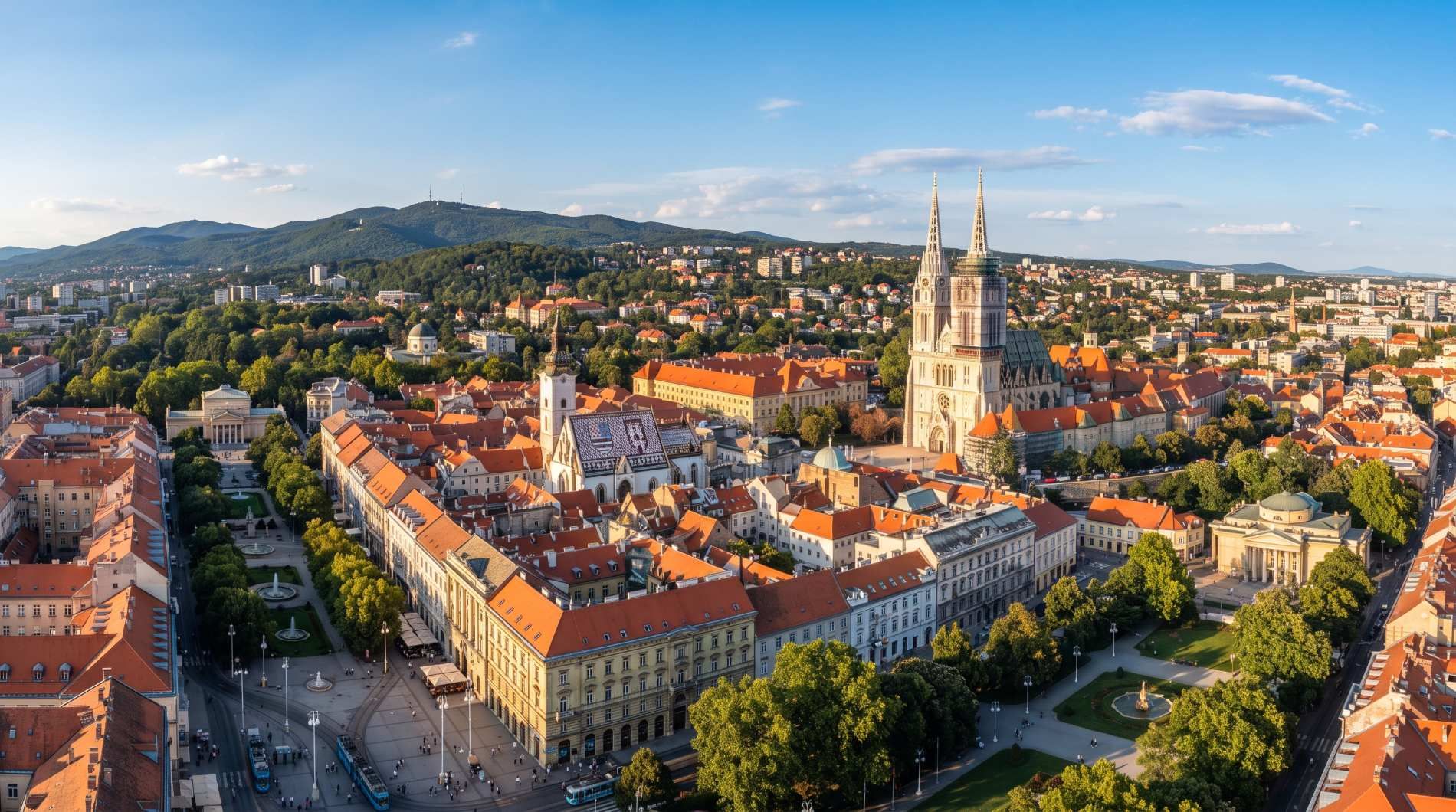
Zagreb is the capital and largest city of Croatia, located in the country's northwestern interior at the foot of Medvednica Mountain.
Unlike Croatia's famous Adriatic destinations, Zagreb offers a distinctly continental European experience, combining medieval streets, Austro-Hungarian architecture, museums, cafés, parks, markets, local food, and a lively cultural scene.
The city is particularly appealing for history lovers, architecture enthusiasts, couples, families, food travelers, museum lovers, photographers, and travelers looking for a less beach-focused side of Croatia.
Zagreb also works extremely well as a base for exploring northern Croatia, including Medvednica, Samobor, Varaždin, and the Croatian Zagorje region.
Quick Facts
| Category | Information |
|---|---|
| Country | Croatia |
| Region | Central Europe / Southeastern Europe |
| Famous For | Historic Upper Town, cafés, museums, architecture |
| Landscape | Historic city, parks, Medvednica Mountain |
| Best For | History, culture, food, architecture, museums |
| Currency | Euro (EUR) |
| Recommended Stay | 2–3 days |
| Main Attraction | Historic Upper Town |
| Airport | Franjo Tuđman Airport |
Why Visit Zagreb?
- Explore the historic Upper Town (Gornji Grad).
- Visit St. Mark's Square.
- See the colorful tiled roof of St. Mark's Church.
- Walk through Tkalčićeva Street.
- Visit Dolac Market.
- Explore Ban Jelačić Square.
- Ride the historic funicular.
- Discover Zagreb's unusual museums.
- Visit Mirogoj Cemetery.
- Relax in Maksimir Park.
- Explore the Museum of Broken Relationships.
- Enjoy Croatian food and coffee culture.
- Experience Zagreb's Christmas markets.
- Take a day trip into the Croatian countryside.
- Hike or explore Medvednica Mountain.
Zagreb's appeal comes from the way medieval heritage, Austro-Hungarian architecture, modern Croatian culture, parks, museums, and café life fit together within a relatively compact city.
Main Attractions
1. Gornji Grad — Upper Town
The historic Gornji Grad is Zagreb's atmospheric medieval core.
Visitors can explore:
- Cobblestone streets
- Historic buildings
- Churches
- Small squares
- Museums
- Viewpoints
- Cafés
- Historic gates
The Upper Town is particularly beautiful in the morning and evening when the streets are quieter.
Best for: History, architecture, photography, couples, and culture.
2. St. Mark's Square
St. Mark's Square is one of Zagreb's most recognizable locations.
The square is dominated by:
- St. Mark's Church
- Croatian government buildings
- Historic architecture
The church is particularly famous for its colorful tiled roof featuring the coats of arms associated with Croatia, Dalmatia, Slavonia, and Zagreb.
Best for: Architecture, history, photography, and sightseeing.
3. St. Mark's Church
St. Mark's Church is one of Zagreb's most distinctive landmarks.
Its colorful roof makes it instantly recognizable.
The church combines medieval origins with later architectural modifications.
Best for: Architecture, history, photography, and culture.
4. Lotrščak Tower
Lotrščak Tower is a medieval defensive tower overlooking Zagreb's Lower Town.
Visitors can climb the tower for panoramic views.
The tower is also famous for its traditional Grič cannon, fired daily at noon.
Best for: History, views, photography, and architecture.
Tower Tip
Visit around midday if you want to experience the traditional cannon firing.
5. Zagreb Funicular
The Zagreb Funicular connects the Lower Town with the Upper Town.
It is one of the city's most recognizable pieces of transportation heritage.
The journey is very short but provides a convenient way to reach Gornji Grad.
Best for: Families, history, photography, and a quick city experience.
6. Stone Gate
Kamenita vrata, or Stone Gate, is one of the best-preserved entrances to medieval Zagreb.
Inside the gate is a small chapel dedicated to the Virgin Mary, which remains an important place of devotion.
Best for: History, architecture, religion, and culture.
7. Ban Jelačić Square
Ban Jelačić Square is the central gathering place of Zagreb.
It is an excellent starting point for exploring the city.
From here you can easily reach:
- Dolac Market
- Tkalčićeva Street
- Upper Town
- Ilica Street
- Main shopping areas
Best for: First-time visitors, city walks, shopping, and people-watching.
8. Dolac Market
Dolac Market is Zagreb's main traditional market.
The market offers a lively introduction to everyday Croatian food culture.
Look for:
- Fresh fruit
- Vegetables
- Cheese
- Meat
- Local products
- Honey
- Flowers
- Regional specialties
Best for: Food travelers, photography, culture, and local life.
Market Tip
Visit in the morning when the market is busiest and the selection is generally at its best.
9. Tkalčićeva Street
Tkalčićeva Street is one of Zagreb's most popular pedestrian streets.
The street is lined with:
- Restaurants
- Cafés
- Bars
- Historic buildings
- Outdoor terraces
It is particularly lively in the evening.
Best for: Food, nightlife, couples, and people-watching.
10. Museum of Broken Relationships
The Museum of Broken Relationships is one of Zagreb's most unusual museums.
The museum explores relationships and emotional experiences through personal objects and stories donated by people from around the world.
Best for: Couples, culture, contemporary museums, and unusual experiences.
11. Zagreb Cathedral
The Zagreb Cathedral is one of the city's most prominent landmarks.
Its monumental Neo-Gothic appearance dominates the historic center.
The cathedral has played an important role in Zagreb's religious and architectural history.
Best for: Architecture, history, religion, and photography.
12. Mirogoj Cemetery
Mirogoj is one of Zagreb's most beautiful historic sites.
More than a conventional cemetery, it is known for its monumental arcades, sculptures, gardens, and architecture.
It is the final resting place of numerous important Croatian cultural and political figures.
Best for: Architecture, photography, history, and quiet walks.
13. Maksimir Park
Maksimir Park is one of Zagreb's largest and most historic green spaces.
The park includes:
- Forests
- Lakes
- Walking paths
- Meadows
- Wildlife
- Historic structures
It is an excellent escape from the city center.
Best for: Families, nature, walking, jogging, and relaxation.
14. Zagreb Botanical Garden
The Zagreb Botanical Garden provides a peaceful green space near the center of the city.
Visitors can discover:
- Trees
- Flowers
- Water features
- Botanical collections
- Walking paths
Best for: Nature, photography, couples, and relaxed sightseeing.
15. Croatian Museum of Naïve Art
This museum showcases works by Croatian naïve artists.
It provides insight into a distinctive artistic tradition associated with Croatia.
Best for: Art lovers, culture travelers, and museum enthusiasts.
16. Museum of Contemporary Art
The Museum of Contemporary Art is one of Croatia's major institutions for modern and contemporary art.
Its collection and exhibitions explore Croatian and international contemporary artistic movements.
Best for: Art lovers, architecture, and contemporary culture.
17. Zagreb 80s Museum
The Zagreb 80s Museum recreates aspects of everyday life during the 1980s.
Visitors can encounter:
- Vintage objects
- Pop culture
- Technology
- Furniture
- Games
- Music
- Nostalgic displays
Best for: Families, nostalgia, pop culture, and unusual museums.
18. Croatian National Theatre
The Croatian National Theatre in Zagreb is an impressive Neo-Baroque building and an important cultural institution.
Visitors can attend:
- Opera
- Ballet
- Theater performances
Even if you do not attend a performance, the exterior is worth seeing.
Best for: Architecture, performing arts, culture, and evening entertainment.
19. Ilica Street
Ilica is one of Zagreb's longest and most important streets.
It combines:
- Shops
- Cafés
- Restaurants
- Historic buildings
- Everyday city life
Best for: Shopping, architecture, food, and urban exploration.
20. Medvednica Mountain
Medvednica rises immediately north of Zagreb and provides a dramatic natural backdrop to the city.
The mountain offers:
- Hiking
- Forest trails
- Panoramic views
- Nature
- Historic sites
- Winter activities
Best for: Hiking, nature, adventure, and escaping the city.
Nature Experience
Zagreb offers a surprisingly strong combination of urban culture and nearby nature.
Popular Activities
- Hiking
- Walking
- Cycling
- Running
- Botanical gardens
- Parks
- Mountain excursions
- Wildlife observation
- Photography
Medvednica
Medvednica is the best option for travelers wanting a more substantial outdoor experience.
Culture & Heritage
Zagreb's cultural identity reflects several historical influences.
Important themes include:
- Medieval Croatia
- Austro-Hungarian heritage
- Catholic traditions
- Croatian national identity
- Modern European culture
- Yugoslav-era history
- Contemporary Croatian art
- Café culture
The city is particularly interesting for travelers who enjoy seeing how different historical periods coexist within one urban landscape.
Food Guide
Zagreb is an excellent destination for experiencing continental Croatian cuisine.
Štrukli
Štrukli is one of Zagreb and northern Croatia's most famous traditional dishes.
It consists of pastry filled with ingredients such as:
- Fresh cheese
- Sour cream
- Herbs
It can be served baked or cooked.
Must try.
Zagorski Štrukli
A regional variation associated with nearby Croatian Zagorje.
Best for: Travelers interested in traditional northern Croatian cuisine.
Zagreb Schnitzel
A local variation of breaded meat filled with cheese and ham.
Purica s Mlincima
Turkey served with mlinci, a traditional flatbread-like pasta associated with northern Croatia.
Sarma
Cabbage leaves stuffed with seasoned meat and rice.
Especially popular during colder months.
Fresh Cheese & Cream
Fresh cheese and sour cream are common ingredients in northern Croatian cuisine.
Croatian Cakes & Pastries
Look for:
- Cream cakes
- Strudels
- Walnut cakes
- Poppy-seed pastries
- Traditional Croatian desserts
Coffee Culture
Zagreb has a strong café culture.
Coffee is less about quickly drinking a beverage and more about sitting, talking, and enjoying the atmosphere.
Shopping
Local Products
Look for:
- Croatian olive oil
- Wine
- Honey
- Licitar hearts
- Chocolate
- Traditional crafts
- Local cosmetics
- Croatian design products
- Art
- Food specialties
Licitar Hearts
Colorful decorated gingerbread hearts are one of Croatia's best-known traditional souvenirs.
Accommodation Areas
| Traveler Type | Recommended Area | Why |
|---|---|---|
| First-time visitor | Lower Town / Center | Easy access to attractions |
| Couple | Upper Town / Center | Romantic historic atmosphere |
| Food traveler | Center / Tkalčićeva | Restaurants and cafés |
| Family | Lower Town | Parks and convenient transport |
| Budget traveler | Around center | Good transport connections |
| Luxury traveler | Upper/Lower Town | Boutique and upscale hotels |
| Culture traveler | Upper Town | Historic buildings and museums |
| Nature traveler | Northern Zagreb | Closer to Medvednica |
Transportation
Getting There
Zagreb is Croatia's primary transport hub.
Travelers can arrive by:
- Air
- Train
- Bus
- Car
Franjo Tuđman Airport is the city's main international airport.
Zagreb also has strong road and rail connections with other Croatian and European destinations.
Local Transportation
You can use:
- Walking
- Trams
- Buses
- Taxis
- Ride-hailing services
- Bicycles
- Funicular
The historic center is highly walkable.
Transportation Tip
For most first-time visitors, there is little need to rent a car while staying in central Zagreb.
Suggested 2-Day Itinerary
Day 1 — Historic Zagreb
Morning
Start at Ban Jelačić Square.
Visit Dolac Market and walk toward the Upper Town.
Afternoon
Explore:
- Stone Gate
- St. Mark's Square
- St. Mark's Church
- Lotrščak Tower
Then take the funicular back toward the Lower Town.
Evening
Dinner around Tkalčićeva Street.
Day 2 — Museums & Parks
Morning
Visit the Museum of Broken Relationships.
Explore more of the Upper Town.
Afternoon
Visit Mirogoj Cemetery and Maksimir Park.
Evening
Enjoy dinner and Zagreb's café culture.
Suggested 3-Day Itinerary
Day 1
Ban Jelačić Square + Dolac Market + Upper Town + St. Mark's Square.
Day 2
Museum of Broken Relationships + Zagreb Cathedral + Tkalčićeva + Lower Town.
Day 3
Mirogoj + Maksimir Park + Croatian National Theatre + relaxed evening.
Suggested 4-Day Itinerary
Day 1
Historic center + Upper Town.
Day 2
Museums + Lower Town + café culture.
Day 3
Mirogoj + Maksimir + Medvednica.
Day 4
Day trip to Samobor or Croatian Zagorje.
Suggested 5-Day Itinerary
Day 1
Historic Zagreb.
Day 2
Museums + architecture + food.
Day 3
Mirogoj + Maksimir + Medvednica.
Day 4
Samobor excursion.
Day 5
Varaždin or Croatian Zagorje + final evening in Zagreb.
Best Things to Do in Zagreb
- Explore Gornji Grad.
- Visit St. Mark's Square.
- Photograph St. Mark's Church.
- Climb Lotrščak Tower.
- Ride the Zagreb Funicular.
- Visit Stone Gate.
- Explore Ban Jelačić Square.
- Visit Dolac Market.
- Walk Tkalčićeva Street.
- Visit the Museum of Broken Relationships.
- Explore Zagreb Cathedral.
- Visit Mirogoj Cemetery.
- Walk through Maksimir Park.
- Visit the Botanical Garden.
- Explore Croatian museums.
- Visit the Croatian National Theatre.
- Try štrukli.
- Experience Zagreb's café culture.
- Hike Medvednica.
- Explore Ilica Street.
- Visit local markets.
- Try Croatian wine and food.
- Take a day trip to Samobor.
- Explore Croatian Zagorje.
- Visit Zagreb during the Christmas season.
Photography Guide
Zagreb is excellent for architecture, street photography, historic buildings, parks, markets, food, and urban photography.
Best Subjects
- St. Mark's Church
- St. Mark's Square
- Lotrščak Tower
- Stone Gate
- Dolac Market
- Tkalčićeva Street
- Ban Jelačić Square
- Zagreb Cathedral
- Mirogoj
- Maksimir Park
- Tramways
- Cafés
- Historic façades
- Croatian National Theatre
Best Times
Early morning: Quiet Upper Town streets and Dolac Market.
Late afternoon: Warm light on historic architecture.
Evening: Tkalčićeva and the city center become lively.
Winter: Zagreb's Christmas decorations create particularly atmospheric photographs.
Best Seasons
Spring
A beautiful time for:
- Parks
- Gardens
- Walking
- Photography
- Outdoor cafés
Summer
Warm weather makes it excellent for:
- Outdoor cafés
- Festivals
- Parks
- Day trips
- Hiking
Zagreb can be considerably quieter than Croatia's Adriatic coast during parts of the summer.
Autumn
Excellent for:
- Food
- Museums
- Photography
- Hiking
- Parks
The surrounding forests can become particularly colorful.
Winter
Zagreb is particularly famous for its Advent Christmas celebrations.
Visitors can enjoy:
- Christmas markets
- Decorations
- Food stalls
- Ice skating
- Concerts
- Festive atmosphere
Best for: Couples, families, Christmas travelers, and photography.
Family Travel
Zagreb is a family-friendly city with a good mixture of educational and outdoor activities.
Best Family Attractions
- Zagreb Zoo
- Maksimir Park
- Zagreb Funicular
- Museum of Broken Relationships
- Zagreb 80s Museum
- Botanical Garden
- Dolac Market
- Upper Town
Family Tips
- Use trams for longer journeys.
- Explore the center on foot.
- Combine museums with parks.
- Allow children time to explore Maksimir.
- Consider a funicular ride.
- Plan outdoor activities around the weather.
Couple Travel
Zagreb works particularly well for couples who enjoy historic streets, cafés, museums, food, parks, and relaxed city experiences.
Romantic Experiences
Upper Town
Walk through the historic streets after sunset.
Tkalčićeva Street
Enjoy dinner or drinks at an outdoor terrace.
Strossmayer Promenade
Take in city views together.
Maksimir Park
Enjoy a quiet walk away from the center.
Café Culture
Spend an afternoon slowly enjoying coffee together.
Advent Zagreb
Visit during the Christmas season for a particularly romantic atmosphere.
Travel Tips
- Stay two to three nights for the main attractions.
- Explore the Upper Town on foot.
- Visit Dolac Market in the morning.
- Try traditional štrukli.
- Spend time in local cafés.
- Visit at least one unusual museum.
- Use trams for longer journeys.
- Consider a Medvednica excursion.
- Visit Mirogoj.
- Leave time for Zagreb's parks.
- Consider a day trip outside the city.
- Bring comfortable walking shoes.
- Carry an umbrella during wetter seasons.
- Book accommodation early during major festivals and Advent.
- Use Zagreb as a base for exploring northern Croatia.
- Avoid trying to see every museum in one visit.
- Take time to experience everyday Zagreb rather than treating it only as a sightseeing stop.
Common Mistakes to Avoid
1. Treating Zagreb as Only a Stopover
The city deserves at least two full days.
2. Skipping the Upper Town
Gornji Grad contains some of Zagreb's most atmospheric historic streets.
3. Ignoring the Food
Northern Croatian cuisine is different from the seafood-heavy cuisine of the Adriatic coast.
4. Missing Dolac Market
The market provides a much better sense of everyday Zagreb than simply visiting monuments.
5. Spending the Entire Trip Indoors
Maksimir, Mirogoj, and Medvednica provide excellent outdoor experiences.
6. Comparing Zagreb Too Closely With Dubrovnik
Zagreb is a continental capital, not an Adriatic resort town. Its strengths are museums, architecture, culture, food, parks, and urban life.
Zagreb + Other Destinations
Zagreb + Plitvice Lakes
Best for:
City + spectacular lakes + waterfalls + nature
Zagreb + Ljubljana
Best for:
Two compact Central European capitals + architecture + cafés
Zagreb + Split
Best for:
Capital city + Adriatic coast + Roman heritage
Zagreb + Dubrovnik
Best for:
Continental Croatia + Mediterranean Croatia + historic cities
Zagreb + Istria
Best for:
City culture + hill towns + food + wine + Adriatic landscapes
Zagreb + Varaždin
Best for:
Historic architecture + baroque heritage + northern Croatia
Touratu Pro Tips
- Make Gornji Grad your starting point.
- Visit St. Mark's Square.
- Explore Dolac Market in the morning.
- Walk through Tkalčićeva Street.
- Ride the Zagreb Funicular.
- Visit the Museum of Broken Relationships.
- Try traditional štrukli.
- Spend time in Zagreb's cafés.
- Visit Mirogoj Cemetery.
- Relax in Maksimir Park.
- Hike Medvednica if you enjoy nature.
- Visit Zagreb during Advent if you love Christmas markets.
- Take a day trip to Samobor or Croatian Zagorje.
- Stay in or near the historic center for a first visit.
- Use public transportation instead of renting a car for central Zagreb.
- Explore beyond the major landmarks to experience local neighborhoods.
- Use Touratu's interactive maps to compare museums, historic buildings, restaurants, cafés, hotels, parks, viewpoints, markets, transportation, and day trips.
- Use narrated destination guides to create a personalized Zagreb itinerary.
Frequently Asked Questions
What is Zagreb famous for?
Zagreb is famous for its historic Upper Town, St. Mark's Church, Austro-Hungarian architecture, museums, markets, café culture, parks, and cultural scene.
Is Zagreb worth visiting?
Yes. Zagreb is especially worthwhile for history, architecture, food, museums, culture, parks, and a more local Croatian city experience.
How many days do I need?
Two to three days is ideal for the main attractions. Four or five days allows time for Medvednica and nearby northern Croatian destinations.
What is the most famous attraction in Zagreb?
The Upper Town and St. Mark's Square, particularly St. Mark's Church, are among the city's most recognizable sights.
Is Zagreb good for families?
Yes. Parks, museums, the zoo, the funicular, markets, and pedestrian areas make Zagreb a good family destination.
Is Zagreb good for couples?
Absolutely. Historic streets, cafés, restaurants, parks, viewpoints, and winter Advent celebrations make it particularly appealing for couples.
Is Zagreb good for photography?
Yes. The city offers medieval architecture, colorful rooftops, markets, trams, historic façades, parks, churches, and atmospheric streets.
What food is Zagreb famous for?
Zagreb and northern Croatia are known for dishes such as štrukli, purica s mlincima, fresh cheese, traditional pastries, and continental Croatian cuisine.
Is Zagreb expensive?
Compared with many Western European capitals, Zagreb can be relatively accessible, although prices vary significantly depending on accommodation, restaurants, and season.
Can Zagreb be combined with Plitvice Lakes?
Yes. Zagreb + Plitvice Lakes is one of the easiest combinations for travelers wanting both a European capital and spectacular Croatian nature.
Can Zagreb be combined with Dubrovnik?
Yes. A Zagreb + Split + Dubrovnik itinerary provides a strong overview of Croatia, from the continental north to the Adriatic coast.
Is Zagreb good for nature?
Yes. Maksimir Park, the Botanical Garden, Mirogoj, and especially Medvednica Mountain provide plenty of opportunities to experience nature without leaving the city region.
Key Takeaways
- Zagreb is the capital and largest city of Croatia.
- The city is best known for its historic Upper Town, architecture, museums, markets, cafés, and cultural life.
- St. Mark's Square and St. Mark's Church are among its most recognizable landmarks.
- Dolac Market is an excellent introduction to local food and everyday life.
- Zagreb has an unusually strong collection of specialty and contemporary museums.
- Maksimir Park and Medvednica Mountain provide easy access to nature.
- Northern Croatian cuisine, particularly štrukli, is an important part of the experience.
- The city is ideal for couples, families, history lovers, food travelers, photographers, and culture enthusiasts.
- 2–3 days is a good starting point.
- Zagreb works especially well as part of a Croatia itinerary combining Zagreb + Plitvice + Split + Dubrovnik.
Loading activities…