
Vietnam Travel Guide: Top Things & Bookable Activities
Vietnam: The Unfiltered Traveller's Guide to a Country That Refuses Categories
The moment your flight descends into Ho Chi Minh City, you sense Vietnam isn't interested in your expectations. The humidity hits first—a thick, living thing that wraps around your skin. Then come the sounds: millions of motorbikes creating a rhythm that's almost musical if you stop fighting it. The smell of street food, exhaust, and flower vendors mixes into something you'll either crave for the rest of your life or spend years trying to forget.
Vietnam doesn't sell itself with postcards. It works through accumulation—a thousand small moments that eventually reshape how you see travel altogether.
What Actually Happens When You Travel Through Vietnam
People describe Vietnam as a "journey through time," which is lazy shorthand for something more complicated: it's a country where multiple versions of history don't just coexist, they actively negotiate with each other on every street corner.
Walk through the Old Quarter in Hanoi and you're moving through layers. Centuries-old tube houses still function as family homes and businesses. A silk shop from 1950 sits next to a phone repair place with neon signage. French colonial architecture watches over streets where teenagers on modern motorbikes queue outside bubble tea shops. It's not preserved as a museum. People actually live here, which is what makes it genuinely interesting.
The thing about Vietnam that catches most travellers off-guard is how physically close everything feels. Conversations happen at volumes that would get you asked to leave in most Western countries. Vendors will negotiate aggressively but not unkindly. Personal space has a different definition. If you interpret this as rudeness, you'll have a terrible time. If you recognize it as directness without malice, you'll understand a fundamental part of Vietnamese culture.
The food alone justifies a trip, but not for the Instagram-ready reasons. Street pho isn't cheap nostalgia or exotic experience tourism. It's breakfast. It's what's available at 6 AM from a woman who's been perfecting her broth for thirty years. The depth of flavour comes from time and technique, not mystery. Fish sauce smells like something died, then you taste it and suddenly everything makes sense.
What to Expect: A Geographic and Practical Walk-Through
The North: Hanoi and Halong Bay
Hanoi is the entry point for most visitors, and it functions like a shock to your system if you've come from Southeast Asian beaches. The city operates at a different pace—faster, more chaotic, less concerned with tourist comfort. The Old Quarter rewards people who get lost deliberately. Street food vendors operate from carts that weigh what your luggage does. Coffee shops are where locals actually spend time, not where Instagram aesthetics happen to occur.
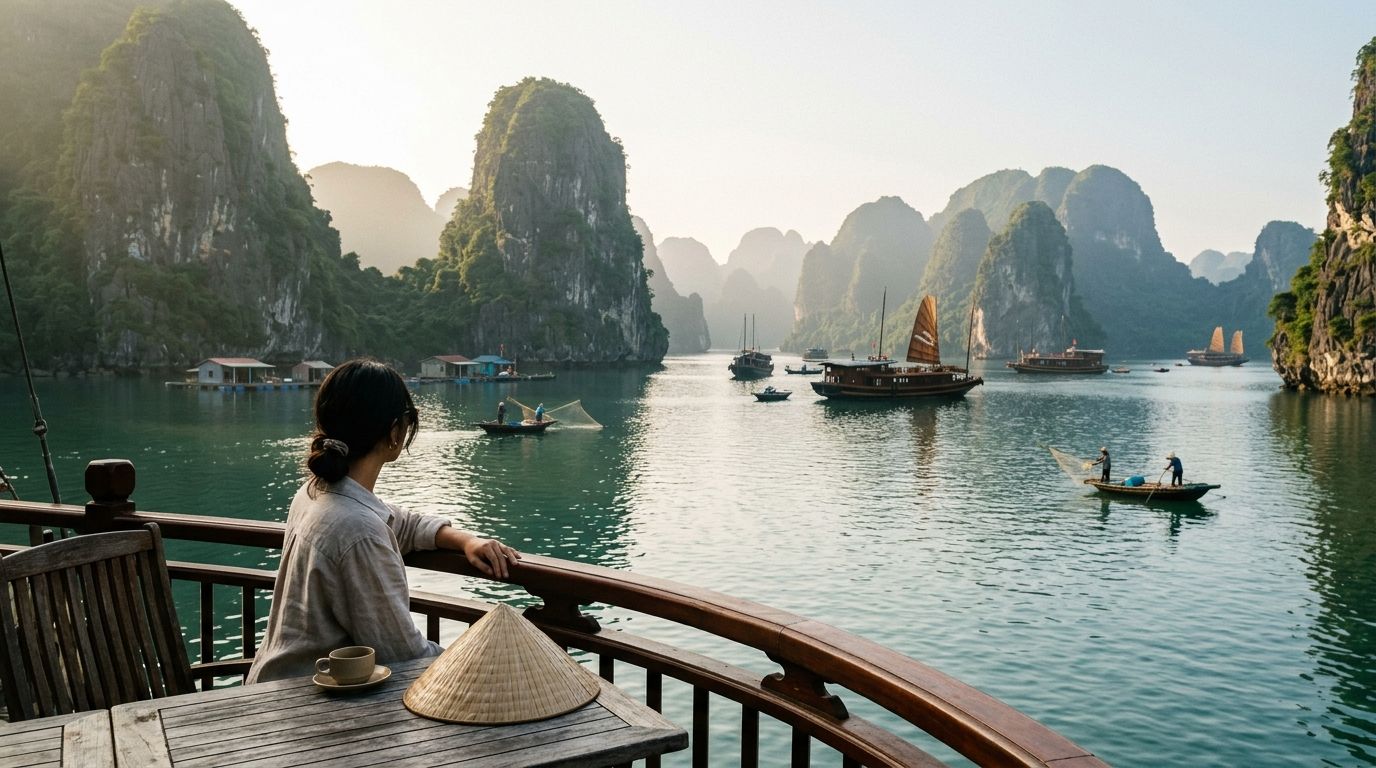
Halong Bay lies three hours northeast and represents the postcard Vietnam. Limestone karsts rise vertically from turquoise water. Tourist boats cruise through, and you'll share the experience with dozens of other vessels. The authenticity question isn't really relevant here—it's geologically spectacular regardless of how many tourists have already seen it. Some people consider this a tick-box experience. Others find genuine quietness on quieter waters if you go during shoulder season.
Central Vietnam: Hoi An and Da Nang
Hoi An is where Vietnam's tourism infrastructure shows its softer side. The town is small enough to walk, old enough to feel established, and new enough to have functional WiFi. The famous lantern-lit walking street can feel manufactured when packed with tourists, but early morning before the crowds arrive reveals something quieter. The real Hoi An happens in the surrounding villages—silk weavers, farmers, families running restaurants that have no English menus and no interest in compromise.
Da Nang, twenty minutes away, is Vietnam's beach reset. It's where Vietnamese families actually holiday, not just Western tourists. The beaches are functional, the seafood is excellent, and there's less pressure to perform tourism here.
The South: Ho Chi Minh City and the Mekong Delta
Ho Chi Minh City doesn't try to be charming. It's a working metropolis where survival capitalism meets entrepreneurship. The War Remnants Museum is absolutely necessary to visit, though it's not recreational. It's informative in ways that feel important. The city's food scene is the best in Vietnam for sheer variety and technique. District 1 has become increasingly gentrified, but venture into Districts 3 and 10 and you'll find the version of the city that actually functions.
The Mekong Delta requires its own time investment. Tourist boats exist, sure, but the real experience is renting a motorbike or hiring a driver for a day and simply moving through the landscape—floating markets, rice paddies, small wooden temples, villages where your appearance genuinely registers as notable. This is where Vietnam's agricultural reality lives. It's not exotic. It's how food happens.
Planning Your Visit: Honest Logistics
Timing matters more than most destinations
Vietnam has a genuinely wrong season and several optimal ones. November to February is the best overall period—cooler, drier, pleasant. March to May gets progressively hotter and more humid. June through September is the wet season; it rains hard and suddenly, which actually clears out some tourist areas but makes travel less comfortable. October is a transition month that can work well.
Duration: What you actually need
Two weeks is the absolute minimum to feel like you've done more than check boxes. One week in Vietnam feels rushed because the distances between regions are deceptive. Hanoi to Ho Chi Minh City isn't just geographic—they feel like different countries. Consider:
- Hanoi and surroundings: 3-4 days
- Halong Bay or alternative northern routes: 1-2 days
- Central coast (Hoi An, Da Nang): 3 days
- Ho Chi Minh City: 2-3 days
- Mekong Delta or other southern explorations: 2 days
This leaves buffer time for delays and discoveries.
Transport between regions
Domestic flights are genuinely affordable and save significant time. Buses exist and are cheap but require patience with schedules and comfort levels. Trains are an experience—sleeper trains especially give you a sense of genuine journey. For in-city movement, taxis and ride-sharing apps work, but the motorbike experience is worth attempting if you're comfortable with it. Renting a motorbike costs $3-5 daily and opens up rural areas.
Crowds and how to navigate them
Tourist areas experience genuine bottlenecking during peak season. Halong Bay runs boats like ferries during December and January. Hoi An's walking street becomes pedestrian-only congestion during evening hours in high season. This isn't a reason to avoid visiting—it's a reason to understand your energy and plan accordingly. Many places improve significantly before 7 AM or after 8 PM.
Money and daily costs
Vietnam operates on a different price structure than most Southeast Asian destinations. Budget accommodation and food is genuinely cheap—$20-30 daily if you're eating street food and staying in hostels. Mid-range travel (decent hotels, restaurant meals, activities) runs $50-80 daily. Services and experiences remain fairly priced because wages haven't inflated as rapidly as in Thailand or Cambodia. This matters less if you're comfortable spending, but it's worth noting that budget travel remains actually affordable here.
Places Near Vietnam Worth Your Time
Cambodia (specifically Siem Reap)
A border crossing away, Cambodia offers Angkor Wat and the broader temple culture. Most travellers route through here, though it's becoming increasingly touristy. The experience differs significantly from Vietnam—gentler pace, different history, different food.
Laos (specifically Luang Prabang)
If Vietnam feels intense, Laos operates on a different rhythm entirely. Luang Prabang is one of Southeast Asia's few places that genuinely rewards slow travel. The Mekong surroundings are different from Vietnam's version. Many people find it easier to process after Vietnam's intensity.
Southern Thailand
The beaches at Ko Samui or Ko Phi Phi are Thailand's version of coastal tourism. Some find them more developed and easier than Vietnam's beach offerings. They're several hours from Ho Chi Minh City.
Is Vietnam Actually Worth Visiting?
Yes, but not for the reasons tourism marketing suggests.
It's worth visiting because it challenges your assumptions about hospitality, culture, and how humans organize themselves. It's worth visiting because the food is genuinely exceptional and because you'll taste variations of dishes you thought you knew. It's worth visiting because the history is complex and important to understand directly rather than through news cycles.
It's not worth visiting if you're seeking relaxation and comfort without challenge. It's not worth visiting if you're on a strict schedule and uncomfortable with flexibility. It's not worth visiting if you're uncomfortable with visible poverty, traffic chaos, or cultural differences that aren't easily bridged.
For everyone else—for people curious enough to be confused, confident enough to get lost, humble enough to accept that your way isn't the only way—Vietnam is one of those places that stays with you in ways you don't anticipate before booking the flight.
Quick Facts
- Entry: Most nationalities receive 90-day tourist visas or visa-on-arrival options
- Language: Vietnamese; English is spoken in tourist areas, rarely outside them
- Currency: Vietnamese Dong (VND); $1 USD ≈ 24,000 VND
- Health: Tap water isn't recommended; bottled water is everywhere
- Electricity: 220V, two-pin plugs; adaptors are standard
- Getting around: Motorbikes, buses, trains, and affordable domestic flights
- Best regions for different interests: Food = all of it; history = Hanoi and Ho Chi Minh City; nature = northern regions and Mekong Delta; beaches = central coast
Your Vietnam Journey Starts with Understanding the Routes
Vietnam rewards people who approach it as a living destination rather than a checklist experience. Use Touratu's interactive map to explore different routes through the country—whether you're planning a two-week deep dive or a week-long highlight reel. Watch travel videos that show you the actual rhythm of Vietnamese life, not the polished version. Book activities that connect you with local communities rather than isolate you in tourist bubbles.
The real question isn't whether Vietnam is worth visiting. It's whether you're ready for a country that doesn't perform tourism for your comfort.
Loading activities…
