
Vietnam: 20 Places Travelers Return To
20 places to visit in Vietnam
Vietnam: Why Travelers Keep Coming Back to These 20 Places
There's a particular kind of magic that unfolds when you stop fighting Vietnam and start surrendering to it. It's the moment you accept the chaos of Hanoi's traffic as rhythm rather than assault, when you understand that the humidity isn't something to endure but a texture of belonging. Vietnam doesn't announce itself with grand gestures. It reveals itself through small surrenders—a bowl of pho at dawn, the way limestone cliffs dissolve into mist, a stranger's genuine curiosity about where you're from.
Travelers return to Vietnam not because it's picturesque (though it often is), but because something in its contradictions speaks to something in them. The country refuses to settle into a single story. Ancient temples coexist with motorbike ambition. Tourist infrastructure hums alongside villages where time moves according to rice crops and monsoons. It's this refusal to be simple that keeps people coming back, year after year, discovering that the Vietnam they thought they knew was only ever the beginning.
The Places That Haunt You
1. Hanoi's Old Quarter at Dusk
There's a specific moment in early evening when Hanoi's Old Quarter shifts from tourist theater into something genuine. The light turns amber. Shop owners pull down metal gates. The street vendors are tired and real. This isn't the postcard version—it's the breathing version, where locals outnumber cameras and the architecture whispers instead of shouting about history.
Walk Hang Gai Street at this hour and you'll understand why people spend years here. The street feels less like a destination and more like an overheard conversation. Street food vendors who've been working the same corner for two decades cook with the muscle memory of ritual. Visit in September to October, when the monsoon breaks and the air becomes almost forgettable in its clarity.
The photography moment: Shoot from street level during vendor setup—the chaos of daily life arranged in unplanned geometry. The insider observation: Skip the day entirely. Come back at 5 PM with a camera that sees in low light.
Practical tip: Stay in Hang Be area if possible. The neighborhood empties out enough that you experience it rather than just photograph it. Bring comfortable walking shoes that can navigate uneven ancient streets.
2. Sapa's Rice Terraces at Sunrise
Most people arrive in Sapa, hike the same trails as everyone else, and leave thinking they understand something. But the rice terraces reveal themselves in layers—and each season tells a different story. Come during planting season in May and the earth is chocolate-dark, freshly turned. Come in September when the rice is full-bodied and green, and the entire landscape is a study in emerald gradations.
The real revelation happens when you find yourself alone on a terraced ridge at first light, watching mist evaporate from the valleys. You'll understand then why this view has survived tourism largely intact—it's simply too large for any single narrative to contain it.
What sets Sapa apart from other mountain terraces is the presence of H'Mong and Zay people whose life rhythms still sync with these slopes. This isn't preserved culture; it's living culture, which means it's messier and more real.
Photography moment: Shoot the diagonal lines of terraces with a figure (local farmer works best) at scale. Get to ridges by 5:30 AM.
Practical tip: The trek down requires proper footwear and knee stability. Consider hiring a guide not for navigation, but for genuine conversation—they'll point out details that aren't in any guidebook.
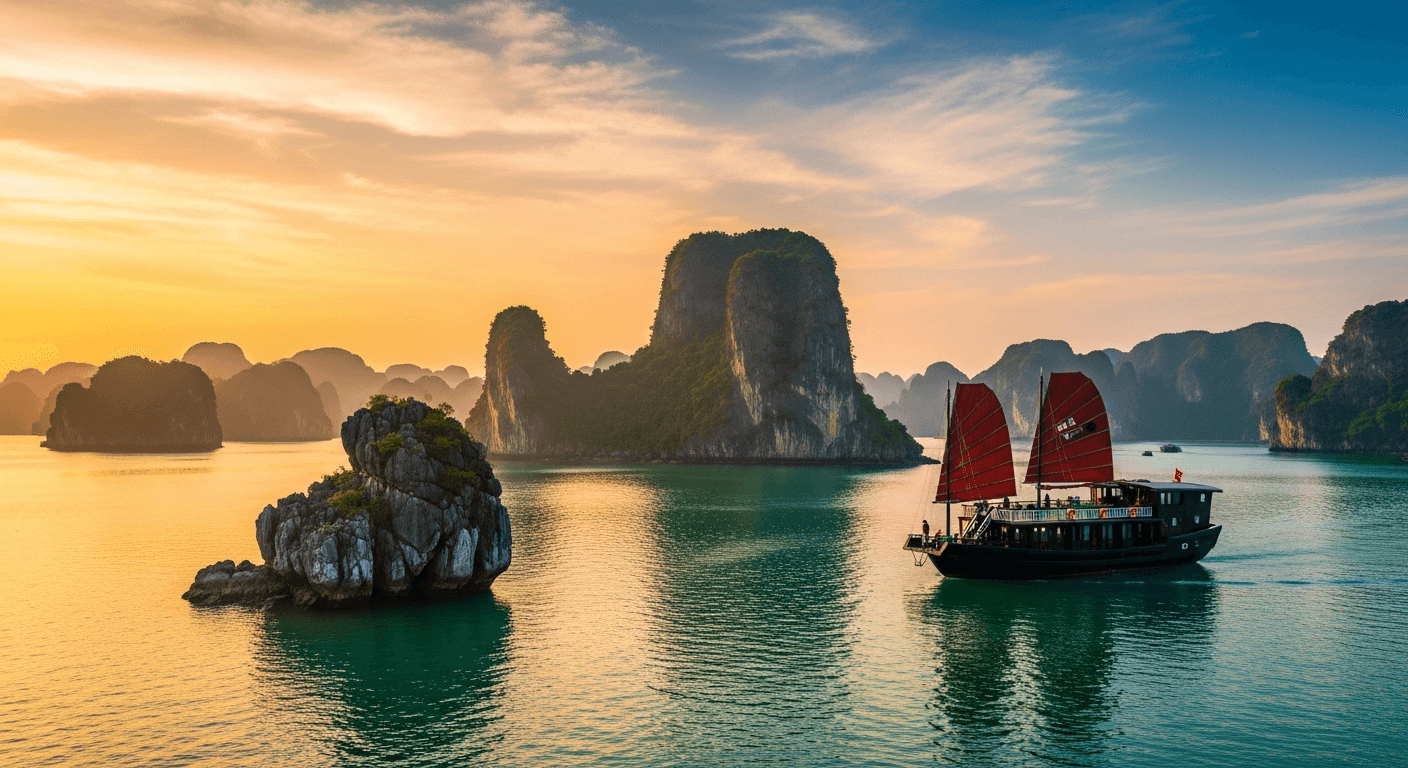
3. Halong Bay by Slower Junk
Everyone sees Halong Bay. Most people experience it as a passenger on an overstuffed cruise ship, collecting the expected limestone-and-water photograph. The difference between visiting and understanding Halong Bay is the speed at which you move through it—and the kind of vessel that carries you.
Booking onto a 3-4 person vintage junk with a small crew changes everything. You're not moving through the bay; you're inhabiting a particular relationship to it. You notice how light moves across rock faces. You hear the water differently. You can stop on a quiet beach at 3 PM and spend two hours there instead of 45 minutes.
Best time: October to November, when the season stabilizes and crowds thin slightly.
Practical tip: Research small-scale operators before booking. Ask specifically about crew size, passenger numbers, and daily schedule flexibility. Avoid the massive junks with hundreds of visitors.
4. Mekong Delta's Floating Markets
The Mekong doesn't announce itself as sacred, but spend a morning navigating its waterways and you'll understand the spiritual logic of water-based living. The floating markets—particularly around Cai Be and Cai Rang—operate on their own temporal system, determined by boat traffic and produce availability rather than clock time.
Visit at 6 AM when wholesale trading happens, before tourist boats arrive. The market then is a serious place—vendors negotiating prices, boats heavy with fruit, the water busy with working commerce. You're witnessing economic life, not performance.
Photography moment: Shoot from a low angle (boat level) looking up at boat owners negotiating overhead. The composition naturally frames the human element against water and sky.
Practical tip: Negotiate your own small boat rental with a local boatman rather than booking organized tours. It costs about the same and allows you to linger where things are interesting.
5. Ho Chi Minh City at Street Level
Most visitors skim Ho Chi Minh City's surface—War Remnants Museum, Ben Thanh Market, rooftop bars—and leave feeling they've understood something. The city's real intelligence happens at street level, in the markets that smell like a thousand fermented things, in the 6 AM tai chi groups in tiny parks, in the coffee shops where customers sit for three hours over a single dark brew.
District 1's surface tourism is exhausting. District 3, just north, is where the actual rhythm lives. Walk Tran Hung Dao early morning and you'll see Ho Chi Minh City that most tourists never encounter—organized chaos, genuine hospitality, and food that exists before it gets packaged for visitors.
Best time: November to February, when heat becomes manageable.
Practical tip: Stay in District 3, not District 1. Hire a motorbike taxi driver for full days and just ask them to take you where they eat. It's cheap and revelatory.
6. Hoi An's Waterfront After Dark
Hoi An's reputation as a "picture-perfect" town precedes it (and partly corrupts it). But there's a legitimate reason people keep returning: the lantern-lit waterfront at night genuinely conjures something the photographs can't quite capture. It's not just pretty—it's atmospheric in the old-fashioned sense, like you've stepped into a different temporal period.
The trick is experiencing it without the crush of day-trippers. Arrive in mid-afternoon and spend hours moving slowly—coffee, river observation, dinner somewhere local—until the sun drops and the plastic lanterns illuminate. By then, most visitors have evaporated.
Practical tip: Skip the ancient town tourist circuit. Rent a bicycle and explore the surrounding agricultural areas instead. The rice paddies and village rhythm around Hoi An are where the real story unfolds.
7. Phong Nha-Ke Bang's Underground Rivers
There's something fundamentally humbling about entering a cave system that was only properly explored in the 1990s. Son Doong Cave, the world's largest cave by volume, still reveals new details each season. The experience isn't about the statistics—it's about the silence underground, the particular kind of darkness that makes you understand scale.
The cave systems here aren't novelty attractions. They're geological evidence of deep time, and visiting them creates a different relationship to the landscape than surface tourism typically allows.
Best time: October to March, when water levels are manageable.
Practical tip: The tours are rigorous—they require swimming, climbing, and genuine physical commitment. Don't book if you're doing it for the Instagram moment. Do it if you want to understand why geology becomes spiritual.
8. Da Nang's Marble Mountains
Most people climb Marble Mountains for the view and miss the actual point—the sculpture caves carved into the rock by earlier monks and sculptors. These aren't merely decorative. They're spatial attempts to understand the relationship between stone, light, and human consciousness.
Climb early, before heat becomes oppressive. Moving through the caves, you'll notice how light enters differently in each chamber, how space changes the way your voice sounds, how the presence of stone creates a specific kind of quiet.
The Practical Matter of Moving Through Vietnam
On transport: Domestic flights between regions save time but eliminate the gradual geographic transition that makes each landscape feel distinct. Train routes (particularly Hanoi to Ho Chi Minh City) move slowly enough that the country reveals itself through the window. Buses are the democratic option—you'll sit alongside locals, move at their pace, and understand the country's actual size.
On timing: Vietnam functions on different rhythms in different regions. Northern Vietnam peaks October through March. Southern Vietnam's dry season runs November through April. The Mekong floods in monsoon season, which (counterintuitively) is when it's most spectacular. Plan around these realities rather than fighting them.
On etiquette: The "must respect" rules are reasonable—cover shoulders in temples, don't photograph people without permission, remove shoes appropriately. But the underlying principle is simpler: move with genuine curiosity, not entitlement. Vietnamese hospitality is real but isn't infinite. Honor it through attention rather than assumption.
Mapping Your Return
The beauty of discovering Vietnam repeatedly is that each return rewrites your understanding of previous journeys. Explore interactive maps on Touratu—trace other travelers' routes through these 20 places, review the photographs that capture light and atmosphere you'll recognize when you arrive, and build your own version of this itinerary. The routes others have taken become the vocabulary for writing your own.
The Return
Vietnam doesn't become less mysterious the more you visit it. It becomes differently mysterious. You stop seeking the undiscovered and start deepening your relationship with places you've already been. A coffee shop you visited three years ago becomes the place you need to sit for two hours. A small restaurant where you ate accidentally on your first visit becomes the restaurant you return to specifically, expecting the same woman to remember how you take your order.
This is what keeps people coming back—not the checking off of destinations, but the small conversions that happen when you stop being a tourist and start becoming a returnee. Vietnam doesn't need you to understand it completely. It only requires that you remain curious enough to come back.
Loading activities…
