
Uzbekistan Travel Guide: Silk Road Cities
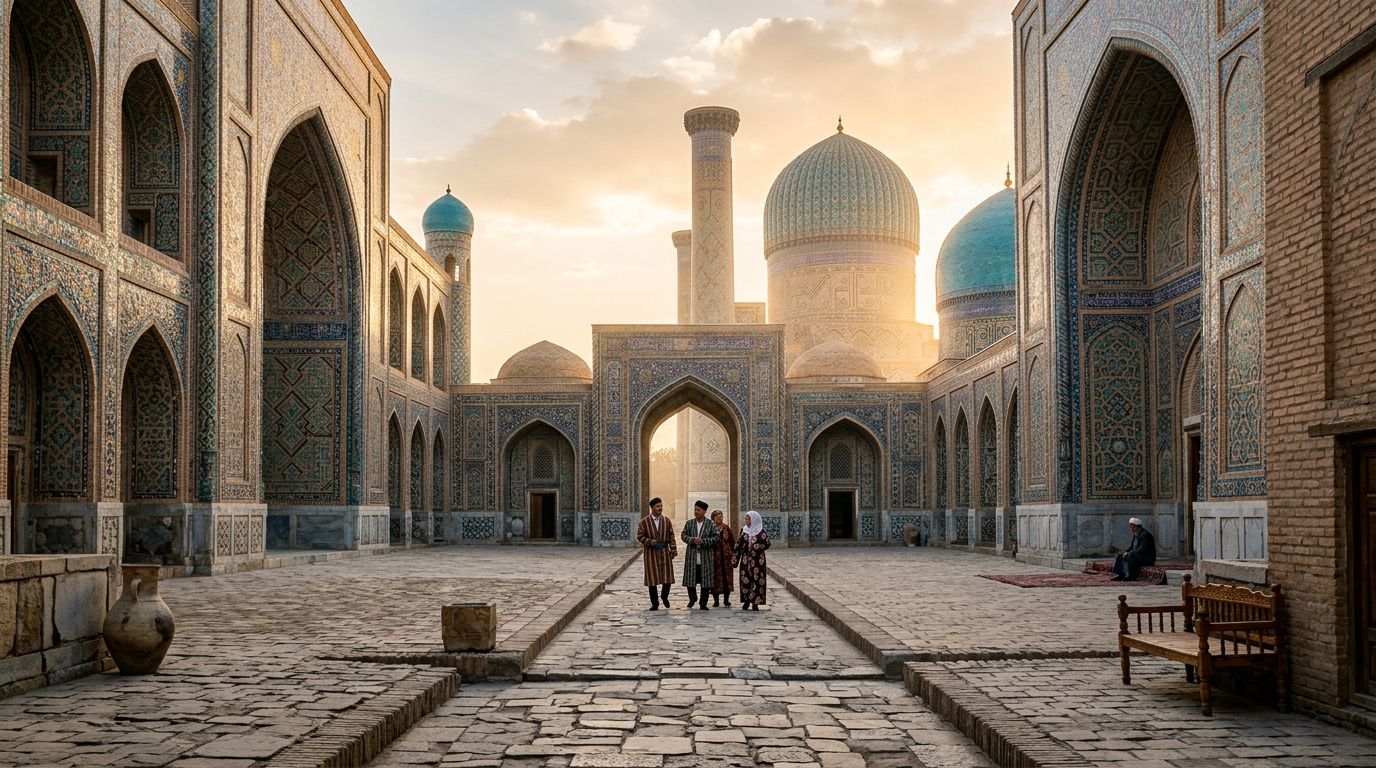
Uzbekistan: Silk Road Remains and the Noise of Real Cities
The morning call to prayer echoes across Samarkand's Registan Square at 5 AM. You're standing in your hotel room, half-awake, listening to amplified voices layer over each other from three different mosques. It's not poetic. It's loud. It's disorienting. It's completely real—and that's exactly why you should go.
Uzbekistan doesn't perform for tourists the way some destinations do. It doesn't curate its chaos or sand-polish its contradictions. You get the Silk Road's actual legacy—not a theme park version of it, but a functioning country where ancient trade routes still intersect with Soviet-era architecture, where people argue loudly in bazaars, where guidebooks feel quaintly outdated the moment you step onto a crowded marshrutka.
I spent three weeks moving between Uzbekistan's main cities and smaller towns, and what struck me most wasn't the monuments themselves—though they are genuinely extraordinary—but the texture of getting there. The experience lives in the details: sitting in a Russian-style plov restaurant while men in a corner booth negotiate a carpet deal in rapid Uzbek; watching a teenage girl in a conservative headscarf navigate Instagram on her phone; noticing how quickly a city of 500 years becomes a city of tomorrow.
What Actually Makes Uzbekistan Memorable
Samarkand and Bukhara are the obvious draws, and deservedly so. But the real intrigue comes from what they represent—a 2,500-year-old crossroads that's still functioning as exactly that. These cities weren't preserved for tourism; they were simply never abandoned. They kept their purpose.
The Registan isn't isolated behind velvet ropes. It's genuinely surrounded by the lived-in city. You can buy a kebab from a vendor literally metres from a 15th-century façade. The bazaars don't exist for Instagram content; they exist because Uzbek people actually buy spices, dried fruits, and textiles there. You'll see grandmothers filling plastic bags with cumin alongside tourists attempting to barter for souvenirs they don't need.
In Bukhara, the old town architecture is so densely packed that you can't tell which buildings are restored monuments and which are someone's actual home. A family might live upstairs in what guidebooks describe as a "historic caravanserai." The mosque you admired at sunset becomes a place of actual worship at dawn. This overlap—between ancient and present—is what makes Uzbekistan feel lived-in rather than performed.
The Penjikent ruins in Tajikistan's direction show you where Silk Road culture existed in its everyday form. Not just the grand monuments, but the homes where merchants actually lived. It's archaeological and surprisingly grounding.
What to Expect: The Practical Reality
The cities themselves: Tashkent is a sprawling Soviet capital that doesn't photograph well but functions efficiently. It's not immediately charming, but it's useful—good transport hub, decent restaurants, the Amir Timur Museum if you want context for everything else. Spend a day here maximum.
Samarkand is where the heaviness of history becomes tangible. The Registan's three madrasahs are ceramic studies in geometric obsession. The Bibi-Khanym Mosque is almost aggressively vast—you understand immediately why it impressed the region. The Shah-i-Zinda necropolis is a narrow corridor of tombs, each covered in tilework that makes you reconsider what's possible with glazed brick. It's a place where photographs consistently fail to capture scale or colour saturation.
You'll actually feel the distance between sites here—Samarkand isn't compact, and you'll do a lot of hot walking unless you hire transport. The old bazaar is atmospheric but functionally confusing; you won't find what you're looking for, but you'll find things you didn't know existed.
Bukhara is smaller, more intricately woven, and somehow more hypnotic than Samarkand. The Ark (a palace complex) dominates the old city visually. The bazaars are narrower, more intimate. The mosques are less grandiose and more meditative. If Samarkand announces itself, Bukhara absorbs you. You'll get lost in the same streets repeatedly and somehow find something new each time.
The transport: Marshrutkas (minibuses) connect everything and cost almost nothing. They're genuinely uncomfortable—cramped, hot, driven with a philosophy of speed over comfort—but they're how Uzbek people actually move between cities. Taking them puts you in real travel territory rather than tourist infrastructure. Trains exist too; overnight journeys are clean and reasonable.
The atmosphere: Spring (March–May) and autumn (September–November) are genuinely pleasant. Summer is relentlessly hot—40°C+ in the cities, making afternoons nearly immobilizing. Winter is mild in these areas but dusty. You'll notice the dust everywhere; it's part of the experience rather than a bug. Bring sunscreen and decent sunglasses.
The pace of tourism: Tourist infrastructure exists without being overwhelming. English is limited outside Tashkent, but people are patient with translation. You won't be herded into tour groups unless you book them. Solo travel is straightforward and safe.
Planning Your Visit: Real Timings
Duration: Two weeks is ideal. One week feels rushed; three weeks is only necessary if you're doing serious bazaar shopping or making side trips to Tajikistan or Kyrgyzstan.
Route: Tashkent → Samarkand → Bukhara → Khiva (if time permits) is the logical path. Khiva, on the far western edge, adds another night of travel but rewards you with an almost perfectly preserved walled city—quieter than Samarkand or Bukhara, which some travellers prefer.
Best time: Mid-April to mid-May, or September to mid-October. Avoid July and August entirely unless you're exceptionally heat-tolerant. December to February is fine if you don't mind cooler temperatures, but heating can be inconsistent in cheaper hotels.
Visa: Most nationalities get 30 days visa-free on arrival, or you can arrange a tourist visa beforehand. Check current requirements; regulations shift.
Crowds: There aren't peak crowd periods like you'd experience in Southeast Asia. You'll see tourists, but they're distributed enough that you never feel like you're in a crowd. The sites themselves can feel crowded (particularly the Registan at midday), but that's more about density than numbers.
The Nearby Pull: Where the Road Continues
Khiva sits at Uzbekistan's western edge and feels almost like you've reached the edge of the known world. It's a walled city with concentric layers of old architecture, less visited than Samarkand or Bukhara, which can either appeal to you or disappoint you depending on what you want. The marshrutka journey from Bukhara is genuinely long (6+ hours), which is probably why fewer tourists make it.
Penjikent (technically in Tajikistan, just across the border) gives you archaeological context for how Silk Road cities actually developed. It's a ruin site with better museum presentation than you'd expect, and the border crossing is straightforward for most nationalities. The journey adds complexity but provides a different texture to the trip.
The Aral Sea disaster zone, further north, is increasingly visited by dark tourism interests. It's genuinely haunting—a former sea reduced to a fraction of its size—but it's not sightseeing in the conventional sense. It's confrontation with human impact. Worth reading about carefully before deciding if it fits your travel philosophy.
Is It Actually Worth Visiting?
Yes, with qualifications.
Uzbekistan rewards curious travellers more than casual tourists. If you're looking for Instagram moments and definable "attractions," you'll find them, but the real value comes from how you move between them—the slow bazaar navigation, the marshrutka conversations, the moment when a centuries-old courtyard suddenly becomes ordinary because you've walked past it five times and it's just part of the city fabric.
The monuments are extraordinary, genuinely. The tilework on Islamic architecture here operates at a level of precision and ambition that justifies the journey. But the monuments aren't the point; they're evidence of something deeper—a place that's been continuously inhabited, argued over, rebuilt, and maintained for thousands of years by real people with real concerns.
If you want to understand how the Silk Road functioned not as an abstract historical concept but as an actual system of cities and trade and cultural exchange, Uzbekistan shows you in tangible form. The physical evidence is still there. The people are still there. The complexity of modern Uzbekistan—Soviet legacy, Central Asian identity, Islamic tradition, rapid modernization—is all visible simultaneously.
It's not a destination that'll feel comfortable if you're looking for pristine tourism infrastructure or narrative clarity. It's messy and sometimes frustrating and genuinely interesting in ways that resist marketing language.
Quick Facts
- Capital: Tashkent (population 2.4+ million)
- Best cities for visitors: Samarkand, Bukhara, Khiva
- Official language: Uzbek (Russian widely spoken among older generations)
- Currency: Uzbekistani som (approximately 11,000–12,500 per USD, rates fluctuate)
- Cost level: Extremely budget-friendly—accommodation $10–20/night, meals $1–3, transport negligible
- Getting there: Flights to Tashkent from most major hubs; regional carriers are reasonable
- Main sites: The Registan, Bibi-Khanym Mosque, Shah-i-Zinda, the Ark at Bukhara, the old bazaars
The Silk Road exists now as a network of cities, not as a route you can physically follow. But in Uzbekistan, you can stand in the places where goods moved, where cultures collided, where innovation happened because different worlds pressed against each other. The call to prayer still echoes across the same squares where it echoed 500 years ago—louder now, amplified, reaching further, but fundamentally unchanged in purpose.
That continuity is rare.
Use Touratu's interactive map to explore the exact routes between these cities, watch travel videos that capture the real pace of movement between sites, and book activities—from bazaar guides to architectural tours—that'll deepen your understanding of how these ancient cities actually function today.
Loading activities…
