
Turkey Travel Guide: 20 Unforgettable Destinations
Turkey: The Places That Keep Calling Travelers Back
There's something about Turkey that lodges itself in your bones long after you've returned home. It's not just the architecture or the food, though both are magnificent. It's something quieter—the particular light at dusk over the Aegean, the way a vendor remembers your order from yesterday, the moment you realize you've stopped thinking about where you came from. Turkey has this way of making return visits feel inevitable rather than remarkable. You go back not because you missed something, but because something in you belonged there all along.
The country exists at a crossroads that actually feels alive rather than performative. West collides with East in everyday moments: a grandmother in heels carrying fresh bread, a teenager in traditional dress scrolling through Instagram, a teahouse that's been serving the same recipe for seventy years adjacent to a contemporary gallery. Istanbul might be the poster child, but the real magic unfolds in the spaces between the famous places—where travelers arrive seeking one thing and leave having found something entirely unexpected.
This is what brings people back. Not the checklist satisfaction of "doing" Turkey, but the unfinished conversation with it.
The Places You'll Return For
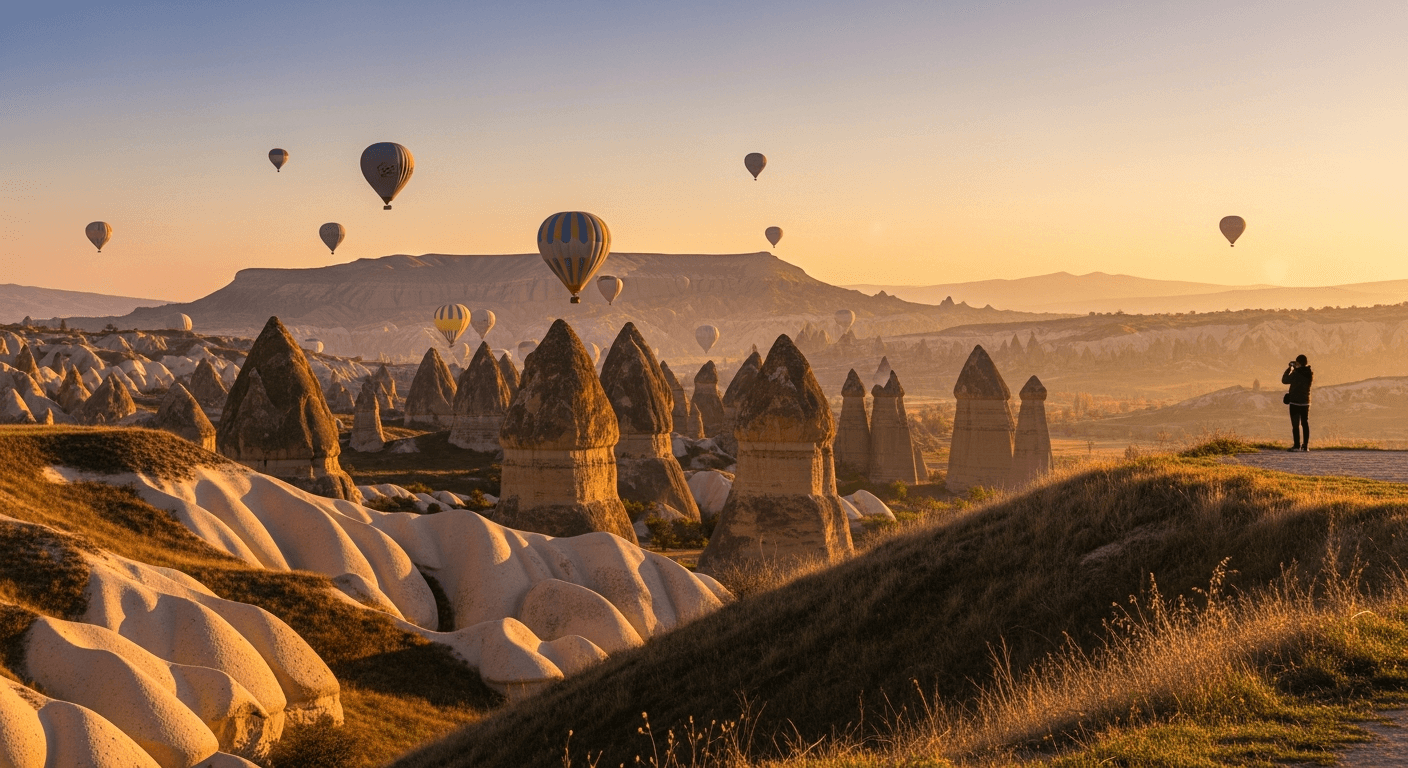
Cappadocia's Fairy Chimneys at First Light
There's a reason photographers wake at 4 a.m. here, and it has nothing to do with obligation. The otherworldly landscape reveals itself slowly as dawn breaks over the rock formations, each minute shifting the palette from charcoal to amber to honey. But the real discovery isn't the view—it's the silence. Walking through these valleys before the hot air balloons launch, you feel like an archaeologist of your own thoughts.
The experience deepens when you stay in a cave hotel without fanfare. Not the luxury ones with infinity pools, but the authentic conversions where 800-year-old walls enclose your sleep. You wake to stone, settle into stone, eat breakfast watching light transform stone into something transcendent.
Best visited in April or May when the air carries no heat, only clarity. September offers the same gift of solitude before autumn tourists arrive.
Insider observation: The underground cities here (Derinkuyu, Kaymakli) draw crowds during midday. Early or late visits reveal why ancient people chose these spaces—not just for survival, but for the particular acoustic properties that made communities feel intimate even in subterranean darkness.
Photography moment: The valley approach from Göreme's north rim at sunset, when the fairy chimneys cast long shadows that make the landscape read like sculpture.
Practical consideration: Hire a local guide for underground cities. The passages are genuinely disorienting without context, and the stories of daily life—where families copped, stored grain, slept in these conditions—transforms stone into narrative.
Istanbul's Galata Tower District Without the View
Yes, everyone goes to Galata Tower for the panoramic photos. Most people never actually arrive at the district itself. The tower stands in a neighborhood that functions as its own complete world—a tangle of narrow streets where fishmongers still call out prices, where vintage record shops share walls with modern galleries, where the essential Istanbul hums without performing for anyone.
Spend an afternoon without a destination. Walk downhill from the tower into Tophane, where street art covers every available surface and locals genuinely outnumber tourists. Stop at Antrepo for coffee in a converted warehouse. Recognize that you're not here to collect the experience, but to inhabit it for a few hours.
Best October through April, when the streets feel lived-in rather than photographed.
Insider observation: The actual neighborhood tension—between preservation and change—is visible in real time. This isn't a museum district pretending to be alive. It's a neighborhood actively negotiating its future while maintaining its rhythm.
Photography moment: A back alley where laundry hangs between medieval buildings, with golden-hour light hitting weathered shutters.
Practical tip: Skip the tower queue entirely. The real Galata exists at street level.
Bodrum's Off-Season Clarity
Bodrum in July is chaos—a resort destination swallowing itself with its own popularity. Return in November and you find the actual town: a fishing harbor where daily life hasn't been reorganized for tourism. Local restaurants serve only what came in that morning. Fishermen repair nets without an audience. The water is still warm enough for swimming, the light still generous, the crowds completely absent.
The experience here is one of earned access. You're not intruding on someone's performance; you're witnessing their actual life. Coffee at the harbor takes three hours because you're actually having a conversation, not consuming a moment.
Best November through March, though April's wildflower season makes it equally compelling.
Insider observation: The winter residents—people who've chosen to live here year-round—treat visitors with genuine interest rather than service protocol. They'll adopt you, actually. Accept the invitation to dinner. This matters more than any restaurant reservation.
Photography moment: The harbor at dawn with fishing boats creating reflections that blur the line between sky and water.
Practical note: Many restaurants close in low season. This is a feature, not a bug. You're eating where locals eat, which means sometimes that place is someone's kitchen.
Ephesus Before 10 A.M.
The Library of Celsus will be consumed by tour groups soon after sunrise, but if you arrive at the gates when they open, you'll have maybe sixty minutes of contemplative space with one of antiquity's most stunning structures. The architecture doesn't change when crowds arrive, but something essential does: the quality of silence.
Walk the marble streets as archaeologists imagined them—populated by your own observations rather than a guide's script. The genius lies in the urban planning, the water engineering, the thoughtful placement of public and private spaces. These weren't monuments; they were someone's Tuesday.
Best September and May when temperature and tourism find an uneasy balance.
Insider observation: The ongoing excavations are as compelling as completed sites. You're watching history continue to be written rather than consume a finished narrative.
Photography moment: The harbor street at early light, where the road curves and invites you toward the ruins proper.
Practical tip: Stay in nearby Selçuk rather than the crowded Kuşadası. It's a proper Anatolian town with actual electricity, better food, and a restored mosque that's equally stunning as its famous neighbor.
Pamukkale's Travertine Terraces at Quietude
Yes, the white mineral pools are remarkable. Yes, everyone says so. What people miss is that the experience transforms entirely when you're one of five people instead of five hundred. Walk the terraces at dusk, when tour buses have departed and the natural thermal pools at the summit take on an almost private quality.
The physics of the place—how water calcifies into these cascading white formations—becomes the meditation rather than the photo opportunity.
Best March, April, September, or October when weather cooperates and crowds haven't fully mobilized.
Insider observation: The locals remember a time before this became an international destination. Their complicated relationship with tourism—gratitude mixed with some loss—is visible in small gestures. Honor that complexity.
Photography moment: A single pool in golden hour with thermal mist rising, untouched by human scale.
Practical wisdom: Wear appropriate footwear despite the "barefoot is better" suggestion. The calcium deposits genuinely hurt unprotected feet.
Antalya's Kaleiçi Harbor as Personal Discovery
The old town here exists in a state of beautiful contradiction. Tourism infrastructure coexists with authentic Ottoman architecture, boutique hotels occupy centuries-old buildings, and somehow it works—not because it's perfectly balanced, but because it's still lived-in. This isn't a preservation district where the past has been embalmed.
Wander the harbor side at evening aperitivo hour. Stop at a meyhane where the meze selection is determined by what made it to market that morning. Let the experience be inefficient and unscheduled.
Best October through April when the Mediterranean light stays generous and the harbor feels like a neighborhood rather than a resort.
Insider observation: The people who live here year-round represent generations of harbor culture. A simple conversation can teach you more than guidebooks attempt.
Photography moment: Wooden boats at dusk with minaret silhouettes in the background and lantern light beginning to activate the waterfront.
Practical note: The tourist-oriented restaurants cluster near the main attractions. Walk five minutes away and eating improves drastically while prices calibrate to reality.
Safranbolu's Ottoman Streets Time Machine
Few towns in Turkey maintain the organic continuity of Safranbolu. It's a functioning place that happens to have been beautiful since the Ottoman era—not a reconstructed theme park pretending to be historic. Families have bakeries that operated through centuries. Woodcraft techniques survive because they're still useful, not preserved as curiosities.
The experience is deliberately low-stimulation. You walk, notice details, have coffee, observe daily patterns. The town asks nothing of you except presence.
Best April through May or September through October when weather doesn't dominate the experience.
Insider observation: The UNESCO designation brought infrastructure but also preservation pressure. You're witnessing a town negotiating what gets to stay old and what's allowed to change. It's not resolved, which is precisely what makes it authentic.
Photography moment: A wooden doorway with morning light creating depth in the carved details, with the street life of the town visible beyond.
Practical consideration: Stay at a traditional konak (house) conversion where the architecture becomes your accommodation. This matters more than comfort metrics.
The Rhythm of Traveling Here
Forget the rigid itinerary. Turkey rewards slowness, and the transport network actually accommodates it. Dolmuş vans—minibuses that run set routes but stop wherever passengers request—are the real infrastructure. They're cheaper than buses, more flexible than trains, and you'll find yourself having unexpected conversations in the back seat with locals heading to villages tourists don't photograph.
The neighborhoods where travelers cluster shift seasonally and by region. Istanbul has distinct personalities (Beyoğlu versus Balat, for instance), and understanding these differences changes everything. Timing your arrival in each neighborhood matters: the morning fruit markets, the evening tea gardens, the pre-dawn fishing harbor activity. The place transforms based on when you show up.
Cultural navigation is straightforward once you recognize that hospitality here is genuine. Accept tea when offered. Say "teşekkür ederim" with a slight hand-on-heart gesture. These aren't performances—they're how people actually communicate respect. Leave your shoes outside in a home. Stand when greeting elders. These customs persist because they mean something, not because tourists need to feel authentic.
Seeing These Routes on Touratu
The real magic of return travel emerges when you map out how others have moved through Turkey—which seasons they chose, which neighborhoods they lingered in, how long they spent in each location before moving on. Touratu's interactive map reveals traveler routes and visual discoveries from people who've spent real time here, showing you not just what's worth seeing, but how to see it, what seasons unlocked which experiences, and which neighborhoods reward getting lost.
The Conversation Continues
Turkey doesn't exhaust itself. This is why travelers keep returning—not because they finished a journey, but because they started a conversation that extends across multiple visits. You return to places you left unfinished, to people who've become something approaching friends, to moments that revealed themselves too quietly the first time.
The country teaches patience. It teaches that a good teahouse visit beats a famous landmark. It teaches that the best discoveries happen when you're not actually looking for them. And it teaches the most important lesson of travel: that arrival is the beginning of understanding, never its conclusion.
Loading activities…
