
Thailand Travel Guide: Best Things to Do
Thailand: A Thousand Ways to Get It Right (And a Few to Get It Wrong)
The moment you step out of Suvarnabhumi Airport, the heat doesn't just hit you—it wraps around you like something alive. Your shirt sticks within seconds. The air smells like exhaust, jasmine, and fish sauce cooking somewhere you can't quite locate. A taxi driver with four gold teeth grins at you in the rear-view mirror and asks where you're from without waiting for an answer. This is Thailand's opening act, and it's neither soft nor gentle. It's immediate. Real. Exactly what you didn't expect and exactly what you came for.
Thailand isn't a single destination. It's a collection of contradictions that somehow exist in perfect balance—ancient temples next to 7-Elevens, monks in saffron robes walking past teenagers with dyed hair, beaches where you can rent jet skis beside fisher folk using methods unchanged for centuries. Most travel guides will tell you Thailand is about ticking boxes: Bangkok for chaos, Phuket for beaches, Chiang Mai for culture. They're not wrong, exactly. They're just incomplete.
What Actually Makes Thailand Memorable
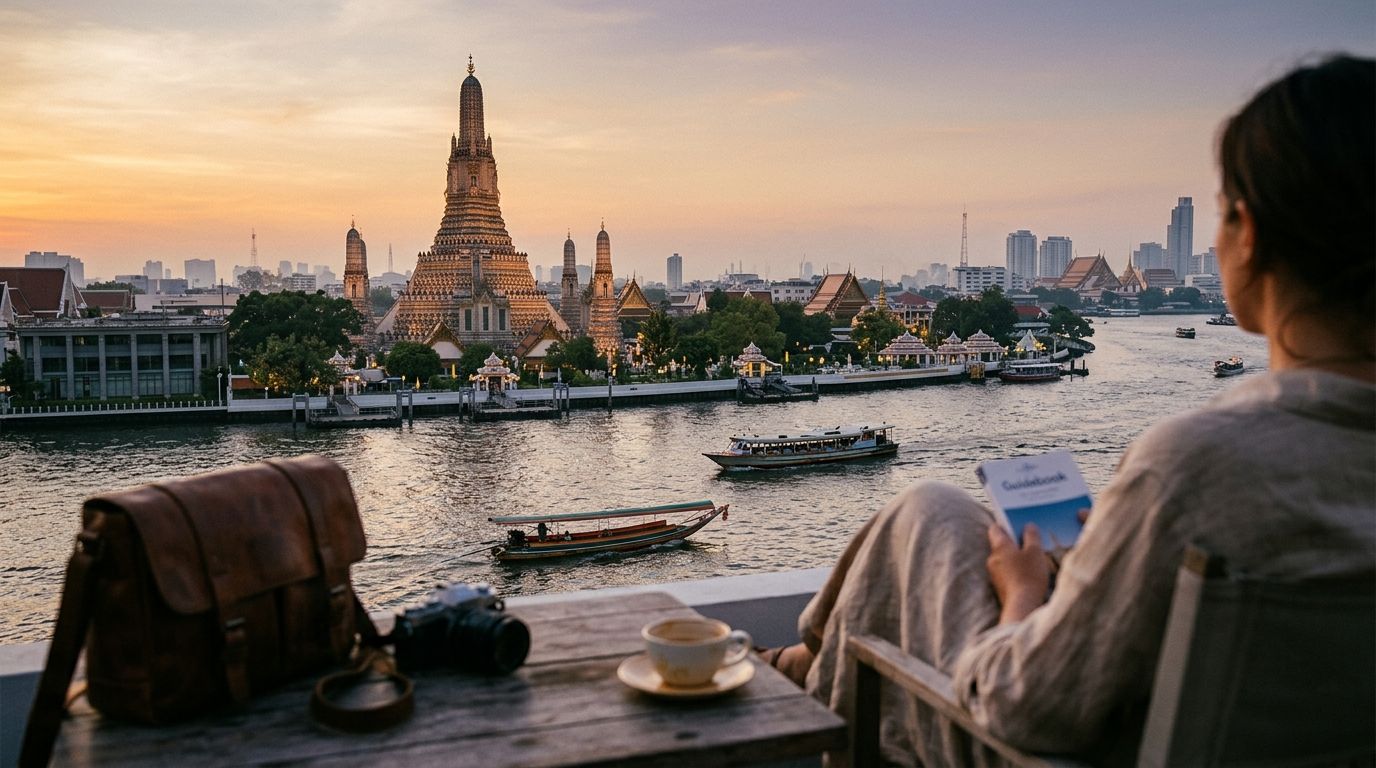
It's not the limestone cliffs of Phang Nga Bay, though they're extraordinary. It's not Wat Arun's spires or the Grand Palace's gold leaf. It's the texture of being surrounded by 70 million people who aren't constantly trying to optimize your experience. Thais have mastered the art of coexistence—they'll take your money with genuine warmth, not manufactured hospitality. There's a difference, and once you feel it, the forced friendliness of other destinations feels thin.
Thailand works because the infrastructure doesn't scream at you. It's just there. You need to get from Bangkok to Krabi? Four options exist, and they all work. You're hungry at 3 AM? Someone nearby is cooking. You want a suit tailored in 24 hours? There's a person for that. This baseline competence—especially in the service industry—means you can actually relax instead of spending energy figuring things out.
The other thing Thailand does brilliantly is scale. You can be completely alone on a private beach or in the chaos of 50,000 people at Chatuchak Weekend Market. The country has mastered offering both extremes without compromise. Most places choose one lane. Thailand just... has everything.
What to Expect: The Reality of Moving Through Thailand
Bangkok will overwhelm you for 2-3 days. The traffic is genuinely horrible—moving through the city during rush hour feels like being stuck in a metal container while someone slowly turns up the heat. But the moment you stop fighting it and accept the gridlock, things improve. Get a motorcycle taxi. Find a local restaurant in Silom instead of the tourist trap on Khao San Road. Walk into a random soi (alley) and discover a shophouse where a woman has been making boat noodles since 1987. This is where Bangkok reveals itself—not in the Instagram angles, but in the spaces between.
The Grand Palace is worth seeing once, early in the morning, before the tour groups arrive in their matching hats. It's overwhelming and beautiful and genuinely important culturally. Just know that you'll be surrounded by hundreds of other people thinking the exact same thing. Wat Pho (home of the massive reclining Buddha) is better—less crowded and more photogenic. Dress appropriately: shoulders and knees covered. This isn't negotiable.
The Islands come in flavors. Phuket is overdeveloped—package tourists, Russian retirees, nightlife that ranges from charming to seedy depending on which beach you're on. But it's got infrastructure, easy accessibility, and genuine good food if you leave the beachfront. Phi Phi Islands are postcard-perfect and aggressively touristy. Krabi is Phuket's slightly less chaotic older sibling, with better beach access and a more relaxed vibe.
If you want actual quiet with decent amenities, Koh Samui works—it's developed but maintains separation between tourist areas and real villages. Koh Lanta is genuinely quiet, with long beaches and enough restaurants to not starve, but limited nightlife. Koh Tao is the diving capital—if you're getting certified, do it here. The reefs are fine, not world-changing, but the experience is excellent.
The North around Chiang Mai is where the tourism industry tries to feel cultured. Elephant sanctuaries (ethical ones exist; many don't), night markets, old temples. Chiang Mai is genuinely charming once you leave the night bazaar—the old city has actual character. The surrounding mountains and villages are real, not constructed for cameras. Trekking exists here but often involves more tourists than nature. Book with smaller operators if you want experience over logistics.
Real observation: Northern Thailand gets less rain but more tourists in peak season (Nov-Feb). Bangkok can be tolerable in air conditioning but is legitimately uncomfortable November through March, and suffocating from March through May. The islands are hot year-round, with monsoon patterns varying by coast.
Planning Your Visit: The Practical Side
Best time to visit: November through February. It's dry, mild (80s F), and tourist season peaks. Expect crowds and higher prices. If you're flexible, September-October and late February-March offer similar weather with 40% fewer tourists and better value.
Duration: Thailand rewards 2-3 weeks minimum. A week works if you choose discipline (Bangkok + one island + one northern destination). Less than a week becomes an exhausting logistics exercise.
Getting there: Most international flights land in Bangkok. Get out of Bangkok quickly if you're not staying—move to islands or north the next day. Flying domestically is cheap ($30-50 range) and efficient. Buses work but are slow (10+ hours for Chiang Mai). Trains are scenic but unreliable on schedule.
Transportation: The rail system connects major cities but isn't fast. Buses are the budget option and generally safe, though driving standards are chaotic. Flying domestically is worth the modest cost. Within cities, motorcycles (with drivers) are fastest and cheapest. Grab (Southeast Asian Uber) works in all major cities.
Crowds: Bangkok's always crowded. Islands peak from December-February. Chiang Mai peaks same period. Shoulder seasons (Sep-Oct, Mar-Apr) have thin crowds but occasional rain.
Budget reality: Expect $30-50/day for backpacker basics (cheap room, street food, bus between cities). $60-100/day for comfortable mid-range travel (decent hotels, restaurant meals, some activities). $150+/day for proper comfort. Island resorts can double these figures.
Nearby Places Worth Considering
Cambodia (Siem Reap): 1.5-hour flight or long bus from Bangkok. Angkor Wat is genuinely world-class, though crowded. Siem Reap has interesting food culture and less developed tourism infrastructure, which means more authenticity and more rough edges.
Laos (Vientiane or Luang Prabang): 1-2 hour flight. Slower pace, fewer crowds, more subtle beauty. Less developed infrastructure means more independence required, but the reward is genuine cultural immersion without the performance aspect.
Vietnam (Ho Chi Minh City to Hanoi): Accessible by plane, bus, or train. Similar tourism infrastructure to Thailand but higher energy and less comfortable for everyone. Better food, more intense experience.
Is Thailand Worth Visiting? The Honest Answer
Yes, but not for the reasons the brochures suggest.
Thailand is worth visiting because it's functional and welcoming without being saccharine. You can be genuinely comfortable while remaining genuinely outside your normal life. The food is exceptional, the people are patient with foreigners, and the infrastructure is solid enough that you can make decisions on impulse instead of planning every minute.
It's not perfect. Environmental issues are real—marine life is declining, plastic pollution is visible, development is happening at questionable speed. Some tourism experiences involve animal suffering. Parts of it feel exploitative if you look too closely. The monarchy is revered with an intensity that feels heavy if you're culturally different. Political history is complicated and contemporary politics are restrictive.
But these problems exist alongside something genuine: a place where 70 million people have figured out how to exist comfortably and welcoming toward strangers. That's rarer than it sounds.
Go during the right season, spend enough time to move beyond logistics, eat street food without paranoia, and you'll understand why people come back. Thailand doesn't need you to love it—it's already full of people who do. But it will let you exist on your own terms, which is a gift travel destinations rarely offer.
Quick Facts
- Capital: Bangkok (pop. 10 million metro)
- Language: Thai (English spoken in tourist areas)
- Currency: Thai Baht (35 THB ≈ $1 USD)
- Visa: 60-day exemption for most Western passports on arrival
- Power: 220V, Type A/B plugs (US adapters work)
- Religion: Buddhism (95%), Islam in south
- Time zone: UTC+7 (no daylight saving)
- Distance Bangkok to Chiang Mai: 680km (1.5-hour flight, 10+ hour bus)
Ready to explore Thailand with purpose? Use Touratu's interactive map to visualize routes between Bangkok, the islands, and the north. Watch travel videos from real visitors showing how long things actually take, what neighborhoods feel like, and where the overlooked spots are. Plan bookable activities without the tourist markup—see where local operators work and compare directly. Thailand rewards planning, but not the guidebook kind. The kind where you know what's real before you arrive.
Loading activities…
