
Thailand: 20 Places Worth Returning To
Thailand: Why Travelers Keep Coming Back to These 20 Places
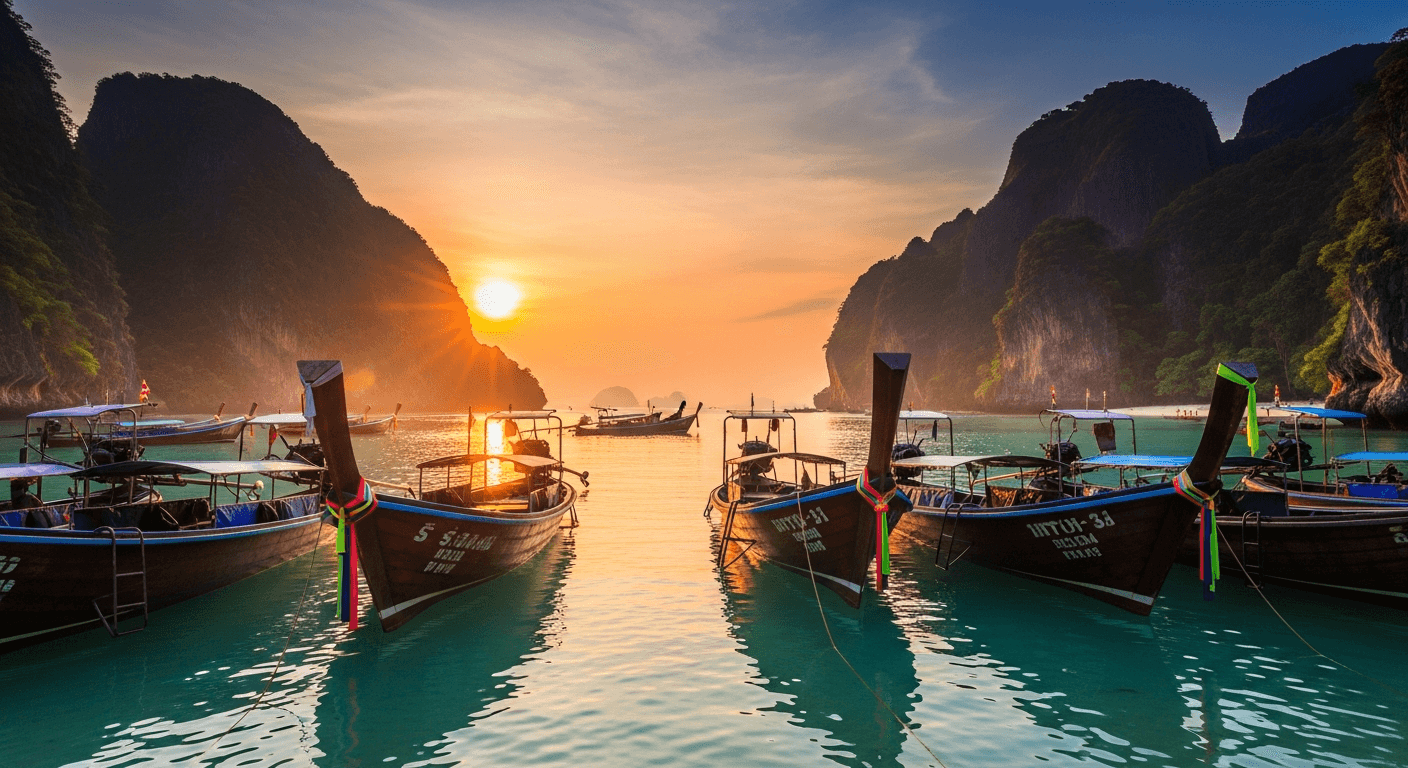
There's a particular quality to the light in Thailand at dawn—the kind that turns the sky into brushstrokes of coral and gold before the heat arrives. It hits differently when you're standing at the edge of a temple courtyard, or watching longtail boats cut through water so still it mirrors the palms above. Thailand doesn't announce itself. It simply unfolds, persistent and patient, and somewhere between your first visit and your third, you realize you're not chasing experiences anymore—you're returning to ones that have been waiting for you.
This is the gravity Thailand exerts. Not the postcard version, but something quieter: the way a particular noodle vendor greets you by name, how a small beach feels like your secret despite the others around you, the texture of trust that builds when you move slowly enough to notice. These twenty places have become the tether points for travelers who understand that the real measure of a destination isn't how many stamps you collect, but how many times your feet find their way back.
The Places That Prove Thailand Isn't a One-Visit Country
1. Chiang Mai's Old City Temples
The reverence here is tactile. Doi Suthep doesn't just sit above the city—it breathes over it, its golden spire catching light in ways that photography never quite captures. What keeps travelers returning isn't the temple itself, but the monks who serve breakfast at 6 a.m., the whisper of footsteps in courtyards before tourists arrive, the way morning chanting echoes between ancient brick walls. Each visit reveals another minor temple tucked into a quiet lane, another conversation with a temple guardian who remembers you. Best visited during cool season (November to February), when the air is clear and early mornings are almost cold. The insider truth: most visitors rush through Doi Suthep by afternoon. Arrive as dawn breaks, and you'll have it almost entirely to yourself.
Photography moment: The moment the sun breaches the mountains behind the temple, turning the city below into amber haze.
Practical tip: Wear covered shoulders and knees; the dress code is observed seriously here, and it matters.
2. The Floating Markets of Damnoen Saduak
It's crowded, yes—inevitably. But there's a particular alchemy to moving through water at daybreak, past vendors who've been selling the same fruits from the same boats for decades, their practiced hands creating arrangements that are functional and beautiful simultaneously. The repetition itself becomes meditative. You come back for the rhythm, the commerce that feels more like choreography, the way light fractures through the canals. October through March offers the calmest waters and most comfortable temperatures.
Insider observation: Hire a long-tail solo rather than joining a tour; the difference in pace and authenticity is profound.
Photography moment: A vendor's weathered hand holding a custard apple, with temple spires reflected in water behind.
Sukhothai asks for patience, and those who give it understand why travelers return. The ruins aren't dramatic—they're subtle, absorbed into landscape over centuries. Buddha statues sit with perfect serenity in overgrown courtyards. You can rent a bicycle and move through the park for hours, arriving at each temple as though you've discovered it yourself. The park reveals itself to slow travelers; rushed visitors miss the point entirely. Visit November to January for cooler mornings.
Practical tip: Skip the main entrance crowds; enter from the northern edge, near Wat Saphan, and move through the park in reverse.
4. Koh Samui's Lesser-Known Beaches
Everyone knows Chaweng. Clever travelers discovered Lamai years ago. The return visitors know about Taling Ngam, a curved crescent on the island's western edge where the light at sunset turns the sky into watercolor gradients. The beaches of Koh Samui's quieter shores are where you'll find the same vendors you saw last year, the same beach bars with the same chalkboards announcing the day's specials. Familiarity becomes part of the appeal.
Best time: April to October, when monsoon rains keep day-trippers minimal.
Insider observation: Rent a scooter and explore the island's interior villages—where actual life happens, far from resort beaches.
5. Bangkok's Neighborhoods Beyond the Tourist Map
Chinatown (Yaowarat) at night is sensory overload in the best possible way—charred meat, jasmine incense, voices haggling in Mandarin and Thai. But return visitors venture deeper, into Talad Rot Fai (the train market), or find themselves in Talad Noi, where narrow lanes smell of fish sauce and centuries-old teak shophouses lean into one another. Each neighborhood is a puzzle you slowly solve. You return because you've barely scratched the surface.
Practical tip: Hire a tuk-tuk for 8 hours rather than jumping between neighborhoods. Let the driver take you where locals actually go.
6. Pai's Mountain Roads and Waterfalls
The drive to Pai winds through mountains that feel untouched despite the town itself becoming increasingly developed. Mae Yen Waterfall lies just beyond, where water pools in jade-colored basins and the jungle hums with life. Travelers come back for the drive as much as the destination—there's something about mountain roads that strip away the unnecessary.
Best time: September to November, when waterfalls run full and the air is clearest.
Photography moment: The moment when the mountains break and you see the valley of Pai spread below you.
7. Ayutthaya's Temple Islands
The old capital is haunted in the most beautiful sense—ruins emerging from parks and school grounds, Buddha heads overtaken by tree roots, temples that float on their own islands. Unlike Sukhothai, Ayutthaya is chaotic and overwhelming, but that's precisely why regular visitors appreciate it. There's no sanitized experience here; you're moving through a living city that simply exists beside its ghosts.
Insider tip: Hire a private longtail boat and navigate the waterways instead of the main roads. The temples reveal themselves differently from the water.
8. Krabi's Rock Climbing Routes
For travelers who return seasonally (November to March), Krabi becomes a kind of second home. The limestone cliffs above Railay Beach have been bolted for decades, and you'll recognize climbers you've encountered before, following the same routes. There's a meditative quality to learning a rock face intimately over multiple visits.
Practical consideration: Join a climbing group rather than going solo—community is half the experience.
9. Isaan Region Markets and Small Towns
Udon Thani, Khon Kaen, and Mukdahan aren't on the classic Thailand circuit, which is precisely why they matter. These towns offer genuine commerce, food that reflects regional agriculture, and the kind of anonymity that allows you to observe rather than perform. You return because you're slowly understanding Thailand as Thais understand it.
Best time: Cool season (November to February), when you can actually walk through markets without melting.
10-20. The Anchoring Places
The remaining ten places that form the gravity of return visits include: the Jim Thompson House's hidden galleries in Bangkok; the night bazaars of Chang Mai (especially Somphet Market); the quieter temples north of Bangkok like Wat Phra Kaew; the islands accessible by ferry from Trat; the hot springs and caves of Phetchabun Province; the beach bars of Koh Lanta where bartenders remember your name; the morning alms-giving ceremonies (tak bat) that happen in every town; the night trains that move through Thailand like heartbeats; the night markets that fuel late-night conversation; and the simple, persistent act of returning to the same restaurant because the cook remembers how you like your som tam.
Moving Through Thailand Like Someone Who's Seen It Before
Transport in Thailand rewards flexibility. The overnight trains are slower than flying, but they're also where genuine conversations happen. Long-distance buses connect towns in ways that let you witness the gradations of landscape. Scooters give you access to the spaces between tourist destinations—the roads where roadside vendors sell sticky rice to workers, where little temples appear in the most unexpected corners. Most returning travelers abandon the idea of seeing everything and instead develop expertise in one region or one practice (market hunting, temple visiting, climbing, eating).
Neighborhoods matter more on second and third visits. Rather than staying in resort areas, consider residential zones like Talad Noi in Bangkok or the side streets of Chiang Mai's Old City. You'll have breakfast alongside office workers, notice which shops close on which days, gradually become recognized. This is when travel transforms from tourism into something more genuine.
Timing your visit around seasons you've experienced before creates expectation—you know how the light hits in November, how the energy shifts in the rainy months. Even the crowds become familiar.
Etiquette deepens in importance the more you travel Thailand. The image of the king is sacred; disrespect carries real consequences. Temples require proper dress and behavior. Food is never wasted; it's a sign of ingratitude. The more time you spend, the more these practices feel less like rules and more like the simple respect you'd extend to someone's home.
Mapping Your Return Routes
The beauty of repeated travel is watching how your own routes shift over time. Use Touratu's interactive map to explore how other travelers have navigated these places—their routes reveal seasonal patterns, hidden pathways, and the kinds of discoveries that only come from returning again and again. You'll see where others linger, which neighborhoods draw repeat visitors, and how journeys to Thailand often spiral rather than progress in straight lines.
Why Thailand Keeps Calling
Thailand doesn't overwhelm you into submission like some destinations. It seduces you gradually, quietly, through repetition and small recognitions. A coffee vendor who knows your order. A temple entrance you missed last time. The certainty that if you stay long enough, you'll understand something true. The returns aren't about ticking boxes or collecting experiences—they're about the particular comfort of moving through a place that, despite its foreignness, starts to feel like something closer to home.
Loading activities…
