
Taiwan Travel Guide: Mountains, Markets, Real Culture
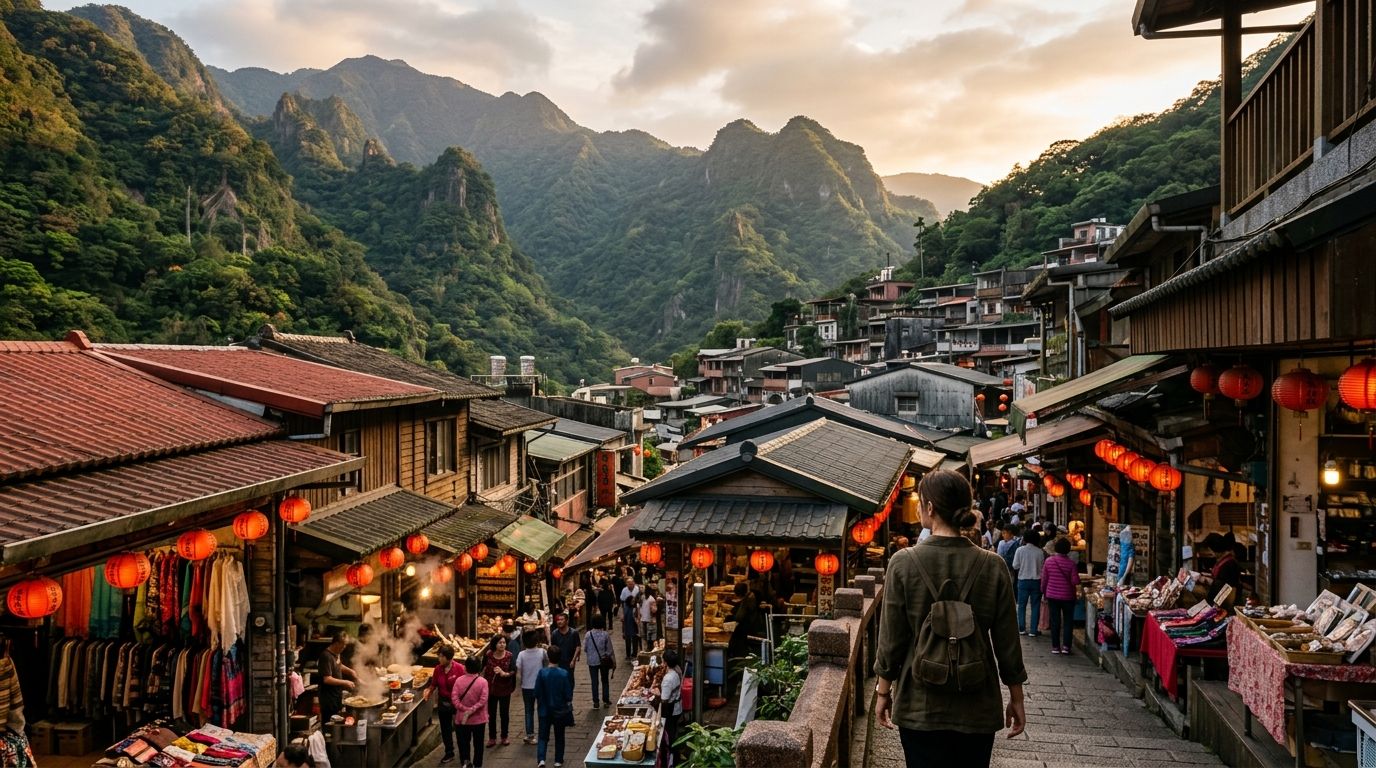
Taiwan: A Place That Makes You Rethink What Travel Means
You're standing in a night market at 11 PM on a random Tuesday, holding a paper cone of stinky tofu, watching a 70-year-old vendor move through the same motions she's performed maybe 20,000 times. Her hands know the rhythm before her mind does. Steam rises. Oil sizzles. Someone behind you laughs in Mandarin. The smell is genuinely terrible and somehow magnetic. This is Taiwan—a place that doesn't announce itself loudly but somehow stays with you months after you've left.
Taiwan operates differently from its neighbours. It's not trying to be Instagram-perfect or Instagram-anything. It simply works as a place where people live actual lives, and you're invited to observe and participate in that reality. Temples sit beside modern architecture. Bullet trains connect night markets. Mountain peaks emerge from mist at dawn. This friction between old and new, between mountain and city, between tradition and pragmatism, is what makes Taiwan genuinely worth the plane ride.
What Actually Makes Taiwan Memorable
Most Taiwan travel guides list attractions like bullet points on a corporate presentation. They miss the point entirely.
Taiwan's real currency is human scale. Everything feels purposefully designed for actual people, not optimised for tourism revenue. The MRT system is so logical that you navigate it intuitively. Night markets aren't curated for foreigners—they're where locals actually shop and eat. Mountain hikes don't end at a restaurant with 400 seats and a fixed menu. You end up at a small stall run by someone's grandmother.
The second thing is permission. Taiwan doesn't make you feel like you're disrupting someone's day by being there. Vendors will chat with you even if your Mandarin is three words long. People will help you find your guesthouse. This openness without obsequiousness is rare.
The third element is genuine geographic drama packed into a tight space. You can be in a 25°C subtropical city at noon, then hiking through cloud forest at 1,800 metres by evening. You can eat seafood caught that morning and visit temples that have existed for 300 years, all in the same afternoon. This compression of experiences is logistically efficient and emotionally potent.
What to Expect: Walking Through Taiwan's Actual Rhythms
Taipei is where most people start, and it's a sensible choice, though not for the reasons you've heard. Yes, there are temples (Chiang Kai-shek Memorial, Longshan Temple). Yes, there's Taipei 101. These are real things, but they're not why you come to Taipei. You come for the texture of living in a medium-scale Asian city that functions correctly. You ride the MRT late at night. You eat at 24-hour noodle shops. You walk through Jiufen Old Street when it's raining and crowds thin out. You visit Maokong tea plantations where the air tastes cleaner than anywhere on earth.
The night markets deserve specific attention. Shilin, Raohe, Ningxia—they're not theme parks pretending to be markets. They're actual commercial spaces where people buy groceries, clothes, and dinner. You're a visitor, not a guest on a stage. The food is cheap and varied. Oyster omelettes, taro balls, stinky tofu, grilled seafood, soup dumplings—you eat standing up, moving between stalls, learning what you like by taste rather than by reading a guidebook.
Central Taiwan requires a slight shift in mindset. This is where you leave the city and encounter mountains. Jiufen might feel designed for tourists, but Alishan—a mountain region two hours south—does not. You can take a narrow-gauge railway up a mountain covered in tea plantations and red-cypress forests. The journey matters as much as the destination. You pass through tunnels, over bridges, watching the elevation change and the temperature drop. At the top, villages are quiet. You eat mountain vegetables. You sleep in basic accommodation and wake at 5 AM to watch mist separate from peaks.
Sun Moon Lake sits between mountain and city consciousness. It's a real lake, genuinely scenic, with legitimate hiking and cycling routes. It's popular, but the popularity doesn't diminish the experience—it just means good infrastructure and reliable transport. You can bicycle around the entire circumference in a day, or hike sections of the surrounding ridges. Local restaurants serve fresh fish from the lake. It's functional beauty rather than dramatic beauty.
East Coast and Kenting feel different from the crowded west. Kenting is Taiwan's beach town, and yes, it gets busy, but the beaches are real and the water is genuinely warm. You can snorkel. You can eat fresh seafood grilled on the beach. It's less polished than Thai beach towns and more authentic because of that roughness.
High mountain peaks require permits and planning but reveal a different Taiwan entirely. Jade Mountain (Yu Shan) sits above 3,900 metres. The air is thin. Your legs hurt. You see snowfall in Taiwan. Most people have no idea Taiwan has snow. The infrastructure for serious hiking is excellent—well-marked trails, basic accommodation at higher elevations, reliable weather patterns. This isn't wilderness tourism. It's actual hiking in a real mountain range.
Planning Your Visit: Practical Reality
Best time to visit: October through November, or March through April. These months are clear, cool enough for hiking, and before the summer typhoon season. Winter is dry but cold in the north. Summer is hot, humid, and typhoon-prone. Avoid Chinese New Year (late January/early February) unless you specifically want to experience the craziness.
Duration: Two weeks minimum, one week if you're only doing Taipei and central Taiwan. Taiwan is geographically compact but psychologically spacious. A week gives you breathing room. Less than a week and you're just collecting locations.
Getting around: The MRT in Taipei is excellent. Between cities, the High Speed Rail (HSR) is fast and clean. Regional trains are slower but give you actual views and feel more like travel than teleportation. Buses connect everywhere and cost almost nothing. You absolutely can visit Taiwan without renting a car, though a scooter rental in smaller areas (Jiufen, Kenting) gives you freedom.
How crowded it gets: Taipei's popular areas are busy, especially on weekends. Jiufen is perpetually crowded. But unlike Thailand or Vietnam, crowds don't overwhelm the experience. There's space to exist in Taiwan. Once you leave Taipei proper, things thin out significantly. A Tuesday morning on Alishan will show you why people live there.
Accommodation: Cheap guesthouses exist everywhere. Mid-range hotels are excellent value. High-end accommodation is rare but good. Book in advance during October-November and Chinese New Year. Otherwise, you can often negotiate discounts for longer stays.
Budget: Taiwan is inexpensive by developed-country standards. Meals cost 3-8 USD. Transport is minimal expense. Mid-range hotels run 40-70 USD per night. You can travel comfortably on 40-50 USD per day including accommodation.
Nearby Places Worth Your Time
Keelung sits two hours north of Taipei. It's Taiwan's primary port city and genuinely gritty in a way that appeals to actual travellers. The Miaokou Night Market is working-class Taiwan—seafood vendors, locals actually eating, no pretence. The coastal scenery around Keelung is dramatic. Jiufen sits nearby.
Hualien on the east coast is 90 minutes from Taipei by train. Taroko Gorge is the obvious attraction—a dramatic marble canyon with hiking trails that genuinely impress. But beyond the gorge, Hualien feels different from western Taiwan. The east coast has a quieter, slightly more bohemian energy. The rock formations, the coastal roads, the aboriginal culture—it's worth three days if you have the time.
Penghu (Pescadores) is an island archipelago 50 minutes by ferry from Taiwan proper. It's windier, quieter, and feels genuinely removed from the mainland. Good seafood. Clear water for swimming. Interesting basalt formations. It works as a four-day detour if you're not on a strict timeline.
Is It Actually Worth Visiting?
Yes. With specificity.
Taiwan is worth visiting if you want to understand how a developed East Asian city functions at human scale. It's worth visiting if you like mountains, tea plantations, and temples. It's worth visiting if you want to eat well for cheap. It's worth visiting if you're tired of tourism as performance.
Taiwan isn't worth visiting if you're looking for famous landmarks to photograph. It isn't worth visiting if you need your travel experience packaged and authenticated by Instagram metrics. It isn't worth visiting if you prefer dramatic landscapes over lived experience—though it actually has both.
The experience is cumulative. You'll spend the first few days orienting. By day five, something shifts. You understand the rhythm. You know which bus to take. You've had enough conversations to contextualise what you're seeing. By the end of two weeks, Taiwan stops being a destination and becomes a place you understand.
Quick Facts
- Capital: Taipei (population 2.6 million metro area)
- Official language: Mandarin Chinese (Taiwanese dialect commonly spoken)
- Currency: New Taiwan Dollar (1 USD = ~31 TWD currently)
- Visa: Most Western nationals get 90 days visa-free
- How to get there: Taipei's Taoyuan Airport (TPE) connects to most major cities
- Best way to move between regions: High Speed Rail (HSR) is fastest; regional trains are more scenic
- Altitude: Taiwan's highest peak (Jade Mountain) reaches 3,952 metres
The Closing Thought
Taiwan doesn't announce itself. It doesn't need to. It exists as a place where systems work, where food is excellent, where mountains are accessible, where people are genuinely kind without performing kindness. You'll leave having taken fewer photos than you expected and having understood more than you anticipated.
The best part? You can explore Taiwan's regions, see routes connecting different areas, watch travel videos of what actually happens in these places, and even book activities directly through Touratu's interactive map. Instead of reading about where to go, you can visualise the actual routes between destinations, watch real footage of experiences, and plan with full geographic context. That's how modern travel research should work.
Loading activities…
