
Switzerland: 20 Places Travelers Return To
Switzerland: Why Travelers Keep Coming Back to These 20 Places
There's a particular quality to returning to Switzerland—not the triumphant feeling of ticking off a destination, but something quieter. It's the pull of somewhere that doesn't exhaust you with its beauty, but rather invites you back with the calm of a familiar room. Switzerland does this without trying. The mountains remain the mountains. The trains run on time. The light falls through Alpine valleys at the same angle it did last year. Yet somehow, travelers find new reasons to return, discovering that the real magnetism lies not in conquest, but in accumulation—in allowing a place to reveal itself across multiple visits.
What makes Switzerland different from other mountain destinations isn't the altitude or the chocolate or the efficiency. It's the texture of attention paid to small things. A village keeps its 17th-century streets intact while hosting a contemporary art gallery. A lake reflects both a Gothic church and a cutting-edge aquarium. This is a country that doesn't ask you to choose between past and present, between solitude and connection. It simply holds space for both.
The Places That Call You Back
1. Interlaken: The Convergence Point
Interlaken sits where two glacial lakes meet, but what makes travelers return is how it operates as an emotional crossroads rather than merely a geographic one. First-time visitors come for paragliding and hiking permits. Return visitors come for the bars along the Aare River, where locals actually gather, not tourists performing the role of adventurers. There's a restaurant called Wäckerstutz where they serve raclette in front of a centuries-old stone fireplace, and the owner remembers your name by your second visit. Best visited in September, when summer crowds thin but the weather remains stable and warm. The insider's move: climb Harder Kulm at sunrise, when the mountains are still thinking in silence. The photograph: the moment when mist lifts from the Jungfrau, and you realize why Caspar David Friedrich painted so many Alpine dreams. Practically, base yourself here if you want access to everything—Jungfrau, Lauterbrunnen Valley, Grimmelwald—without moving hotels.
2. Appenzell: Where Time Moves Sideways
In the eastern Alps, Appenzell refuses modernization with the gentleness of someone who simply doesn't see the need. The village itself is painted in cream and forest green, with shutters that look as though they were designed specifically to frame views of geraniums. Travelers return here for the clarity it brings—not the kind that comes from mountain peaks, but from witnessing a place where community decisions are still made in the Landsgemeinde, an assembly held in the village square. The cheese dairy nearby produces Appenzell's famous cheese using recipes unchanged for three centuries. Come in late spring when the meadows bloom with such casual profusion that you stop believing in the concept of scarcity. The photographer's moment: the moment someone's grandmother hangs laundry from a traditional wooden balcony, backlit by afternoon sun. Here, the practical wisdom: learn to say "Grüezi" properly. The locals don't expect perfect Swiss German, but they notice and appreciate the attempt. Eat at Gasthaus Säntis for Sunday lunch—arrive hungry.
3. Montreux: The Lake That Remembers Everyone
Lake Geneva, along Montreux's shore, has the unusual quality of feeling both cosmopolitan and introspective. Travelers return because each season rewrites the story. Winter brings a different light—sharper, more crystalline. Spring brings music festivals that draw virtuosos. Summer brings the kind of crowd that creates its own energy. But autumn is when Montreux reveals what it's actually about: a place where Nabokov wrote, where Charlie Chaplin lived, where the lake itself seems to hold centuries of conversations. The Jazz Festival in July is predictable, so go in November instead and discover quieter concerts in smaller venues where musicians actually seem to care. The insider observation: the Montreux-Oberland Bernois Railway is often overlooked for flashier train journeys, but it moves through landscape so intricately layered that you understand why painters kept coming back here. The photogenic moment: the moment when the Château de Chillon is reflected in morning water, before tour buses arrive. Practically, stay in the smaller villages like Veytaux or Territet, not in Montreux proper. You'll have the lake without the traffic.
4. Zermatt: The Village That Earns Its Drama
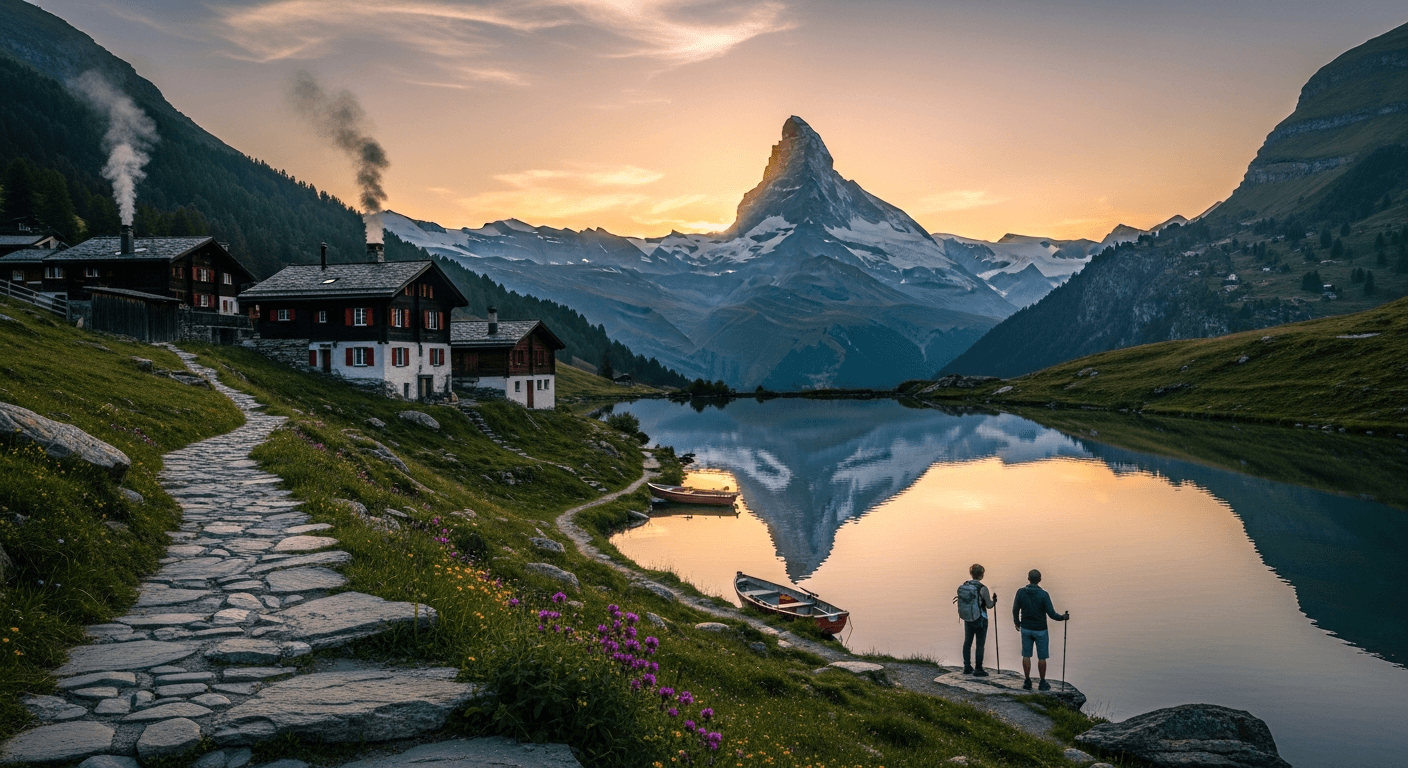
Zermatt exists in a particular relationship with the Matterhorn—not dominated by it, but defined by proximity to it. Cars don't enter here, which changes everything about how you move through space and time. First-time visitors often come for the mountain; return visitors come for the village itself, for the electric feeling of a place that has organized itself entirely around principles of contemplation and care. The hiking is extraordinary, but what keeps people returning is the culture of slow mornings. There are bakeries that seem designed specifically for the act of choosing between one excellent pastry and another. There are hotels where staff remember which guest prefers which tea without being asked. Best visited in early autumn, when the Matterhorn is most likely to be clear and the village is less crowded. The insider move: take the train up to Gornergrat at sunset rather than sunrise—you'll avoid crowds and experience the alpenglow moment when most people are settling into dinner. The photograph: the reflection of the Matterhorn in a small pond near Riffelalp, where tourists rarely venture. Practically, book a guide for at least one hike, even if you're experienced. They'll show you routes that bypass crowds and explain the geology in ways that change how you see the landscape.
5. Lugano: Where Switzerland Becomes Italian
In the Ticino region, Lugano occupies a border space that makes it feel like a secret even Swiss people aren't entirely aware of. The lake is warmer. The architecture is Mediterranean. The quality of light differs noticeably from the rest of Switzerland—it's more generous, less reserved. Travelers return here to remember that Switzerland contains multitudes. There's a lakeside promenade where you can sit with an espresso and watch the mountains frame themselves against Italian hills. The Civico Museo di Belle Arti has an unexpectedly rich collection. The restaurants serve polenta and risotto alongside fondue. Visit in May or early June, when the weather is warm but the crowds haven't yet arrived. The insider's truth: the Noi—a network of local galleries and design studios—operates by invitation and word of mouth. Ask your hotel keeper how to connect. The photograph: the moment when afternoon light strikes the façades of the old town, turning them the color of honey and rust. Practically, spend time in the Ceresio neighborhood rather than the obvious tourist quarters. This is where actual Luganesi live and eat and argue and laugh.
6. Grindelwald: The View That Stays
Unlike Zermatt, Grindelwald remains accessible by car, which paradoxically makes it feel more intimate rather than less. The Eiger looms above the town, creating a particular kind of pressure in the air—not threatening, but present. Travelers return because the hiking here is genuinely unparalleled in accessibility and beauty. You can walk for three hours and find yourself alone on a path with views that would justify a two-week trip. Come in June or September. July and August are shoulder-height-to-shoulder-height with people. The insider observation: most hikers head toward the famous trails. Walk instead toward Schynige Platte via the Grosse Scheidegg trail—you'll pass through genuinely remote landscape. The photograph: the moment at sunrise when the north face of the Eiger transitions from purple to gold. Practically, bring good boots and leave early. The trails here demand respect more than they demand fitness.
7. St. Gallen: The Monastery That Became a Library
St. Gallen isn't immediately obvious as a return destination, which is precisely why travelers find themselves coming back. The Abbey of Saint Gall houses one of the world's oldest libraries, and something about standing in the baroque library rotunda—surrounded by medieval manuscripts, their spines glowing in afternoon light—changes your understanding of what a place can be. The old town itself is painted in shades of cream and terracotta, with details in the woodwork that reward slow walking. Come in autumn when the light is low and the streets are less congested. The insider's move: have coffee at a café along Multergasse, the main shopping street, but sit inside the arcade structures where locals actually gather, not in the obvious tourist seating. The photograph: the ornate wooden balconies of the old houses, with the Abbey visible in the distance. Practically, allocate at least three hours just for the library—rushing through defeats the purpose. The monks who assembled this collection weren't hurried people.
8. Schaffhausen & the Rhine Falls: Water as Theater
The Rhine Falls are the largest in Europe, but somehow this fact doesn't capture what it's like to witness them. The water doesn't fall like other waterfalls—it cascades with a kind of insistent vitality that makes you understand why Renaissance painters came here. Travelers return because watching the falls in different seasons feels like watching different works by the same artist. In spring, when snowmelt feeds the river, the falls are aggressive and loud. In autumn, they're more contemplative. The town of Schaffhausen itself, with its Renaissance architecture and quiet side streets, makes a perfect base. Visit in late April or early May, when the water volume is at its peak but the weather is reliable. The insider observation: rent a small boat and get on the water itself—the perspective changes everything. The photograph: the moment when light catches the spray and creates a temporary rainbow. Practically, stay in Schaffhausen proper and walk to the falls, letting the landscape gradually reveal itself rather than driving directly there.
9. Kandersteg: The Pass Village
Kandersteg exists at the base of the Gemmi Pass, a mountain crossing that has been used for centuries. The village feels less constructed than discovered—as though travelers simply decided to stay here because the geography demanded it. There are no particular attractions, which is the entire point. Travelers return for the simplicity of purpose: hiking, walking, sitting. The light through the valley in early morning has a quality that makes photography feel almost unnecessary—you want to simply be present. Come anytime except peak summer and winter. The ideal window is late June or early September. The insider's move: take the morning train up to Oeschinen Lake and hike back down—you'll encounter practically no one and understand why valleys like this have been inhabited for millennia. The photograph: the moment when mist rises from the forested valley at dawn. Practically, book accommodation well in advance—there are only a few options, and they fill quickly with people who've discovered this place already.
10. Saas-Fee: The Alpine Village That Hasn't Surrendered
Saas-Fee maintains a delicate balance—it's sophisticated enough to feel culturally alive, but small enough that you can walk through it in fifteen minutes. It sits in a valley surrounded by thirteen 4,000-meter peaks, which gives it the particular quality of being surrounded rather than dominated. Travelers return because each season offers a completely different experience of the landscape. Summer brings hikers. Winter brings skiers. But spring and autumn bring something rarer: silence and clarity. Visit in May or September. The insider truth: most visitors focus on the high peaks. Walk instead through the lower valleys toward the glaciers—the landscape is less famous but more intimate. The photograph: the moment at dusk when the valleys darken but the peaks remain illuminated. Practically, the village is car-free in the center, which means it maintains a particular rhythm and human scale. Eat at Zum Stall, a small restaurant where the owner is present and opinionated about food in the best way.
11. Thun: The Lake Jewel with Depth
Thun sits at the foot of where two rivers meet, and there's something about this convergence that creates a particular quality of light and air. The lake itself is pristine—you can see down through meters of water to the bottom. Travelers return because Thun is sophisticated without being pretentious, accessible without being obvious. There's a castle with views over the lake, a promenade with actual locals, and restaurants that exist because people need to eat, not because tourists need entertainment. Visit in early autumn when the water is warmest and the crowds have dispersed. The insider observation: take the steamboat along the lake—it's the local method of transport and offers perspectives you can't get from shore. The photograph: the castle reflected in morning water, with the Bernese Oberland mountains visible beyond. Practically, base yourself here and take day trips to smaller villages rather than treating it as a through-point.
12. Gimmelwald: The Argument Against Improvement
Gimmelwald has no road access, which keeps it fundamentally unchanged. You arrive by cable car or on foot, and immediately you understand why certain places resist development. There are approximately 120 residents, several restaurants, and a collective decision to remain small. Travelers return because Gimmelwald offers something increasingly rare: a place organized around sufficiency rather than growth. The views down the valley toward the Eiger and Jungfrau are extraordinary, but what makes people come back is the absence of friction—the simplicity of arriving somewhere and being received. Visit in June or September for reliable weather and fewer people. The insider move: hike from Mürren to Gimmelwald via Schilthorn—the route is less famous than others but equally beautiful. The photograph: the moment when mist clears and reveals the valley system below. Practically, book accommodation in advance and expect to eat where you're staying. There are no separate tourist restaurants here.
Local Wisdom: How to Move Through Switzerland Like Someone Who's Been Before
The Swiss rail network operates with such precision that you might miss how to actually use it well. Buy a Railpass if you're staying longer than a week, but learn which journeys are worth taking for their own sake rather than as mere transport. The Glacier Express, the Bernina Express, and the Golden Pass Line aren't scenic routes tacked onto ordinary train journeys—they're designed specifically as experiences. Sit on the correct side, bring good coffee if the on-board restaurant isn't calling to you, and surrender to the rhythm of rail travel.
Stay in villages whenever possible rather than major towns. Zurich and Bern are efficient cities, but they're not where Switzerland reveals itself. The energy exists in places like Appenzell, Kandersteg, and Schaffhausen—towns where you can walk the entire place in an hour and still have things worth seeing. Hotels in these villages often provide more nuanced service than larger establishments because the staff actually know their guests.
Timing matters more than most travelers understand. July and August are warm but crowded. September and early October offer the same access with fundamentally different energy. Winter transforms the landscape entirely—don't dismiss it because you associate Switzerland with summer hiking. The light in winter is clearer and lower, and the quiet is profound.
Learn a phrase in Swiss German beyond "hello." The Swiss are pragmatically multilingual, but they notice and appreciate the attempt. "Merci vilmal" (thank you very much) will open doors more effectively than English will.
Seeing the Patterns: Your Route Mapped
The real discovery in returning to Switzerland lies in seeing how these places connect—not just geographically, but in terms of how they reveal different facets of the same landscape. On Touratu's interactive map, you can explore the routes that frequent travelers follow, see where others have discovered secondary villages, and trace the visual themes that repeat across these twenty places. The map transforms these destinations from isolated attractions into a continuous conversation about what Switzerland actually offers to those willing to visit more than once.
Why We Return
There's a particular luxury in returning to a place without agenda. No Instagram moment to capture, no list to complete. Just the knowledge that the light will fall differently this time, that the mountains will be in a different mood, that somehow the same village will feel both familiar and newly revealed. Switzerland has mastered the art of being worth returning to precisely because it doesn't try to reinvent itself. It simply remains—patient, detailed, organized, and deeply alive.
Loading activities…
