
South Africa Travel Guide: Plans & Things to Do
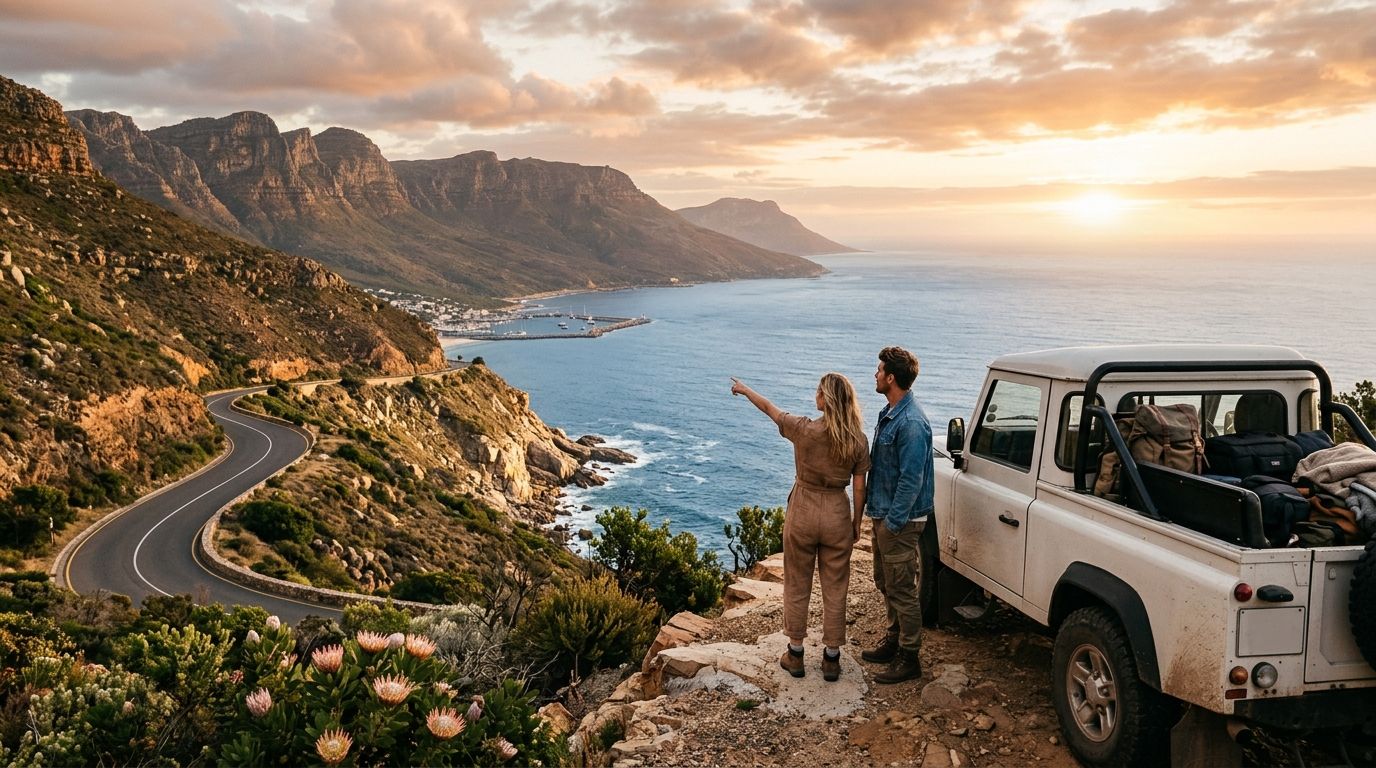
South Africa: A Honest Look at Why This Country Stops You in Your Tracks
The moment you step off the plane at OR Tambo, before you've even cleared baggage claim, you'll notice the light. It's not something travel guides mention—this golden, almost aggressive brightness that seems to hit from every angle. An older woman behind me in the queue smiled and said, "It takes three days to understand what you're looking at." She was right.
South Africa isn't a place that delivers a single postcard moment. It's a country that asks questions back at you, and that's what makes it genuinely difficult to leave.
What Actually Happens When You're There
South Africa works on contradiction. You'll find yourself in a World Cup stadium one afternoon, watching the energy of a nation, then driving through wine country where the light falls so perfectly on the vines that you'll understand why people stay. The game drives in Kruger aren't about luck—they're about patience and being comfortable with long stretches of watching nothing until, suddenly, you're watching a leopard drink from a river while you hold your breath.
The Garden Route flows like someone designed a road specifically to keep you engaged. Every turn opens something different: small towns where locals still outnumber tourists, forests that smell like rain and decay in the best way, coastlines where you can actually see how different oceans meet. Table Mountain isn't just scenery—it's the spine of Cape Town, and whether you hike it or take the rotating cable car, you're making a choice about how you want to experience the city.
The cultural reality of South Africa is written into everything. The museums—Apartheid Museum, District Six Museum—aren't comfortable spaces. They're necessary ones. Walking through them changes how you see the country afterward, the way certain neighborhoods developed, why certain roads exist. This context isn't optional if you want to understand what you're seeing.
Cape Town's markets smell like coriander and fish and human commerce. The Bo-Kaap neighbourhood's pastel houses and narrow streets draw photographers like light draws insects, but the real thing is the lived culture—families who've been there for generations, corner cafes where languages overlap. Robben Island sits in the harbor, visible and significant. Nelson Mandela spent 18 years in a cell you can stand in. The boat ride out is quiet in a way that makes people stop talking.
The Winelands aren't pretentious if you skip the resort experiences and find the smaller farms where the owner's still working the harvest. You'll taste wines that cost less than anywhere else in the world for the quality, and eat lunches on terraces where the conversation matters more than the Instagram angle.
Johannesburg moves differently than Cape Town. It's raw in a way that coastal cities aren't—a city that rebuilt itself several times and still feels like it's moving through something. The Soweto township tours vary wildly depending on who you go with; the good ones are led by people who actually live there, who show you where they got their education, where they drink coffee, not just the historical sites.
The Garden Route's small towns like Mossel Bay and Wilderness have the feeling of places that time forgot briefly and then remembered, but slowly. You can kayak up rivers, walk through forests where you're genuinely small, eat at restaurants run by people who moved here specifically because they wanted to be somewhere quieter.
What to Expect: A Practical Walk-Through
Cape Town takes three to four days minimum if you want to do it properly. The first day is usually adjustment—arriving, settling into a neighborhood (Green Point or the City Bowl if you want to be central, Camps Bay if you want beaches, the Bo-Kaap if you want culture). The second day is Table Mountain and the Waterfront, the third is either the Winelands or False Bay (the cold-water coastline where you'll see penguins at Boulders Beach and feel like you've somehow ended up in two places at once). By day four, you'll have opinions about where you actually want to spend more time.
Kruger National Park isn't a drive-through. Three days is functional; four is better. You're waking at 4:45 AM for the early drive, sitting in an open vehicle watching grass for ninety minutes before anything happens, then something happens and you forget it was slow. The afternoon drives are quieter, hotter, better for smaller animals and birds. You'll see more by moving slowly than by covering distance. Self-driving is possible and significantly cheaper than guided tours, but the guides actually know where things are.
The Garden Route works as a slow drive over three or four days. Staying in different towns—maybe Mossel Bay, then Wilderness, then Knysna—means you're not driving more than two hours between stops. Each town has a different personality. This isn't a route you speed through.
Johannesburg needs two days to stop being disorienting. The first day is Soweto and the museums, the second is the neighborhoods you actually want to spend time in—Maboneng for galleries and design, Braamfontein for the university energy and street food, Sandton if you're interested in understanding where money lives.
Transport between cities is straightforward—flights are cheap and frequent between Jo'burg and Cape Town (2 hours), or you can drive (14 hours, but nobody does this in one go). Within Cape Town, Uber works and costs almost nothing. Within Jo'burg, you'll want to either book taxis through your hotel or use Uber; don't wander after dark in unfamiliar areas. Rental cars are essential for Kruger and the Garden Route. The roads are good, driving is on the left, and people generally follow traffic rules.
Best Time to Visit: Season Matters More Than You'd Think
November to March is summer. It's hot, humid in Cape Town, and December-January is peak tourist season. The Garden Route is glorious but crowded. Kruger is hot but wildlife-spotting is easier because animals congregate around water sources. Christmas and New Year weeks are packed and expensive.
April to May and September to October are the sweet spots. Spring (September-October) brings wildflowers to the landscape and slightly cooler temperatures. Autumn (April-May) offers similar weather without the flowers. Both are less crowded than summer, and prices are more reasonable.
June to August is winter. Cape Town gets genuinely cold and rainy. Kruger is cooler and clearer—excellent for game drives if you don't mind wearing layers. Fewer tourists. Whale season (July-November) brings Southern Right Whales to the coastlines near Hermanus, about 2 hours from Cape Town.
The worst time is honestly December-January unless you specifically want the energy of summer holidays. You'll pay premium prices, deal with crowds everywhere, and spend more time waiting in queues than exploring.
A Few Hours From Everything
Hermanus (2 hours from Cape Town) is South Africa's whale-watching capital. You can actually see Southern Right Whales from the shore during July to November. The town itself is pleasant but not remarkable; the whales are the point.
Stellenbosch (45 minutes from Cape Town) is the heart of wine country. It's charming in an almost too-intentional way, with art galleries and excellent restaurants, but the real experience is on the smaller wine estates outside town where you're dealing with smaller crowds and more actual winemaking.
Blyde River Canyon (near Kruger, 5 hours from Jo'burg) is a canyon that genuinely justifies the drive. The geological formations are unusual, the viewpoints are worth standing at for longer than you initially plan, and the area has solid hiking. Most people miss this because they're focused on Kruger, which is a mistake.
Is It Actually Worth Visiting?
Yes, but not for the reasons travel writing usually says.
South Africa isn't going to be the most comfortable travel experience you'll ever have. You'll need to think about safety in certain neighborhoods (they're real, not imagined fears, but they're also specific areas that locals will tell you to avoid). The economic inequality is visible and sometimes uncomfortable to witness. Infrastructure in some areas isn't what you'd expect from a middle-income country.
But the landscape moves you in a way that's hard to explain until you're there. The biodiversity—eight different ecosystems depending on where you are—means you're never bored by the scenery. The food is actually good and genuinely unique (Afrikaans influences, Indian spice from Durban, Portuguese cooking from Mozambique-era trade). The people, once you're past the surface friendliness, are warm in the specific way people are when they've lived through hard things and come out thinking about community.
It's worth three weeks if you have it. Two weeks minimum. A week is functional but you'll feel like you arrived just as you were leaving.
Quick Facts
- Currency: South African Rand (ZAR). Currently around 18-20 to 1 USD (exchange rates fluctuate). ATMs are ubiquitous in cities.
- Visas: Most Western passport holders get 90 days on arrival. Check current requirements for your nationality.
- Language: 11 official languages, but English is widely spoken in cities and tourist areas.
- Electricity: 220V, 50Hz. South African plug (Type M, three large round pins). Power cuts happen occasionally in certain areas, but aren't constant.
- Health: Malaria is present in Kruger and certain northern areas. Prophylaxis is recommended. Yellow fever vaccination isn't required but is recommended if you're traveling from certain countries.
- Budget: Mid-range is realistic at $40-60 per day for accommodation, $10-20 for meals, $50-100 for activities. Self-catering and Airbnb are cheaper than hotels.
- Mobile Data: Cheap and reliable. Pick up a local SIM from Vodacom or MTN at the airport.
The Real Experience
What you'll remember isn't the Instagram angles, though there are plenty. It's smaller things: the conversation with someone on a wine estate about their family's history in the area. The moment you actually see an elephant and realize you've been holding your breath. The way the light hits the Bo-Kaap at 6 PM and suddenly everyone's outside on their stoops. Eating snoek (a local fish) at a beachside shack in Hout Bay while watching the sun lower. The specific exhaustion after a long game drive and the specific calm it brings.
South Africa rewards the curious and the patient. It doesn't rush you; it just asks that you show up honestly and pay attention.
Your Next Step
Start exploring South Africa's regions, routes, and specific activities through Touratu's interactive map, where you can zoom into different areas, see travel videos of what each region actually looks like, and book activities directly. The map lets you plan routes based on how much time you have, and watching the videos of places before you visit means you'll arrive with better questions and fewer misconceptions.
Loading activities…
