
South Aegean Islands: Best Places and Hidden Spots
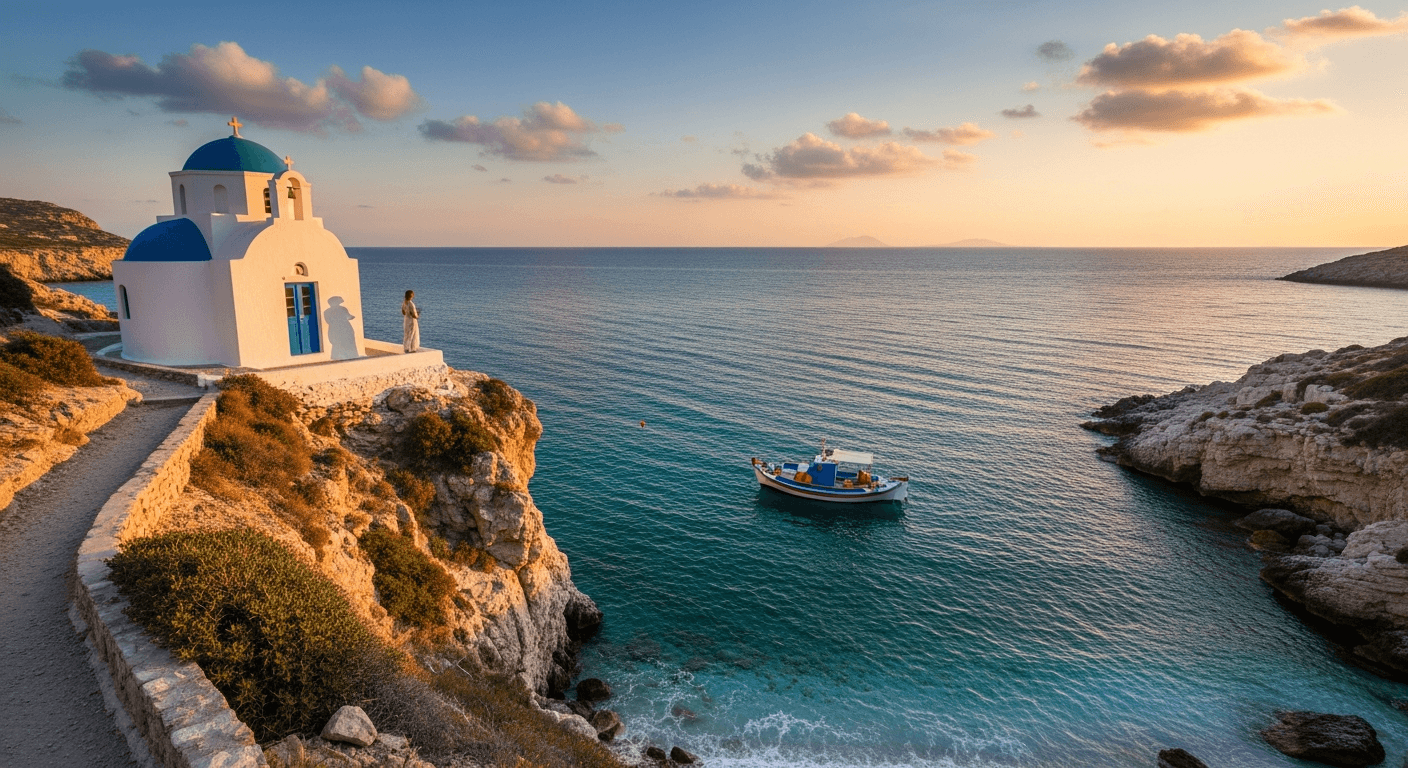
South Aegean: Where Islands Reveal Themselves Slowly
There's a moment that arrives without warning—usually around midday, when the light hits the water at a particular angle and you realize you've stopped checking your phone. You're standing on a stone terrace with a cold glass of wine, watching a ferry dissolve into the horizon, and the only sound is wind moving through olive trees. This is what the South Aegean offers, not as a destination but as a slowdown. A deliberate unlearning of how to rush.
The South Aegean isn't one island. It's a collection of distinct personalities scattered across warm water—Rhodes, Symi, Patmos, Leros, Kos, and smaller islands whose names take practice to pronounce. Each one has developed differently, shaped by history, geography, and the people who chose to stay rather than leave.
What Actually Makes This Region Worth the Effort
Most people know Rhodes. They've heard of Patmos. But the South Aegean's real character emerges in the quieter corners—in how ferries connect these islands, how local rhythms still exist separate from tourism cycles, and how some nights still feel genuinely undisturbed.
I spent three weeks moving between these islands, staying longer than travel guides suggested, and what struck me wasn't the postcard moments. It was the consistency of genuine hospitality that hasn't been packaged into a product. A woman in Symi, whose family has lived there for five generations, actually cared whether I understood why the harbor houses are painted in specific colors. A fisherman on Leros corrected my terrible Greek pronunciation with patience. These interactions happen because tourism here exists alongside real life, not instead of it.
The region's architecture tells a different story than mainland Greece. You see Ottoman influence in doorways and narrow streets, Italian Art Deco details from when Rhodes was a colonial possession, Byzantine churches tucked into hillsides. Rhodes Old Town, in particular, remains genuinely complex—a medieval fortress-city where you can spend hours and still find corners that feel accidental rather than curated.
What to Actually Expect When You Get There
Rhodes and its sprawl
Rhodes is the anchor. Lindos, on the southern coast, gets the crowds because the Acropolis there is legitimately impressive—a hilltop sanctuary with Doric temples commanding views across three seas. The town below is all whitewash and bougainvillea, compact enough to walk in an hour. But Rhodes town itself, particularly the Old Town, deserves more than an afternoon. The Street of the Knights is medieval Europe transplanted into Greek sunlight. The Palace of Grand Masters is theatrical—Byzantine mosaics, Italian Renaissance fireplaces, Ottoman courtyards all layered together.
The lesson: go to Rhodes in May or September. June through August, Lindos becomes a parking lot of tour groups. The Old Town survives summer better because its narrow streets naturally regulate crowds, but you'll still fight for restaurant tables after 8 PM.
Symi's harbor obsession
Symi is thirty kilometers away but feels like a different country. The harbor is a complete circle of buildings—colorful houses stacked vertically, a working fishing fleet, cafés where fishermen actually sit. You arrive by ferry and the temptation is to photograph immediately. Don't. Sit with coffee first. Watch how the light changes the colors. The houses aren't quaint decoration; they're how people live.
Most visitors stay two or three hours. They're missing the point. Stay overnight. Walk to Nannou Beach the next morning, swim in water that's colder and cleaner than Lindos, see how the island empties of day-trippers. Visit Pedi Beach on the eastern side—fewer people, excellent taverna, the sort of place where you understand why someone would build a house here permanently.
Patmos and religious pilgrimage-tourism intersection
Patmos draws Greek Orthodox pilgrims and secular tourists into an uneasy mix. The Cave of the Apocalypse, where John supposedly wrote Revelation, sits two-thirds up a hillside. The Monastery of Saint John dominates the skyline. These sites genuinely matter to people, and the island respects that reverence even while accommodating tourism.
Chora, the main town, is more orderly than Symi or Lindos—streets follow logic, whitewash is whiter, tourism infrastructure is smoother. There's nothing wrong with this. It means you can navigate easily, find good restaurants without exhaustive research, and experience religious sites without performative religious behavior being required.
Skip Skala (the port town) and head immediately uphill to Chora. The waterfront harbor in Skala is functional, not memorable. Chora is where the island actually exists.
Kos's unexpected complexity
Kos gets a bad reputation for package tourism, particularly in Kardamena on the south coast. Ignore Kardamena. Head to the north coast instead—Tingaki, Marmari—where tourism is still present but less compressed. The Asklepion (ancient medical school) sits inland and deserves a half-day visit. Hippocrates' plane tree, in Kos Town, is supposedly the exact tree where the physician taught. Whether that's true historically doesn't matter much; what matters is the tree has been growing for 2,400 years.
Leros and Kalymnos: the ones nobody plans for
These islands appear on maps but rarely in itineraries. Leros is sleepier, good for cycling between small villages and beaches. Kalymnos is famous among rock climbers—the landscape is dramatic, vertical, genuinely beautiful. If you have a week and want to escape the Rhodes-Patmos conveyor belt entirely, these two justify the extra ferry connections.
Planning Your Actual Visit
Timing matters more than elsewhere
The South Aegean follows Mediterranean seasons strictly. May and September offer warm water, sunny days, and manageable crowds. June, July, August are hot and packed—Rhodes becomes a theme park. October is still warm, quieter, but some island ferries reduce schedules. April and November are gambles; you might have perfect weather or unexpected rain.
Plan 10-12 days minimum if you're island-hopping. Five days gets you Rhodes and Lindos only, which misses the region's actual character. Two weeks allows unhurried exploration of four or five islands plus actual rest days.
Ferry logistics
Ferries connect these islands, but not always when you want. Rhodes has the main port. Ferries to Symi take 45 minutes. Patmos is further—ferry times vary depending on whether it's the fast boat or local service. Blue Star Ferries runs the main lines; they're reliable, occasionally delayed, and crowded during peak season.
Download the ferry schedules early. Plan your route backwards from your final destination. If you need to leave on specific dates, book return ferries when you arrive.
Where to stay
Rhodes Old Town: Hotels here charge premium prices but eliminate transport confusion. You're walking to everything.
Lindos: Stay in the village, not the resort hotels spreading up the hillside. Stavros Taverna has rooms above the restaurant—basic but perfectly positioned.
Symi: Any harbor-facing room justifies the expense. Alternatively, stay in Pedi and take a local bus.
Patmos: Chora is essential. Astoria is a decent mid-range hotel. Cheaper rooms scattered through neighborhood backstreets.
Don't chase reviews obsessively. Ask locals on arrival. They know which places are genuinely decent versus which are popular because tourists expect them to be.
Transportation and costs
Ferry tickets average 30-50 euros. Internal bus systems exist but schedules are infrequent outside main towns. Renting a scooter is viable if you're comfortable with Greek driving habits (fast, creative). Car rental is unnecessary unless you're staying two weeks.
Eating out costs more than mainland Greece. Budget 15-20 euros per meal at restaurants serving tourists, 8-12 euros at local establishments. Wine is reasonable.
Nearby Places Worth the Detour
Chalki Island
Twenty minutes from Rhodes by ferry. Population under 300. No cars. A working harbor and vacation homes scattered through the village. If you want "escape" without pretense, this delivers it. Emporio Beach is small and peaceful.
Tilos
Between Rhodes and Patmos in ferry schedules. Even quieter than Chalki. Good hiking. A legitimate monastery. The kind of place where staying three nights feels like you've accomplished something real rather than consumed an experience.
Nisyros
Volcanic island. Sits in the harbor and you immediately understand the geology—dark sand, dramatic geology, different climate than surrounding islands. The volcano crater is accessible. Tourism hasn't overrun it yet.
Is It Actually Worth Your Time?
The South Aegean repays whatever you invest. Come for three days and you'll have nice beach photos and tired feet. Come for two weeks and you'll understand why people build lives here, why ferries connect these islands so deliberately, why some rhythms resist acceleration.
This isn't somewhere you go to check boxes. It's somewhere you go to remember how days can move at variable speeds, how 10 AM coffee can genuinely be the best part of a morning, how people from completely different backgrounds can share a taverna and the interaction doesn't need English or performance.
The islands have dealt with tourism for decades. They've learned to accommodate it while preserving what matters locally. That balance is increasingly rare.
Quick Facts
- Best time: May, June, September, October
- Duration: 10-14 days for proper island-hopping
- Main hub: Rhodes (airport and ferry terminal)
- Inter-island ferries: 30 minutes to 2 hours depending on route
- Language: Greek; English spoken in tourist areas, essential in villages
- Currency: EUR
- Visa: EU citizens unrestricted; non-EU visitors check current requirements
- Getting there: Flights to Rhodes from most European hubs
Final Word
Use Touratu's interactive map to explore ferry routes, plan your island sequence, and watch travel videos of specific harbors and villages. Having the route visualized before you arrive removes navigation stress and lets you focus on what actually matters—the moments when the light changes and you stop checking time.
Loading activities…
