
Slovakia Travel Guide: 20 Places Worth Revisiting
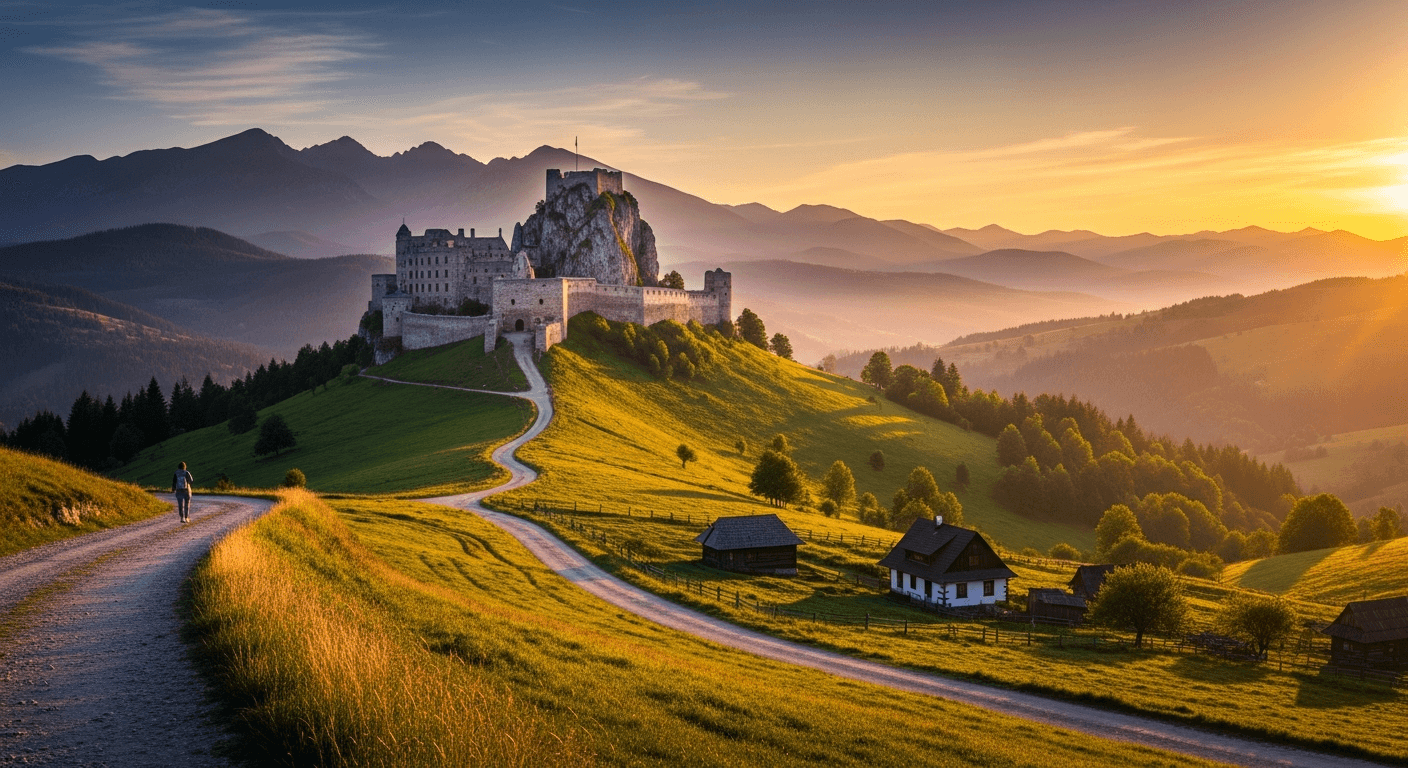
Slovakia: The Twenty Places That Keep Travelers Coming Back
There's a particular quality to Central European light in autumn—how it turns gold not with drama, but with a kind of melancholy certainty. Slovakia has this light in abundance. You'll notice it first when arriving in Bratislava, how it catches the Danube and makes the old town feel both timeless and impossibly present. What draws travelers back to Slovakia isn't a single landmark or a viral moment. It's something quieter: the discovery that this wedge of land between the High Tatras and the Carpathians contains more contradictions—and more texture—than any guidebook suggests. Medieval castles sit beside communist-era brutalism. Wine regions smell of earth and centuries. Mountains rise without ceremony. People speak with dry humor and genuine warmth to those who bother to notice.
After the first visit, something shifts. You realize that Slovakia doesn't perform for tourists. It simply exists, stubbornly itself, which is precisely why people keep returning.
1. Bratislava's Old Town: Where Empires Left Their Fingerprints
The cobblestones here have absorbed so much history they've become spongy with it. Walking through the old town isn't tourism—it's archaeological wandering. The Primate's Palace reveals itself suddenly, yellow and confident. The Michael Tower watches from its medieval perch. But the real magic surfaces in the quieter passages: the courtyards where laundry flutters above baroque facades, the wine bars tucked beneath street level where locals drink Veltlínské Zelené and argue about politics with the ease of people who've survived worse.
Why it endures: Bratislava avoids the trap of becoming a theme park version of itself. Yes, tourists arrive, but they're diffused through narrow streets rather than concentrated. The city breathes.
The experience: Arrive early morning, before the tour groups materialize. Climb to the castle. Watch the city arrange itself below.
Best time: May or September—the shoulder seasons when the light is clean and the crowds are negotiable.
Insider note: Locals slip into wine bars on Sedlárska ulica without ceremony. Follow them.
Photography moment: The view from the castle ramparts at dusk, when the Danube turns pewter.
Practical tip: The city is small enough to navigate without maps, but bring comfortable shoes—the stones are unforgiving on day-old blisters.
2. Vlkolínec: A Living Museum That Doesn't Know It's Special
This UNESCO village in the Low Tatras region consists of forty-seven wooden houses arranged with the casualness of things that have always been this way. A UNESCO designation could have turned it into performance art. Instead, people still live here—smoking chimneys suggest actual winters, actual lives. The houses are painted in faded creams and grays, their windows small against the mountains. It feels less like stepping back in time and more like stumbling into someone else's present.
Why it endures: Authenticity isn't performed here; it's lived. Vlkolínec doesn't need to try.
The experience: Walk the narrow lanes without rushing. Sit on a bench. Listen to the wind move through the valley.
Best time: June through September. Winter is beautiful but isolates the village entirely.
Insider note: There's a small museum—skip it. The village is the museum.
Photography moment: Any house front with mountains behind it. The composition writes itself.
Practical tip: Arrive by midday; the light changes dramatically after 3 PM.
3. High Tatras: Where Hiking Feels Like Pilgrimage
The peaks here are sharp enough to cut the sky. The trails are technical without being impossible—there's something democratic about Tatra climbing, a welcome absence of gatekeeping. Lake Štrbské Pleso reflects the mountains so perfectly it feels like heresy. The mountain air tastes clean in a way that makes you aware you've been breathing something else your entire life. Families hike beside serious mountaineers beside solo travelers seeking something wordless.
Why it endures: The mountains are accessible without being trivial. You earn the views but don't need special equipment.
The experience: Take the Poprad-Tatry train to Štrbské Pleso. Hike to one of the surrounding lakes. The journey matters more than the destination.
Best time: July through August for clear trails; June for wildflowers.
Insider note: The cable cars are useful for descents but rob you of the full experience. Hike up.
Photography moment: Lake Popradské Pleso at sunrise, when mist rises off the water like memory.
Practical tip: Weather changes rapidly. Bring layers despite the forecast.
4. Banská Štiavnica: The Town Built on Silver Obsession
Once upon a time, this hill-town mined silver and became wealthy beyond reason. That richness lingers in the architecture—baroque churches, Renaissance townhouses, fountains built by someone who had enough money to pipe water through mountains. But prosperity ended. Banská Štiavnica was abandoned by fortune, which is precisely why it survived. The baroque didn't get demolished for shopping centers. The mining lakes reflect the architecture back to itself. It's a place that remembers what it was without performing that memory.
Why it endures: Travelers recognize that decay and beauty aren't opposites.
The experience: Walk to the mining lakes that ring the town. Visit the mining museum if technical history appeals. Mostly, wander.
Best time: September and October, when the light turns amber and the crowds dissolve.
Insider note: The locals have a dry sense of humor about the town's faded grandeur. They appreciate visitors who notice without pitying.
Photography moment: The church reflected in the lower mining lake at late afternoon.
Practical tip: It's hilly. Very hilly. Good shoes are not optional.
5. Lučenec Region: Wine Country Without Pretense
Slovakia produces wines that almost no one outside the country knows exist. The Lučenec region grows Veltlín and other varietals in sandy soil that gives the whites a particular mineral quality. The vineyard owners here aren't performing hospitality for tourists—they're tending grapes because their families did and their families before them. You can taste the difference between wine made for export and wine made for living.
Why it endures: Genuine wine culture without Instagram-optimization.
The experience: Visit family-run vineyards. Taste with the person who made it. Understand that wine is agriculture, not luxury.
Best time: September during harvest, or May during bloom.
Insider note: The wine may not be famous, but it's honest. That's rarer than you'd think.
Photography moment: Golden hour through the vineyard rows, the worker's silhouette against the vines.
Practical tip: Arrange visits in advance through local tourism boards. These are working operations, not destinations.
6. Spišský Podzamok: The Castle That Predates Certainty
This castle rises from the Slovak Plain with the inevitability of something that's always been there. The first mentions appear in documents from the 13th century, but the stones feel older—the kind of old that precedes record-keeping. From certain angles, particularly from the small village below, it looks not like a structure but like a natural formation that architecture happened to colonize. The approach is long and involves some hiking, which filters out the casual visitor. You arrive breathless, which is the point.
Why it endures: The castle makes you feel small. There's something necessary about that.
The experience: Hike from Spišské Podhradie village to the castle. The walk is the experience; the castle is the confirmation.
Best time: May through September.
Insider note: Many visitors skip this for the more famous Oravský Podzamok. Their loss.
Photography moment: Dawn light on the castle walls, looking east toward the plain.
Practical tip: Bring water. There's nothing between the village and the castle except landscape and history.
7. Oravský Podzamok: The Castle That Earned Its Fame
In contrast, this castle appears on calendars. It sits dramatically above the Orava River, towers and walls arranged as if specifically designed to make photographers weep. Here's the thing though: the fame is justified. Yes, it's crowded on summer days, but the architecture is genuinely extraordinary. The courtyards contain five centuries of construction. The views from the ramparts actually justify the cliché. Sometimes the popular places are popular for honest reasons.
Why it endures: It's worth the attention, which paradoxically makes it worth visiting despite the attention.
The experience: Tour the interior to understand how medieval space was actually organized. Climb everything climbable.
Best time: Early September when the weather is stable but summer crowds have departed.
Insider note: The castle café serves standard tourist fare. Skip it and eat in the village below.
Photography moment: The full castle from the river bridge, particularly in golden hour when the stone turns honey-colored.
Practical tip: Go on a weekday if you can. The castle's architecture remains exceptional regardless of crowds, but solitude changes the experience.
8. Kremnica: The Medieval Mining Town Time Forgot
Kremnica exists in its own temporal pocket. This medieval town mined gold and lived lavishly until the mines exhausted themselves. Now it's quiet—genuinely quiet—with narrow streets and baroque churches and a castle that watches over everything without needing to perform. The mint that operated here for centuries is still in operation, which somehow feels appropriate: the town that made gold now makes coins.
Why it endures: It offers the medieval experience without the medieval crowds.
The experience: Climb to the castle. Tour the mint museum. Eat at one of the restaurants in the old town where the owner likely knew your waiter's grandmother.
Best time: October and April, when the light is particular and the temperature is negotiable.
Insider note: Ask locals about the ghost stories. Kremnica has opinions about its past.
Photography moment: The castle framed through the arch of the old town gate.
Practical tip: It's small enough that two hours covers the essentials, but there's value in staying longer and soaking in the pace.
9. Bardejov: The Town That Resists Modernity
In the eastern reaches of Slovakia sits a town that appears to have signed a pact with time. Bardejov keeps medieval town planning intact—the square is enormous and surrounded by preserved townhouses. The basilica contains a staggering collection of medieval altarpieces. The streets are stone, the light is old-fashioned, and nobody is performing touristic enthusiasm. The cafés exist for locals. The restaurants serve food that someone's grandmother created.
Why it endures: Bardejov demands that you slow down to its pace.
The experience: Spend an afternoon in the town square. Visit the basilica. Talk to people. There's no checklist here.
Best time: June and September.
Insider note: The Saturday market in the square is authentic market, not tourist market. Arrive early.
Photography moment: The square at night when the townhouses are lit from below and the stone glows.
Practical tip: Bardejov is in eastern Slovakia. It requires planning to reach, which means it filters out casual tourism. Respect that by spending time.
10. Čunovo: Where Water and Architecture Meet Unexpectedly
This dam-created recreational area doesn't fit any traditional Slovak narrative. It's modern. It's utilitarian. It's somehow compelling. The water is impossibly turquoise. The artificial landscape has developed genuine character—people come here for swimming, windsurfing, kayaking. It's not medieval, not mysterious, not particularly romantic. But it's honest and it works.
Why it endures: Slovakia contains multitudes. Čunovo admits that not everything historical has value.
The experience: Swim if the season permits. Rent a kayak. Sit on the promenade and watch families enjoy water and sun.
Best time: June through August.
Insider note: This is where Slovaks vacation. Traveling there means briefly joining that contemporary culture.
Photography moment: The turquoise water against the sky at midday—the colors are almost abstract.
Practical tip: The facilities are well-maintained and accessible. This is actual recreation, not tourism destination.
11. Poniky: The Village That Chose Horses
In the southern lowlands sits a village built by and for horses. It's not a tourist attraction, though tourists can visit. It's a functioning community where horses outnumber people and the architecture reflects equestrian life. There are stables with more character than many farmhouses. The horses are treated as partners, not performances. The village smells of hay and earth and animal care.
Why it endures: It's utterly genuine. No one built this for tourism.
The experience: Arrange a ride with one of the local horse breeders. Spend time in the landscape at horse pace rather than human pace.
Best time: May through September.
Insider note: The slower pace forces presence. Your phone will have no signal for substantial stretches, which is the point.
Photography moment: The morning light on the main avenue with horses moving through it.
Practical tip: Book rides in advance. Respect that these are working animals, not tourist attractions.
12. Devín Castle: The Ruin That Watches the Danube
At the confluence of the Danube and Morava, Devín Castle rises in fragments. It's been ruined for centuries, since Habsburg authorities demolished it. But ruins have their own beauty. You can read the castle's structure in what remains—the towers, the walls, the central keep. The Danube flows below. The three-country border (Slovakia, Austria, Hungary) is near, though you won't feel it as a visitor. The castle remains. The river remains.
Why it endures: Some places are powerful because of what's missing as much as what remains.
The experience: Climb to the highest remaining point. Look at the river and the borders and the history contained in stone and water.
Best time: April and October when the light favors ruins.
Insider note: The museum is somewhat superfluous. The ruin tells its own story.
Photography moment: The castle silhouetted against evening sky, the Danube flowing silver below.
Practical tip: It's close to Bratislava. Many make it a day trip without lingering. Lingering rewards you.
Local Intelligence: How to Move Through Slovakia Like Someone Who Belongs
Slovakia's infrastructure is genuinely good. Trains connect major towns with reliability. Buses reach smaller villages. Driving offers freedom if you're comfortable with mountain roads that demand attention. The country is small enough that distances that seem significant on the map prove manageable in reality—Bratislava to the High Tatras is perhaps four hours by car.
The best neighborhoods to stay in are the old towns: Bratislava's Staré Mesto, the old quarters of Banská Štiavnica, Bardejov's center. These aren't always the cheapest options, but they offer genuine living rather than hotel isolation. Eat where locals eat. The restaurants serving tourist-optimized food exist, but they're avoidable. The food that matters—the pork dishes, the local wines, the pastries from family bakeries—announces itself through smell and word of mouth.
Timing matters. September is exceptional—the summer crowds have departed, the weather remains warm, the light turns golden. May is similarly excellent but busier. July and August are warm and crowded, particularly in mountain regions. Winter is beautiful if you're prepared for cold, but many smaller attractions close.
Respect local etiquette. Slovaks are warm but not effusive. They value directness. They appreciate visitors who learn basic phrases. Photography is fine; asking permission is finer. The country has absorbed significant history—treat that awareness with quiet respect.
Discover More on Touratu's Interactive Map
Explore traveler routes, reels, and visual discoveries from these 20 locations on Touratu's interactive map. See where travelers have documented their moments, find emerging patterns in routes, and discover connections between places that the map reveals in ways linear lists cannot.
Why We Return
Slovakia doesn't present itself as a destination. It simply exists—layered, contradictory, self-assured. The castles rise without begging for attention. The towns keep their pace regardless of who arrives. The mountains don't perform. The wine isn't famous but tastes honest. Travelers return because these places offer something increasingly rare: the experience of moving through somewhere that doesn't exist primarily for you. The landscape doesn't care if you photograph it. The locals appreciate politeness but don't require adoration. The history is present but doesn't overwhelm.
There's freedom in that indifference. It allows you to move through Slovakia at your own pace, finding what matters to you rather than consuming what's been designated as important. After the first visit, when you understand this, you begin planning the return.
Loading activities…
