
Best Places to Visit in Sihanoukville, Cambodia
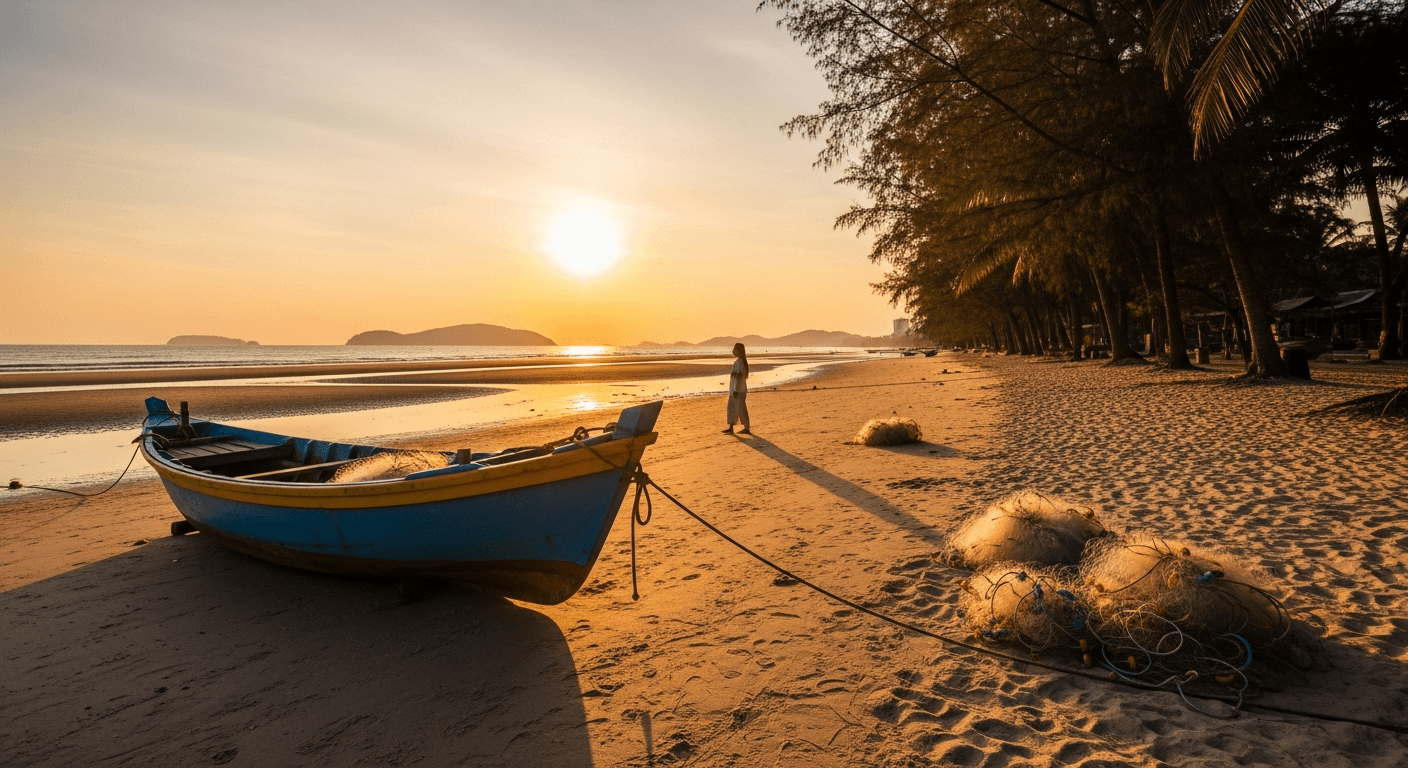
Sihanoukville: Where Cambodia's Coastal Reality Meets Tourist Imagination
The sound hits you first—not the ocean, but the construction. Pile drivers echo across Sihanoukville's coastline like a relentless metronome, a reminder that this port town has stopped pretending to be a quiet beach destination. Instead, it's become something far more interesting: a place caught between versions of itself, where you can observe how tourism reshapes a city in real time.
I arrived on a humid afternoon, stepping off a minibus into controlled chaos. Tuk-tuks competed for fares, Russian speakers haggled over accommodation, and a vendor near Victory Monument grilled fish with the kind of practiced efficiency that suggested he'd done this ten thousand times. This isn't the sanitized beach town you might have imagined. It's messier, noisier, more complicated—and honestly, more worth understanding than most travel guides admit.
What Actually Happens in Sihanoukville
Sihanoukville occupies a strange position in Southeast Asian tourism. Twenty years ago, it was a legitimate escape—a working fishing port with a few guesthouses and minimal infrastructure. Today, it's a city of roughly 100,000 people transformed by Chinese investment, gambling operations, and a tourism industry that's evolved faster than its infrastructure could handle.
But here's what makes it genuinely worth a visit: it's one of the few places in Cambodia where you can see infrastructure and economic change happening openly. There's something anthropologically interesting about watching a city remake itself. The old town still functions as a town—people live here, work here, send their children to school—rather than existing solely for tourists.
The beaches themselves are functional rather than spectacular. They're not the crystalline waters of Thailand or the dramatic limestone of Halong Bay. What you get instead is warm water, reliable sun, and the actual experience of how Cambodians use their coastal access. Locals swim fully clothed. Families set up under umbrellas for entire weekends. The shoreline feels lived-in rather than performed.
Walking Through the Experience
Downtown and the Working Waterfront
Start where most visitors never do—near the fishing port. This isn't Instagram-friendly, which is precisely why it matters. You'll see the working infrastructure that actually built Sihanoukville: fishing boats, cargo operations, the daily rhythm that has nothing to do with tourism. The area around Serendipity Beach Road has restaurants facing the water where locals eat breakfast—crab soup, grilled fish, coffee with condensed milk. Prices are genuine because locals aren't being overcharged.
The Old Market (Phsar Kraom) is worth an hour of wandering. It smells like every Southeast Asian market—dried fish, fresh fruit, meat hanging from hooks—and operates on actual merchant logic rather than tourist convenience. You can buy what you need or simply observe how people purchase their daily supplies. A bowl of noodles from a stall costs about $1.50.
The Beach Reality Check
Ochheuteal Beach (often called Sihanouk Beach) is the main public stretch. It's not pristine. The sand isn't white. The water isn't transparent. But it's genuine—a place where actual commerce and actual swimming coexist. Beach loungers rent for a few dollars. Restaurants serve cold beer and grilled seafood. The vibe is relaxed without being manufactured.
Independence Beach, on the northwestern peninsula, is quieter and slightly less developed. It has fewer vendors, more shade, and a more authentic local character. This is where you'll find actual residents swimming rather than tourists photographing themselves.
Ream National Park
About 15 kilometers outside the city, Ream National Park offers the version of Sihanoukville that tourism marketing typically emphasizes—mangrove forests, coastal ecosystems, wildlife. A motorboat trip through the mangroves costs around $15-20 per person and takes about two hours. You'll see salt farms, observe fishing villages built on stilts, and understand the actual geography that supports the region. The park's beach at Ream is quieter than the downtown beaches, though it requires a longer journey to access.
The park infrastructure is functional but basic. Guides are knowledgeable about local ecology rather than trained in tourism patter. This means you get actual information about mangrove restoration, local fishing practices, and why these ecosystems matter.
Koh Rong and Koh Rong Sanloem Islands
These islands, about 25 kilometers offshore, represent the destination Sihanoukville probably imagined it would become. Koh Rong has transformed significantly—it went from barely inhabited to featuring beachfront bars, diving operations, and tourist infrastructure. Koh Rong Sanloem remains smaller and quieter, with fewer resources but also fewer crowds.
Both islands require a ferry journey of 45 minutes to two hours from the main port. The experience is genuine maritime commerce—you're traveling on actual transport boats, not tourism vessels. Ferries cost $10-15. Accommodation on the islands ranges from $10 guesthouses to $50+ beach bungalows. The islands have electricity, usually from generators, and limited fresh water, which affects prices and availability.
Planning Your Actual Visit
When to Come
November through February is the established "dry season"—the most comfortable time temperature-wise, though Sihanoukville isn't actually that seasonal compared to northern Cambodia. It's warm and humid year-round. December and January see slightly more tourists and slightly higher prices. Shoulder months (March-April, September-October) are hotter and more humid but significantly less crowded and cheaper.
The monsoon (May-October) brings heavy rain, but it usually comes in dramatic afternoon bursts rather than all-day soaking. Many travelers find this period underrated—the rain keeps tourist numbers low, the landscape is vividly green, and accommodations offer genuine discounts.
How Long to Stay
Three to four days is realistic for understanding Sihanoukville without exhaustion. One day downtown (markets, Old Town, beaches), one day at Ream National Park or island exploration, and a day for swimming and eating genuinely well. Anything longer requires specific interests—diving instruction, island island-hopping, or simply appreciating the pace.
Getting There
From Phnom Penh: Minibuses run throughout the day (4-5 hours, $5-8). The highway is highway-like—not necessarily smooth but functionally paved. Flying is technically possible but not practical for the distance.
From other coastal destinations: It's possible to travel to/from Kampot or Kep, but transport is less frequent. Most people base themselves in Sihanoukville if they want coastal access.
Within Sihanoukville: Tuk-tuks cost $2-4 for trips around the city. Motorbike rentals cost $5-8 per day if you're comfortable with that transport style. It's small enough to navigate.
Practical Crowding
Sihanoukville is never actually crowded in the way that Phuket or Bali feel crowded. The beaches don't have the shoulder-to-shoulder compression of major resort destinations. What has changed is the nightlife scene, which shifted significantly toward serving Chinese tourists and sex tourism. This is worth acknowledging: certain areas (particularly around Diamond Island development and specific bar districts) have a very specific character that's not for everyone.
The daytime experience—beaches, parks, markets, restaurants—remains straightforward and accessible without navigating that context.
Nearby Places Worth Considering
Kampot (about 90 km east, 2-3 hours by minibus) is a colonial-era river town that maintained its small-town character better than Sihanoukville. River walks, pepper plantations, and a slower pace make it worth the drive if you want contrast. The cost is identical to Sihanoukville.
Kep (further east from Kampot, total 3-4 hours from Sihanoukville) is a smaller coastal town with decent beaches and a completely different development trajectory. It's where you'll find the actual French colonial architecture and a genuinely quieter beach experience.
Ream National Park's Mangrove Trails extend significantly beyond the typical boat tour if you want more exploration. The hiking infrastructure is minimal, which is either perfect or challenging depending on your preferences.
Is It Actually Worth Visiting?
This depends entirely on what you're looking for. If you want a postcard beach destination, there are better options in Southeast Asia. If you want to understand how coastal cities in Cambodia actually develop, how economic change reshapes communities, and what a working Southeast Asian port town actually looks like—then yes, it's genuinely worth visiting.
The beaches work fine for swimming and relaxation. The food is excellent and affordable. The people are friendly without that performative tourism enthusiasm. The infrastructure works adequately. What you won't get is exclusivity or the sense that you've discovered something unknown. What you will get is the actual experience of a place that's actively becoming something, rather than a destination frozen in a particular stage of tourism development.
For a week in Cambodia's south, Sihanoukville pairs logically with Kampot and Kep. For a beach break from Phnom Penh, it works perfectly well. For someone looking for quiet, uncrowded beaches, you should probably look toward the island options instead.
Quick Facts
- Population: Approximately 100,000
- Best beach months: November-February (least rain, moderate humidity)
- Average meal cost: $2-5 for local restaurants, $8-15 for tourist-oriented dining
- Accommodation range: $8-12 for guesthouses, $25-50 for mid-range, $60+ for hotels
- Beach condition: Functional, not pristine. Warm water year-round
- Water quality: Swimmable, though not transparent
- Infrastructure: Roads are paved, electricity is reliable, water is available
- Language: Khmer primarily; English spoken in tourism areas; Mandarin increasingly common
Final Thoughts
Sihanoukville works best when you approach it without expectations borrowed from other beach destinations. It's not trying to be Bali or Thailand. It's a Cambodian coastal city doing what Cambodian coastal cities do—serving as a port, an economic hub, and increasingly, a tourist destination. That multifunctionality makes it more interesting than purely tourism-designed places.
Come for the swimming, the seafood, and the relatively accessible island access. Stay for the observation of how a real place works—where tourists are present but not everything is designed for them. That's increasingly rare in Southeast Asia, and it's worth experiencing.
For more detailed route planning, interactive maps, and travel videos exploring Sihanoukville's neighborhoods and the broader Cambodian coast, check out Touratu's interactive map. You can explore the exact locations mentioned here, see community recommendations, and find navigation routes to help plan your journey more effectively.
Loading activities…
