
Salzburg Attractions: Best Places Worth Your Time
Salzburg: Beyond The Sound of Music
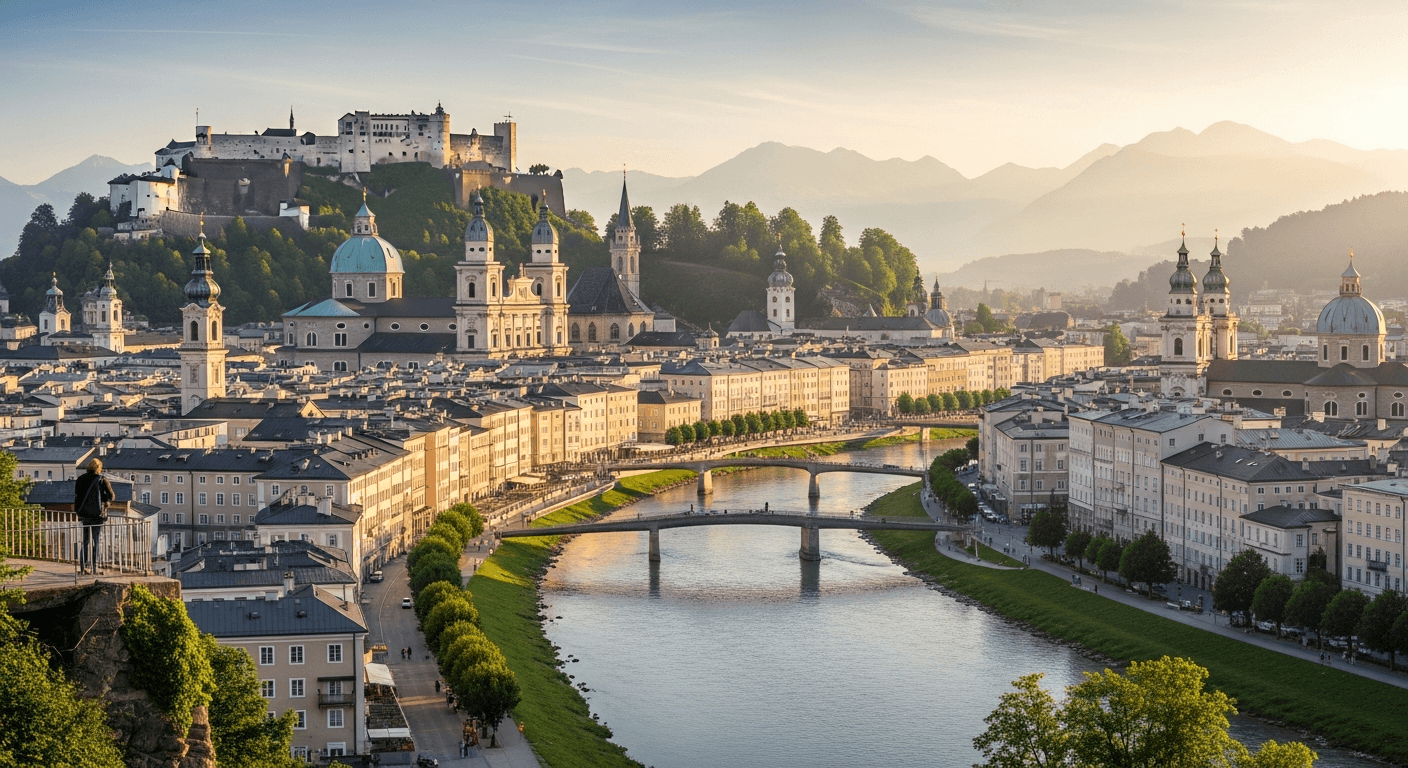
The Salzach River cuts through the city like a clean thought, dividing the medieval Altstadt from the newer baroque districts. Stand on any of its bridges at dusk, and you'll see why Mozart was born here—there's something about the light, the way it catches the spires and then pools in the water, that makes you understand why people become artists in places like this.
Salzburg doesn't announce itself with drama. It whispers. And if you're paying attention, it reveals itself slowly: a courtyard hidden behind an anonymous wooden door, a café where locals have been drinking coffee for thirty years, a street so quiet it feels like trespassing.
What Actually Makes Salzburg Worth Your Time
Most people arrive with The Sound of Music choreography in their heads. Maria twirling on Alpine hills. That's fine—it's a legitimate draw—but it's also the narrowest possible reading of what Salzburg offers. The real story is older and more interesting.
Salzburg is a city where power was once measured in archbishops instead of politicians. Prince-Bishops controlled everything here, and they built accordingly. The Salzburg Cathedral you see today rose from baroque ambitions: 10,000 people could fit in that stone belly. The Dom (as locals call it) sits at the end of Domplatz, a square so perfectly proportioned it could be the work of an obsessive architect with a compass and ruler. Walk around it early morning, when the cathedral's façade catches clean light and there's just the sound of someone opening a shop shutter.
But here's what surprised me about Salzburg, and what the guidebooks skim over: the city's best moments happen in the spaces between attractions. In the Getreidegasse—yes, it's touristy, narrow, lined with shops—but walk it at 8 AM before the buses arrive, and you'll see why merchants have been selling things on this street for 400 years. The proportions work. The light works. It's designed for human pace, not Instagram extraction.
The fortress—Hohensalzburg—dominates the skyline from every angle. Most people cable car up and rush through. Stay longer. Sit in the courtyard. Watch the city from up there when rain is threatening and the light turns apocalyptic. There's a reason this fortress has been here since 1077. It commands the geography.
The Walking Experience: What You'll Actually Encounter
Salzburg rewards walking more than almost any Austrian city I've spent time in. The distances are manageable—you can cross the old town on foot in twenty minutes—but there's enough architecture, street life, and sudden vistas to make wandering the real itinerary.
Start in the Altstadt early. The streets are narrow—medieval-narrow, the kind where you touch both walls if you stretch. This isn't accidental. It kept the city warm, defensible, intimate. You'll pass bakeries releasing the smell of fresh Salzburg bread (a flaky pastry thing, not actually bread), Mozart's birthplace on Getreidegasse (it's worth seeing, but the crowds are real; go early), and eventually you'll discover your own cafés. This matters. Find a place that doesn't have a tourist menu, order a coffee, sit for twenty minutes. This is how cities reveal themselves.
Cross to the Neustadt (new town, built in the 17th century) via the MakartSteg pedestrian bridge. From there, the whole Altstadt spreads out like an architectural drawing. Continue up to Mirabell Palace and Gardens. Most tourists treat this as a tick-box. Wrong approach. The gardens are genuinely beautiful in a composed, European way—fountains, pergolas, horse sculptures. There's a Pegasus fountain that's been here since 1661. Sit on a bench. Bring a book you're not actually reading. Watch whatever happens.
The Pegasus Fountain in particular—it's been restored multiple times, but the proportions remain. A baroque artist understood something about symmetry and water that still works. You can't explain it, only observe that it does.
When to Visit and What to Expect
Summer (June-August): This is when Salzburg becomes Venice—crowded, profitable, slightly frantic. The Sound of Music tours run in full force. The weather is reliably warm (18-24°C). The festivals are happening. It's also when you'll fight for elbow room on Getreidegasse and pay inflated prices for mediocre food.
Shoulder seasons (April-May, September-October): Better. The crowds thin out, the light is still excellent, and the weather is more forgiving than peak summer heat. Spring brings Easter crowds to the cathedral, but nothing unmanageable. September is genuinely pleasant—warm enough for outdoor cafés, cool enough that walking isn't sweating.
Winter (November-February): Salzburg transforms. Christmas markets happen (November-December), and if you're not opposed to cold and occasional snow, this is when the city feels most like itself. Fewer tourists. Locals actually use the streets. The Christmas markets are substantial (especially Domplatz), but aimed at locals as much as visitors. January and February are quiet, cold, and genuinely beautiful if you like architecture without crowds.
Duration: Two full days minimum. One day if you're passing through. Most visitors spend 2-3 days and find it sufficient. Any less and you're just collecting photos.
Getting around: Salzburg is walkable entirely. Consider a Salzburg Card if you're hitting multiple paid attractions (cathedral, fortress, museums), but honestly, the best experiences are free—walking, sitting, observing. Public transport (buses) is clean and efficient if your feet need a break. Taxis exist but aren't necessary.
The Practical Details Worth Knowing
Best time for light: Golden hour here is generous. September and May offer the most forgiving light—neither the harsh midday sun of summer nor the brief daylight of winter.
Crowds reality: The Sound of Music tours are real, visible, and concentrated around Mirabell Gardens and Getreidegasse between 10 AM and 3 PM. If you're noise-sensitive, avoid these times or these areas during peak season.
Food situation: Salzburg's restaurants are decent but not exceptional. Traditional Austrian food (schnitzel, strudel, kasnocken) is everywhere, and it's fine. The coffee culture is strong—cafés are genuinely good places to spend time. Avoid the restaurants literally adjacent to major attractions; they charge more for less. Walk two streets away and the economics change dramatically.
Where to actually stay: The Altstadt is where you want to be, despite higher prices. Hotels like Hotel Goldener Hirsch are expensive but positioned beautifully. Midrange options in the Altstadt work fine. The Neustadt is cheaper and quieter but means crossing the river each morning. Budget travelers should investigate the Neustadt thoroughly.
Nearby: What's Actually Worth the Detour
Lake Anif (20 minutes by bus): A genuine lake with mountain views, Austrian families swimming, no notable crowds. The Anif Castle is tiny and charming, surrounded by gardens. If Salzburg feels too architectural, this is where you remember Austria has nature.
Hallein (15 minutes by train): Overlooked. An actual working town (salt mining heritage) across the German border, with its own Altstadt and fortress views. If you want Salzburg's architecture and peace, Hallein delivers. The salt mines are real if you're into industrial history.
Untersberg (cable car from Anif): A small mountain with a panorama view. The cable car ride is pleasant. The views are genuine. It's not dramatic or rare, but it's where Salzburg's position in the landscape becomes clear—you realize the city is tucked in a valley, with actual geography surrounding it.
Is Salzburg Actually Worth Visiting?
Yes, with conditions.
If you're expecting spiritual transcendence or life-changing revelation, you're setting yourself up for disappointment. Salzburg is an old European city with good architecture, functional infrastructure, and a manageable size. It does these things well.
If you approach it as an opportunity to walk slowly through baroque streets, sit in cafés without purpose, observe how a well-proportioned city functions, and experience European urban life at human scale—then yes. Absolutely.
The best version of Salzburg is achieved by giving it time and lowering your expectations of excitement. It's not dramatic. It's composed. It's thoughtful. These qualities matter less to Instagram than to actual happiness.
The Sound of Music connection is real (filming did happen here), but Salzburg existed for 1,000 years before that film. The city's actual claim on your attention is older and slower.
Quick Facts
- Population: ~155,000
- Elevation: 420 meters
- Best viewpoint: Fortress Hohensalzburg (cable car or steep walk)
- Cathedral height: 79 meters
- Distance from Munich: 90 km (1 hour by train)
- Language: German (English widely spoken in tourist areas)
- Currency: EUR
- Public transport: Single tickets around €2.50, day passes ~€6
- Cost reality: Midrange—not cheap, not expensive. A decent lunch costs €12-18. Coffee €3-4.
The Closing Observation
Salzburg doesn't overwhelm. It accumulates. You'll leave having seen certain things (the cathedral, the fortress, the gardens), but you'll remember the light at a particular hour, the sound of water from a fountain you passed twice, the taste of coffee at a café whose name you didn't catch. This is how cities lodge themselves in memory—not through landmarks, but through small sensations repeated.
If you're planning your route through Austria or Central Europe, Salzburg makes logistical sense (Munich and Innsbruck are both reachable within 2-3 hours), and it rewards the time spent there. Go. Walk it. Sit. Let it reveal itself.
For detailed route planning through Salzburg and surrounding Austrian regions, check out Touratu's interactive map—it shows walkable routes, viewpoints, café recommendations from other travelers, and video guides of the neighborhoods. It's the kind of tool that lets you plan a morning walk or a full day without relying on generic guidebook categories.
Loading activities…
