
Russia Travel Guide: Top Things to Do
Russia: What Actually Awaits Beyond the Headlines
The plane descends through cloud cover, and Moscow appears below like a circuit board of lights and geometric sprawl. You've read the warnings, the geopolitical tensions, the "don't go there" advice from people who've never been. But here's what actually happens when you land: a woman at customs smiles at your terrible Russian attempt. A taxi driver with gold-rimmed teeth turns up old Soviet pop on the radio. Life continues, ordinary and unspectacular, exactly as it does everywhere else.
Russia operates under a particular mythology in Western travel writing—either it's all danger and intrigue, or it's all golden domes and Tolstoy-adjacent melancholy. Neither is quite true. What you actually find is a country so geographically vast and culturally layered that generalizing about it is almost pointless. You could spend three weeks in Moscow and barely scratch the surface of the architecture, food, and art scene. Or you could travel the Trans-Siberian Railway for eleven days and understand almost nothing about the people living in the villages you pass. The experience depends entirely on what you're looking for and how much you're willing to sit with discomfort and strangeness.
What Makes Russia Actually Memorable
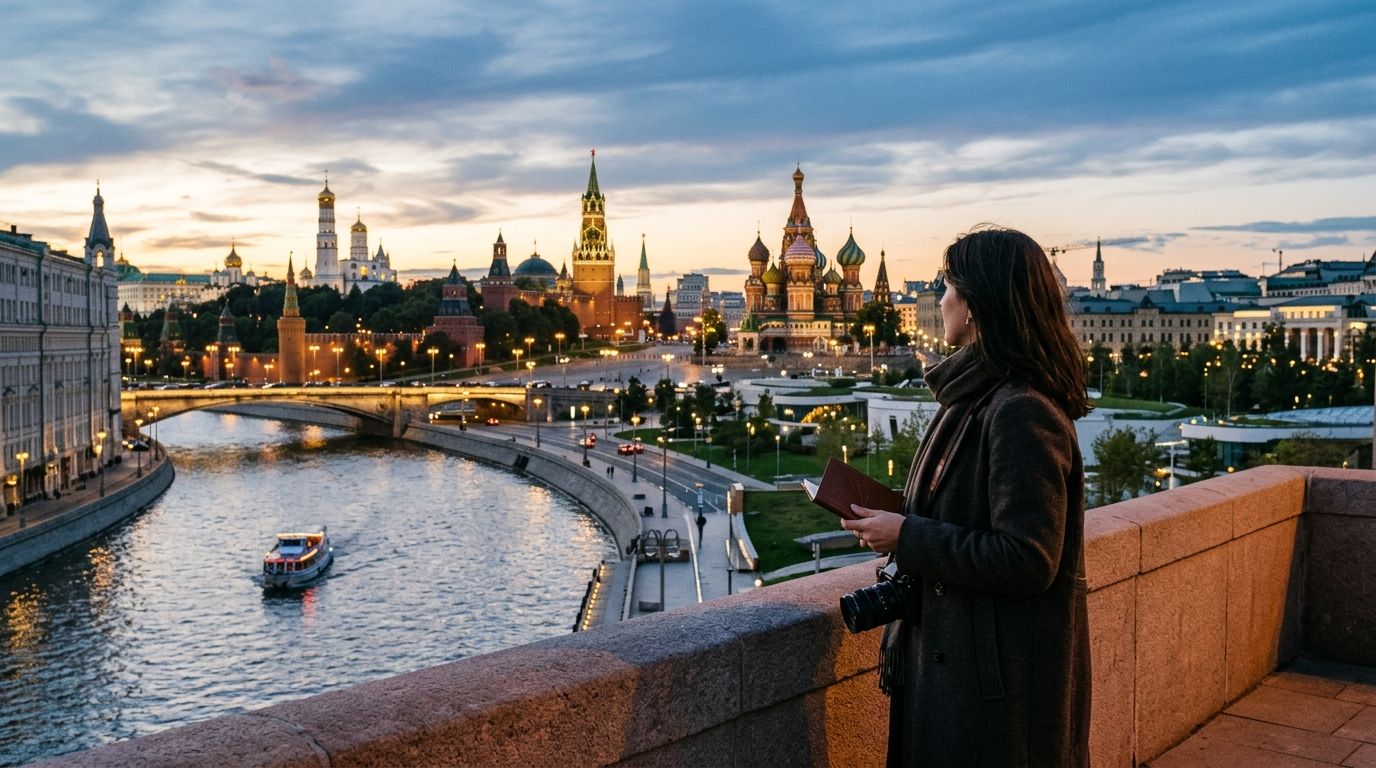
It's not the pageantry. Yes, Red Square is iconic. Yes, St. Basil's Cathedral is a genuine architectural marvel—those twisted domes were designed to look like flames rising to heaven, and even knowing that factually doesn't diminish the unsettling beauty of them in person. But the memorable part comes later, usually when you're not trying.
I remember a conversation in a Soviet-era apartment in St. Petersburg with a woman who'd lived through the siege of Leningrad's aftermath. I remember the weight of that: nine hundred days of starvation, and she was showing me photos of her grandmother in a kitchen that hadn't really changed since then. I remember the marble stations of the Moscow Metro, built by forced labor, each one designed to be more ornate than the last—a kind of architectural propaganda that's so overdone it becomes almost tender.
The museums are genuinely exceptional. The Hermitage in St. Petersburg isn't just a collection of paintings; it's a statement of imperial ambition housed in a building that's its own artwork. The State Tretyakov Gallery in Moscow has Russian art that barely makes it into Western art history textbooks. If you care about visual culture at all, these places will unhinge you a little.
But mostly, what makes Russia memorable is the friction. The food is heavier than you expect—meat pies, sour cream on everything, pickle juice as a hangover cure. The winters are genuinely brutal, not in a romantic way but in a practical, "your eyelashes are freezing" way. The directness of communication can feel like rudeness if you're not expecting it. You'll meet people who are more thoughtful, more widely-read, more curious about the world than you're used to encountering. You'll also encounter bureaucratic nonsense that makes you understand why Kafka set The Trial in an unnamed Central European country that might as well have been Russian.
What to Expect: Walking Through the Experience
In Moscow: Arrive in winter if you can manage it. The city is different in snow—softer somehow, despite being unquestionably harder to navigate. Visit Red Square in the early morning before it fills with tour groups. Walk through it without the weight of touristic obligation. Then go to GUM, the massive Soviet-era shopping mall, and grab coffee. Seriously. The coffee culture in Moscow is genuinely good now, and this is how you see the city function.
Spend time in neighborhoods, not just monuments. Walk through Kitay-Gorod's narrow streets where medieval Moscow still exists under Soviet and modern construction. Go to a banya (bathhouse) if you're adventurous—not the touristy ones, but a local one where you'll see Russia in its most vulnerable and honest state. Eat at a stolovaya (Soviet canteen) and order pelmeni. Visit the Moscow Metro not to gawk, but to understand the scale of Stalin's ambition and the way propaganda disguises itself as beauty.
In St. Petersburg: Arrive in summer, when the white nights make the city feel like it's existing outside normal time. The city is Venice-like in its geography—you navigate by canals and small bridges, and it's easy to get intentionally lost. The Hermitage requires at least two full days. The Russian Museum deserves a day. But also walk the streets without destination. St. Petersburg's beauty is in its proportions and light, not in individual monuments.
Take the hydrofoil to Peterhof if you want imperial excess, but understand that Peter the Great's summer palace is about power, not comfort. Visit the city's smaller palaces and churches. Eat at local restaurants, not tourist ones. St. Petersburg still has a bohemian undercurrent—artists, musicians, dancers who've stayed despite economic challenges. You'll feel it in the galleries and clubs if you're paying attention.
Trans-Siberian Railway: This isn't really a tourist experience so much as a very long endurance test that occasionally reveals something true about the vastness of Russia. You sit in a compartment with strangers for days. You watch landscapes change so gradually you don't notice it happening. You develop opinions about train food and window seats. Most people do the shortened version (Moscow to Lake Baikal), which takes about four days and is manageable without losing your mind.
Planning Your Visit: Logistics Matter More Than You'd Think
Best time: December to February if you want proper winter, though you'll freeze. May to September is easier and technically "peak," but you'll share everything with other travelers. March and April are transitional and unpredictable. October and November are beautiful but brief—everything starts closing for winter.
Visa situation: This is genuinely complicated right now, and conditions change. Russia has made visa acquisition harder for many nationalities. Check your specific circumstances weeks in advance, not days before your trip. The old advice about needing a support letter and booking through agencies is outdated for many nationalities, but not all. Get current information from your nearest Russian embassy.
Duration: Moscow alone deserves at least four days. St. Petersburg deserves at least three. If you're doing both, budget 7-10 days minimum. Add the Trans-Siberian journey if you have 14+ days. If you only have three days total, Moscow only—at least you'll understand one city properly rather than glimpse two poorly.
Transport: Domestic flights are cheap and extensive. Trains are iconic but slow. Buses are cheaper but less comfortable. The driving is chaotic but possible if you're experienced. In cities, use public transport and apps. Yandex.Taxi is the Russian version of Uber and works better than you'd expect.
Cost: Russia is cheaper than Western Europe but more expensive than Central Asia. Accommodation in major cities runs $40-80 for decent mid-range hotels. Food is inexpensive if you eat locally and avoid tourist restaurants. Museums are extremely cheap. A realistic daily budget is $60-80 for mid-range travel in major cities, rising to $100+ if you want comfort.
Language: English exists in tourist areas and among younger people, but not reliably. Learn basic Cyrillic. Download an offline translation app. Carry a notebook. The effort to communicate, even poorly, changes how people interact with you.
Nearby Places Worth Time
Lake Baikal: The world's deepest lake. The journey matters more than the destination—the Trans-Siberian Railway follows it for stretches. The towns around it (Listvyanka, Irkutsk) are less polished than Moscow but more authentic. Budget 4-5 days minimum.
The Golden Ring: Medieval towns around Moscow (Sergiyev Posad, Pereslavl-Zalessky, Rostov Veliky) with white monasteries and old Russian architecture. Doable as day trips or a two-day circuit. Less dramatic than the major cities but genuinely moving if you care about religious architecture and Russian history.
Novgorod: One of Russia's oldest cities, 185 kilometers south of St. Petersburg. Kremlin fortress, old churches, relatively untouched medieval atmosphere. A good day trip or overnight from St. Petersburg.
Is It Worth Visiting? The Honest Assessment
Russia is worth visiting if you're curious about places that complicate your assumptions. It's not worth visiting if you want comfort, ease, or travel that feels uncomplicated.
The infrastructure exists for tourism, but it doesn't always feel like tourism is wanted. Things that should be simple sometimes require negotiation. The food is an acquired taste. The cold is genuinely difficult. The history is heavy—not romantic, but genuinely heavy.
But if you can sit with those things, if you're genuinely interested in art and architecture and how societies function differently, if you want to have conversations with people who think differently about the world, then yes. Make it happen. Just go in with clear eyes and patience.
Quick Facts
- Capital: Moscow (population 12+ million)
- Language: Russian
- Currency: Russian Ruble (RUB)
- Time zones: Multiple (Russia spans 11 time zones)
- Visa: Required for most nationalities; conditions vary
- Best months: May-September for ease; December-February for winter
- Average daily cost: $60-100 (mid-range)
Final Thought
Russia remains one of the few places where travel still feels like actual travel—not a consumable experience, but an engagement with something that doesn't exist to please you. That's increasingly rare. The cities aren't designed for Instagram. The experiences don't fit neatly into travel narratives. You'll leave with more questions than answers and a deeper respect for complexity.
To start planning your Russian journey, explore routes, view travel videos, and discover bookable activities on Touratu's interactive map. You'll find detailed itineraries for Moscow, St. Petersburg, and the Trans-Siberian Railway, plus videos that capture the reality of travel there—the good, the difficult, and the genuinely strange. That's how real travel planning actually works.
Loading activities…
