
Russia: 20 Places That Keep Travelers Returning
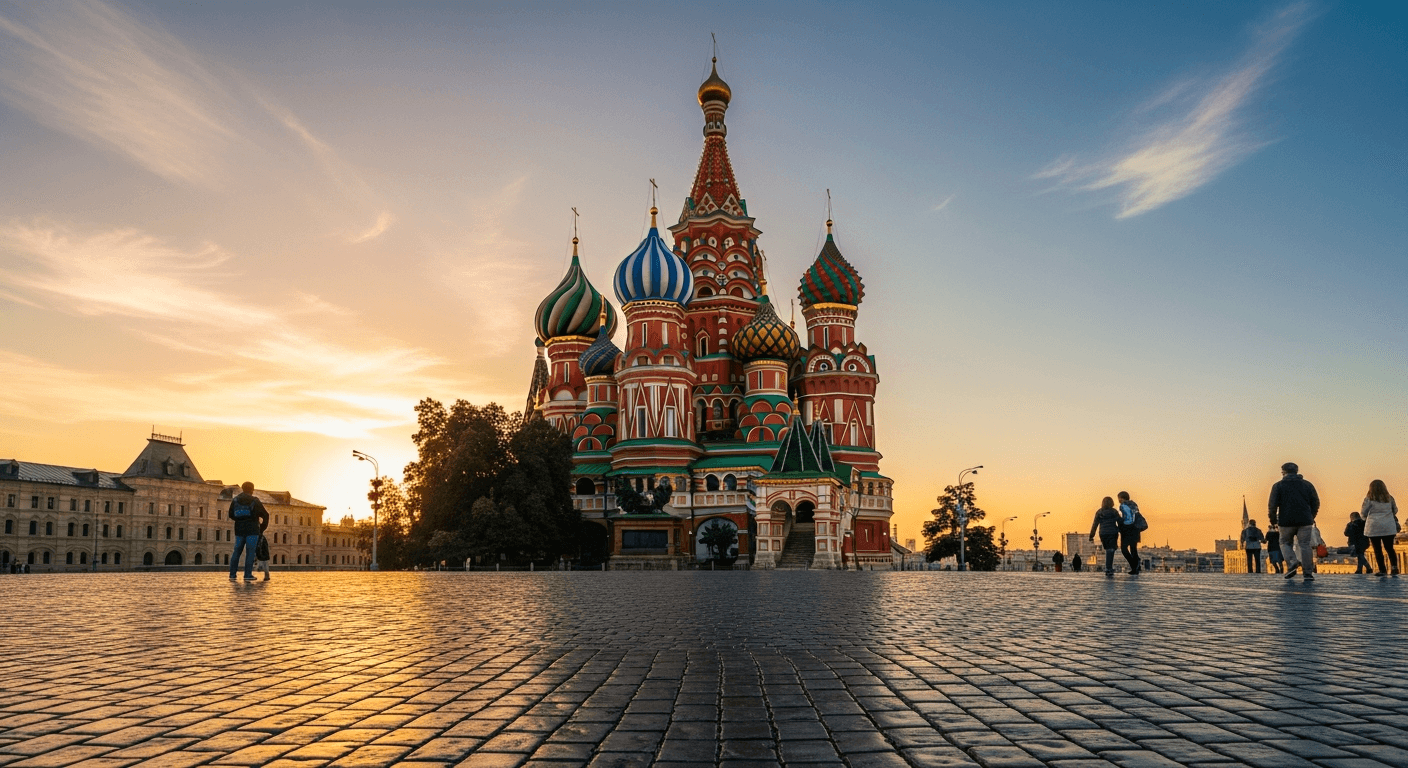
Russia: Why Travelers Keep Coming Back to These 20 Places
There's a particular quality to light in Russia—the way it filters through birch forests in late afternoon, how it lingers impossibly long during summer nights, or how it fractures across frozen rivers into a thousand sharp diamonds. Most travelers arrive with expectations shaped by Hollywood and history books, only to discover something far more textured: a country that rewards curiosity with quiet intimacy, where the drama is in the details rather than the declarations.
What brings people back isn't the postcards—though those exist. It's the conversations in train compartments with strangers who become friends, the taste of pelmeni freshly made in a grandmother's kitchen, the moment you realize the architecture isn't just ornate, it's confessional. Russia reveals itself to those patient enough to sit still, listen, and let the narrative unfold in its own deliberate pace.
These twenty destinations form the constellation of Russian travel—not an exhaustive map, but a deeply felt guide to what makes this vast landscape so magnetic for the repeat traveler.
1. Moscow: The Roaring Present in Tsarist Halls
Moscow doesn't apologize for being overwhelming. Red Square arrests you immediately—not with subtlety but with the sheer audacity of its geometry, the way St. Basil's Cathedral seems to defy logic with its layered domes. But the real Moscow lives in the neighborhoods that sprawl beyond the Kremlin walls: Kitay-Gorod's winding medieval streets, Presnya's art galleries hidden in converted mansions, the music venues where Moscow's underground heartbeat still drums.
The Red Line metro, designed with the paranoia and ambition of the Stalin era, remains the city's greatest artwork. Ride it for the stations—Mayakovskaya's ethereal mosaics, Komsomolskaya's chandeliers like frozen fireworks. Go in spring when the city's gardens crack open, or winter when the cold strips everything to essential beauty.
Photograph the Grand Hotel Moscow's facade against the Kremlin walls at dusk, when the pink light makes the architecture look almost vulnerable.
Practical note: Understand that Moscow moves on multiple timescales. The official circuits (Kremlin, museums, galleries) are manageable. The real texture emerges when you wander. Allocate time for aimlessness.
2. St. Petersburg: The City Built on Ghosts
If Moscow is present-tense, St. Petersburg is the past speaking directly to you in velvet tones. Built by Peter the Great as a window to the west, this city of canals and palaces remains impossibly European, yet entirely Russian—a contradiction that never resolves and never needs to. The Hermitage is overwhelming not because of its size but because of its intimacy; room after room of paintings and sculptures chosen by emperors who understood that beauty was a form of power.
But step away from Palace Square and find the city's true rhythm in the smaller museums—the Fabergé Collection, the Russian Museum's neoclassical wings, the Dostoevsky apartment where the writer's ghosts seem to linger in the light. White nights in June are real: the sun barely descends, and the city becomes dreamlike, peopled with insomniacs, artists, and lovers who move like they're underwater.
Walk the street where Dostoevsky lived and nearly committed murder in his novel. Photograph the Neva at 3 a.m. when the light is pearl-gray and a single bridge is being raised.
Insider tip: Avoid peak summer if you can. September captures the city's true character—the tourists thin out, the light becomes purposeful, and locals reclaim their streets.
3. Lake Baikal: Where Time Moves in Ice
Baikal is not a place to visit; it's a place to witness yourself being very small. The world's deepest freshwater lake, containing a quarter of Earth's fresh water, communicates in a language older than civilization. In winter, it freezes solid enough to drive on—an experience that borders on the metaphysical, walking across a surface that contains an entire ecosystem below.
Summer brings a different magic: the water is shockingly blue, the surrounding taiga forest is emerald-dense, and you understand why the Buryat people considered it sacred. Olkhon Island is the primary base, where you can trek through forests, visit Shamanistic sites, and camp beside water so clear you feel like you're sleeping on glass.
Photograph the frozen lake in January when the ice fractures create patterns like abstract art, or capture the summer sunrise when the light hits the water like it's been waiting specifically for your camera.
Travel consideration: Winter access is limited. Summer (June-August) is accessible but crowded. Spring and autumn are when locals come—fewer tourists, clearer air, more authentic rhythms.
4. Kazan: Where East Genuinely Meets West
Kazan is the city that proves Russia is a plural noun. The capital of Tatarstan, it's a place where Orthodox churches and mosques stand in peaceful conversation, where Tatar culture infuses everything from architecture to cuisine. The Kul-Sharif Mosque, rebuilt in the 2000s, is a statement of contemporary design that somehow honors classical Islamic tradition. Meanwhile, the Kremlin walls hold museums that tell stories most tourists never hear.
The food here—tat, a type of layered bread; chak-chak, honey-soaked pastry; plov made with Tatar spices—tastes different because it is different. Kazansky Station in Moscow itself is a masterpiece of neoclassical design that hints at this city's architectural confidence.
Photograph the Kremlin reflected in the Kazanka River at twilight, or capture a street vendor selling pelmeni with snow falling in the background.
Local knowledge: September is ideal—summer crowds have departed, winter hasn't arrived, and the city hosts its cultural festivals. Stay in the Old Tatar Quarter for restaurants that feed your curiosity.
5. Irkutsk: The Cultured Exile
Irkutsk feels like a secret that travelers whisper about. As the gateway to Lake Baikal, it's often bypassed for the lake itself, but this riverside city deserves attention. It was historically a place where exiles—intellectuals, revolutionaries, dissidents—were sent, and that history has endued it with a certain intellectual restlessness, visible in its theaters, bookshops, and late-night conversations.
The wooden architecture of the old merchant quarters is stunning—intricate window frames carved with such precision they look like lace. The Irkutsk Art Museum holds works that would draw crowds in major capitals but remain relatively undiscovered here.
Take the overnight train from Baikal back to Irkutsk. Photograph the station's facade—a study in Siberian utilitarianism and hidden grace.
Timing note: Winter transforms Irkutsk into something genuinely atmospheric. Locals ski, the streets have fewer visitors, and the cold air somehow clarifies thought.
6. Altai Mountains: The Untouched Interior
The Altai region is where Russia's geography becomes almost embarrassingly dramatic. Alpine peaks, turquoise lakes (Teletskoye Lake is unreal in its blueness), dense forests that seem older than history—this is Russia before tourism, mostly. Accessible from Gorno-Altaysk, the region rewards hikers, horseback riders, and anyone willing to move slowly through landscape that doesn't perform for cameras but cooperates generously when you're genuinely present.
Visit in summer for the accessibility and wildflower abundance, but understand you're joining an emerging traveler circuit, not discovering something entirely unknown.
7. Vladivostok: The Russian Pacific
At the far eastern edge of Russia, Vladivostok is a port city with secrets. Influenced by Japanese and Chinese nearby, it feels less inherently Russian than anywhere else on this list—which is precisely why it's compelling. The Golden Bridge is iconic; the waterfront is working and vital, not gentrified into sterility. The Russian Far East Maritime Museum chronicles a history most travelers never learn.
This is a city that rewards walking, harbor-watching, and the particular pleasure of standing where Russian geography ends.
8-20: The Continuing Constellation
Pskov offers medieval white stone churches in landscapes that inspired Russian romantic art. Novgorod is where Russian history genuinely begins, with kremlin walls and monastery churches that predate the Mongol invasions. Suzdal preserves wooden architecture and rural rhythms—travel here feels like stepping into the 17th century. Ulan-Ude brings Siberian buddhist culture into focus. Peterhof extends St. Petersburg's imperial narrative into palace gardens of astonishing scale. The Golden Ring villages (Sergiyev Posad, Pereslavl-Zalessky, Rostov) form a pilgrimage route of white stone monasteries. Yakutsk represents the far north's resilience. Yekaterinburg is the cultural capital of the Urals. Sochi offers Black Sea coastlines and subtropical microclimates. Murmansk and the Kola Peninsula open access to Northern Lights phenomena and Arctic culture.
Finding Your Rhythm: On Moving Through Russia
The practical infrastructure of Russian travel rewards planning but tolerates spontaneity. Trains are genuinely the best way to see the country—the Trans-Siberian isn't merely a journey, it's a cultural education conducted slowly, with proper pacing. Book tickets early during peak seasons; second-class compartments offer more character than higher classes and usually cost less.
Neighborhoods matter. In cities, staying in residential areas rather than tourist zones reveals how people actually inhabit space. Arbat in Moscow or the Karavannaya Quarter in St. Petersburg place you adjacent to local life. Learn the word for "excuse me" (простите, prostite) and "thank you" (спасибо, spasibo)—small courtesies open conversations.
Timing shapes everything. Winter is genuine winter here; it's not romantic but challenging and rewarding if you're genuinely interested. Spring (May-June) and early autumn (September) are the sweet spots—weather is cooperative, crowds are manageable, and the light is purposeful rather than harsh.
Etiquette: Russians appreciate directness and aren't offended by straightforward questions. Restaurant culture involves respect for pace—meals are events, not transactions. Museums close on Mondays; plan accordingly.
Discovering Your Own Route on Touratu
On Touratu's interactive map, you can trace the journeys of travelers who've moved through these spaces—examining the routes they chose, the neighborhoods they lingered in, the exact monuments they photographed and why. The visual discoveries others have documented often reveal the overlooked details: a particular angle on a church, a café tucked into an unexpected corner, the quality of light at a specific location on a specific date. These aren't suggestions but invitations to see what previous travelers noticed and what you might notice differently.
Why They Keep Coming Back
Russia doesn't make friendship easy. It requires patience with bureaucracy, tolerance for inefficiency, and acceptance that not every question will have a satisfying answer. What it offers instead is substance—the weight of history held carefully in daily rituals, the intelligence that emanates from a culture that values literature and art as necessities rather than luxuries, the peculiar warmth that emerges when you're genuinely invited into someone's world.
Travelers return because Russia doesn't diminish with familiarity. Each visit reveals layers previous visits hadn't reached. The cities grow more navigable, the landscape more intimate, the sense of having glimpsed something real—not performed for tourists but lived by people who inhabit these spaces with intention and complexity—becomes more assured. You return not because Russia is picturesque but because it's true.
Loading activities…
