
Romania Travel Guide: Explore Castles, Mountains & Medieval Towns
Introduction
Romania offers a remarkable combination of rich folklore, medieval history, and untouched natural beauty.
A trip to Romania can include:
- Exploring spectacular Gothic castles and fortresses
- Hiking through the pristine Carpathian Mountains
- Stepping back in time in traditional wooden villages
- Birdwatching in the vast Danube Delta
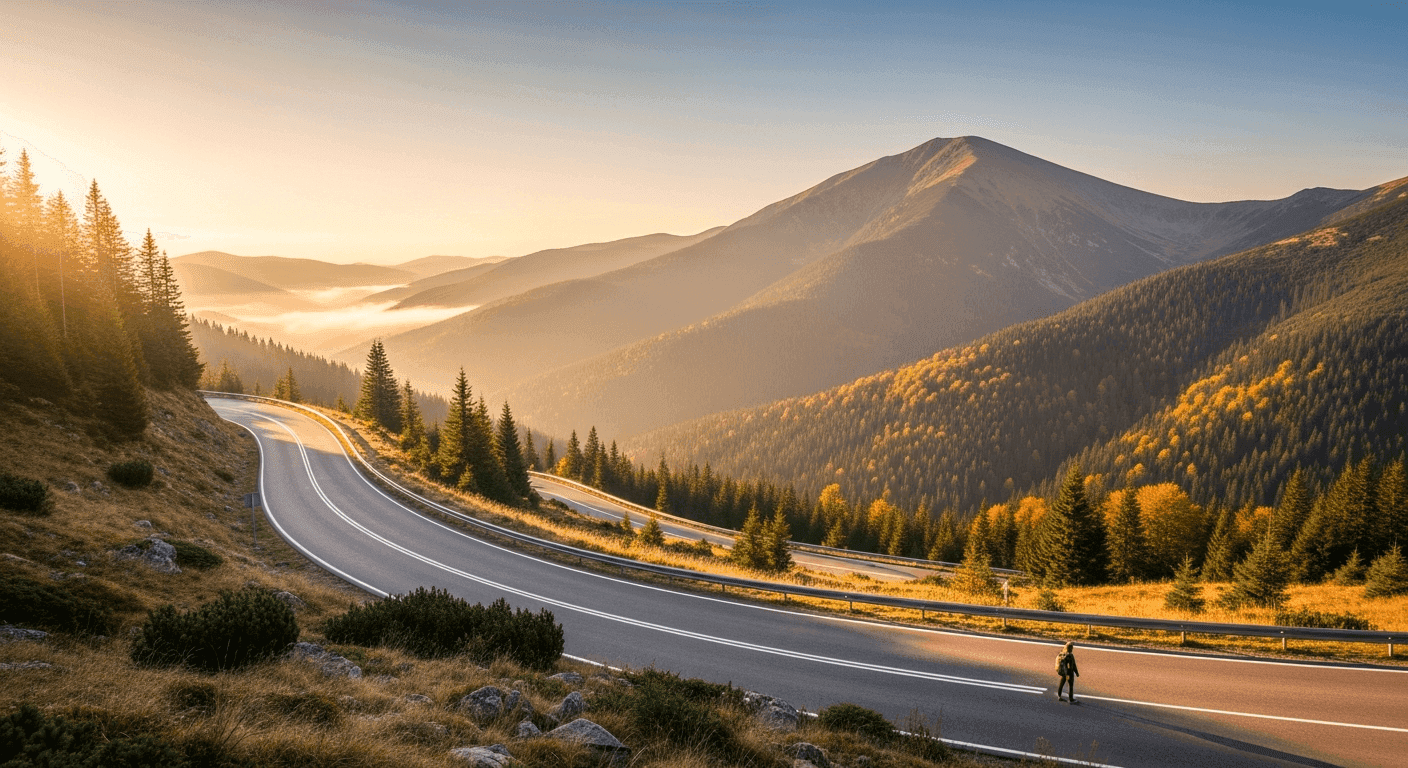
- Driving across the legendary Transfăgărășan alpine highway
- Discovering centuries-old painted monasteries
- Wandering through perfectly preserved Saxon towns
- Experiencing vibrant urban life and grand architecture in the capital
Every region presents a different side of the country, from the majestic mountain peaks and dense forests of Transylvania to the slow-paced rural charm of Maramureș and the maritime culture of the Black Sea coast.
Touratu helps travelers understand Romania before arrival through narrated destination guide videos and interactive destination maps. Travelers can compare attractions, understand travel routes, discover nearby experiences, and build efficient itineraries.
Why Visit Romania?
Spectacular Natural Landscapes
Romania offers some of Europe's most diverse, wild, and dramatic scenery.
Visitors can explore:
- The jagged peaks of the Carpathian Mountains
- The sprawling wetlands of the Danube Delta
- Dense, primeval forests sheltering brown bears and wolves
- Subterranean marvels like the Turda Salt Mine
- Glacial lakes and deep limestone gorges
- The rolling green hills of the Transylvanian countryside
Authentic Culture and History
Romania has preserved its deep rural traditions, complex history, and unique architectural heritage.
Travelers can experience:
- Perfectly preserved medieval Saxon towns and fortified churches
- The famous exterior frescoes of the Bucovina painted monasteries
- Traditional wooden architecture and folklore in Maramureș
- Vibrant folk music, dance, and traditional crafts
- The contrasting grand Belle Époque and massive communist-era architecture of Bucharest
Incredible Castles and Fortresses
The country is home to some of the most striking and legendary castles in Europe.
Popular activities include:
- Exploring the dramatic corridors of Bran Castle (Dracula's Castle)
- Admiring the fairytale, Neo-Renaissance beauty of Peleș Castle
- Walking the massive drawbridge of Corvin Castle in Hunedoara
- Discovering the ancient, mountaintop ruins of Poenari Fortress
- Touring the massive, star-shaped Alba Carolina Citadel
Beautiful Rivers and Coastline
Romania's waterscapes range from Europe's most preserved river delta to lively coastal resorts.
Visitors can enjoy:
- Wildlife safaris by boat through the Danube Delta biosphere
- Relaxing on the sandy beaches of the Black Sea coast
- Exploring the bohemian coastal town of Vama Veche
- Cruising through the dramatic Iron Gates gorge on the Danube River
- Swimming in natural thermal spa resorts like Băile Felix
Adventure Opportunities
Adventure travelers can enjoy:
- Hiking and ridge-walking in Piatra Craiului National Park
- Driving the hairpin turns of the Transfăgărășan or Transalpina highways
- Guided brown bear tracking in the deep Carpathian forests
- Caving and spelunking in the Apuseni Mountains
- Skiing and snowboarding in Poiana Brașov
Perfect for Every Traveler
Romania is ideal for:
- History buffs and heritage travelers
- Budget-conscious explorers
- Nature and wildlife enthusiasts
- Road trip enthusiasts
- Architecture and photography lovers
- Cultural explorers
- Hikers and outdoor adventurers
Explore Romania Before You Travel
Romania's attractions are spread across grand capital boulevards, deep mountain passes, remote rural villages, and vast river deltas, making itinerary planning important.
Touratu helps travelers explore Romania visually before departure.
Interactive maps allow travelers to:
- Compare historic Transylvanian cities and rural regions
- Understand driving routes through the mountain passes
- Discover nearby castles and fortified churches
- Find traditional guesthouses and boutique urban apartments
- Explore outdoor activities
- Build personalized itineraries
Narrated destination guide videos help travelers visualize:
- Colorful, cobblestone medieval squares
- Dramatic alpine highway switchbacks
- Massive, ornate royal palaces
- Peaceful, traditional village life
- Vast, bird-filled wetland channels
Instead of choosing destinations only through photos, travelers can better understand Romania before planning their journey.
Best Places to Visit in Romania
Bucharest
Bucharest is Romania's dynamic capital, a city of contrasts where beautiful 19th-century "Little Paris" architecture sits alongside massive communist-era structures and a vibrant modern café culture.
Why Visit
It offers monumental architecture, lively nightlife in the historic center, expansive parks, and deep insights into the country's complex 20th-century history.
What You'll Experience
- The colossal Palace of Parliament (the world's heaviest building)
- The pedestrianized streets of the Old Town (Lipscani)
- The beautiful Romanian Athenaeum concert hall
- The open-air National Village Museum in Herăstrău Park
- Historic hidden gems like the Macca-Vilacrosse Passage and Stavropoleos Monastery
- Therme Bucharest (a massive indoor thermal spa and water park)
Best Time to Visit
May to September, or December for the Christmas markets.
Best For
- First-time visitors
- History and architecture buffs
- Food and nightlife lovers
- Urban explorers
Suggested Duration
2–3 days
Nearby Attractions
- Snagov Monastery (reputed burial site of Vlad the Impaler)
- Mogoșoaia Palace
- Pitești
Practical Travel Advice
Take a guided walking tour to fully understand the fascinating, often turbulent history of the city, especially regarding the communist era and the 1989 revolution.
Brașov & the Carpathian Mountains
Brașov is the perfect gateway to Transylvania, framed by the peaks of the Southern Carpathians and featuring a stunning, beautifully preserved medieval core.
Why Visit
It combines a relaxed, walkable historical center with immediate access to prime hiking trails, ski resorts, and Romania's most famous castles.
What You'll Experience
- Piața Sfatului (Council Square) and the Old Town Hall
- The Black Church, the largest Gothic church in Eastern Europe
- Taking the cable car up Mount Tâmpa for panoramic city views
- Walking through Strada Sforii (one of the narrowest streets in Europe)
- Day trips to the legendary Bran Castle (Dracula's Castle)
- Visiting the stunning Peleș Castle in nearby Sinaia
Best Time to Visit
May to October for hiking; December to March for winter sports in Poiana Brașov.
Best For
- History and castle lovers
- Hikers and outdoor enthusiasts
- Families
- Photographers
Suggested Duration
3–4 days
Nearby Attractions
- Râșnov Fortress
- Libearty Bear Sanctuary in Zărnești
- Seven Ladders Canyon (Canionul Șapte Scări)
Practical Travel Advice
Bran Castle gets incredibly busy during summer and Halloween. Arrive right at opening time to beat the heavy tourist crowds and enjoy the castle's atmosphere.
Watch Before You Visit
A narrated destination guide helps travelers understand Romania's mountain driving routes, the true scale of its castles, train connections, and traditional village etiquette before arrival.
Explore on the Interactive Map
Compare nearby historic guesthouses, mountain trails, fortified churches, transit hubs, and traditional restaurants while planning your stay.
Touratu Insight
While Bucharest and Bran Castle attract the vast majority of tourists, Romania's true magic is found in the quiet, timeless wooden villages of Maramureș, the awe-inspiring drive over the Transfăgărășan highway, and the vibrant, pastel-colored squares of Sighișoara.
Suggested Route
Bucharest → Sinaia (Peleș Castle) → Brașov → Sighișoara → Sibiu → Transfăgărășan Highway → Bucharest creates one of Romania's most rewarding and comprehensive travel itineraries.
Best Places to Visit in Romania
Sibiu & Sighișoara
These two Transylvanian gems are the crown jewels of the region's Saxon heritage, offering cobblestone streets, colorful houses, and an atmosphere straight out of a fairy tale.
Why Visit
Sighișoara is the last continuously inhabited medieval citadel in Europe (and the birthplace of Vlad the Impaler), while Sibiu is a former European Capital of Culture known for its bohemian vibe and unique architecture.
What You'll Experience
- The iconic Clock Tower and colorful streets of Sighișoara's Citadel
- Walking across Sibiu's Bridge of Lies
- The "Houses with Eyes" (roof windows) watching over Sibiu's Grand Square
- Exploring traditional Transylvanian fortified churches (like Biertan or Viscri)
- Enjoying vibrant outdoor cafes and artisan shops
- Climbing the Covered Scholar's Stairs in Sighișoara
Best Time to Visit
May to September, or during the Medieval Festival in Sighișoara (usually July).
Best For
- Romantic getaways
- History and architecture buffs
- Photographers
- Slow-travel enthusiasts
Suggested Duration
2–3 days
Nearby Attractions
- Corvin Castle in Hunedoara
- Alba Iulia Citadel
- ASTRA National Museum Complex (open-air museum near Sibiu)
Practical Travel Advice
Sighișoara’s citadel is quite steep and entirely paved with uneven cobblestones; wear comfortable, flat walking shoes to explore safely.
Maramureș & Bucovina
Located in the far north of Romania, these two regions represent the country's spiritual and traditional heartland, where rural life has remained largely unchanged for a century.
Why Visit
Bucovina is world-famous for its incredible painted monasteries, while Maramureș is a living museum of wooden architecture, rolling haystacks, and ancestral farming traditions.
What You'll Experience
- The stunning exterior frescoes of the Voroneț, Sucevița, and Moldovița Monasteries
- The towering, all-wood churches of Maramureș
- The brightly painted, humorous wooden crosses of the Merry Cemetery in Săpânța
- Riding the Mocănița narrow-gauge steam train through the Vaser Valley
- Staying in authentic rural guesthouses and experiencing deep local hospitality
- Discovering traditional crafts like egg painting and wood carving
Best Time to Visit
May to September, or during major Orthodox holidays (Easter and Christmas) to see locals in full traditional dress.
Best For
- Cultural explorers
- Photographers
- Heritage travelers
- Those seeking to disconnect
Suggested Duration
3–4 days
Nearby Attractions
- The Carpathian Mountains border regions
- Rodna Mountains National Park
Practical Travel Advice
Public transport in these rural northern regions is scarce. Renting a car or hiring a local driver is essential to properly explore the scattered villages and monasteries.
The Danube Delta
Where the mighty Danube River meets the Black Sea, it creates the second-largest and best-preserved river delta in Europe, recognized as a UNESCO World Biosphere Reserve.
Why Visit
It is a true paradise for nature lovers, offering one of the greatest concentrations of biodiversity and birdlife on the continent.
What You'll Experience
- Guided boat safaris through narrow, reed-fringed water channels
- Spotting massive flocks of wild pelicans, herons, and egrets
- Visiting remote, traditional Lipovan fishing villages like Mila 23
- Exploring the Letea Forest, home to wild horses and sand dunes
- Eating traditional, incredibly fresh fish borscht (borș de pește)
- Watching spectacular sunsets over the vast waterways
Best Time to Visit
May to June (for peak bird migrations and blooming water lilies) or September.
Best For
- Nature and wildlife lovers
- Birdwatchers
- Photographers
- Travelers seeking tranquility
Suggested Duration
2–3 days
Nearby Attractions
- Tulcea (the gateway city to the Delta)
- The Black Sea coastal resorts
- Histria ancient ruins
Practical Travel Advice
Bring high-quality mosquito repellent, as the wetlands can be heavily populated with insects, especially during the humid summer evenings.
Best Things to Do in Romania
Romania offers incredible historical insights, dramatic outdoor adventures, and rural cultural experiences.
| Category | Top Experiences |
|---|---|
| Nature | Carpathian mountain hiking, Danube Delta boat safaris, glacial lakes |
| Adventure | Driving the Transfăgărășan, bear tracking, Turda Gorge trekking |
| Culture | Maramureș wooden villages, painted monasteries, Saxon heritage towns |
| History | Bran and Peleș Castles, Palace of Parliament, Corvin Castle |
| Photography | Colorful medieval citadels, misty mountain passes, traditional haystacks |
| Scenic Routes | Transalpina highway, Mocănița steam train, Bicaz Gorge |
Nature and Wildlife Experiences
Romania’s wilderness is vast, rugged, and home to some of the last significant populations of large carnivores in Europe.
Top experiences include:
- Navigating the quiet, narrow wetland channels of the Danube Delta in a traditional wooden boat
- Safely tracking wild brown bears from specialized forest observation hides in the Carpathians
- Hiking through the towering limestone walls of the Turda Gorge (Cheile Turzii)
- Discovering underground glaciers and massive cave systems in the Apuseni Mountains
- Trekking to the high-altitude glacial lake of Bâlea Lac in the Făgăraș Mountains
Best destinations:
- Danube Delta Biosphere Reserve
- Piatra Craiului National Park
- Bucegi Mountains
- Apuseni Nature Park
Historical and Cultural Adventures
Romania’s history is a complex tapestry of Roman, Dacian, Saxon, Ottoman, and Austro-Hungarian influences.
Popular destinations:
- Transylvania (Brașov, Sibiu, Sighișoara)
- Bucovina (Painted Monasteries)
- Maramureș (Wooden Churches)
- Bucharest (Communist and Belle Époque history)
Activities include:
- Exploring the opulent, wood-carved rooms of the royal Peleș Castle in Sinaia
- Walking through the massive, fortified walls of Prejmer or Biertan Saxon churches
- Wandering the vast, echoing halls of the Palace of Parliament
- Witnessing traditional pottery making in the village of Marginea or Corund
- Exploring the chilling history and Gothic architecture of Corvin Castle
Photography Locations
Romania offers spectacular photography opportunities.
Top photography spots:
- The winding, hairpin turns of the Transfăgărășan Highway from above
- The vibrant, multi-colored houses lining the Grand Square in Sibiu
- The exterior judgment frescoes of Voroneț Monastery (known as the "Sistine Chapel of the East")
- The dramatic silhouette of Bran Castle rising out of the forested mist
- The bright blue, intricately painted wooden crosses of the Merry Cemetery
- Sunsets over the vast reed beds of the Danube Delta
- The massive, fairy-tale Gothic bridge leading into Corvin Castle
Autumn brings incredible yellow and orange foliage to the Carpathian forests, providing a stunning backdrop to the region's castles and medieval towns.
Family Experiences
Families visiting Romania can enjoy:
- Massive, otherworldly underground amusement parks (Salina Turda)
- Interactive open-air village museums featuring traditional windmills and houses (Bucharest and Sibiu)
- Dinosaur parks and adventure climbing courses (Dino Parc Râșnov)
- Exploring real-life fairy-tale castles and medieval knight fortresses
- Safe, wide sandy beaches on the Black Sea coast (Mamaia or Eforie Nord)
- Riding historic, slow-moving steam trains through mountain valleys
Best Family Destinations
- Brașov & Râșnov (Castles, nature, and adventure parks)
- Sibiu (Pedestrian squares and ASTRA museum)
- Bucharest (Therme water park and vast city parks)
- Cluj-Napoca & Turda (Salt mine boating)
Hidden Gems in Romania
Salina Turda
A massive, ancient salt mine in Transylvania that has been transformed into an incredible subterranean sci-fi theme park, complete with a Ferris wheel and underground boating lake.
The Transfăgărășan Highway
Famed as one of the most spectacular driving roads in the world, this twisting alpine pass cuts directly through the dramatic peaks of the Făgăraș Mountains (only open during summer).
The Merry Cemetery (Cimitirul Vesel)
Located in Săpânța, this unique cemetery features hundreds of brightly painted wooden crosses inscribed with darkly humorous, poetic epitaphs detailing how the deceased lived and died.
Viscri Fortified Church
A stunning, UNESCO-protected Saxon fortified church located in a pristine, traditional village that gained fame after King Charles III purchased a restored property there.
Bicaz Gorge (Cheile Bicazului)
A spectacular, narrow limestone canyon in the Eastern Carpathians where the road twists between towering rock walls, close to the beautiful Red Lake (Lacu Roșu).
Touratu Insight
Many visitors limit their journey to a quick Dracula-themed weekend between Bucharest and Brașov, but Romania's true spirit reveals itself when you venture out on a road trip to discover the ancient wooden gates of Maramureș, the quiet grandeur of the painted monasteries, and the deep, untouched wilderness of the Carpathians.
Suggested Itineraries
5-Day Romania Itinerary
Day 1
- Arrival in Bucharest, explore the Old Town and the Palace of Parliament
Day 2
- Drive to Sinaia, visit Peleș Castle, continue to Brașov
Day 3
- Explore Brașov's Black Church and take a half-day trip to Bran Castle
Day 4
- Drive to Sighișoara, explore the medieval citadel
Day 5
- Return drive to Bucharest and departure
7-Day Romania Itinerary
- Bucharest (History and grand architecture)
- Sinaia (Peleș Castle)
- Brașov (Transylvanian hub and Bran Castle)
- Sibiu (Bohemian Saxon city)
- Sighișoara (Vlad the Impaler's citadel)
- Cluj-Napoca & Salina Turda (Vibrant city and salt mine)
10-Day Romania Itinerary
Add:
- A drive across the Transfăgărășan Highway (summer only)
- Bucovina region (Touring the Painted Monasteries of Voroneț and Sucevița)
- Exploring the Bicaz Gorge
14-Day Romania Itinerary
Complete route:
- Bucharest (The resilient capital)
- Sinaia & Brașov (Royal castles and mountain towns)
- Sibiu & Sighișoara (Medieval Saxon heritage)
- Cluj-Napoca (Transylvanian culture)
- Maramureș (Wooden churches, Merry Cemetery, and steam trains)
- Bucovina (Painted monasteries)
- Tulcea & the Danube Delta (Wetland boat safaris and birdwatching)
- Return to Bucharest
This comprehensive itinerary showcases the stark contrast between the monumental capital, the Gothic majesty of Transylvania, the deep rural traditions of the north, and the unparalleled biodiversity of the Delta.
Explore Through Guided Videos
Romania's labyrinth of medieval streets, deep mountain passes, scattered rural villages, and vast wetlands are best understood visually before arrival. Narrated destination guide videos help travelers discover rail networks, challenging driving routes, museum scales, and cultural practices before planning their journey.
Touratu's verified destination videos help travelers:
- Compare historic Transylvanian cities visually
- Understand the conditions of mountain driving routes
- Discover remote fortified churches and hidden villages
- Set realistic travel expectations for rural regions
- Build high-efficiency road trip itineraries
Food to Try in Romania
Romanian cuisine is hearty, comforting, and deeply rooted in its agrarian history, featuring a heavy reliance on pork, root vegetables, garlic, cornmeal, and rich dairy.
Must-Try Dishes
- Sarmale – The national dish; minced pork and rice mixed with herbs, rolled tightly in pickled cabbage leaves, and slow-cooked.
- Mămăligă – A staple side dish of dense yellow cornmeal (polenta), often served hot with sour cream and sharp sheep's milk cheese.
- Papanași – The ultimate Romanian dessert; a hot, fried dough pastry shaped like a donut, smothered in sour cream and tart cherry or blueberry jam.
- Mici (Mititei) – Skinless, grilled sausages made from a mixture of beef, pork, and lamb, heavily seasoned with garlic and served with mustard and crusty bread.
- Ciorbă de Burtă – A rich, creamy traditional tripe soup soured with vinegar and heavily flavored with garlic.
- Ciorbă de Fasole în Pită – A hearty bean soup traditionally served inside a hollowed-out loaf of crusty bread.
- Salată de Boeuf – A festive salad made of finely diced root vegetables, meat, and pickles bound together with mayonnaise.
- Covrigi – The ultimate street food; large, hot, soft pretzels often topped with sesame or poppy seeds.
- Țuică / Pălincă – A highly potent, traditional plum or fruit brandy, usually offered as a welcoming drink before a meal.
Seek out traditional Han (historic inns) or local rural guesthouses for highly affordable, authentic, home-cooked Romanian meals.
Shopping in Romania
Romania offers excellent shopping for unique traditional handicrafts, fine local textiles, and regional culinary products.
Popular souvenirs include:
- Ie (Romanian Blouse) – Beautifully hand-embroidered traditional linen or cotton blouses featuring complex geometric or floral motifs.
- Painted Eggs – Exquisitely detailed, hand-painted wooden or real eggshells from the Bucovina region, traditionally created for Easter.
- Horezu Ceramics – UNESCO-recognized traditional pottery known for its earthy colors and distinctive spiral or rooster patterns.
- Traditional Wood Carvings – Intricate wooden spoons, boxes, and flutes, especially prominent in the Maramureș region.
- Romanian Wine – High-quality local wines from indigenous grape varieties like Fetească Neagră, sourced from regions like Dealu Mare.
- Sheepskin Vests and Wool Blankets – Thick, warm traditional garments handcrafted by shepherds in the mountain regions.
- Plum Brandy (Țuică) – Artisanal fruit spirits, often sold in beautifully shaped glass bottles.
Best shopping locations:
- The peasant markets around Bran Castle and Sinaia
- Local artisan shops in Sighișoara and Sibiu
- The Village Museum gift shop in Bucharest
- Traditional fairs and festivals during summer
Best Time to Visit Romania
| Season | Experience |
|---|---|
| May–September (Summer/Warm) | Pleasant weather, long daylight hours, ideal for driving the mountain passes, hiking the Carpathians, and exploring the Danube Delta. |
| December–February (Winter) | Cold and snowy. The best time for traditional Christmas markets in Sibiu and Brașov, winter sports in Poiana Brașov, and magical snowy castle views. |
| March–April & October–November (Transition) | Chilly weather with beautiful autumn foliage in October. Excellent for exploring uncrowded castles and cities, though high mountain roads will be closed. |
Recommended: May to September is generally the best window to visit the vast majority of destinations in Romania, while late September to October offers incredible autumn colors across Transylvania.
Where to Stay
Romania offers diverse accommodations catering to every style and budget, representing excellent value for money.
Historic Mansions and Castles
Popular in:
- Transylvania
- The Covasna and Brașov regions
Best for:
- Heritage and history enthusiasts
- Couples and romantic getaways
- Those seeking unique, atmospheric stays
Traditional Rural Guesthouses (Pensiuni)
Located in:
- Maramureș and Bucovina
- Villages around Sibiu (Marginimea Sibiului)
Perfect for:
- Cultural immersion and deep hospitality
- Home-cooked traditional meals
- Slow-travel enthusiasts
Mountain Cabins (Cabane)
Available near:
- The Bucegi and Făgăraș Mountains
- Apuseni Nature Park
Ideal for:
- Hikers and trekkers
- Nature lovers
- Budget-conscious adventurers
Urban Boutique Apartments and Hostels
Options include:
- Restored historic apartments in Old Towns
- Modern urban lofts
- Highly-rated backpacker hostels
Available across Bucharest, Cluj-Napoca, Sibiu, and Brașov.
Getting Around Romania
Romania has a diverse transport network. While public transit connects major cities, independent transport is best for rural exploration.
Transit Methods
- Rental Cars: The absolute best way to explore Romania, offering the flexibility to visit remote castles, drive the Transfăgărășan, and explore the scattered villages of Maramureș.
- Trains (CFR Călători): Trains connect all major cities (Bucharest, Brașov, Sibiu, Cluj). They are affordable and scenic, though often slower than driving.
- Buses and Minibuses (Maxi-Taxis): Useful for reaching towns without train stations, but schedules can be confusing for first-time visitors.
- Ridesharing Apps: Uber and Bolt are highly available, efficient, and inexpensive within major urban centers like Bucharest and Cluj-Napoca.
Travel Tips
- When driving in Romania, be prepared for winding mountain roads, horse-drawn carts in rural areas, and aggressive local overtaking habits.
- You must purchase a "Rovinieta" (road toll vignette) to drive on national roads; rental cars usually include this.
- Book domestic train tickets a few days in advance during summer, and opt for InterCity (IC) or InterRegional (IR) trains for better comfort and speed.
Travel Tips
- Currency: Romania uses the Romanian Leu (RON), not the Euro. Cards are widely accepted in cities, but carrying cash is essential for rural guesthouses, small markets, and rural transport.
- Bear Safety: Romania has the largest population of brown bears in Europe. If hiking in the Carpathians, stay on marked trails, make noise, and never leave food outside.
- Language: Romanian is a Romance language, closely related to Italian and Spanish. English is widely spoken by younger generations and in all tourist hubs.
- Tipping: A 10% tip is customary in sit-down restaurants for good service, usually left in cash.
- Safety: Romania is a very safe country for tourists. Violent crime is rare, but watch out for common pickpockets in crowded areas like the Bucharest Old Town or busy train stations.
- Tap Water: Tap water in major cities is generally safe to drink, but many locals and tourists prefer to drink inexpensive bottled spring water.
Frequently Asked Questions (FAQs)
Is Romania worth visiting?
Absolutely. Romania offers incredible value, perfectly preserved medieval towns, dramatic Gothic castles, and some of the most untouched, spectacular wilderness in Europe.
Is it safe to travel in Romania?
Yes. Romania is a safe destination for travelers. Standard precautions against pickpocketing in crowded urban areas are recommended, but violent crime is exceptionally low.
How many days should I spend in Romania?
A minimum of 7 to 10 days is recommended to comfortably explore Bucharest and the main highlights of Transylvania, including Brașov, Sibiu, and the major castles.
Is Romania a budget-friendly destination?
Yes. Compared to Western Europe, Romania offers excellent value for money regarding high-quality dining, boutique accommodations, and public transport.
What food should I try in Romania?
Sarmale (stuffed cabbage rolls), Papanași (fried dough with jam and cream), Mici (grilled sausages), and traditional Mămăligă (polenta) are absolute culinary highlights.
Can I visit Dracula's Castle as a day trip from Bucharest?
Yes, Bran Castle can be visited as a long day trip from Bucharest, often combined with a stop at Peleș Castle in Sinaia, though staying overnight in Brașov is more relaxing.
Why Explore Romania with Touratu?
Planning a multi-region journey across deep mountain passes, medieval citadels, and remote river deltas becomes seamless when you can visually chart your path before leaving home.
Touratu helps travelers:
- Map out driving routes between historic Transylvanian cities using interactive destination maps
- Watch verified narrated destination guide videos detailing Gothic castles and wooden villages
- Compare urban city breaks, mountain hiking zones, and rural retreats side-by-side
- Discover hidden boutique guesthouses and traditional mountain cabins
- Construct smooth, realistic multi-province travel itineraries
- Make highly confident booking decisions
Whether you are navigating the lively streets of Bucharest's Old Town, driving the spectacular Transfăgărășan Highway, exploring the dark corridors of Corvin Castle, or relaxing on a boat in the Danube Delta, Touratu ensures you experience Romania before your physical journey begins.
Final Thoughts
Romania stands out as one of Europe's most rewarding, deeply authentic, and visually dramatic travel destinations. Its greatest asset is the incredible contrast between its regions—where you can spend your morning exploring a colossal palace in a bustling capital, and find yourself stepping back in time in a quiet, horse-drawn wooden village by sunset.
Whether you are seeking a high-intensity mountain hiking adventure, a slow-paced cultural deep dive into medieval Saxon history, a memorable road trip across alpine passes, or a journey tracing the legends of ancient fortresses, the country delivers unmatched experiences anchored by genuine hospitality and raw natural beauty.
Utilizing Touratu's interactive maps and highly comprehensive narrated destination guide videos, you can smoothly navigate the complex mountain roads, pick the ultimate historic bases, and craft the perfect Eastern European itinerary long before you fly.
Loading activities…
Related Places
Romania Travel Guide
Loading activities…
