
Portugal Travel Guide: Routes, Activities & Maps
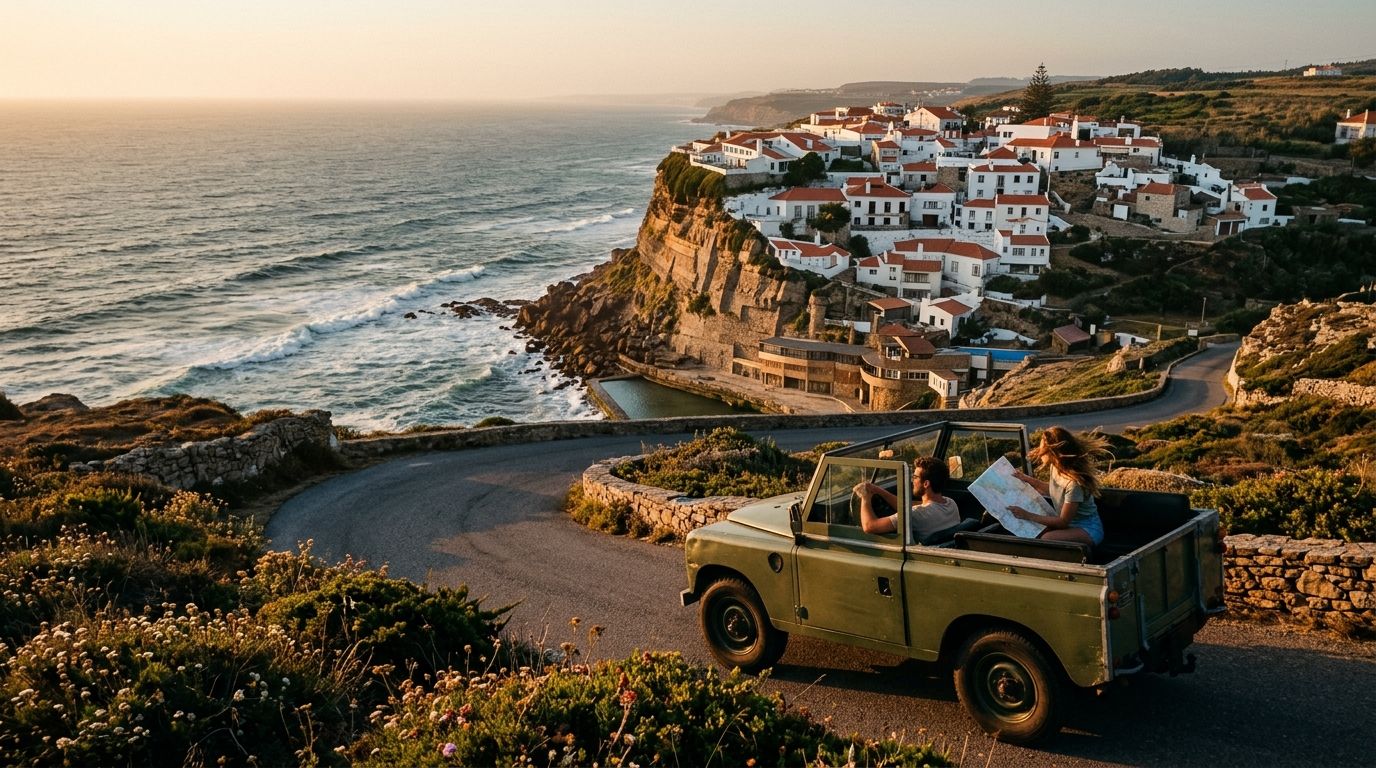
Portugal: A Traveller's Guide Beyond the Tourist Trail
The tile work catches you first. Not dramatically—you won't be ambushed by majesty—but gradually, as you walk a Lisbon street at dusk and notice the repeated patterns bleeding into one another. Blue and white. Yellow and brown. A centuries-old language written in ceramic. You stop walking. A woman passes, wheeling her shopping trolley without looking up. This is daily life here, and somehow that makes it more arresting.
Portugal has a way of creeping up on you like this. It doesn't announce itself. There are no dramatic mountains, no architectural spectacles demanding your phone camera immediately, no Instagram-famous cliffside villages (well, there are, but that's not the point). What Portugal has instead is texture. Rhythm. The specific quality of light hitting weathered buildings at certain hours. The taste of sardines you didn't know you liked. Conversations that last longer than they should, in cafés that smell like coffee and time.
I've spent enough seasons moving through this country—Lisbon to the Algarve, Porto to the Douro Valley—to know when something is genuinely worth your attention and when you're being sold a story. This is my honest assessment.
Why Portugal Stays With You
Portugal works because it operates at a human scale. Even Lisbon, its largest city, doesn't overwhelm you with grandeur. The neighborhoods are walkable. The people engage rather than perform. You can sit in a pastel-coloured alley at three in the afternoon with a small glass of white wine and not feel like you're supposed to be anywhere else.
The country's tourism hasn't yet achieved the saturation point where everything feels curated for consumption. There are tourists, certainly, but you can still find yourself in a room where you're the only non-Portuguese speaker, eating food that wasn't designed with foreign palates in mind, and feeling like you've actually traveled rather than participated in a choreographed experience.
This matters more than you'd think. Authenticity isn't a luxury—it's what makes travel meaningful. Portugal still has pockets of this everywhere.
The food is honest. Not fancy-plated, not Instagram-optimized. Bacalhau à Brás is shredded salt cod with crispy potatoes and olives. It tastes like someone understood exactly what that combination should be and stopped there. Pastéis de nata are cinnamon and custard in a thin pastry shell. They're best eaten at a counter in a small shop, not at a branded café. The seafood is fresh because the ocean is right there. The wine is excellent and inexpensive, which changes how you relate to it—you can drink well without ceremony.
The architecture tells a story most guidebooks get half-right. Yes, there are azulejo tiles (those handpainted ceramics), but they're not decorative—they were practical. Tiles don't crack easily, they clean well, they last. Everything in Portugal was built with centuries in mind. You see this in the thick walls of older homes, in the deliberate placement of buildings against salt spray, in the slow restoration of neighborhoods rather than their demolition and rebuilding.
And the light—I'm mentioning this again because it genuinely affects how you experience the place. The sun doesn't just hang in the sky here; it moves through the streets, creating shadows on weathered stone that change the character of a plaza between 5 PM and 6 PM. Golden hour isn't a photography term; it's the time when Portugal becomes visually coherent to you.
What to Expect: Walking Through the Reality
Let me be direct about what showing up in Portugal actually involves.
Lisbon will feel chaotic for your first few days. The hills are steep. The sidewalks are narrow. The traffic sounds like it's happening in several directions simultaneously. This isn't a flaw—it's part of the character. The city is built on seven hills, which means you're constantly climbing, constantly getting different angles on the same street, constantly discovering that the neighborhood you're in isn't the one you thought. Alfama is the old quarter, winding and tangled. Bairro Alto is grid-like and filled with restaurants and bars. Belém is where you go for the monument-scale history (Jerónimos Monastery, the Torre de Belém). None of it is far from anything else. You can traverse the entire city center on foot in an hour, though you'll want to take two.
The best parts of Lisbon reveal themselves when you stop trying to see everything. Pick a café. Sit for two hours. Watch the light change. Walk to a random neighborhood you haven't heard of. The city makes more sense this way.
Porto, in the north, is steeper and more compressed than Lisbon, built on a dramatic hillside overlooking the Douro River. The Ribeira district is all narrow staircases and laundry lines and cafés that smell like strong coffee. The port wine houses are on the south bank—they're beautiful and touristy and worth visiting, but go early, go on a weekday if you can, and don't expect intimacy. The real Porto emerges in the quieter neighborhoods: Miragaia, Massarelos, the places where locals actually live.
The Algarve is the southern coast. It has beaches, rock formations, some spectacular coastal walking. It also gets very crowded during summer. October and April are better. The beaches near Lagos and Ponta da Piedade are genuinely beautiful—dramatic ochre cliffs, golden sand, turquoise water—but you'll be sharing them with hundreds of others during peak season.
Sintra, a short train ride from Lisbon, is where Portugal gets fantastical. The Palácio da Pena looks like someone built a Disneyland castle in the 1800s and decided to call it history. Quinta da Regaleira is a century-old estate with secret gardens and initiation wells. Monserrate Palace is Romantic Gothic. It's all a bit much, but it's also genuinely odd and beautiful. Go early in the morning. This matters more than you'd think.
The Douro Valley is wine country, terraced hillsides, small villages that feel genuinely removed from the world. You can travel by river, by car, by train (the train is lovely). It's agricultural and working and real. The towns aren't centered around tourism; they're centered around wine.
Expect Portugal to be slower than you'd assume. Not inefficient, just slower. Shops close for lunch. Things take time. Coffee is a ritual, not a pit stop. Dinner doesn't start until 8 PM. This isn't frustrating once you adjust—it's actually the point.
Planning Your Visit: The Practical Framework
Duration: Two weeks is genuinely ideal. You can do a week—hit Lisbon, Sintra, maybe Porto—but you'll feel rushed. Three weeks would let you add the Douro Valley and the Algarve without any sense of hurrying.
Best time to visit: May and September. The weather is warm but not scorching. Summer (June-August) is hot and crowded. October is beautiful. Winter is mild by northern standards but grey, and some smaller places reduce hours or close. Spring arrives suddenly and entirely.
Getting around:
- Within cities: walking, or trams/buses (buy a transit card from any newsstand)
- Between cities: trains are excellent, cheap, and reliable. The Alfa Pendular is faster; regional trains are slower but show you more of the landscape
- Driving: sensible if you're exploring rural areas (Algarve, Douro Valley), but cities are better experienced without a car
Money: Portugal is cheap compared to most of Western Europe, but it's normalized. A decent dinner is €12-18. Accommodation ranges widely—€40 for a basic room, €100+ for comfort. You're not getting deals just by showing up; prices have risen.
Language: Portuguese is the language. English is increasingly spoken in tourism areas, but learning a few phrases changes how locals engage with you. Duolingo for two weeks beforehand is worth it.
Crowds: Lisbon and Porto are busy year-round. The Algarve beaches are unbearable in July and August. Sintra gets crowded on weekends. The Douro Valley and smaller towns are almost always quiet.
Nearby Regions Worth Considering
Évora, two hours south of Lisbon, is a walled medieval town with Roman ruins, an aqueduct, and a cathedral. It's less touristy than Sintra and architecturally compelling. Half a day here is enough; it's a place that reveals itself quickly.
Óbidos, between Lisbon and Porto, is a picture-book medieval village crowded with tourists but still somehow charming. The castle overlooks whitewashed streets. Ginja (a cherry liqueur) is sold in chocolate cups and you're supposed to eat the cup. It's worth stopping for a few hours.
Covilhã, in the Serra da Estrela mountains, is less known and more interesting. Hiking, cool mountain air, genuine Portuguese village life. You feel like you've stumbled onto something rather than visited something.
Is It Worth Visiting? The Honest Answer
Yes. Portugal punches above its weight as a destination. It's not life-changing in the way some places are—you won't have a spiritual awakening or transform your understanding of what's possible. But it's deeply, genuinely enjoyable. The food is good. The people are warm without being performance-y. The light is beautiful. The pace is human.
It's also affordable enough that you can travel here without constant financial anxiety, which matters more to how you experience a place than you'd think. You can take taxis without guilt. You can eat well without budgeting. You can sit in cafés without feeling rushed.
The main risk is underestimating how good it is. Portugal doesn't sell itself aggressively. It doesn't have the dramatic narratives that places like Greece or Spain have built. So people visit, and then they say "that was nice," and they move on. They miss the point slightly. The point is the niceness. The point is the texture of living somewhere for a few weeks where everything is just slightly better than it needs to be, and nobody's trying to convince you of anything.
Come for the architecture and food. Stay for the rhythm.
Quick Facts
- Population: ~10.4 million
- Language: Portuguese
- Currency: Euro
- Time zone: WET (UTC+0)
- Visa: Schengen area—US/UK/Australian citizens get 90 days
- Safety: Excellent. Petty theft in tourist areas, but violent crime is minimal
- Public transport: Buses and metros in cities are €0.60-1.50 per trip; trains between cities are €10-80 depending on distance
- Tipping: Not obligatory. Round up or leave 5-10% if service was good
The Path Forward
Portugal repays curiosity. The more time you spend walking random streets, sitting in unexpected cafés, talking to people, the more the place opens up. It's not complicated—it's just there, waiting to be inhabited rather than sightseeing'd.
Start by exploring Touratu's interactive map to get a visual sense of the routes between Portugal's regions, check out the travel videos to see how people actually move through these cities and towns, and use the bookable activities to secure experiences that genuinely reflect local life rather than tour-package versions of it. That combination—real maps, real footage, real bookings—is how you turn a general idea of Portugal into an actual plan.
Go. Take your time. Sit with the tiles.
Loading activities…
