
Poland: Why Travelers Return to 20 Places
Poland: Why Travelers Keep Coming Back to These 20 Places
There's a particular quality to Polish light in autumn—something about the way it catches on red-brick facades and seeps through linden trees that makes you want to stay longer than you planned. Perhaps it's this, or perhaps it's simply that Poland refuses to be a single story. You come for Kraków's medieval squares and discover something quieter in a provincial town. You return for Warsaw's raw energy and find yourself instead in a monastery garden where the world has barely changed in three centuries.
What draws travelers back repeatedly to Poland isn't novelty—it's recognition. The country moves through your consciousness in layers: first, the obvious landmarks; then, the rhythm of daily life; finally, something more private emerges. You notice how people gather, how light falls on water, the particular generosity of strangers. Poland accumulates in you like memory.
Twenty Reasons to Keep Coming Back
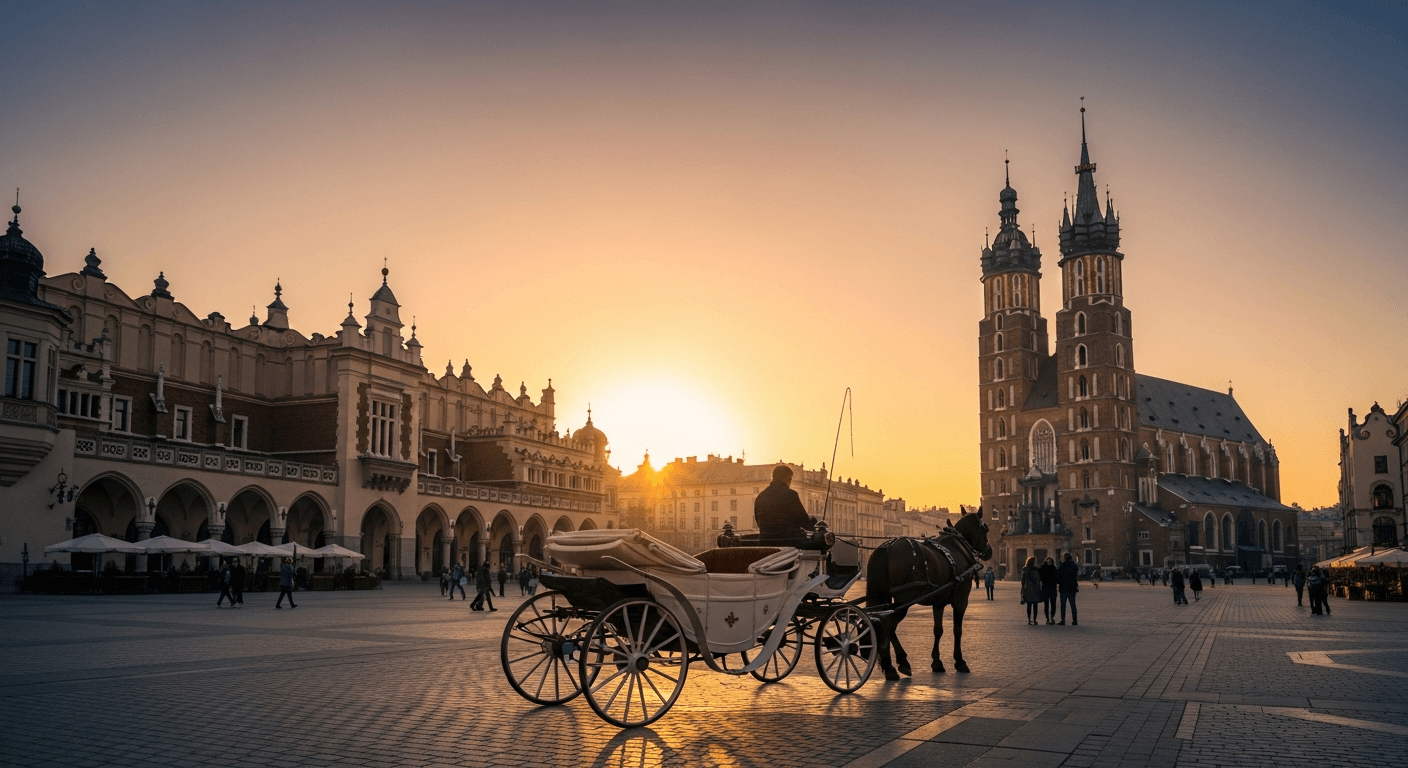
1. Kraków's Main Market Square at Dusk
The moment the Mariacki Basilica bells begin their hourly call, something shifts. Tourists thin out, locals claim the benches, and the square becomes almost tender. The cloth hall catches the last light amber, and you understand why merchants have gathered here for 700 years. It's the proportions—everything feels held in perfect suspension between grandeur and intimacy.
Best visited October through March, when frost clarifies the architecture. Arrive at 4 PM, drink coffee from a street vendor, sit on the northern side where light extends longest. The photography magic happens as shadows lengthen. Locals eat dinner here casually; do the same.
2. Wawel Castle at Sunrise
Climb before the crowds and the castle reveals itself in layers—military fortress, royal residence, spiritual symbol. The Vistula River winds below like something from a medieval manuscript.
Deep beneath Kraków, sculptors have carved an entire chapel from salt. The air tastes different here, thick and mineral. It's neither museum nor attraction in the conventional sense—it's a small miracle of human labor made visible.
4. Warsaw's POLIN Museum
This is architecture as storytelling. The building itself, bisected by a glass canyon, holds 1,000 years of Polish-Jewish history with an intelligence that moves beyond documentation into genuine understanding. Allow three hours minimum.
5. The Białowieża Forest
One of Europe's last primordial forests straddles the Polish-Belarusian border. Walking here, you're not in nature—you're in history, watching the ecosystem that has existed since the ice ages. The silence is profound.
6. Gdańsk's Riverfront
Rebuilt meticulously after World War II, these gabled houses create a streetscape that feels both authentic and slightly theatrical. The Motława River reflects them perfectly at evening. Sit at a waterside restaurant and watch the light turn gold, then copper.
7. Toruń's Old Town
Less crowded than Kraków, more authentic somehow. Medieval streets slope downward toward the Vistula, and the city maintains an intellectual atmosphere—Copernicus was born here. The gingerbread shops are genuine; locals actually eat this stuff.
The largest castle by area in Europe, yet it rarely feels mobbed. Walk the red-brick ramparts and imagine the Teutonic Knights planning medieval campaigns. The scale is unsettling in the best way.
9. Auschwitz-Birkenau Memorial
This requires its own emotional preparation. The site demands respect above all else. Visit with a guide who understands that silence matters more than explanation. Late afternoon light, when visitor numbers drop, allows for something closer to contemplation.
10. The Tatra Mountains
If you've only seen Poland's flatlands, the southern mountains feel like a secret. Hiking between Morskie Oko and Czarny Staw lakes, you encounter alpine meadows that seem impossibly distant from Warsaw.
11. Poznan's Old Market Square
Smaller than Kraków's but somehow more livable. Town hall stands center-stage with two bronze goats that, legend claims, butt heads at noon. Poznan residents gather here naturally, not touristically.
12. Kazimierz Dolny
This artists' town on the Vistula feels suspended in time. Cobblestone streets wind upward to Renaissance mansions, and the river below catches light like hammered silver. Summer concerts in the town square, but winter is quieter and truer.
13. The Carpathian Foothills
Around Nowy Sącz and Pieniny, the landscape softens. Hiking here feels like walking through a storybook version of mountains. The Dunajec Gorge offers dramatic rafting.
14. Łódź's Artistic Evolution
Once Poland's industrial heart, it's now a city of street murals, independent galleries, and a sobering WWII history. It's rough in places but genuinely alive in a way that feels earned rather than curated.
15. Wrocław's Island Districts
Twelve islands connected by 112 bridges give this city a secret waterside existence. Cross bridges at random and discover small plazas, churches reflected in water, cafés where time moves differently.
16. Jasna Góra Monastery
The Black Madonna icon draws pilgrims in steady streams, but if you arrive on a quiet morning, you'll understand the spiritual pull. The devotion is visible and moving without being theatrical.
17. Sopot's Pier
The Baltic coast's entertainment hub, yet it retains elegance. The pier extends like a wooden tongue into the sea. Walk it at sunset when the water turns molten.
18. Biebrza River Wetlands
Birdwatchers' paradise, but valuable even if you don't identify species. The landscape feels primordial—marshes and mirages, silence and sudden movement.
19. Lublin's Old Town
Underrated and quietly beautiful. The castle gates lead to winding streets where Orthodox churches sit beside Catholic ones, visible history of multiple cultures.
20. Rynek Starego Miasta (Warsaw Old Town Square)
Warsaw's rebuilt heart. Yes, it's reconstructed after 1945's devastation, but that authenticity—the desire to remember what was—makes it more moving than purely original medieval squares.
How to Navigate Poland Like Someone Returning
Polish transport connects everywhere efficiently. The train network is genuinely good; booking PKP or private operators through their websites beats queuing. Buses, particularly flixbus, offer budget alternatives, though they're slower. In cities, buy weekly transit passes; locals do, and it's cheaper than daily tickets.
Neighborhoods matter more than you'd expect. In Warsaw, Praga and Powiśle have become vibrant alternative districts, while Wola preserves old tenement architecture. In Kraków, Kazimierz offers Jewish history without sanitization. Wrocław's quarters—each island district—feel distinct and worth exploring individually.
Timing determines everything. September and May offer weather and smaller crowds. October through December brings Christmas markets, particularly in Kraków and Wrocław, though they're touristy. Winter isn't for everyone, but if you tolerate cold, you'll encounter fewer people and clearer light. August brings heat and peak tourism.
Polish etiquette: greet shopkeepers and café staff; it's expected. In restaurants, waiters won't rush you—timing is your decision. Tipping is 10% if service was good, not automatic. In museums and historical sites, move quietly and respectfully. Poles are warmly hospitable once they sense genuine interest rather than superficial tourism.
Explore Poland's Traveler Stories on Touratu
The routes that bring travelers back to Poland emerge clearly when you explore Touratu's interactive map—watch how visitors weave between Kraków and the countryside, how some linger in overlooked towns, how seasonal patterns reveal themselves through visual travel discoveries and shared reels from people who've learned Poland's rhythms.
Returning
What makes Poland compelling for returning visitors isn't mystery—it's the opposite. You come back because you recognize something. Because you left unfinished conversations with towns and light and the particular way Polish hospitality feels like genuine interest rather than service. Because autumn in Kraków stays with you through entire seasons elsewhere, and you need to confirm it was real. Poland doesn't offer the theatrical drama of other European destinations. Instead, it offers recognition, quiet depth, the knowledge that something here matches something inside you. That's worth returning for.
Loading activities…
