
Peru: 20 Places Why Travelers Keep Returning
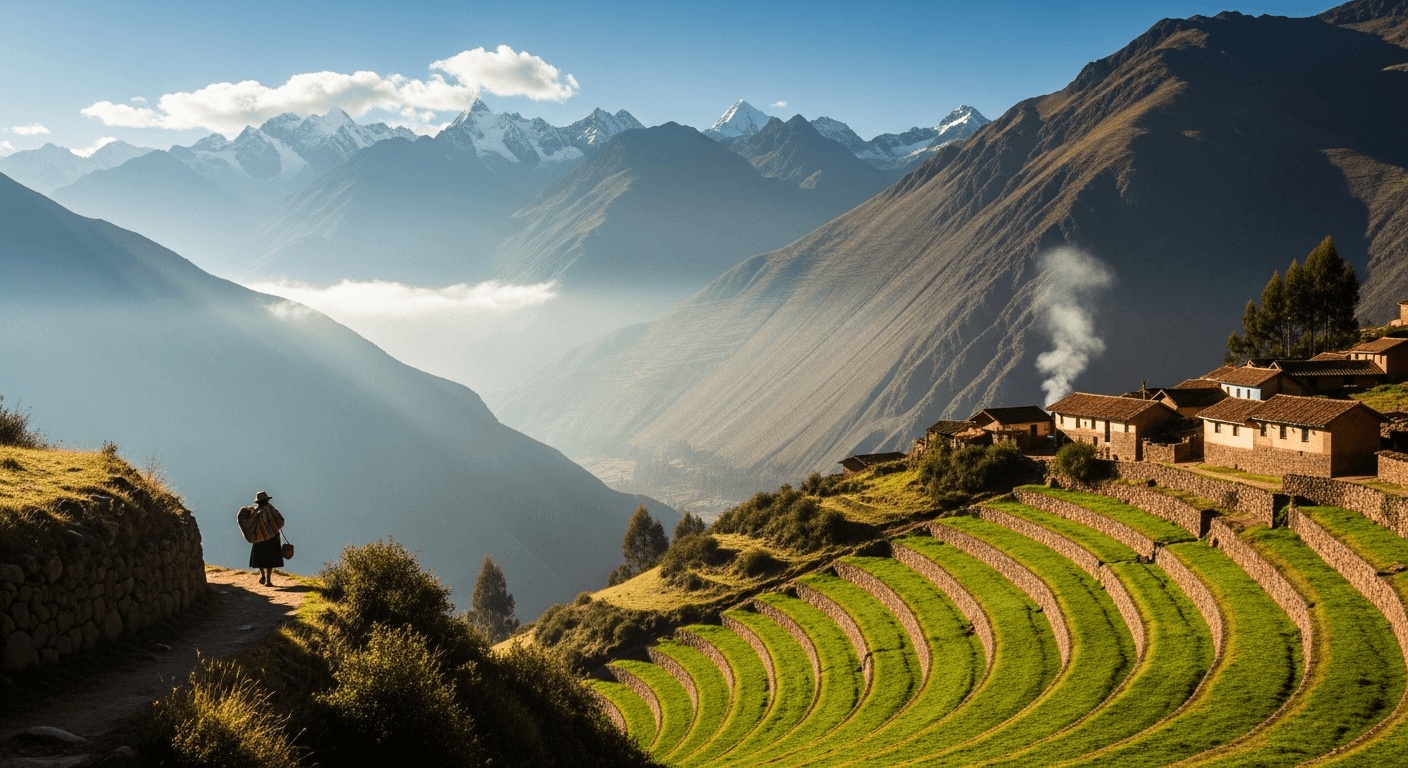
Peru: Why Travelers Keep Coming Back to These 20 Places
There's something about Peru that rewires the way you see the world. It's not just the monuments—though they are extraordinary—but the way the light falls differently on each mountain pass, how the air tastes like eucalyptus and time, and the peculiar sensation of standing in a place that was sacred five hundred years ago and somehow still is. Peru doesn't demand your reverence. It simply shows you its hands, and you find yourself reaching back.
Travelers return to Peru not because it's on a checklist, but because something there—maybe the weight of history in Cusco's stone walls, maybe the smile of a Quechua woman selling alpaca blankets, maybe the way mist clings to Machu Picchu's terraces like it's protecting a secret—becomes part of how you understand beauty. This is a country of layered contradictions: ancient and alive, harsh and generous, deeply spiritual yet wildly sensual. Once you've walked through it, you can't quite leave.
Here are twenty places that explain why.
1. Machu Picchu
The obvious first entry, yes. But Machu Picchu still does something no photograph prepares you for: it humbles without preaching. Stand at the eastern entrance at sunrise, when fewer tourists have arrived and the terraces emerge from mist like a civilization remembering itself into being. What makes it endure isn't the engineering—though the agricultural systems are elegant beyond belief—but the experience of seeing human ambition married to landscape in perfect proportion. Visit June–August for clarity, though fewer crowds come May or September. The photography moment: from the Temple of the Sun, golden hour transforms the stonework into something almost liquid. Practical tip: Begin your journey in Aguas Calientes the evening before. The 20-minute train ride from Cusco is worth the time to acclimate and avoid the predawn scramble.
2. Sacred Valley
Where Machu Picchu is monument, the Sacred Valley is living Peru. This string of small towns—Ollantaytambo, Chinchero, Pisac—feel less curated, more inhabited. Ollantaytambo's fortress sits against the mountain like it's part of the landscape, not imposed upon it. The real magic is in the weaving communities and agricultural markets: watching women trade alpaca and potatoes in Chinchero, understanding that this economy has operated on similar principles for generations. March–May brings wildflowers and optimal light. Insider note: Skip the main Pisac market and head to the Sunday market in Chinchero instead—you'll see fewer cameras and more connection.
3. Cusco
A city of contradictions where Spanish colonial plazas sit atop Incan foundations, Cusco rewards the kind of wandering that leaves you slightly lost. The Plaza de Armas is orchestral at dusk, but the real discoveries live in narrow side streets: a café serving coca tea in a 400-year-old courtyard, a textile museum tucked above a pharmacy, a church where Catholic saints wear Incan textiles. Don't miss the San Blas neighborhood's winding stone staircases, where locals outnumber tourists and the views of the valley spread below like a painter's study. April and October offer perfect temperatures. Photography moment: Climb to the Church of San Cristóbal just before sunset. The plaza light below turns honey-gold.
4. Lake Titicaca
At 12,507 feet, Titicaca doesn't feel like Earth. It feels like a dream someone is having about water and sky. The Uros islands—floating reed settlements—are more about the surrealism of engineering human life on entirely biodegradable foundation than tourism theater. But visit the less-traversed Taquile Island, where the steep climb rewards you with terraces that fall toward blue, and islanders who still weave their own clothing and avoid motorized boats. Best time: April–October, when winds are calmer. Practical tip: Puno is the main access point, but the five-hour drive from Cusco is meditative—hire a private driver and stop at colonial churches along the way.
5. Arequipa & El Misti
Arequipa's white sillar stone architecture glows at night like the city has absorbed some internal light. It's Peru's second city but with the feeling of a place you've stumbled into rather than found. El Misti volcano presides over everything—a perfect cone that seems almost unreal. The Santa Catalina Monastery is a small city unto itself: courtyards, cloisters, cell doors painted in deep reds and blues, the lives of enclosed nuns preserved in every corner. Arequipa tastes different too—sharper, more coastal, influenced by nearby Chile. Visit June–August for clear skies and warm days. Insider observation: The younger generation is leaving the mountains for coastal cities, so there's a bittersweet quality to conversations in local cafés—a place changing in real time.
6. Colca Canyon
Deeper than the Grand Canyon and twice as complex, Colca Canyon is for travelers who come for raw landscape rather than comforts. The condor viewpoint at Mirador de Condores is where you wait in cold air at dawn and then watch the largest flying bird on Earth drift beneath you on thermals. The valley floor is a tangle of green where Collagua people farm in the same terraces their ancestors built six centuries ago. It's demanding terrain, but that's precisely why it teaches you something about your own limitations. Best time: May–June or September–October, before heavy rain or extreme cold. Practical tip: Base yourself in Chivay and hire a local guide—the Colca is large enough to get properly lost.
7. Nazca Lines
You cannot truly see the Nazca Lines from the ground—they exist only for the sky, which means you must ascend in a small plane and trust both physics and hope. There's something spiritually audacious about lines drawn 1,500 years ago that ask to be seen from above, as if the ancient Nazca people understood something about perspective that wouldn't be documented again for centuries. The flight is bumpy, disorienting, and worth every moment of vertigo. The geometric precision of the hummingbird, the monkey, the spiral becomes a kind of transcendental geometry lesson. Best time: May–October, for stable weather and clear visibility. Practical tip: Fly early morning—afternoon winds make planes rock considerably. The Nazca town itself is fairly bleak, so fly in and out from nearby Ica.
8. Chinchero Textile Weaving Communities
While tourists photograph at Pisac, real textile production happens in Chinchero and surrounding villages where women have been reviving traditional natural dye techniques. Visiting an actual weaving family—not a showroom—means sitting in a home courtyard while someone demonstrates how to spin alpaca, dye thread with cochineal beetles, and create patterns that have traveled through generations with almost no written instruction. This is Peru's living cultural heritage, not displayed but practiced. Timing: Any season, but April–May brings clearest mountain light. Insider tip: Work with a community-based tour operator rather than hotel concierges—you'll be invited into actual homes rather than performance spaces.
9. The Train from Cusco to Hydroelectric Station
This isn't a must-do touristic journey; it's the train that locals actually use. The route from Cusco down to Machu Picchu's hydroelectric station follows the Urubamba River through cloud forest, and the landscape transforms from high Andean moorland to subtropical jungle over several hours. Sit outside your cabin on the platform cars (yes, they exist) and let the mist and vegetation gradually envelop you. It's meditative in a way the tourist Vistadome train cannot be. Best for: Acclimatization and mood-setting before Machu Picchu. The journey itself becomes the destination rather than the preamble to one.
10. Cusipata
A small village in the Vilcanota River valley that few tourists find, Cusipata offers hot springs heated naturally, a community-run restaurant serving local food, and a particular kind of authenticity that requires effort to reach. The landscape is severe—high altitude, sparse vegetation—but the residents have transformed it into a sustainable tourism model where visitors fund education. There's no Instagram moment here, just genuine exchange and excellent trout and the understanding that you're supporting something real. Access: From Cusco, take a shared taxi toward Puno and ask the driver to drop you at Cusipata—about 90 minutes. The village is organizing more tours, but moving slowly, which is entirely intentional.
Getting Around Peru: What Matters Beyond the Map
Traveling through Peru requires a recalibration of your relationship with time. Distances that appear short will take longer than expected—not due to poor roads necessarily, but because the terrain is unforgiving and driving carefully through mountain passes is non-negotiable. Arrange flights between Cusco and coastal cities like Lima or Arequipa. Trains run between Cusco and Machu Picchu, but are expensive for tourists; locals take a different route. For regional travel within the highlands, shared taxis are simultaneously the slowest and most authentic option—you'll sit with farmers, students, and families going to market, overhearing conversations in Quechua and Spanish that no guidebook can teach you.
The best neighborhoods for staying are San Blas in Cusco (steep, quiet, local), the Sacred Valley towns themselves rather than Cusco if you're focusing on that region, and central Arequipa near the Plaza de Armas. Avoid the tourist strips on your first visit to any place—walk three blocks in any direction and you'll find the actual city.
Timing matters less than altitude. Cusco sits at 11,150 feet, and the first day feels like breathing through a straw. Plan your first two days gently: coca tea, rest, short walks. The malaise passes by day three, but fighting it makes you miserable. Visit the highlands May–October for weather certainty. The rainy season (November–April) makes mountain passes occasionally impassable and historic sites can be shrouded in cloud, but fewer tourists arrive and the landscape is greener, more alive.
Etiquette is quiet here. Dress respectfully in indigenous communities. Photography of people requires permission—a simple gesture toward your camera and a smile usually answers the question. Don't assume because someone speaks Spanish that they're not Quechua-first; many bilingual speakers prefer their ancestral language. Tip guides generously if they've given you real insight.
Explore the Routes on Touratu
The real magic of Peru lives in how travelers string these places together—the train journey that becomes memory, the valley market that changes how you see commerce, the moment at 4 a.m. when you realize you're awake to see condors. On Touratu's interactive map, you can trace the visual discoveries and actual routes that travelers have taken through Peru, seeing how the itineraries evolve and where unexpected connections emerge.
Peru doesn't give you memories in the way postcards promise. It gives you textures: the weight of ancient stone under your palm, the taste of potato varieties whose names only exist in Quechua, the particular silence of high altitude at night. It gives you the experience of standing at the edge of human understanding—both your own and civilization's. You return to Peru not because you've conquered it, but because you've had the privilege of being small within something vast, and you want to remember that feeling, to understand it better, to ask the questions it left unanswered. That's why travelers keep coming back.
Loading activities…
