
Paphos Cyprus: Ancient Ruins & Coastal Escapes
Introduction
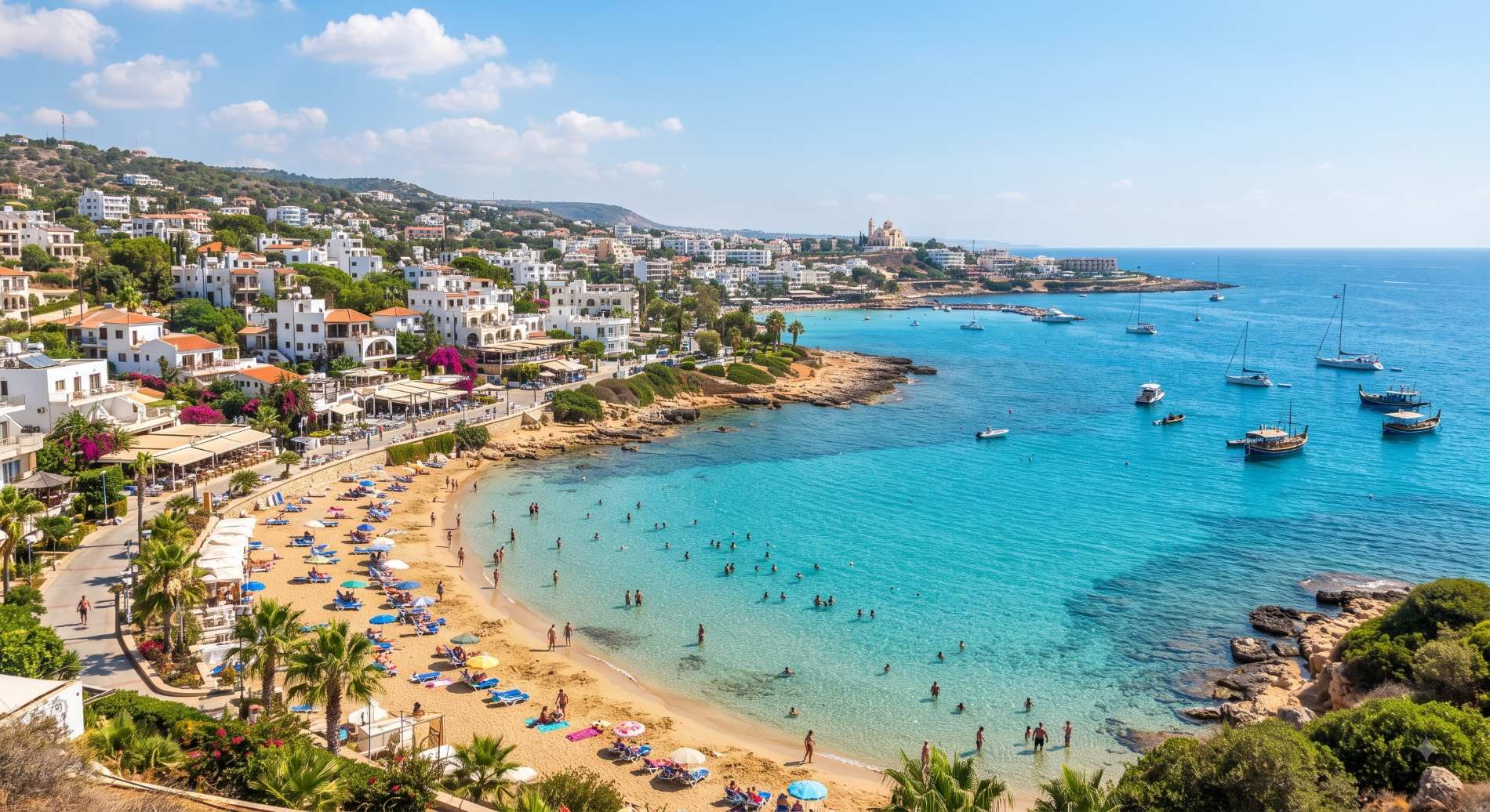
Paphos is one of the most fascinating destinations in Cyprus, located on the island's southwestern coast.
The city combines ancient archaeological sites, Mediterranean beaches, historic harbor views, Byzantine and medieval monuments, dramatic coastline, traditional villages, and a relaxed resort atmosphere.
Paphos is particularly famous for its connection to Aphrodite, the ancient Greek goddess of love and beauty, as well as its exceptionally rich archaeological heritage. The Archaeological Park of Paphos is a UNESCO World Heritage Site and contains some of the island's most impressive ancient mosaics.
Beyond the city, travelers can explore Coral Bay, Akamas Peninsula, the Blue Lagoon, Sea Caves, Lara Beach, Aphrodite's Rock, wineries, monasteries, and the Troodos foothills.
Paphos is an excellent destination for couples, families, history lovers, beach travelers, photographers, food travelers, nature enthusiasts, and travelers looking for a slower Mediterranean experience.
Quick Facts
| Category | Information |
|---|---|
| Country | Cyprus |
| Region | Southwestern Cyprus |
| Famous For | Archaeology, Aphrodite, beaches, harbor, mosaics |
| Landscape | Mediterranean coast, cliffs, hills, countryside |
| Best For | History, beaches, couples, culture, nature |
| Currency | Euro (EUR) |
| Recommended Stay | 3–5 days |
| Main Attraction | Archaeological Park of Paphos |
| Nearest Airport | Paphos International Airport |
Why Visit Paphos?
- Explore the Archaeological Park of Paphos.
- See spectacular ancient Roman mosaics.
- Walk around Paphos Harbour.
- Visit Paphos Castle.
- Discover the Tombs of the Kings.
- Relax at Coral Bay.
- Explore the Akamas Peninsula.
- Take a boat trip to the Blue Lagoon.
- Visit Aphrodite's Rock.
- Discover Byzantine churches and monasteries.
- Explore traditional Cypriot villages.
- Taste local wine and cuisine.
- Go snorkeling and diving.
- Watch Mediterranean sunsets.
- Hike through coastal landscapes.
- Combine history with a relaxing beach holiday.
Paphos is particularly special because ancient history, mythology, beaches, and nature can all be experienced within the same trip.
Main Attractions
1. Archaeological Park of Paphos
The Archaeological Park of Paphos is the city's most important historical attraction and a UNESCO World Heritage Site.
The archaeological area contains remains from several periods, particularly the Hellenistic and Roman eras.
Visitors can explore:
- Ancient villas
- Roman mosaics
- Columns
- Archaeological remains
- Ancient theaters
- Historic streets
- Religious sites
Roman Mosaics
The ancient mosaics are among the park's greatest treasures.
They feature elaborate scenes from:
- Greek mythology
- Ancient legends
- Everyday life
- Animals
- Gods and heroes
Best for: History, archaeology, culture, photography, and families.
2. House of Dionysus
The House of Dionysus contains some of the most impressive Roman mosaics in Paphos.
The mosaics feature elaborate mythological scenes and provide an extraordinary glimpse into Roman-era life.
Best for: Archaeology, history, art, and photography.
3. Paphos Harbour
Paphos Harbour is the heart of the city's waterfront.
Visitors can enjoy:
- Restaurants
- Cafés
- Harbor walks
- Boat trips
- Sea views
- Sunset photography
The harbor is particularly attractive in the evening.
Best for: Couples, families, dining, photography, and relaxed walks.
4. Paphos Castle
Paphos Castle stands at the edge of the harbor.
The stone fortress is one of the city's most recognizable landmarks.
Visitors can explore the historic structure and enjoy views toward:
- The harbor
- Mediterranean Sea
- Archaeological area
- Waterfront
Best for: History, architecture, and photography.
5. Tombs of the Kings
The Tombs of the Kings is an impressive ancient necropolis dating from the Hellenistic and Roman periods.
Despite its name, the site was not necessarily used for actual kings. The monumental underground tombs reflect the status and wealth of the people buried there.
Visitors can see:
- Rock-cut chambers
- Columns
- Underground tombs
- Ancient burial architecture
Best for: Archaeology, history, photography, and culture.
Tombs Tip
Visit early in the day, especially during summer, because much of the site is exposed to the sun.
6. Agia Kyriaki Chrysopolitissa
The Agia Kyriaki Chrysopolitissa area contains important Christian and archaeological remains.
One of the best-known features is St. Paul's Pillar, associated with Christian tradition in Paphos.
Best for: History, religion, archaeology, and culture.
7. Byzantine Museum
The Byzantine Museum provides insight into Cyprus's Christian artistic heritage.
Visitors can discover:
- Religious icons
- Byzantine art
- Ecclesiastical objects
- Historic artworks
Best for: Art, culture, and history.
8. Coral Bay
Coral Bay is one of the most popular beaches near Paphos.
The sheltered bay features:
- Golden sand
- Clear Mediterranean water
- Swimming
- Sunbathing
- Water sports
- Restaurants nearby
Best for: Families, couples, swimming, and beach holidays.
9. Akamas Peninsula
The Akamas Peninsula is one of western Cyprus's most spectacular natural areas.
The landscape combines:
- Rocky coastline
- Forest
- Cliffs
- Hidden beaches
- Sea caves
- Wildlife
- Hiking trails
Best for: Nature, hiking, photography, adventure, and boat trips.
10. Blue Lagoon
The Blue Lagoon in the Akamas area is famous for its exceptionally clear turquoise water.
Visitors commonly reach it by:
- Boat
- 4x4 excursion
- Organized tour
Popular activities include:
- Swimming
- Snorkeling
- Boat trips
- Photography
Best for: Couples, swimming, snorkeling, and nature.
11. Aphrodite's Rock
Petra) tou Romiou, commonly known as Aphrodite's Rock, is one of Cyprus's most famous coastal landmarks.
According to mythology, the location is associated with the birth of Aphrodite, the Greek goddess of love and beauty.
The dramatic coastline makes it a popular place for:
- Photography
- Sunset viewing
- Swimming
- Mythology
- Scenic stops
Best for: Couples, photography, mythology, and sightseeing.
12. Aphrodite's Bath
Aphrodite's Baths is a natural grotto associated with the mythology of Aphrodite.
The surrounding area provides access to walking trails and the landscapes of the Akamas Peninsula.
Best for: Nature, mythology, hiking, and photography.
13. Lara Beach
Lara Beach is located within the Akamas region and is known for its relatively undeveloped character.
The area is particularly important for sea turtle conservation.
Visitors should respect local conservation rules and avoid disturbing nesting areas.
Best for: Nature, wildlife, photography, and peaceful landscapes.
14. Sea Caves
The coastline around Paphos and nearby Peyia features dramatic sea caves and limestone formations.
The scenery is excellent for:
- Photography
- Coastal walks
- Swimming in calm conditions
- Boat trips
Best for: Adventure, photography, and nature.
15. Peyia
Peyia is a hillside town north of Paphos with views over the Mediterranean.
It combines:
- Traditional Cypriot atmosphere
- Restaurants
- Village streets
- Sea views
- Access to Coral Bay
Best for: Food, culture, sunsets, and countryside.
16. Polis
Polis Chrysochous is a quieter town near the Akamas Peninsula.
It is particularly attractive for travelers seeking:
- Nature
- Cycling
- Beaches
- Traditional villages
- Relaxation
Best for: Slow travel, nature, and outdoor activities.
17. Troodos Mountains
The Troodos Mountains are within reach of Paphos and provide a dramatic contrast to the Mediterranean coast.
Visitors can explore:
- Mountain villages
- Forests
- Hiking trails
- Vineyards
- Byzantine churches
- Traditional food
Best for: Hiking, culture, wine, and countryside.
Beaches
Paphos offers a variety of beaches, from organized resort beaches to quieter coastal areas.
Popular Beaches
- Coral Bay
- Alykes Beach
- Vrisoudia Beach
- Lighthouse Beach
- Faros Beach
- Lara Beach
- Laourou Beach
Beach Tip
Coral Bay is generally one of the most convenient choices for a classic beach day, while the Akamas coastline is better for travelers seeking wild scenery and nature.
Nature Experience
Paphos is surrounded by a diverse landscape.
You can experience:
- Mediterranean coastline
- Rocky cliffs
- Forest
- Mountains
- Vineyards
- Canyons
- Sea caves
- Protected habitats
Popular Activities
- Hiking
- Snorkeling
- Scuba diving
- Kayaking
- Boat trips
- Cycling
- Birdwatching
- Wildlife photography
- Swimming
- Wine tourism
Culture & Heritage
Paphos is one of Cyprus's most historically significant destinations.
Important cultural themes include:
- Ancient Greek mythology
- Hellenistic history
- Roman civilization
- Early Christianity
- Byzantine heritage
- Medieval Cyprus
- Ottoman and British-era history
- Traditional Cypriot culture
The connection with Aphrodite is especially important to the cultural identity of the region.
Food Guide
Paphos offers a combination of traditional Cypriot cuisine, Mediterranean seafood, Greek-inspired dishes, international restaurants, and local wine.
Halloumi
Cyprus's famous grilled cheese is a must-try.
Enjoy it:
- Grilled
- In salads
- With vegetables
- With bread
- As part of meze
Cypriot Meze
One of the best ways to experience local cuisine.
A traditional meze may include:
- Halloumi
- Dips
- Olives
- Salads
- Grilled meats
- Vegetables
- Seafood
Best for: Groups, couples, and food travelers.
Souvlaki
Grilled meat commonly served with:
- Pita
- Salad
- Fries
- Tzatziki
Sheftalia
A traditional Cypriot grilled sausage made with seasoned minced meat.
Kleftiko
Slow-cooked lamb is another classic Cypriot dish.
Fresh Seafood
Try:
- Sea bream
- Sea bass
- Calamari
- Octopus
- Shrimp
Loukoumades
Small fried dough treats served with sweet toppings such as honey or syrup.
Local Wine
The countryside around Paphos is part of Cyprus's wine-producing region.
A vineyard visit can combine:
- Wine tasting
- Village exploration
- Local food
- Mountain views
Shopping
Local Products
Look for:
- Olive oil
- Cypriot wine
- Halloumi
- Traditional sweets
- Ceramics
- Lace
- Handmade crafts
- Leather products
- Jewelry
- Religious icons
Accommodation Areas
| Traveler Type | Recommended Area | Why |
|---|---|---|
| First-time visitor | Kato Paphos | Harbor, archaeology, restaurants |
| Couple | Kato Paphos / Coral Bay | Waterfront and romantic scenery |
| Family | Coral Bay | Beach and resort facilities |
| History traveler | Kato Paphos | Archaeological sites nearby |
| Nature traveler | Polis / Akamas | Easy access to nature |
| Luxury traveler | Waterfront / Coral Bay | Resorts and sea views |
| Food traveler | Kato Paphos | Restaurants and harbor |
| Quiet traveler | Peyia / countryside | Views and peaceful surroundings |
Transportation
Getting There
Paphos is served by Paphos International Airport, making the city particularly convenient for international visitors.
Travelers can arrive by:
- Rental car
- Taxi
- Airport transfer
- Bus
- Organized tour
Local Transportation
You can use:
- Walking
- Buses
- Taxis
- Rental cars
- Bicycles
- Organized excursions
Transportation Tip
A rental car is particularly useful if you want to explore Akamas, Aphrodite's Rock, mountain villages, wineries, and beaches outside Paphos.
Suggested 3-Day Itinerary
Day 1 — Ancient Paphos
Morning
Explore the Archaeological Park of Paphos.
See:
- Roman mosaics
- Ancient ruins
- Ancient theater
Afternoon
Visit the Tombs of the Kings.
Evening
Walk around Paphos Harbour and visit Paphos Castle.
Day 2 — Coast & Aphrodite
Morning
Visit Aphrodite's Rock.
Afternoon
Relax at Coral Bay.
Evening
Enjoy a seafood or traditional Cypriot dinner.
Day 3 — Akamas
Morning
Explore the Akamas Peninsula.
Afternoon
Take a boat trip to the Blue Lagoon.
Evening
Return to Paphos for sunset and dinner.
Suggested 4-Day Itinerary
Day 1
Archaeological Park + harbor + castle.
Day 2
Tombs of the Kings + Coral Bay.
Day 3
Akamas + Blue Lagoon.
Day 4
Aphrodite's Rock + countryside villages + winery.
Suggested 5-Day Itinerary
Day 1
Historic and archaeological Paphos.
Day 2
Beaches + Coral Bay + Peyia.
Day 3
Akamas + Blue Lagoon.
Day 4
Aphrodite's Rock + coastal exploration.
Day 5
Troodos foothills + villages + wine and food.
Best Things to Do in Paphos
- Visit the Archaeological Park.
- See the Roman mosaics.
- Explore the Tombs of the Kings.
- Walk around Paphos Harbour.
- Visit Paphos Castle.
- See St. Paul's Pillar.
- Visit Coral Bay.
- Explore Akamas Peninsula.
- Take a boat trip to the Blue Lagoon.
- Visit Aphrodite's Rock.
- Explore Aphrodite's Baths.
- Visit Lara Beach.
- Discover the sea caves.
- Visit Peyia.
- Explore Polis.
- Visit traditional villages.
- Go snorkeling.
- Go scuba diving.
- Hike in the countryside.
- Visit a Cypriot winery.
- Try traditional meze.
- Eat halloumi.
- Try sheftalia.
- Taste local wine.
- Watch the sunset.
- Photograph the archaeological sites.
- Explore the harbor at night.
- Visit the Troodos Mountains.
- Take a coastal boat trip.
- Relax at a Mediterranean beach.
Photography Guide
Paphos is excellent for archaeological, coastal, architectural, landscape, wildlife, and sunset photography.
Best Subjects
- Paphos Harbour
- Paphos Castle
- Roman mosaics
- Tombs of the Kings
- Aphrodite's Rock
- Coral Bay
- Akamas Peninsula
- Blue Lagoon
- Sea caves
- Cyprus countryside
- Vineyards
- Traditional villages
- Mediterranean sunsets
Best Times
Early morning: Archaeological sites with fewer visitors and softer light.
Late afternoon: Excellent light over the coastline.
Sunset: Aphrodite's Rock and the western coast are particularly attractive.
Blue hour: Paphos Harbour and castle become atmospheric after sunset.
Best Seasons
March–May
Excellent for:
- Hiking
- Archaeology
- Photography
- Countryside exploration
- Wildflowers
Temperatures are generally comfortable for sightseeing.
June–August
Peak summer.
Best for:
- Beaches
- Swimming
- Boat trips
- Snorkeling
Expect hot temperatures and more visitors.
Summer Tip
Plan archaeological visits early in the morning and beach activities later in the day.
September–October
One of the best periods for a balanced Paphos trip.
Best for:
- Swimming
- Beaches
- Hiking
- Archaeology
- Wine experiences
November–February
The city is quieter and temperatures are milder than summer.
Best for:
- History
- Hiking
- Photography
- Villages
- Cultural travel
Family Travel
Paphos is particularly good for families because it combines beaches, archaeology, boat trips, nature, and educational attractions.
Best Family Attractions
- Archaeological Park
- Tombs of the Kings
- Coral Bay
- Paphos Harbour
- Boat trips
- Blue Lagoon
- Akamas
- Sea caves
Family Tips
- Visit archaeological sites early during summer.
- Carry water and sunscreen.
- Choose organized boat trips for easier access to the Blue Lagoon.
- Use Coral Bay for a convenient family beach day.
- Allow plenty of breaks during outdoor excursions.
Couple Travel
Paphos is an excellent destination for couples who enjoy history, beaches, mythology, sunsets, seafood, wine, and scenic landscapes.
Romantic Experiences
Aphrodite's Rock
Visit the legendary birthplace associated with Aphrodite.
Blue Lagoon
Take a boat trip and swim together in turquoise water.
Paphos Harbour
Enjoy a sunset walk and dinner by the sea.
Wine Experience
Visit a countryside vineyard.
Akamas
Explore the dramatic coastline together.
Sunset Dinner
Enjoy fresh seafood or traditional Cypriot cuisine overlooking the Mediterranean.
Travel Tips
- Stay for three to five days.
- Start with the Archaeological Park.
- Visit the Tombs of the Kings.
- Explore Paphos Harbour in the evening.
- Reserve time for Akamas.
- Take a Blue Lagoon boat trip.
- Visit Aphrodite's Rock.
- Bring comfortable walking shoes.
- Carry sunscreen and water.
- Rent a car if you want to explore beyond Paphos.
- Try traditional Cypriot meze.
- Visit a local winery.
- Explore Coral Bay.
- Stay overnight rather than treating Paphos only as a day trip.
- Visit archaeological sites early during hot months.
- Check sea conditions before boat excursions.
- Allow at least half a day for the Akamas area.
- Combine the coast with mountain villages for a more complete Cyprus experience.
Common Mistakes to Avoid
1. Visiting Only the Beaches
Paphos has one of Cyprus's richest archaeological landscapes.
2. Skipping the Roman Mosaics
The mosaics in the Archaeological Park are among the city's most important attractions.
3. Missing the Tombs of the Kings
The monumental rock-cut tombs are a major highlight.
4. Ignoring Akamas
The natural landscape north of Paphos is very different from the resort area.
5. Visiting Aphrodite's Rock Only for a Photograph
Take some time to appreciate the mythology and dramatic coastline.
6. Not Allowing Enough Time
Paphos works best when you combine history, beaches, nature, and food rather than rushing through individual attractions.
Paphos + Other Destinations
Paphos + Ayia Napa
Best for:
Archaeology + beaches + nightlife + coastal scenery
Paphos + Limassol
Best for:
History + city life + food + Mediterranean coast
Paphos + Larnaca
Best for:
Historic cities + beaches + convenient Cyprus road trip
Paphos + Troodos Mountains
Best for:
Coast + mountains + villages + hiking + wine
Paphos + Nicosia
Best for:
Archaeology + Cypriot history + capital-city culture
Touratu Pro Tips
- Make the Archaeological Park of Paphos your starting point.
- Spend time studying the Roman mosaics.
- Visit the Tombs of the Kings.
- Walk around Paphos Harbour at sunset.
- Explore Paphos Castle.
- Take a boat trip to the Blue Lagoon.
- Explore the Akamas Peninsula.
- Visit Aphrodite's Rock.
- Relax at Coral Bay.
- Try traditional Cypriot meze.
- Visit a local winery.
- Explore Peyia and the surrounding countryside.
- Stay overnight to experience the waterfront after the day-trippers leave.
- Carry water and sun protection for outdoor attractions.
- Use Touratu's interactive maps to compare archaeological sites, beaches, hotels, restaurants, viewpoints, wineries, boat trips, hiking routes, attractions, and transportation.
- Use narrated destination guides to create a personalized Paphos itinerary.
Frequently Asked Questions
What is Paphos famous for?
Paphos is famous for its ancient archaeological sites, Roman mosaics, Tombs of the Kings, connection with Aphrodite, Mediterranean coastline, beaches, and nearby Akamas Peninsula.
Is Paphos worth visiting?
Yes. It is particularly worthwhile for history, archaeology, beaches, couples, families, food, mythology, photography, and nature.
How many days do I need?
Three to five days is ideal for combining archaeological sites, beaches, Akamas, Aphrodite's Rock, food, and countryside experiences.
What is the most famous attraction in Paphos?
The Archaeological Park of Paphos is the city's most important attraction, particularly famous for its Roman mosaics.
Is Paphos good for families?
Yes. Beaches, archaeological attractions, boat trips, museums, and nature excursions provide plenty of family-friendly activities.
Is Paphos good for couples?
Absolutely. Aphrodite's Rock, Blue Lagoon, sunsets, wine experiences, beaches, and waterfront restaurants make it excellent for couples.
Is Paphos good for photography?
Yes. The combination of ancient ruins, mosaics, Mediterranean coastline, cliffs, beaches, villages, and sunsets creates excellent photographic opportunities.
What food is Paphos famous for?
Try halloumi, Cypriot meze, souvlaki, sheftalia, kleftiko, fresh seafood, loukoumades, and local wine.
Is Akamas worth visiting?
Definitely. Akamas offers some of western Cyprus's best landscapes, including rugged coastline, hiking trails, beaches, and the famous Blue Lagoon.
Is Aphrodite's Rock worth visiting?
Yes. It is one of Cyprus's most iconic natural landmarks and has an important connection to Greek mythology.
Can Paphos be combined with Ayia Napa?
Yes. Combining Paphos with Ayia Napa provides an excellent mix of archaeology, beaches, nature, nightlife, and coastal scenery.
Can Paphos be combined with the Troodos Mountains?
Yes. This is an excellent combination for travelers interested in mountain villages, hiking, wineries, Byzantine churches, and traditional Cypriot culture.
Key Takeaways
- Paphos is one of Cyprus's most important archaeological and cultural destinations.
- The Archaeological Park of Paphos and its Roman mosaics are essential.
- The Tombs of the Kings are another major historical highlight.
- Paphos has a strong connection to Aphrodite and Greek mythology.
- Akamas Peninsula and the Blue Lagoon provide spectacular natural scenery.
- Coral Bay is ideal for a classic Mediterranean beach day.
- The destination combines history, beaches, mythology, nature, food, and wine.
- Paphos is excellent for couples, families, history lovers, photographers, and nature travelers.
- 3–5 days is a good starting point.
- Paphos works especially well as part of a Cyprus road trip combining Paphos, Limassol, Troodos, Nicosia, Larnaca, and Ayia Napa.
Loading activities…