
Norway: Why Travelers Return to These 20 Places
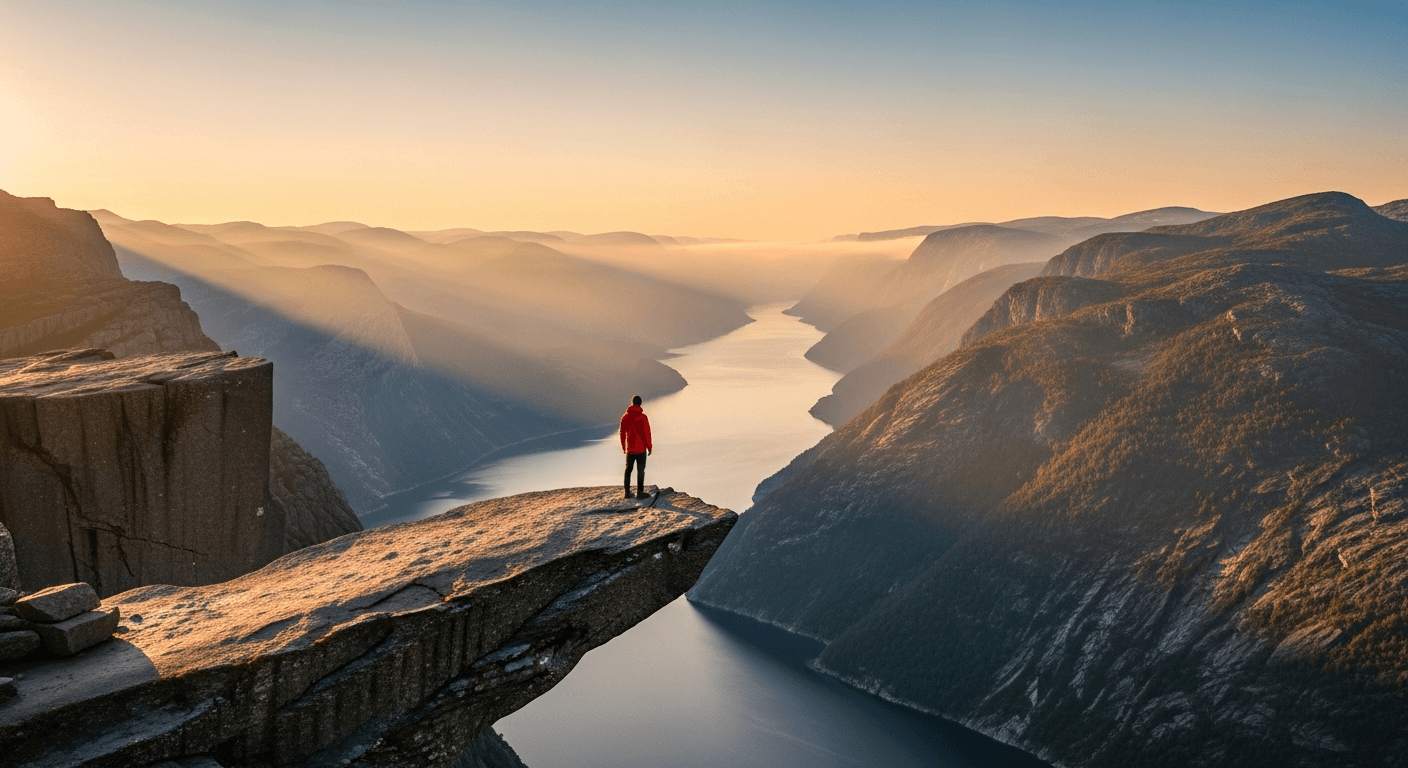
Norway: Why Travelers Keep Coming Back to These 20 Places
There's something about returning to a place that shifts how you see it. The second time you arrive in Norway, you're not chasing the postcard anymore—you're searching for the conversation happening beneath it. You notice the light differently. The way it bleeds across fjord walls at 11 PM in summer, or how it barely grazes the horizon in winter, casting the world in that particular shade of blue that only exists here. You begin to understand why people come back not once, but again and again, as though Norway has whispered something they need to remember.
This country doesn't work through spectacle alone, though the spectacle is undeniably there. It works through repetition and subtlety—the way a glacier moves so slowly you can only perceive it through hours of stillness, or how a small village at the end of a fjord becomes familiar enough to feel like home after a single season. The people who return are rarely chasing the same experience twice. They're searching for deeper access, the way you might reread a favorite novel looking for new meaning in sentences you thought you'd already understood.
What follows are twenty places that consistently pull travelers back. Not because they're the most famous, but because they contain something that invites intimacy rather than mere observation.
1. Geirangerfjord: Watching Water Find Its Path
The first time feels obligatory—you come because everyone says you must. The second time, you come because you've wondered what it looks like in a different season. Geirangerfjord is genuinely one of Europe's most engineered landscapes, yet it never feels constructed. The waterfalls have names (The Suitor, The Sister, The Bridal Veil), and they cascade with such graphic precision that you understand why storytelling was invented.
Visit in June when the water runoff is dramatic, or in September when the light is clearer and the crowds thinner. The photography moment is always from the water—take a boat and angle toward the cliff faces where the scale becomes comprehensible only when you're small beneath it.
Insider observation: Most boats follow the same route. Stay silent for at least twenty minutes instead of filming. Your nervous system will recalibrate.
2. Reine: Where Mountains Remember the Sea
This village on the Lofoten Islands appears in enough landscape photography that when you actually arrive, there's a moment of vertiginous disorientation—is this real or have you stepped into an image you've already seen? The answer is yes to both. The houses in primary colors are genuine. The peak behind them, Reinebringen, is both dramatic and climbable. The fishing culture is active, not preserved.
Come in winter when the northern lights are possible and the landscape feels severe. Come in summer when the sea is navigable and the mountains reflect in black water. Both versions are true.
Practical tip: The village is small enough to feel crowded in peak season. Stay in an adjacent village and walk in—it takes thirty minutes and entirely changes the tenor of the experience.
3. Tromsø: City of Light and Its Opposite
Most people come to Tromsø for the northern lights, which is like going to Paris for the Eiffel Tower. The lights are magnificent, yes, but they're also unpredictable and outside your control. What actually makes people return to Tromsø is the city itself—the way it exists at 69 degrees north with the confidence of a place that has never doubted its right to be here.
The Arctic Cathedral is photographed relentlessly, but walk past it at dusk on a winter evening and you'll understand it differently. The Polar Museum tells the stories of seal hunters and explorers with the kind of detail that turns history into lived experience. The food scene is serious—this is a place where chefs have learned to make something extraordinary from the limited ingredients that actually grow and are caught here.
Best time: Visit twice—once in winter for the dark and the lights, once in summer for the midnight sun. The city transforms entirely.
4. Preikestolen (Pulpit Rock): The Hike That Stays With You
Four hours round trip. 604 meters above sea level. A cliff face that drops straight into Lysefjord. The hike itself is surprisingly modest—well-maintained paths, no technical difficulty. What makes it a return destination is the cumulative effect of sustained exposure to scale. For four hours, your eyes and your nervous system are training you to understand the size of things.
The plateau at the top is genuinely flat, genuinely vast, and genuinely humbling. Arrive early to avoid crowds, and time it so you're descending in the golden hour.
Photography insight: Everyone photographs from the edge. Photograph from twenty meters back, where the human figure becomes comprehensible against the landscape.
5. The Flåm Railway: Traveling Through Time
This railway line descends 864 meters in just 20 kilometers, which means you're constantly moving through different climate zones. You leave in sunshine and arrive in mist. Waterfalls that were invisible become visible. The landscape seems to rearrange itself every few minutes. The train stops at stations where nothing exists but the station, and then it continues again.
This is hypnotic travel rather than scenic travel. You're not going anywhere important; the going itself is the point.
Local tip: Take the early train so you're not sitting behind school groups eating packed lunches. The light is better anyway.
6. Grünerløkka, Oslo: The Neighborhood That Understands Itself
You'll hear about this neighborhood from locals the way they'd recommend a restaurant—as an established fact, not a suggestion. It's a genuinely bohemian district in a capital city where such things remain possible: secondhand record shops that have been in the same location for thirty years, small galleries that show work by artists who actually live here, coffee bars that serve coffee the way serious people serve coffee.
The vintage clothing stores are exceptional. The thrift ethics are genuine, not performed. Walk down Markveien in the early evening and you'll understand how neighborhoods become the places people want to return to.
Timing: Go midweek if you want to feel the actual rhythm of the neighborhood rather than its weekend performance version.
7. Svalbard: The Archipelago Where Rules Change
Here's what's true about Svalbard: it's the northernmost place most people can actually visit (at 78 degrees north). It's beyond the Arctic Circle but warm enough to support settlement. It's Norwegian territory but culturally separate. You need different permits to live here. The gun laws are unusual. The coal mining history is industrial and real and somewhat tragic.
You return to Svalbard because it has genuinely confused your understanding of what a place can be. There's dog sledding. There's also contemporary art. There are polar bears and also bakeries. None of it feels reconciled into theme-park coherence—it just exists in simultaneous contradiction.
Best month: March, when there are both daylight hours and realistic chances of aurora activity.
8. Sognefjord's Villages: The Quiet Side of Drama
The Sognefjord is Norway's longest and deepest, but most people experience it from the water or from photographs taken from standard viewpoints. What keeps people returning is discovering the villages that edge this landscape—places like Balestrand and Mundal, where the fjord is so present it's almost invisible, woven into the fabric of daily life rather than treated as a sight.
The wooden architecture is worth understanding. The relationship between these communities and the water is worth sitting with. In Balestrand, spend an afternoon in the graveyard. Read the names. Understand how generations have lived and died in proximity to this dramatic landscape.
Photography moment: Photograph the buildings at dusk, when the light turns them golden and the water behind them becomes graphite.
9. Lofoten Islands in Winter: Landscape as Personality
The Lofoten Islands in summer are spectacular and crowded. In winter, they become something else entirely—sharper, quieter, more demanding. The light is low and clean. The weather is serious. The landscape has opinions about your presence.
This is where people return because they want to understand a place in its winter truth rather than its summer hospitality.
Practical consideration: Roads are maintained, but conditions change quickly. Driving requires attention and respect for the landscape's actual conditions.
10. Jotunheimen: The Mountains' Interior
This national park contains 60 peaks over 2,000 meters. It's not meant for casual visiting. You need hiking boots and realistic fitness levels and a willingness to climb. What makes it a return destination is that the mountains in Jotunheimen feel actual in a way that mountains in more accessible locations sometimes don't.
The hiking trails are thoughtfully maintained. The mountain huts offer basic comfort in genuinely remote locations. You're earning access rather than being granted it.
Best season: Late July to September. The snow has melted sufficiently that hiking is possible but early enough that you're not fighting summer crowds.
11. Hardangerfjord: The Fruit Blossom Geography
In spring, the cherry and apple trees that have been growing here for generations bloom suddenly, turning the fjord landscape into something that feels almost impossible—pastoral abundance in a region that looks engineered for severity. This brief transformation is why people return to Hardangerfjord specifically in late April or early May.
The fruit farming here has genuine history. The landscape reflects labor and intention and seasonal rhythm. When the blossoms are present, they're not a surprise—they're a reminder of something true.
12. The North Cape: Standing at the Geographic Limit
71 degrees north. The northernmost point of continental Europe. It's a tourist destination, absolutely—there's a visitor center and restaurants and the infrastructure of a place designed to receive many people. And yet, standing there at the actual limit of something, watching the Arctic Ocean, the tourism apparatus falls away briefly and you understand why people return.
They return to remember what a limit feels like.
13. Ålesund and Its Art Nouveau Architecture
Rebuilt entirely after a 1904 fire, Ålesund is an accidental museum of early 20th-century European design. The buildings are genuinely beautiful—the proportions are right, the materials are right, the light hits them properly. This city works as a place rather than as a historical document.
Climb Aksla (the small mountain behind the city) for the view that photographers use. But spend more time walking the streets, noticing how thoughtfully the buildings relate to each other.
14. Bergen: The Port City That Isn't a Museum
Yes, Bryggen (the waterfront district) is UNESCO-listed and photographed constantly. But Bergen beyond Bryggen is a real city where real people have complex relationships with the fish market and the weather and each other. The funicular up Mount Fløyen offers perspective. The museums (especially the Edvard Grieg Museum) are exceptional. The harbor has dimension beyond the postcard view.
People return because Bergen rewards actual exploration rather than checking off landmarks.
15. Dovrefjell-Sunndalsfjella: The Hiking Spine
This isn't a quick drive or a day trip. It's a substantial hiking region where the landscape moves from forested valleys into high plateaus. The trails are well-marked. The mountain huts offer community in genuinely remote locations. This is where Norwegian hiking reveals itself as a complete culture rather than a tourist activity.
16. Kjeragbolten: The Boulder Suspended Above Certainty
A five-hour hike leads to a massive boulder suspended between two cliff faces above Lysefjord. The hike is genuinely challenging (though not technical). The boulder is genuinely there. The photograph—dangling over the boulder with 1,000 meters of air beneath you—is genuinely worth taking, even if you've seen it dozens of times already.
People return because facing that particular void, that particular height, that particular void teaches something each time.
17. The Coastal Railway: Bergen to Oslo
This 6.5-hour train journey traverses mountains, valleys, and plateaus with the kind of visual comprehensiveness that makes flying obsolete. The route is scenic in the way that sustained immersion in landscape becomes scenic—you're not stopping for views, you're moving through them continuously.
18. Lillehammer: The Olympic Infrastructure and Beyond
Site of the 1994 Winter Olympics, Lillehammer has integrated those facilities into actual life rather than preserving them as museum pieces. The ski jumps are functional. Skiing happens here. The town itself is genuinely charming—a place where architectural history and contemporary life coexist without friction.
19. Nordkapp (North Cape) Road: The Drive That Justifies Itself
The journey to the North Cape involves driving through substantial landscape. The drive itself—through vast plateaus, past Sami communities, past landscapes that feel genuinely alien—is the experience rather than the destination.
20. The Small Fishing Villages of Coastal Finnmark
Places like Honningsvåg, Berlevåg, and Båtsfjord have minimal tourism infrastructure and maximum reality. They exist because of fish. They function because of relationship with the sea. They remain because people have decided that this landscape, this livelihood, this specific way of being human is worth continuing.
Local Navigation & Etiquette
Getting around Norway efficiently requires understanding that this is a country organized by geography. The train system is exceptional, but it doesn't penetrate everywhere—you'll need a rental car for the islands and remote valleys. Roads are maintained obsessively, but in winter, conditions change and you must respect that. Download offline maps. Understand that ferries aren't romantic transportation; they're how people get groceries.
The culture operates on principles of understated respect. Norwegians will help you if you ask directly, but they won't perform enthusiasm about it. They're not unfriendly—they've simply optimized their social energy for people they know. Respect this. Don't expect effortful service. Do expect efficient service. Tip if you want, but it's not required. The cost of living is genuinely high; budget accordingly and don't resent it—people are paid fair wages, and that's the reason.
The right to roam (friluftsloven) means you can hike and camp on uncultivated land freely, but this implies responsibility. Leave places better than you found them. Respect private property. Understand that Norway's relationship with nature is one of stewardship rather than ownership.
Explore Deeper on Touratu
The experiences that make Norway a return destination aren't isolated moments—they're part of a larger geography of human connection and landscape intimacy. On Touratu's interactive map, you can trace the routes that other travelers have taken, discover the less-obvious neighborhoods in Oslo and Bergen, and uncover the exact coordinates of those photography moments that stopped your breath. These aren't curated highlight reels; they're the actual movements of actual travelers who keep coming back.
What Remains
The reason people return to Norway isn't about ticking boxes or collecting experiences. It's that Norway teaches something about how to be in landscape—how to move slowly enough to actually perceive change, how to respect scale without becoming diminished by it, how to understand that the most profound experiences rarely announce themselves as such. You go back because you haven't finished learning how to see it. And every time you return, the landscape teaches you something more.
Loading activities…
