
New Zealand Travel Guide: Routes, Activities & Planning
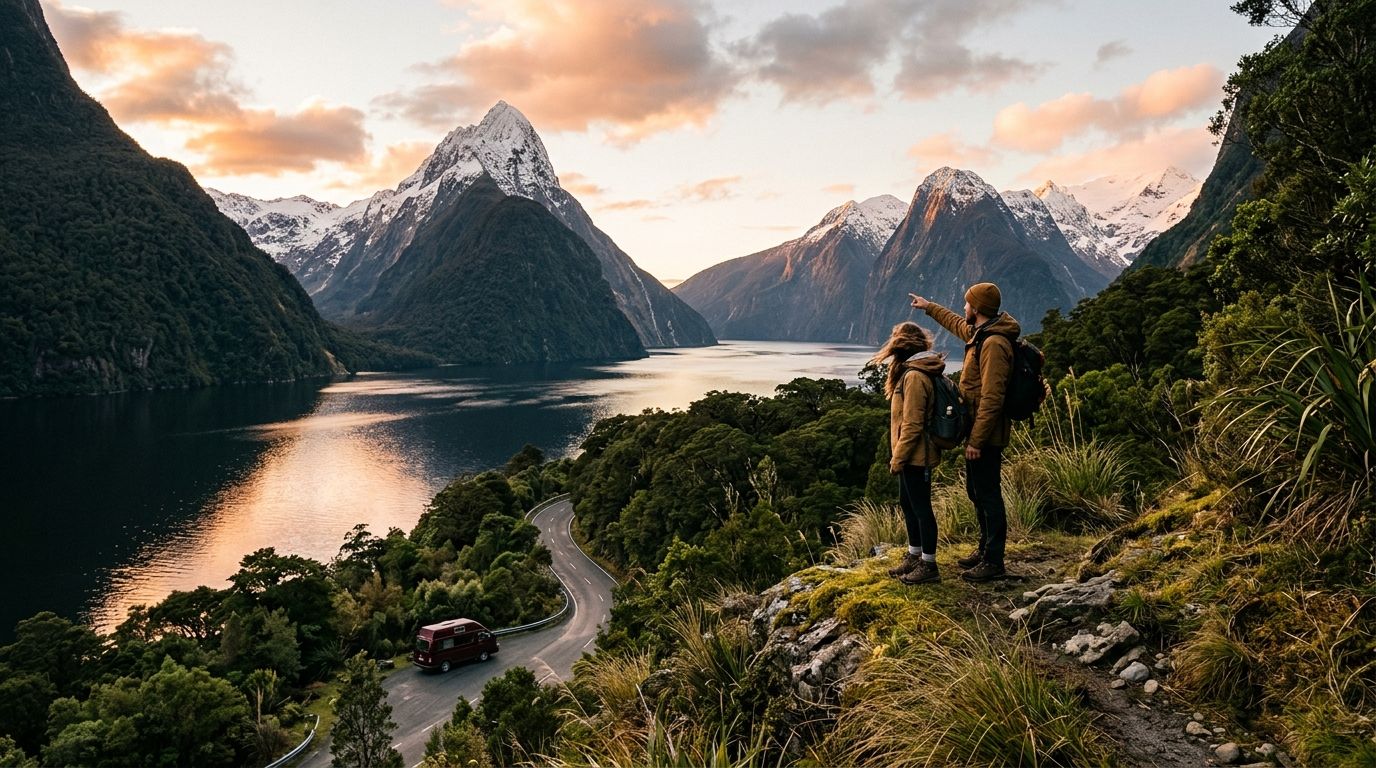
New Zealand: A Country That Quietly Demands Your Attention
The moment your plane descends toward Auckland, you understand why people here speak about the landscape with an almost embarrassed intensity. It's not hyperbole—it's relief. After hours in the air, watching the country emerge from cloud cover, you see why visitors either leave within a week or book their return flight before checking out of their hotel.
New Zealand doesn't perform for tourists. It simply exists in a state of geological drama that would exhaust most destinations. Fjords that look photoshopped. Forests older than human civilisation. Mountains that transition from subtropical warmth to alpine snow within hours of driving. Yet what makes New Zealand genuinely memorable isn't the scenery alone—it's the particular brand of honesty that comes from living in a place where nature consistently reminds you of your scale.
What Actually Happens When You Travel New Zealand
I arrived expecting the postcard version and found something more complex. The landscape is as striking as every travel blog suggests, but the real story emerges when you move through the country slowly enough to notice how differently things feel in each region.
The North Island presents a strange contradiction. Around Auckland and Wellington, you encounter genuinely functional cities where people live actual lives, not performing for Instagram. Drive south from Auckland and the landscape transforms into rolling farmland, geothermal areas that smell of sulfur and ancient earth, and forests that existed before Europeans arrived. Rotorua sits in the middle of this—a town built on thermal activity where the ground literally steams. Walking through the geothermal parks, you're not just observing nature; you're witnessing active planetary processes. This isn't decoration. The earth is actively working.
The coasts differ radically depending on which side you're on. The West Coast (Tasman Sea) is raw and moody—black sand, aggressive weather, fewer people. The East Coast (Pacific Ocean) is gentler, with beaches that actually feel inviting for swimming. Around the Bay of Islands, the water turns a Mediterranean blue that seems geographically impossible this far south.
The South Island is where New Zealand stops being a country and becomes a scale model of Patagonia, the Swiss Alps, and a rainforest, all compressed into one place. Queenstown has been thoroughly colonised by the adventure tourism industry—bungy jumping, jet boating, canyon swinging—which means it's either your kind of place or it isn't. (It wasn't mine, but I understand why it works for others.) Move beyond the resort towns and Fiordland National Park becomes the main event: Milford Sound and Doubtful Sound are fjords that remind you why the term "landscape" seems inadequate.
The drive from Glenorchy to Milford Sound is perhaps the best eight-hour drive in the Southern Hemisphere. You're not getting from point A to B; you're witnessing geology happen in real time. Mountains rise directly from the road. Waterfalls descend from cliffsides. The landscape never settles into single mood.
Planning a Visit: Time, Seasons, and Motion
Duration: The absolute minimum is two weeks if you want to see both islands without feeling rushed. Three weeks is better. A month is ideal. This isn't because there are endless activities (though there are). It's because driving between regions takes significant time, and the pleasure of the country emerges when you stop treating it like a checkbox list.
When to Go: December-February is summer—warmer, longer daylight, busier. June-August is winter in the south, which means real snow on mountains and occasional road closures in Fiordland. April-May and September-November are shoulder seasons with reasonable weather and fewer tourists. I visited in April and found the light particularly clear, the weather stable enough, and crowds manageable.
Getting Around: You'll need to rent a car or commit to tour groups. The public transport system exists but is limited. Driving is straightforward (left side of the road), though mountain roads warrant respect and patience. Road conditions vary—some highways are excellent; others are single-lane affairs with gravel sections. Build extra time into drives if you're unfamiliar with winding roads.
Crowds: December, January, and school holidays (April, July, December-early January) bring heaviest tourism. Milford Sound has so many tour boats that you sometimes queue to get a decent view of the fjord. If solitude matters to you, avoid peak season. The country opens up considerably in October, November, and April.
Cost: New Zealand is expensive. Accommodation, especially in tourist towns, carries premium pricing. Rental cars, petrol, and food cost more than comparable services in Australia. Budget roughly $100-150 per day for mid-range accommodation and eating out occasionally. Activities (walks, tours, adventure sports) add significantly to costs.
What to Actually Do
Skip the generic advice. Here's what genuinely rewards your time:
Walk the Milford Track (South Island): A four-day guided walk through Fiordland. Yes, it's booked months in advance. Yes, it costs serious money. Yes, it's worth planning your entire trip around. You walk through rainforest, past waterfalls, and across high passes. The experience has an almost meditative quality because you're moving through wilderness at human speed.
Drive from Wanaka to Arrowtown (South Island): Skip Queenstown entirely and base yourself in Wanaka. Drive to Arrowtown via the Crown Range Road. Stop at viewpoints. Notice how the landscape changes as you cross elevation. This drive encapsulates New Zealand's visual range.
Spend time in the Catlins (South Island): This coastal region south of Dunedin is genuinely less visited. You'll find blowholes, penguin colonies, rainforest walks, and beaches with character. It's slower-paced and often overlooked by travellers rushing to Queenstown.
Experience geothermal Rotorua properly (North Island): Skip the theme parks. Walk through native bush. Visit the Maori cultural sites. Soak in natural hot pools. Have a conversation about what it means to live in a place where the earth literally changes daily.
Take the ferry to Waiheke Island (North Island): One hour from Auckland. Wineries, art galleries, beaches, and relative quiet. The journey by ferry itself is excellent.
Nearby Regions Worth Considering
Australia: Across the Tasman Sea. If you've already committed to long-haul flight, consider combining with a weeks in Australia—Tasmania, especially, complements New Zealand geographically and culturally.
Fiji or Samoa: Short flights connect to Pacific island nations. The transition from New Zealand's cool, mountainous terrain to tropical islands is jarring but manageable over a few days.
Is It Worth the Effort?
Yes, with caveats.
New Zealand delivers on its promise of extreme landscape diversity. Within hours, you move between environments that most countries spread across entire regions. The infrastructure works. The people are genuinely helpful without performing friendliness. The food is better than you'd expect (particularly if you enjoy wine and fresh produce).
But it's not transformative in the spiritual sense that marketing language suggests. You won't have your understanding of humanity fundamentally altered. The country won't "change your life." What it will do is provide sustained visual interest, good hiking, reliable weather predictions (by New Zealand standards), and moments of genuine quiet in places where the only sound is water.
If you travel to experience landscape progression, to walk in different forests within one week, to drive roads that demand your attention, and to move slowly enough to notice seasonal shifts—then yes, absolutely. If you're seeking transcendence or human connection or cultural immersion, you might find pieces of it, but you'll need to look beyond the marked attractions.
Quick Facts
- Size: Roughly equivalent to Japan or UK (268,000 km²)
- Population: ~5 million (most in North Island around Auckland)
- Time Zone: UTC+12 (UTC+13 in daylight saving)
- Currency: New Zealand Dollar (NZD)
- Best for: Hiking, driving, observing geology, solo travel, small group travel
- Worst for: Budget travellers, those seeking nightlife, people uncomfortable with driving
The Closing Thought
New Zealand rewards the traveller who approaches it with genuine curiosity rather than a shot list. Take longer drives. Stop at viewpoints you hadn't planned. Talk to locals about which walks are actually worth your time. Sit in one place for two days instead of optimizing movements across four regions.
To help plan your route through New Zealand's diverse regions and discover which areas match your travel style, check out Touratu's interactive map and curated travel videos. You can explore the complete journey across both islands, see real-time route options, and watch detailed videos of key areas to make informed decisions about where to spend your time.
Loading activities…
