
Myanmar's 20 Most Compelling Places
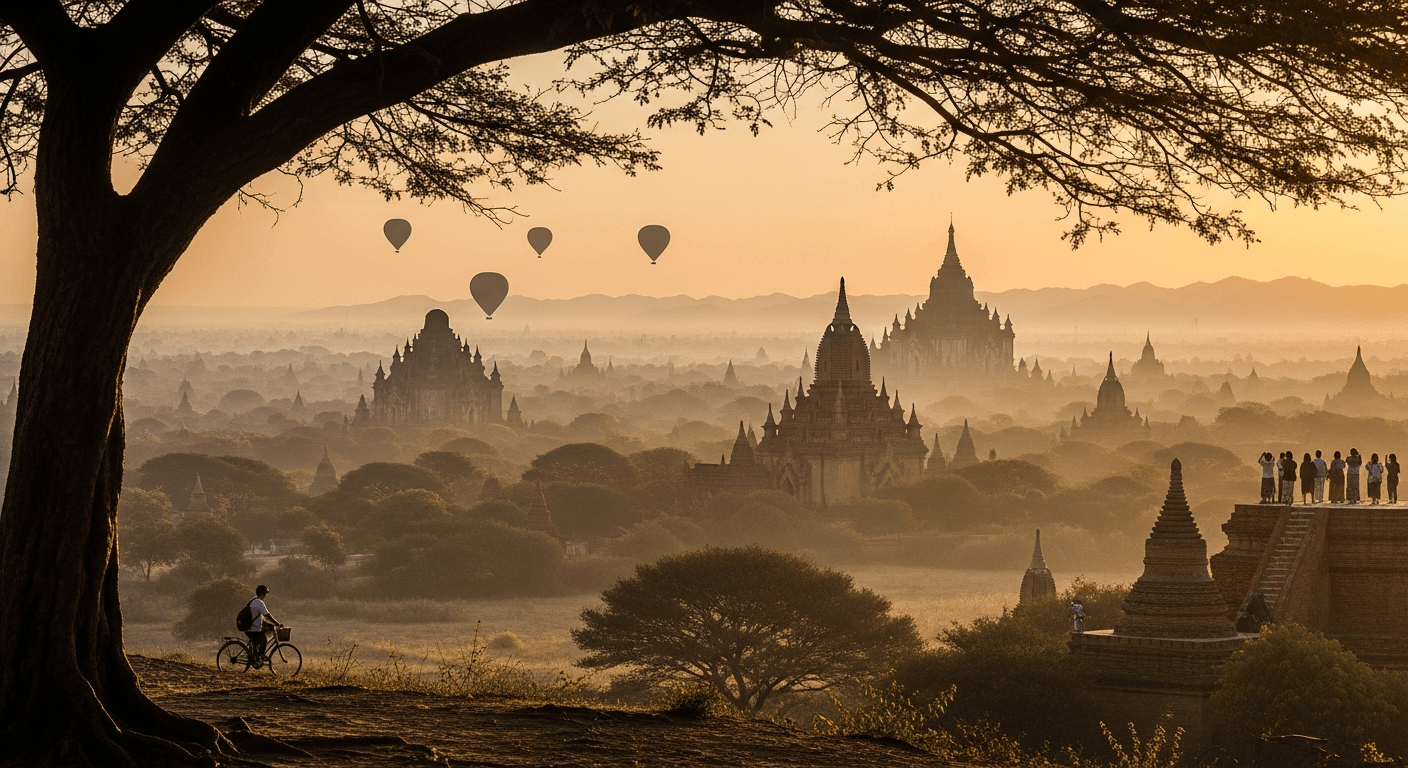
Myanmar: Twenty Reasons the Road Keeps Calling Travelers Back
The monsoon breaks in late October, and something shifts in Myanmar. The air loses its weight. Dust settles. The country exhales. Travelers who've been circling back for years—some for decades—know this rhythm by heart. They arrive not to tick boxes but to return to something ineffable: the particular light falling through a zedi's carved corridors, the exact angle of a fisherman's leg-row across Inle Lake, the taste of tea leaf salad at a corner stall where the vendor remembers your face from three years ago.
Myanmar isn't about checking off the famous stops anymore. It's become a place where repeat travelers develop relationships—with monks who recognize them, with boatmen who know their preferences, with the landscape itself. The country has a way of making you want to come back, not because you didn't see everything, but because you saw too much to comprehend in one visit. You left with more questions than answers.
This is about those places that burrow into travelers' bones. Not in a mystical sense, though there's some of that too. In the way that certain corners of the world refuse to be summarized, and so travelers return, again and again, looking for what they might have missed.
1. Bagan's Temples at 4:45 AM
Most people see Bagan as a sunrise destination. Arrive early, catch the light, move on. But the monks are already moving through the temples when the sky is still navy. You'll find them sweeping, meditating, moving between stupas with purpose. This is the Bagan that repeating travelers come back for—not the one illuminated by Instagram flash but the one still half-asleep, with roosters hollering and mist caught between thousands of spires. Walk here without a guide. Get slightly lost. The temples have been standing for nine centuries; they'll still be there if you take a wrong turn.
Best time: November through February. Photography moment: The interplay of shadow and spire at first light, from any small elevated platform. Insider note: Stay on the fringe of the main temple cluster—Dhammayazika or Sulamani—where tourist buses don't venture until 7 AM.
2. Inle Lake: The Geometry of Fishing
Inle Lake isn't beautiful in a conventional sense. The waters are often murky. The floating villages are, yes, fishing villages, which means the smell is honest and the light is often overcast. But there's something about watching a fisherman's calf wrapped around an oar, the other leg extended for balance, the whole apparatus designed across centuries—that's where the meditation is. Repeating travelers come for the technique, the slow geometry of a life spent balancing on one leg while throwing nets.
Best time: December to February for clearer water. Practical tip: Hire a boatman for three hours rather than the standard tour—negotiate directly at the morning market. What matters: Asking questions about the nets, the seasons, the changing lake rather than photographing without conversation.
3. Yangon's Shwedagon Pagoda in the Dusk Hours
The Shwedagon is not subtle. It's 98 meters of gold, visible from across the city, impossible to miss. Most travelers do the obvious thing: afternoon visit, quick circumambulation, departure. Repeaters know better. Come at 4:30 PM, when the light is honey-colored and the devotional crowd arrives in waves. Walk counterclockwise (the direction of prayer) without rushing. The pagoda will still be golden, but now you're moving at the same pace as locals who've come here for forty years. There's no difference between tourism and pilgrimage at this hour—everyone's seeking something.
Insider observation: The northwest corner has fewer crowds and excellent sightlines. Etiquette note: Remove shoes at the entrance, dress modestly, and accept that you're in a living shrine, not a museum.
4. Mandalay Hill at Sunset
The climb is steep—679 steps, or fewer if you take the stone passages carved through the hill itself. Most people ascend, take a photo at the top, descend. Repeating travelers climb slower, pause midway, watch the city's geometry flatten below them as the light changes. Mandalay from above loses its reality—it becomes almost abstract, the intersecting avenues blurring into pattern. The spiritual architecture of the city reveals itself only in this light.
Best time: October to March. Photography moment: Thirty minutes before sunset, from the covered platforms on the western slope. Practical tip: Wear comfortable shoes; the stone is worn smooth and can be slippery.
5. Hsipaw's Train Journey to Lashio
This isn't a scenic rail line in the tourism brochure sense. The train moves slowly through tea plantations and small villages, stopping inexplicably, sometimes sitting idle for twenty minutes while the engineer drinks tea. You'll find locals commuting, not tourists. You'll find compartments where conversations drift between languages. The point isn't arrival—Lashio is pleasant enough—but the territory in between. The way a landscape reveals itself when you're moving at twelve kilometers per hour instead of forty.
Best time: Year-round, though early morning departures are preferable. Insider note: Buy food before boarding; the station vendors are more reliable than on-train options. What matters: Sitting in a window seat and allowing unstructured time.
6. Mawlamyine's Pier at Sunrise
Mawlamyine is the kind of place tourists skip on the way to Kyaikto. Wrong instinct. The pier comes alive before 6 AM with fishermen, vendors setting up for the day, the Salween River still and golden. There's an old-town texture to this city—French colonial buildings, a port culture, the specific energy of a place that was once important and is now quietly living its own life. Walk the pier for an hour. Buy tea from someone selling it in recycled plastic bottles. Watch the ferries and fishing boats organize the water.
Photography moment: The moment the sun hits the water on the eastern horizon. Practical tip: The Morning Market operates from 5 AM; breakfast here is better than any restaurant.
7. Kalaw: The Walking Trail to Shwe Gu
Tourist agencies will sell you three-day trek packages. Skip the organized version. Instead, hire a local guide for a day walk from Kalaw through countryside villages toward Shwe Gu village. The path moves through agricultural land—rice paddies, orchards, small settlements. You'll encounter schoolchildren, farmers, the ordinary texture of rural Myanmar. Photography is less important than conversation and pace. Walking slowly through countryside with a guide who knows which family grows what creates an entirely different relationship with place than being herded through a "trek."
Best time: November to February. Insider tip: Guides in Kalaw can be found through your guesthouse; quality varies significantly, so ask to meet candidates before committing. Etiquette: Ask permission before photographing people or homes.
8. Kyaikto's Golden Rock at Off-Hours
Yes, the Golden Rock is overrun. Yes, sunrise is chaotic. But arrive at 2 PM on a Tuesday, when tour groups have departed and the pilgrimage continues in pockets—families, monks, devotees. The rock is still glowing under afternoon light. The experience has space around it. You can sit and actually observe the geology, the human behavior, the way people touch the rock and pray, without performing your own observation for an audience.
Best time: November to March. Practical observation: The cable car operates until 5 PM; the night visit exists as an option but draws crowds too. Insider note: Stay overnight at the base station to experience the shift in energy across hours.
9. Tachileik's Border Energy
Tachileik, on the Thai border, is where Myanmar's informal economy is most visible. This isn't a polished border crossing; it's a place where business happens in alleyways, where currency changes hands, where the texture of commerce is raw and unmistakable. Repeating travelers come here not for attractions but for atmosphere—to understand how frontier towns operate, how porous borders actually function, how economies blend and diverge.
Practical note: You'll need border documentation; US citizens require advance arrangements. What to observe: The market dynamics, the mix of Thai and Burmese signage, the rhythm of cross-border trade.
10. Putao's Mountain Silence
Putao is Myanmar's northernmost town, accessible primarily by plane (a spectacular flight itself) or by challenging road. Most international travelers skip it entirely. Repeaters, particularly those on their third or fourth Myanmar visit, come here for what it isn't: crowded, commercialized, accustomed to tourism. Putao offers access to mountain trekking, minority cultures, and profound quietness. It's not easy to reach, and it shouldn't be.
Best time: November to February. Practical reality: Expect basic accommodations and limited food options. What you'll find: Landscape, silence, and travelers seeking exactly those things.
11. Yangon's Bogyoke Market at Opening Hour
The market is less impressive as a shopping destination than as a place to observe commerce culture. Arrive at 9 AM when vendors are still arranging goods. The energy is preparatory, organized, focused. Jewelry, lacquerware, textiles, medicines—the variety is staggering. Walk without buying. Observe the negotiation style, the relationships between vendors, the specificity of what's being sold.
Insider tip: Photography of merchandise is generally welcome; photography of vendors requires permission. Timing: The market closes by 6 PM and feels entirely different in the evening.
12. Mergui Archipelago: Slow Boat Days
The Mergui Archipelago isn't for travelers seeking efficiency. Multi-day boat journeys here are unhurried, island-focused, designed for diving and snorkeling but equally valuable for the simple act of being on a boat in the Andaman Sea for stretches of unscheduled time. Repeating travelers come for the displacement—the sense of moving beyond the mainland's rhythms.
Best time: November to April. Practical reality: Book through established operators; budget for the investment. What matters: The quiet hours between islands, the salt air, the conversation with fellow travelers.
Local Knowledge: Moving Through Myanmar Like You Belong
Transport and rhythm: The long-distance buses are where Myanmar's traveling culture happens. Sixteen-hour overnight buses connect major cities—Yangon to Mandalay, Mandalay to Bagan, Hsipaw to Lashio. Book a night before departure; ask your guesthouse's staff for recommendations. The buses are social spaces. You'll eat at roadside restaurants during stops, share snacks with your neighbor, experience the country at a pace that planes preclude.
Neighborhoods worth lingering in: Yangon's Kyauktada township holds colonial character and local life in equal measure. In Mandalay, the area near Zeyargone Jetty retains working-class authenticity—small restaurants, morning markets, the actual texture of how people live rather than how tourism presents life.
Timing and seasons: November through February are ideal—cool mornings, dry days, minimal rain. Monsoon season (June to October) is when repeaters often return; fewer tourists, lush landscapes, the country in its most fertile state. The rhythm of life changes entirely when rain is falling.
Etiquette that matters: Buddha images are sacred—never step over them or disrespect representations. Feet are considered unclean; avoid pointing with your foot or showing the sole of your shoe to people or images. Monks cannot be touched by women; women should give monks space. Photography of monasteries requires permission. These aren't arbitrary rules; they're expressions of values that order daily life here.
Discover Connections on Touratu
If you're beginning to sense why travelers return to Myanmar—not as box-checkers but as people drawn to repetition, to deepening—consider Touratu's interactive map. Explore the routes other repeating travelers have traced, the specific neighborhoods they've lingered in, the visual discoveries they've documented. See not just where people go but how they move, the pace they chose, the moments that stopped them.
The Return
Myanmar doesn't reveal itself in one visit. It doesn't offer neat narrative arcs or easily summarized highlights. It requires return—not obsessive repetition but genuine coming back, to the same teashop, the same monk, the same corner of a market where something shifted in your understanding of what travel can be.
Travelers keep coming back because the country hasn't been fully converted into an itinerary. Because there are still teahouses where nobody speaks English and that feels like the point. Because a fisherman's leg-row on Inle Lake will never be adequately explained, only witnessed, again and again, until you understand something wordless about balance and patience and making a life in difficult circumstances.
Myanmar teaches the value of returning.
Loading activities…
