
Morocco Travel Guide: Map, Videos & Activities
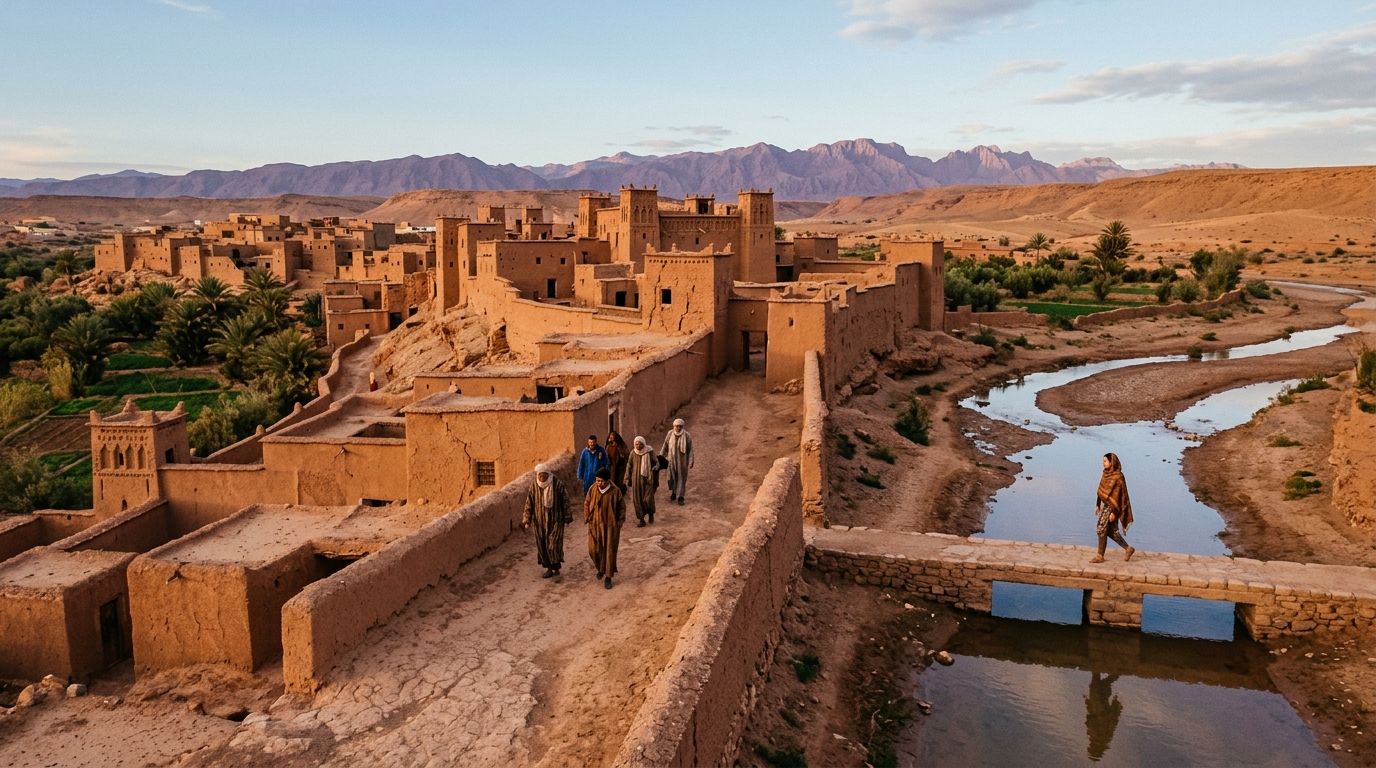
Morocco: A Country That Tests Your Assumptions About Travel
The first time I watched someone get lost in the medina of Fez, they weren't frustrated. They were smiling. Not because they'd found some photogenic corner—though the light filtering through latticed windows does remarkable things—but because they'd stopped trying to navigate and started paying attention. A baker gestured them toward his oven. Children playing with wire cars scattered around their ankles. Someone's grandmother watched from a blue-painted doorway. Getting lost in Morocco isn't a failure of planning. It's usually when the real traveling starts.
Morocco sits at a particular crossroads—Mediterranean, Atlantic, African, Arab, Berber—and you feel the tension of all those identities in the air. It's not a country that's been smoothed into a comfortable narrative for tourists. It's complicated, sometimes chaotic, and genuinely demanding. Which is precisely why it's interesting.
What Actually Makes Morocco Worth Your Time
Most travel writing about Morocco traffics in romance. Atlas mountains, blue cities, tagine pots. I'm not going to pretend those things aren't beautiful. But the reason people actually come back to Morocco—the reason they talk about it years later—is usually something more subtle.
It's the texture of negotiation. Markets here aren't theatrical performances for visitors. Someone is genuinely trying to sell you something they made. You're genuinely deciding whether it's worth what they're asking. That exchange, conducted in broken French or English or hand gestures, is real. You're not consuming an experience. You're participating in an economy.
It's the way Moroccan hospitality creates obligation without resentment. Someone invites you for mint tea and genuinely wants you to stay for an hour. Not as a sales tactic—that's a misreading I see often—but because hospitality is cultural value, not transactional service. This creates a different kind of interaction than you'll have in more tourism-saturated countries.
It's the landscape variation. You can drive from Mediterranean beaches to Saharan sand to Alpine peaks within a few hours. Not because you're driving through different countries, but because Morocco genuinely contains that much geographical drama in one relatively compact space.
What to Expect: Walking Through the Reality
The medinas. If you've been to any North African or Middle Eastern city, you have a template. But Moroccan medinas move faster. There's less lingering theater. Shop owners are efficient. The noise—car horns, motorbikes, someone's phone playing music, vendors calling out—can feel aggressive the first hour, then becomes background. The smell is intense: spices, leather, animals, cooking, humanity. Your nervous system will register this as stimulation, not unpleasantness.
The souks (markets) follow logic, but not the logic tourists expect. Spices are in one area, leather in another, but finding anything specific requires either asking repeatedly or wandering until you stumble across it. This is fine. The wandering is the point.
The people. You'll encounter genuine hospitality and also genuine hustling. Sometimes from the same person in the same interaction. A guide might genuinely want to show you something beautiful and also genuinely want you to buy something at his friend's shop. These aren't contradictions in Moroccan culture—they're coexisting truths. Your job is to navigate them clearly, which is easier than it sounds.
Tourist harassment exists, particularly in Marrakech and Fez, but it's directional and manageable. Say no, keep walking, don't make eye contact if you don't want interaction. It's friction, not danger.
The food. Moroccan cuisine works slowly. Tagines simmer for hours. Even street food comes in courses. If you're someone who needs dinner at 6 PM, Morocco will teach you otherwise. Meals happen later. The layers of flavor—preserved lemon, cumin, cinnamon, fresh cilantro—require attention. You're not just eating. You're tasting something that's been refined over centuries.
The pace. Things take longer than you'd schedule. Buses run on their own timeline. Shops close for prayer. Your guide might disappear for thirty minutes without explanation. You can fight this or accept it. Acceptance is more comfortable.
Planning Your Visit: Practical Details
When to go. Spring (March-May) and fall (September-November) are genuinely ideal. October and April are probably optimal. Summer is brutal in the interior and south—temperatures reach 45°C (113°F). Winter is mild but many mountain roads close. Avoid Ramadan if you value normal restaurant hours and want to see bazaars in full function.
How long. Two weeks is a comfortable amount of time. One week means you'll see 3-4 places adequately. Ten days feels rushed but doable. Three weeks lets you breathe.
Getting around. Rental cars work if you're confident driving in chaotic traffic. Buses are cheap, slow, and generally safe. Grand taxis (shared minibuses) connect cities quickly and are cheaper than taxis for individual travelers if you can handle close quarters with locals. Flights between distant cities save time.
The coast vs. inland. This matters for what kind of trip you want. Coastal towns like Essaouira and Taghazout are laid-back and less culturally intense. The interior—Marrakech, Fez, Meknes—is denser and more demanding. The Atlas and Sahara are landscape-focused. Pick based on your tolerance for intensity.
Costs. Morocco is cheaper than Western Europe but not as dirt-cheap as Southeast Asia. Budget travelers: $25-35/day. Mid-range: $50-80/day. Food is genuinely inexpensive; accommodation varies. Negotiating is expected in markets but usually unnecessary in fixed-price shops.
Crowds. April, October, and Christmas holidays are busy. July-August is packed with Europeans. January-February is quieter. Marrakech and Fez peak earlier than elsewhere.
Nearby: Three Places That Shift Your Perspective
Chefchaouen (The Blue City). This genuinely is blue—every building in the medina is painted various shades of azure. It's touristy, yes, but less suffocating than Marrakech. The blueness becomes meditative once the day-trippers leave at sunset. Two days here is sufficient.
The Atlas Mountains and Berber Villages. Drive into the high Atlas and the landscape changes completely. You'll find villages where French is barely spoken, where traditional life is still functional not just performed. Hiking or trekking is excellent here. This is where you understand that Morocco contains far more than its tourist infrastructure suggests.
The Sahara. Merzouga and Erg Chebbi offer actual desert experience—golden dunes, silence, nights with visible stars. Expect camel riding to be less romantic than you imagine (it's uncomfortable) but the landscape to be exactly as dramatic as photos suggest. A 2-3 day trip is typical.
Is It Worth Visiting?
Yes, with caveats. Morocco rewards travelers who arrive curious rather than demanding. It's excellent if you want some friction in your travel experience—real interaction rather than polished service. It's challenging if you need comfort, convenience, or complete control over your itinerary. It's surprisingly intimate once you move beyond the major tourist centers.
Most importantly: Morocco doesn't perform for you. You have to meet it halfway.
Quick Facts
- Population: ~37 million
- Language: Arabic and Berber (French widely spoken; English less common outside tourism)
- Currency: Moroccan Dirham (1 USD ≈ 10 DH)
- Best regions: Marrakech, Fez, Chefchaouen, Atlas Mountains, Sahara, Coastal towns
- Typical duration: 7-14 days
- Visa: Most Western nationals get 90 days visa-free; check current requirements
Morocco reveals itself differently to different travelers. Use Touratu's interactive map to plan routes between regions, watch travel videos from other explorers to understand what style of travel suits you, and discover bookable activities that match your pace—not the pace of someone else's itinerary.
Loading activities…
