
Monaco: Why Travelers Return to 20 Places
Monaco: Why Travelers Keep Coming Back to These 20 Places
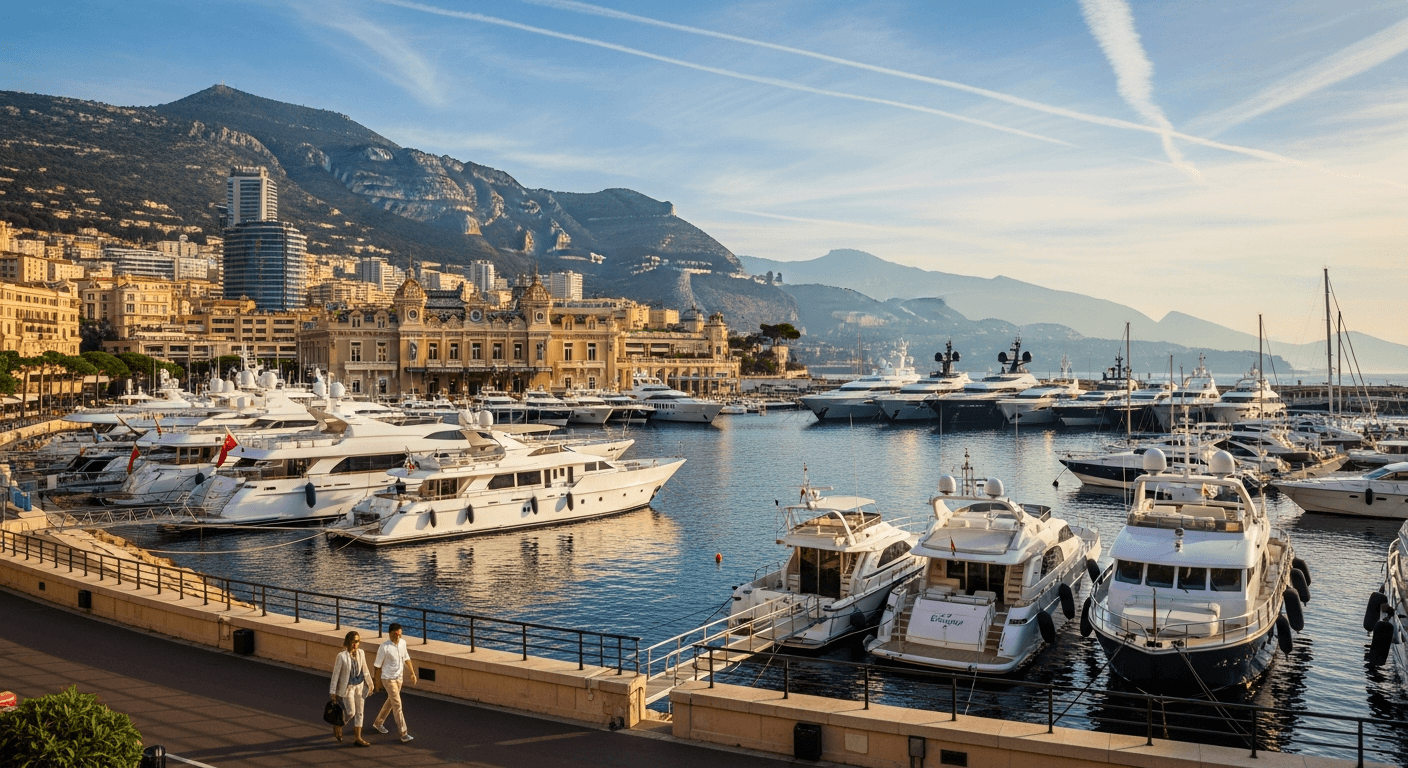
There's a particular quality to Monaco's light in the late afternoon—it hits the limestone facades with a clarity that feels almost accusatory, exposing every detail of the principality's immaculate architecture. It's the kind of light that makes you understand why people have been drawn here for decades, not because it's exclusive or impossibly glamorous, but because something about the place feels unapologetically itself. The yachts in Port Hercule gleam not from pretension but from a kind of civic pride. The manicured gardens exist not to impress but to be genuinely inhabited.
Monaco rewards the traveler who arrives without preconceptions. It's smaller than most visitors expect—you can walk from one end to the other in under an hour—yet somehow contains multitudes. The old assumptions about Monaco have calcified into cliché: casinos, supercars, the principality as a tax haven for oligarchs. But the people who keep returning understand something quieter. They've discovered that Monaco is, at its core, a place of genuine neighborhood character, where locals sip pastis at modest cafés, where Belle Époque architecture sits alongside contemporary galleries, where the sea remains startlingly present even in the middle of the city.
This is why travelers come back. It's not the glamour—though that exists. It's the texture.
The Twenty Places Worth Returning To
1. Casino Square (Place du Casino)
There's a moment when you round the corner onto Casino Square and the proportions suddenly feel right—the neoclassical frontage of the casino itself, the Belle Époque hotels framing the space, the café tables arranged with deliberate casualness. It's not theatrical the way you might expect. Instead, it feels like you've stumbled into a conversation that's been happening for a century and a half.
The experience here isn't about gambling (though the casino still functions as a symbol of Monaco's leisure culture). It's about sitting at Café de Paris with a coffee, watching the light change across the stone façade, observing how the square transforms from a quiet morning place into something more animated by evening. The best time is early morning, before the tour groups, when it's just locals moving through and the casino's ornate doors catching the sun.
Photograph the archways from the café—the geometry is almost mathematical in its precision. And notice the small details: the way the gas lamps still exist alongside modern fixtures, how the flower arrangements change seasonally. Take a table but don't rush. This square requires time.
2. Condamine Market (Marché de la Condamine)
The market operates in that narrow, atmospheric zone between tourist attraction and genuine neighborhood gathering. The vendors here know their customers by name—not performatively, but with actual familiarity. You'll find the obvious tourist-friendly goods, yes, but if you listen and look, you'll encounter old Monégasque women buying specific herbs from specific stalls, businessmen grabbing lunch fixings, small grocers sourcing daily inventory.
Come on a Wednesday morning. The energy is different from the theatrical weekend crowds. Buy something perishable—lemons, perhaps, or a fresh croissant—not as a tourist gesture but as an actual participant. Watch how the market negotiates between preserving character and accommodating outsiders. The fish stall at the north end deserves fifteen minutes of your attention; the monkfish here tastes the way it does partly because of exactly this place, this tradition.
3. Musée Océanographique (Oceanographic Museum)
This isn't a museum that explains the ocean to you from a distance. The building itself, perched on the cliff face, seems to be conducting a continuous conversation with the Mediterranean below. The original structure, designed by Honoré Daumet in 1889, has that specific Belle Époque confidence—the certainty that humans could simultaneously honor and command nature.
The shark display remains genuinely unsettling in the way that good aquariums are; you feel the weight of the animal. The skeleton collections possess an archaeological quality. But the real experience comes on the lower levels, where floor-to-ceiling windows create the strange sensation of being simultaneously above and within the sea. Visit on a clear afternoon when the light turns the water turquoise. Avoid weekends if possible.
4. Saint Nicholas Church (Cathédrale de Monaco)
The cathedral doesn't announce itself with drama. It sits quietly in the old town, a Romanesque-Byzantine structure that feels more Roman than French, which makes sense given the history. Inside, the light is softer than you'd expect—the dome creates an almost intimate illumination despite the space's genuine grandeur.
There's a particular kind of silence here, the kind that suggests centuries of small, consistent devotions. Local families still attend; you'll see them at off-peak hours. Stand for a while beneath the dome and feel how the sound of your own breathing becomes noticeable. The light through the windows shifts throughout the afternoon; the experience at 3 PM differs fundamentally from 5 PM.
5. Jardin Exotique (Exotic Garden)
Approaching the Exotic Garden means climbing higher and higher into Monaco's vertical geography, leaving the port behind, moving into the altitude where the air changes and the perspective of the city below becomes genuinely spectacular. The garden itself—planted on a cliff face with plants from arid regions around the world—shouldn't work conceptually (drought-adapted plants in damp Monaco), yet it does, creating a strange cognitive dissonance that's somehow perfect.
Walk the upper paths at sunset. The succulents catch the warm light; the Mediterranean below becomes molten. This isn't a postcard view; it's an actual physical sensation of height, of having climbed toward something. The cave descent at the garden's edge is cooler than you'd think; bring a light layer.
6. Grimaldi Forum
This contemporary art museum opened in 2014 with understated confidence. The architecture, by Herzog & de Meuron, manages the difficult feat of being strikingly modern without demanding attention loudly. The exhibitions rotate thoughtfully, occasionally provocatively. But what distinguishes the Grimaldi Forum from other contemporary spaces is its relationship to light and the sea—floor-to-ceiling windows create a constant dialogue between interior art and the exterior Mediterranean.
The ground-floor café remains one of Monaco's most civilized spots for a drink, regardless of whether you're viewing an exhibition. The water views aren't ornamental here; they're structural, part of how the space thinks about itself.
7. Old Town (Vieille Ville)
The old town doesn't preserve itself self-consciously. Instead, it simply continues existing: narrow passages that were designed before cars, small apartment buildings with laundry hanging between windows, occasional galleries and restaurants that arrived during the last fifteen years but somehow integrate rather than disrupt.
Walk without navigation if possible. The labyrinth reveals differently depending on your entry point. The light in the passages creates photography moments constantly—you're not hunting for one specific beautiful angle but instead swimming through hundreds of them. Stop at a small café tucked into a corner. Note how the streets seem designed for pedestrians to move slowly, to pause, to notice neighbors.
8. Port Hercule
The port functions as Monaco's living room in summer, though it never quite feels like mere spectacle. Yes, the superyachts dominate the visual landscape, but so do the working fishing boats, the water taxis, the locals sitting on the seawall in evening light. The mix is oddly democratic.
Walk the perimeter rather than staring from a single vantage point. Visit early morning when the fishermen are still selling the night's catch and before the tourists congregate. The north quay, less photographed than the yacht-dense south side, offers an unexpected perspective: working Monaco, where the daily business of a functioning harbor continues alongside the spectacle.
9. Prince's Palace (Palais Princier)
The palace guards in their summer uniforms—white tunics, dress swords—add a degree of performative ceremony that would feel absurd elsewhere but somehow fits Monaco's specific scale and self-confidence. The changing of the guard, a daily 11:55 AM ritual, draws crowds, but the ceremony has genuine formality without irony.
You cannot enter the palace's private rooms, but the courtyard access reveals architecture that's layered with history: medieval fortifications, Renaissance additions, 19th-century expansions. Photograph the stone details rather than pursuing the obvious frontal composition. Come mid-week when fewer tourists are performing the photo-taking ritual simultaneously.
10. Beaches (Plage Larvotto and Plage de la Rousse)
Monaco's beaches are small, inevitably crowded in summer, and yet they remain genuinely pleasant—maintained without feeling overly manicured, social without being theatrical. Plage Larvotto, the main public beach, is where you'll encounter actual families, where the water is clearer than you'd expect given the urban context.
Arrive by mid-morning in June or September, before peak summer crowds. The water temperature peaks in August but the season feels too compressed then; June offers warmth and significantly fewer bodies. Bring a book you're willing to abandon; this is a place where you might spend four hours without noticing time's passage.
11. Saint-Martin Gardens (Jardin Saint-Martin)
These Mediterranean gardens, dotted throughout the old town's heights, offer moments of unexpected quietness. The plants—bougainvillea, plumbago, jasmine—are the ones that actually thrive in this microclimate, not imported exotics. You'll often be alone or nearly alone, which feels surprising given Monaco's density.
Walk during the middle of the day when the light is most intense and the shadows deepest. The fragrance in bloom season (late spring through early autumn) is genuinely powerful. These are places to pause rather than pass through.
12. Fontvieille (Development and Promenade)
Fontvieille, the newer district built on reclaimed land in the 1970s, shouldn't work. It's a planned neighborhood on the edge of a ancient principality, commercial and contemporary. And yet it possesses an odd charm—the promenade offers a different Monaco perspective, the restaurants and shops feel genuinely used by residents rather than merely touristic, and the waterfront creates a sequence of genuine civic spaces.
Walk the eastern promenade in late afternoon when the light turns the new buildings' surfaces golden. The contrast with the old town's stone becomes visible and interesting rather than jarring. Stop at one of the smaller restaurants here rather than the obvious ones; the quality remains high but the attention level differs.
Moving Through Monaco: A Local Perspective
Getting Around
The bus system is reliable and genuinely used by residents—not a tourist afterthought but an essential transport network. Single journeys cost €2; a day pass offers better value. The buses are air-conditioned and frequent; they move through Monaco's streets with practiced ease, navigating the narrower passages better than you'd expect. Walking, however, remains the primary mode of discovery. Monaco is small enough that walking its entire length takes roughly 45 minutes, yet the terrain is vertical enough that you'll feel the exercise.
Neighborhood Character
Each district possesses distinct personality without feeling manufactured. Condamine, the port area, buzzes with restaurant energy and maritime activity. The old town maintains a village-like character despite tourist presence. Fontvieille functions as Monaco's modern face. Moneghetti and other residential neighborhoods remain quietly residential—locals live here, work here, the visitor is a passing element in someone's known geography.
Timing and Seasons
Summer crowds arrive predictably in July and August. June and September offer warm weather without the compression of late summer. Winter, which other Mediterranean destinations treat as dormant season, sees Monaco return more fully to itself—cooler but still pleasant, fewer cruise ship passengers, restaurants and galleries operating for locals rather than performing for tourists. The principality experiences a specific rhythm based on yachting season, the Grand Prix (May), and the monthly Changing of the Guard ceremonies.
Behavioral Notes
Monaco appreciates discretion. Loud behavior, public drunkenness, aggressive photography—these things are observed and gently discouraged. The locals are polite but not effusive; they notice tourists but don't make a performance of it. Dress without obvious tourist signifiers (avoid cruise ship wear, active sportswear in non-exercise contexts). Speak French when possible, even if imperfectly; it's noted and appreciated. Restaurants and hotels function at a high service level, but this comes from training and professionalism rather than requirement of excessive formality from the guest.
Discovering Monaco's Routes and Rhythms
On Touratu's interactive map, you can trace the routes of travelers who've returned to Monaco multiple times—notice how they ignore certain famous spots and instead map out precise sequences through neighborhoods, how they've discovered the specific cafés and market hours and passages that create genuine local experience. These maps reveal Monaco not as a destination to conquer but as a place to develop familiarity with, returning to the same corners and discovering new things each time.
The Return
Monaco reveals itself to return visitors in a particular way. You notice something on your second visit that your first visit's architecture of awe prevented you from observing—the way a specific street smells at noon, how a neighborhood shifts in character between Tuesday and Thursday, the names of regular customers at a café you've visited three times. These small, accumulated details transform Monaco from destination into place, from somewhere you've visited into somewhere you know.
That's what brings people back. Not the image of Monaco they brought with them, but the actual, complicated, quietly alive principality they discovered underneath.
Loading activities…
