
Mexico Travel Guide: Top Things to Do & Routes
Mexico: Beyond the Resort Strip—A Traveller's Guide to What Actually Matters
The moment you step away from the airport shuttle, Mexico stops being a postcard and starts being complicated. A woman selling tamales from a cart nods at you without smiling. A street musician plays the same 30-second riff on repeat. The sky is a particular shade of blue that doesn't photograph well. You realize you came here expecting one thing and have no idea what to do with the reality of another.
This is the tension that makes Mexico worth understanding.
Mexico isn't one place. It's a federation of 31 states plus Mexico City, each with distinct geography, cuisine, history, and local sensibilities. A beach town in Quintana Roo operates on entirely different rhythms than a colonial mountain city in Oaxaca. A visitor treating Mexico as a single destination—ticking boxes between resort pools and ziplines—will have fun in the way a theme park visit is fun. You'll leave with photos and a tan.
But if you're willing to move through Mexico with actual curiosity, paying attention to how people live rather than how Instagram displays life, something deeper opens up. That's what this guide is about.
Why Mexico Doesn't Fit into Travel Clichés
The reason Mexico confuses many first-time visitors is simple: the country refuses the narrative structure we're taught to expect from travel. It doesn't have one "vibe." It contains multitudes.
You can wake in Mexico City—a sprawling metropolitan capital of 21 million people with world-class museums, Michelin-starred restaurants, and contemporary art galleries rivaling anywhere on earth—and feel like you're in a major global city. By evening, you're eating fresh fish in a neighborhood where vendors still use hand-carved wooden carts. The contrast exists within the same block.
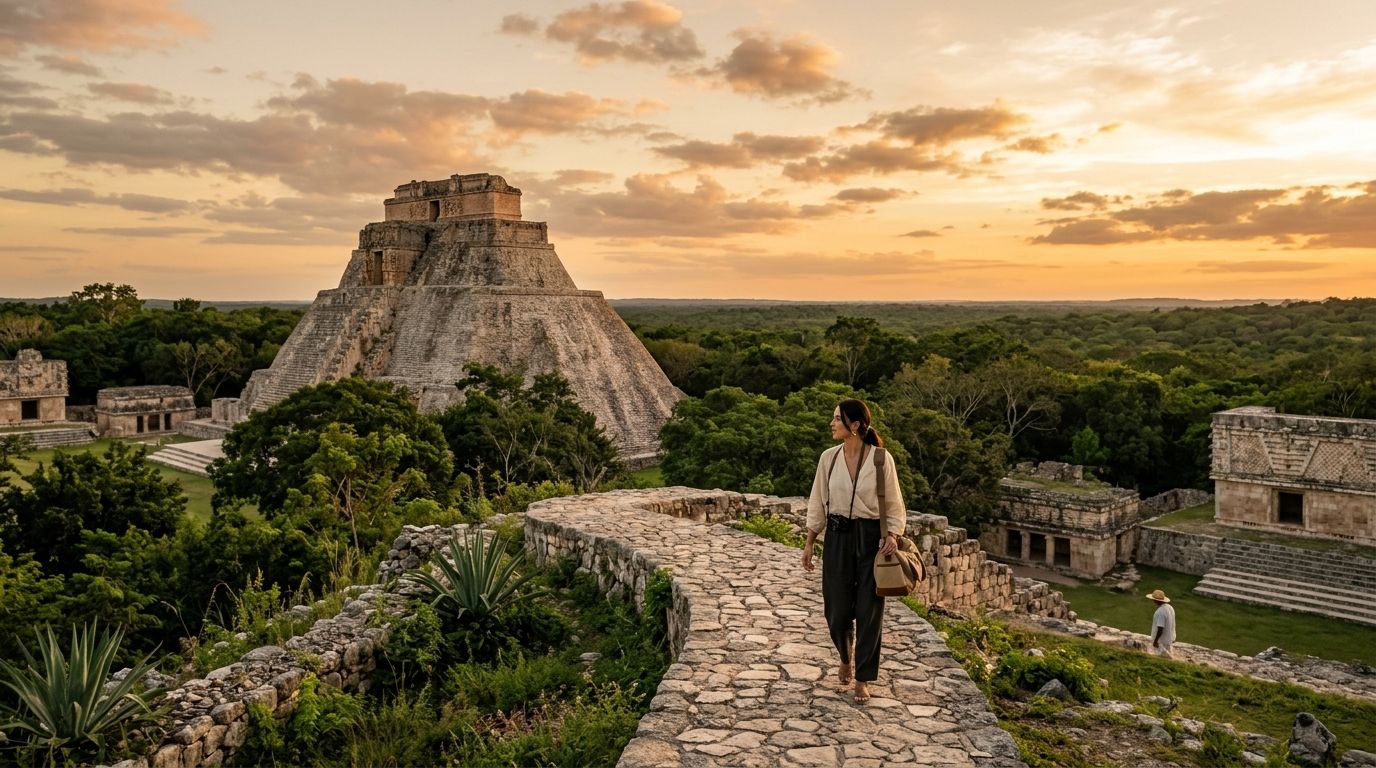
Head south to the Yucatan Peninsula and the landscape transforms entirely. The flat, limestone plain of Quintana Roo creates a different Mexico altogether. Cenotes—underground sinkholes filled with fresh water and geological history—puncture the earth. Ancient Mayan ruins sit beside luxury resorts. Fishermen still work from small boats in towns where tourism is recent enough that locals remember when tourists weren't everywhere.
Go west to Oaxaca and you're in mountain valleys where indigenous traditions haven't been simplified for export. Markets smell like chocolate being ground the way it's been ground for centuries. Food here tastes like food rather than a carefully plated concept.
Mexico's complexity is precisely what makes it interesting. The country doesn't need you to understand it. That's actually refreshing.
What to Expect: Moving Through Mexico with Open Eyes
If you arrive expecting resort-style comfort at every moment, you'll be frustrated. If you arrive expecting complete roughing-it, you'll be pleasantly surprised. Reality is somewhere in the middle, and it's more nuanced than either extreme.
In urban centers (Mexico City, Guadalajara, Oaxaca city): You'll find modern infrastructure alongside very old infrastructure. WiFi exists. Restaurants range from street-level taquerías to fine dining. Neighborhoods have character—some are thoroughly gentrified and Instagram-ready, others are working neighborhoods where tourists are novel. Police presence is visible but unobtrusive in tourist areas. Using metro systems and taxis is straightforward.
In beach towns (Tulum, Playa del Carmen, Puerto Vallarta): The coastal tourism economy has reshaped these places entirely. You can find luxury accommodations, restaurants catering to every dietary preference, and organized activities for every comfort level. But walk one block off the main drag and you'll encounter the actual town underneath the tourism layer—locals going to actual markets, small cafés serving actual prices, life that isn't performing for cameras.
In smaller towns and villages: This is where your expectations will shift most. Tourism infrastructure is minimal. English is less common. Meals are cheaper and simpler. You encounter actual daily rhythms rather than curated experiences. This requires more flexibility and genuine openness to discomfort, but it's also where you learn something.
General patterns: Driving distances in Mexico are longer than they seem on maps. Mexican time doesn't match clock time—if someone says "mañana," they don't mean tomorrow, they mean "eventually." Food is often spiced differently than what restaurants outside Mexico call "Mexican food." Service includes genuine friendliness alongside absolute honesty if something isn't available. Water from the tap in major cities is drinkable despite what legends suggest, though many visitors stick to bottled water.
Planning Your Visit: The Practical Architecture
Best time to visit: November through April. This is the dry season. Temperatures are comfortable (70-85°F depending on region), humidity is lower, and rainfall is minimal. May through October is the rainy season—expect afternoon downpours and higher humidity. It's also hurricane season in the Yucatan, though direct hits are rare. Fewer tourists come during rainy season, which means lower prices and more authentic local interactions. Both have merit depending on your tolerance for weather.
How long to stay: This depends entirely on what you want. If you're visiting a single beach destination, three to four days provides enough time to settle in without feeling rushed. If you're moving between regions (coastal areas, Mexico City, colonial highlands), plan two weeks minimum. Mexico's geography means travel time between regions isn't insignificant. A week trying to cover too much becomes a taxi-and-airport shuffle rather than actual visiting.
How to get around: Flights between major Mexican cities are affordable and frequent. Long-distance buses are extensive and reliable—first-class buses are actually comfortable and reasonably priced. Driving yourself requires an international driving permit and genuine comfort with unfamiliar roads, though the highway system is generally well-maintained. Taxis and ride-sharing apps exist in cities. For beach towns and rural areas, your movement will be more limited—this actually forces you to slow down, which isn't a bad thing.
What to budget: Mexico is moderately priced if you're not staying in high-end tourist resorts. A comfortable meal costs $8-15 USD. Mid-range hotels run $60-100 USD per night. Activities and attractions are inexpensive by global standards. Costs spike dramatically if you're in Playa del Carmen or Puerto Vallarta in high season, or if you're staying in luxury properties. It's entirely possible to travel Mexico well on a modest budget, or to spend significant money if you prefer that level of comfort.
Crowds: December through February are peak tourist months. Spring break (March-April) brings chaos to beach towns. September and October are quiet—it's rainy, but that's when you see Mexico most clearly. Weekends in colonial towns draw Mexico City day-trippers. Major archaeological sites are perpetually crowded but less so if you arrive at opening time.
Places Worth Actually Visiting
Mexico City: Not a day trip. The capital deserves 4-5 days minimum. The Frida Kahlo Museum is predictably popular but genuinely worth the visit. The National Anthropology Museum contains the Aztec Sun Stone and represents one of the world's serious archaeological collections. Walk through neighborhoods like La Roma and Coyoacán to see how people actually live. Eat at markets. Stand in the Zócalo at sunset. The city contains more depth than most visitors allocate time for.
Oaxaca City and surrounding valleys: The state of Oaxaca maintains indigenous traditions more visibly than anywhere else in Mexico. Visit during Day of the Dead (early November) and you'll encounter an entire cultural framework, not a commercialized holiday. The markets sell things for actual use—chocolate, mole pastes, textiles—not primarily for tourists. The food culture here is among the best in Mexico. Plan 5-7 days if you want to visit surrounding towns and markets. Otherwise, 3-4 days in the city itself.
Yucatan Peninsula: More diverse than its reputation suggests. Yes, Tulum has become overdeveloped and Playa del Carmen is aggressively touristy. But Mérida—the capital of Yucatan state—is a genuine colonial city with zero pretension toward international visitors. The cenotes around Tulum and further inland offer actual geological beauty. Chichén Itzá and Tulum are famous for good reasons. Spend time in smaller towns like Valladolid to understand what existed before resort development.
Is It Worth Visiting? Honest Assessment
Mexico rewards travelers who come with curiosity rather than expectation. If you're seeking a luxury resort experience, Mexico provides that. If you're seeking authentic cultural immersion, Mexico requires you to actually immerse rather than observe. If you're seeking complicated, real places where tourism exists alongside actual life, Mexico absolutely delivers.
The country doesn't perform "authenticity" for you. That's actually its greatest appeal. It exists for Mexicans, and tourists are guests in that world. That posture—being a guest rather than a customer—changes how you move through the country and what you actually learn.
Is it worth visiting? Yes, but probably not the way you initially imagine.
Quick Facts
- Population: Approximately 128 million people
- Capital: Mexico City
- Language: Spanish (English spoken in tourist areas but not universally)
- Currency: Mexican Peso (MXN; approximately 17-20 pesos per USD depending on exchange rates)
- Time zone: Central Time (CT) in most of the country
- Electricity: 110V, same plugs as North America
- Visas: Most nationalities receive 180 days tourist visa on arrival
Final Thoughts
Mexico doesn't need defending or explaining. It's a complete world unto itself—large enough to contain multitudes, varied enough that no single experience summarizes it, complex enough that you can return repeatedly and discover something different.
Your first visit might be a beach resort that feels comfortable. Your second might be Mexico City where you realize there's an entire metropolitan culture you didn't encounter before. Your third might be a small town where you finally start understanding something about how Mexico actually works. Each version is valid. None is more "authentic" than another—they're just different angles on the same impossibly large country.
The real question isn't whether Mexico is worth visiting. It's whether you're willing to visit it on its own terms rather than yours. That willingness makes all the difference.
Explore Mexico's regions, routes, and experiences using Touratu's interactive map—navigate between destinations, discover detailed route plans, and watch travel videos that show you what to actually expect. Plan with real information from real travellers, not marketing speak.
Loading activities…
