
Maldives: Places Travelers Keep Returning To
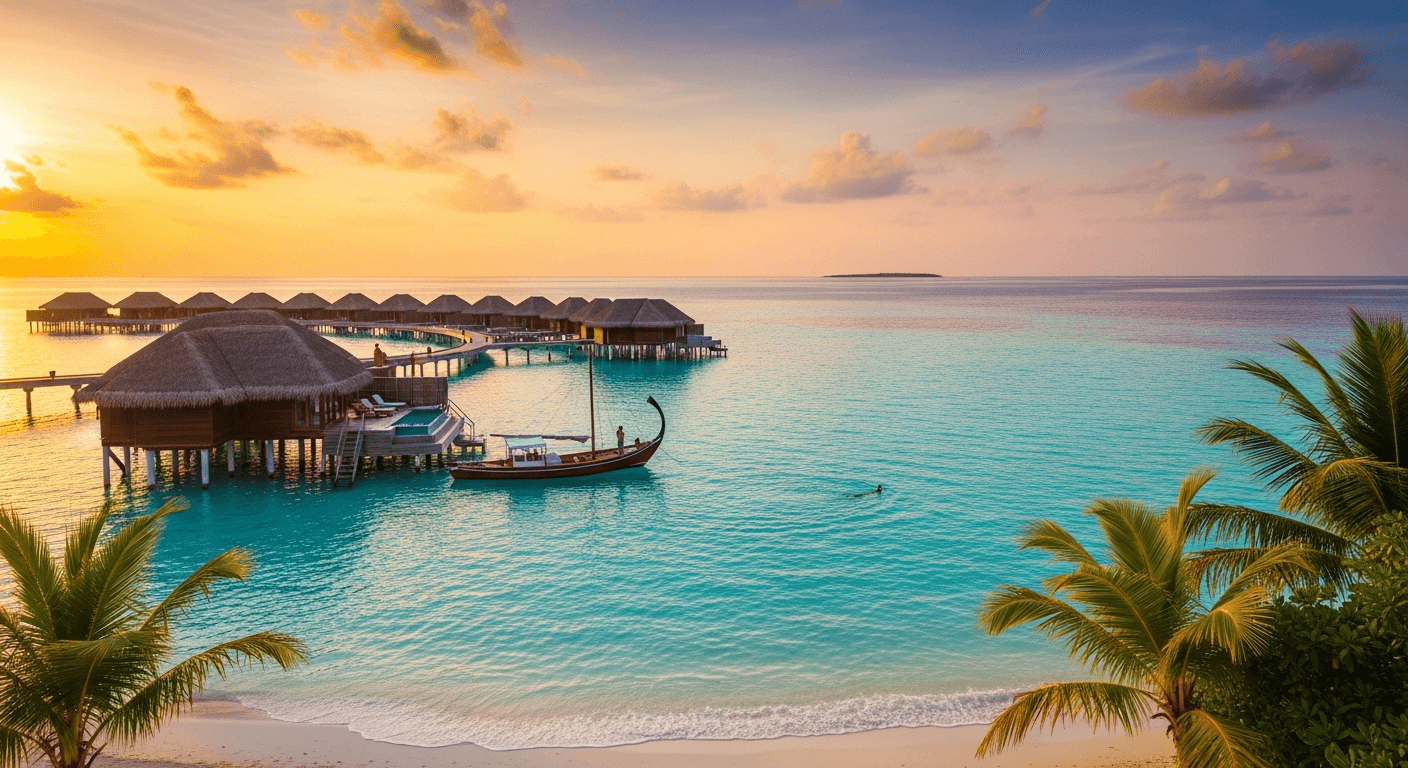
Maldives: Over water villas
Maldives: Twenty Reasons Travelers Return to Paradise Again and Again
There's a particular ache that comes from leaving the Maldives. Not the kind born from rushed goodbyes, but something quieter—the recognition that you've touched something real beneath the postcard perfection. The archipelago's 1,190 coral islands scattered across the Indian Ocean don't just offer escape; they offer a conversation with yourself. Travelers come back because they've glimpsed something genuine in the spaces between the resort pools and the reef walls, something that lingers long after the salt dries from your skin.
What keeps people returning isn't just the turquoise water, though that exists in shades you'll struggle to name. It's the paradox of this place: simultaneously a fortress of luxury and a fragile ecosystem held together by coral older than empires. The Maldives reveals itself differently to each visitor—not everyone sees the same island, even when standing on identical sand.
The Twenty Reasons
1. The House Reef at Veligandu Island
The real magic begins where your room ends. At Veligandu, the house reef doesn't require a boat; it demands only a few steps into impossibly clear water. Schools of trevally move like liquid silver, napoleon fish regard you with ancient intelligence, and somehow the absurdity of conducting this conversation with a parrotfish makes you feel truly alive.
Why it stands out: Most resorts have adequate house reefs. Veligandu's is a living corridor between worlds—you're snorkeling in someone else's neighborhood, witnessing the choreography of survival and abundance.
The experience: Dawn here means water so calm it reflects the sky perfectly, creating the disorienting sensation of floating between two atmospheres. Afternoon light transforms the reef into a cathedral of blue.
Best time: November through April offers consistent visibility and calmer conditions, though the reef performs year-round.
Insider observation: The reef's health has improved noticeably since local conservation efforts intensified. The coral recovery is visible if you know where to look.
Photography moment: Position yourself between the reef and the island at sunrise; the light cuts through the water at an angle that makes color almost redundant.
Practical tips: Reef shoes prevent both damage and discomfort. Visit during slack tide for the clearest water. Respect the 3-meter distance from nesting turtles.
2. South Male Atoll's Dive Sites
The atolls aren't abstract concepts here—they're geological facts you feel in your body. South Male's dive sites demand respect and reward it with encounters that reshape your sense of scale. Cornered by channels where currents push nutrients upward, these sites concentrate life in ways that feel almost orchestrated.
Why it stands out: The variety is genuine—each site has its own personality and challenges. You're not repeating the same dive.
Best time: December to March for the most dramatic fauna encounters and clearest water.
3. Artificial Beach Paradise Island
Sometimes the most honest spaces are the most constructed ones. Paradise Island's engineered perfection—white sand imported, palms positioned, every curve calculated—somehow liberates you from the pressure to find meaning. It's beautiful without pretense, which is its own form of authenticity.
Why it stands out: You needn't feel guilty about enjoying something designed for leisure. The craftsmanship is visible and unapologetic.
4. Hanifaru Bay's Manta Congregation
Between June and November, this shallow bay becomes a gathering place for manta rays—sometimes 200 in a single day, filtering plankton blooms. The water looks like it's moving on its own. You're witnessing not a show, but a necessity, and somehow that makes it more profound.
Best time: August and September peak, when plankton abundance reaches its height.
5. Kandooma Island's Wreck Dive
The ship sank deliberately, and now it's architecture for moray eels, trevally, and the peculiar community that claims metal structures as home. You're exploring intentional ruin, watching entropy become ecosystem.
Photography moment: Wide-angle shots of the wreck's silhouette against the lighter water above create otherworldly depth.
6. Felidhoo Atoll's Smaller Islands
Where tourist infrastructure thins, something else emerges. Felidhoo's quieter islands—Medhufinolhu, Medhupparu—feel like the places locals protect from visibility. The beaches remain unbothered, and the isolation actually heightens rather than diminishes connection.
Why it stands out: Fewer cameras means less performed experience. People here are actually resting.
7. The Thiladhummati Atoll's Secret Reefs
Not secret in the Instagram sense, but secret because their names don't circulate widely and their conditions are seasonal. Divers return because they've experienced something the algorithm hasn't captured.
Best time: March to May for unusual combinations of calm water and pristine marine conditions.
8. Veligandu's Jetty at Night
When the resort empties, the jetty becomes a stage for nocturnal marine life. Squid hunt using bioluminescence, tarpon cruise the shallows, and the ocean performs a show that daylight entirely erases.
Practical tips: Ask staff about safe timing and bring a red light torch (it disturbs marine life less than white light).
9. Maafushi's House Reef and Local Atmosphere
Maafushi isn't manicured—it's alive with labor and daily rhythm. The house reef here draws local fishermen, resort staff, and visitors all negotiating the same water. It's messy and completely honest.
Why it stands out: You're not quarantined from local life; you're adjacent to it, watching the actual rhythm rather than a performed version.
10. The Baa Atoll's Biosphere Reserve
UNESCO designation means nothing until you're here watching parrotfish reshape the reef architecture, understanding that this isn't a museum but a functioning, evolving system where humans are merely observers (if we're fortunate).
Getting Here: The Practical Alignment
Getting to the Maldives requires one of two approaches: you're either in a hurry (multiple internal flights, speedboats) or you've surrendered to the pace that the archipelago enforces. Most travelers arriving at Malé International find that speedboats depart between 6 AM and sunset, with timing coordinating to flight arrivals. The 45-minute to 2-hour journey to outlying islands isn't a transfer; it's the island's threshold. You're being sorted by geography and inclination.
Timing matters, though not in the way marketing typically suggests. The dry season (November through April) promises visibility, but the shoulder months (May and September-October) reward patience with fewer crowds and occasionally more dramatic wildlife encounters. The idea of "shoulder" seasons implies the main event is elsewhere—not true here. The Maldives simply wears different expressions in different months.
Respect for the environment isn't optional. This isn't virtue signaling—it's acknowledging that you're standing on coral that took decades to build. Sunscreen without oxybenzone and octinoxate, reef-safe practices, and distance from nesting turtles aren't guidelines; they're basic reciprocity.
Discovering Your Own Reasons
This list represents twenty points of entry, but the Maldives has a way of generating personal reasons that don't appear in any guide. Perhaps it's a particular afternoon light you encounter nowhere else, or a conversation with a dive guide that reframed something you thought you understood. These discoveries are impossible to predict, which is exactly why travelers return—not to repeat the same experience, but to find what they didn't know they were looking for.
Explore these layered traveler routes on Touratu's interactive map, where you can trace the paths of seasoned visitors, discover reel moments from different atolls, and see how the Maldives reveals itself differently through different eyes and cameras.
The archipelago works like this: you arrive thinking you know what you'll find. You leave understanding you experienced something entirely different, and you're already wondering when you can return to revise that understanding again.
Loading activities…
