Maldives Islands: Explore Tropical Paradise
Introduction
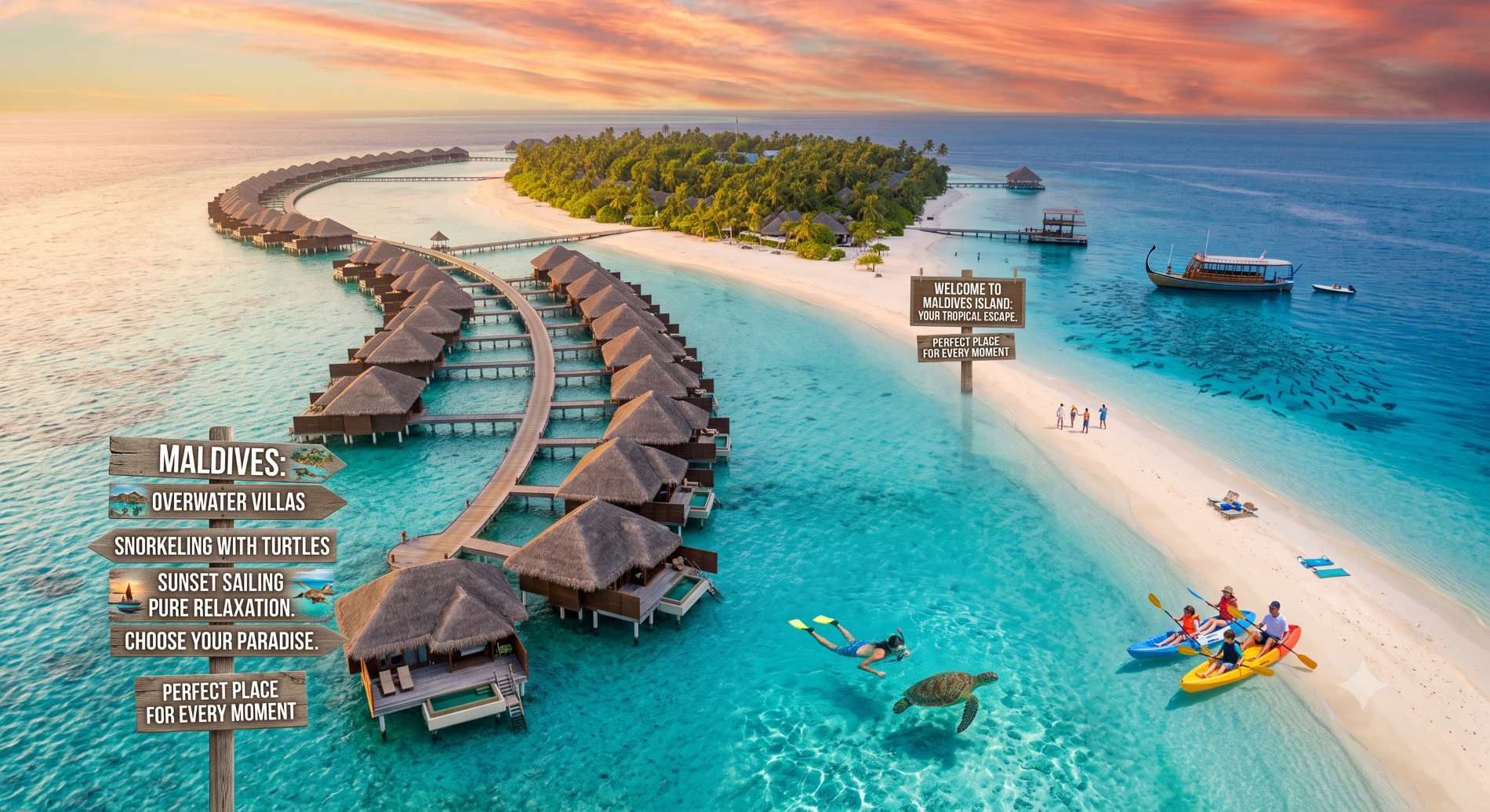
The Maldives is one of the world's most famous tropical island destinations, known for its turquoise lagoons, white-sand beaches, coral reefs, overwater villas, luxury resorts, snorkeling, scuba diving, marine life, and romantic island escapes.
Located in the Indian Ocean southwest of Sri Lanka and India, the Maldives is an archipelago made up of hundreds of islands grouped into atolls. Its geography creates a distinctive travel experience where the ocean, beaches, coral reefs, and islands are central to everyday life.
Visitors can spend a morning snorkeling above colorful coral reefs, relax on a white-sand beach, explore a local island, enjoy a sunset cruise, go scuba diving, or spend the afternoon at an overwater villa.
The Maldives is particularly appealing to travelers looking for beaches, relaxation, romance, water sports, marine life, luxury, and tropical scenery.
The destination suits a wide range of travelers, including couples, honeymooners, families, divers, snorkelers, photographers, luxury travelers, solo travelers, and visitors looking for a peaceful island escape.
Before booking, travelers can use Touratu's interactive maps and narrated destination guide videos to compare Malé, local islands, resort islands, atolls, beaches, diving areas, accommodation options, transfer routes, and activities.
Quick Facts
| Category | Information |
|---|---|
| Country | Maldives |
| Region | Indian Ocean / South Asia |
| Capital | Malé |
| Geography | Archipelago of hundreds of islands grouped into atolls |
| Famous For | Beaches, lagoons, coral reefs, resorts, diving, and overwater villas |
| Popular Activities | Snorkeling, diving, island hopping, cruises, fishing, and water sports |
| Famous Experience | Overwater villa stay |
| Marine Attractions | Coral reefs, tropical fish, turtles, rays, and other marine life |
| Currency | Maldivian rufiyaa (MVR) |
| Languages | Dhivehi and English |
| Ideal Stay | 4–7 days |
| Main Travel Style | Beaches, luxury, romance, relaxation, diving, and island experiences |
Why Visit the Maldives?
- Relax on white-sand tropical beaches.
- Swim in clear turquoise lagoons.
- Stay in an overwater villa.
- Snorkel directly above coral reefs.
- Explore tropical marine life.
- Go scuba diving.
- Enjoy sunset cruises.
- Visit local Maldivian islands.
- Experience traditional island culture.
- Try fresh seafood.
- Enjoy water sports.
- Go fishing.
- Photograph tropical landscapes.
- Celebrate a honeymoon or romantic occasion.
- Disconnect from busy city life.
- Enjoy a peaceful luxury escape.
Main Attractions in the Maldives
Malé
Malé is the capital and one of the most densely populated urban areas in the country.
It provides a very different experience from the quiet resort islands, with markets, mosques, restaurants, shops, museums, and everyday Maldivian life.
Many international visitors pass through Malé before continuing to their resort or local island.
Best for: Culture, short stays, markets, local food, and understanding everyday Maldives.
Hulhumalé
Hulhumalé is a developed island near the capital and Velana International Airport.
It has beaches, restaurants, cafés, accommodation, and convenient access to the airport.
It can be useful for travelers with early departures, late arrivals, or those looking for a more affordable alternative to a private resort island.
Best for: Short stays, budget-conscious travelers, families, restaurants, and airport convenience.
Resort Islands
Private resort islands are one of the defining features of Maldives tourism.
Many resorts occupy individual islands and offer beaches, restaurants, spas, swimming pools, water sports, diving, snorkeling, and private villas.
Best for: Couples, honeymooners, luxury travelers, families, and relaxation.
Local Islands
Local islands provide a different experience from private resorts.
Travelers can experience local communities, restaurants, shops, beaches, guesthouses, and everyday island life.
Best for: Budget travelers, culture, longer stays, and independent travel.
Coral Reefs
Coral reefs are among the Maldives' greatest natural attractions.
The reefs support a wide range of marine life and provide opportunities for snorkeling and diving.
Best for: Divers, snorkelers, photographers, and nature lovers.
Sandbanks
Small sandbanks surrounded by shallow turquoise water are a popular feature of many Maldives excursions.
They are often included in snorkeling, island-hopping, and boat trips.
Best for: Photography, couples, swimming, and day trips.
Famous Areas & Atolls
The Maldives is divided into numerous atolls, each offering different island and marine environments.
North Malé Atoll
One of the most accessible areas for international visitors because of its proximity to the capital and airport.
Best for: First-time visitors, resorts, diving, snorkeling, and convenience.
South Malé Atoll
Known for resort islands, diving, surfing opportunities, and marine experiences.
Best for: Couples, divers, surfers, and resort travelers.
Ari Atoll
A popular region for diving, snorkeling, and marine-life experiences.
Best for: Divers, snorkelers, honeymooners, and marine enthusiasts.
Baa Atoll
Known for its marine environment and protected areas.
Best for: Nature lovers, divers, snorkelers, and luxury travelers.
Addu Atoll
Located farther south, Addu offers a different atmosphere from the more frequently visited central atolls.
It provides opportunities to experience local island life, nature, cycling, and marine environments.
Best for: Longer stays, independent travelers, culture, and nature.
Cultural & Heritage Experiences
Maldivian Culture
The Maldives has a distinctive island culture shaped by its geography, maritime traditions, Islamic heritage, and long history of Indian Ocean trade.
Local Island Life
Visiting a local island provides opportunities to see everyday life beyond the private resort environment.
Travelers can explore:
- Local cafés
- Markets
- Mosques
- Shops
- Fishing communities
- Traditional boats
- Island streets
Visitors should dress respectfully and follow local customs, particularly on inhabited local islands.
Fishing Traditions
Fishing has traditionally been an important part of Maldivian life.
Travelers can experience fishing trips and learn more about the country's relationship with the ocean.
Traditional Boats
Dhoni boats are strongly associated with Maldivian maritime culture and are commonly used for transportation and excursions.
Nature Attractions
Coral Reefs
The Maldives' coral reef ecosystems are central to its natural appeal.
Snorkeling and diving provide opportunities to observe reef fish, corals, turtles, rays, and other marine species.
Marine Life
Depending on location and conditions, travelers may encounter:
- Reef fish
- Sea turtles
- Rays
- Reef sharks
- Dolphins
- Whale sharks
- Coral formations
- Other tropical marine species
Wildlife sightings are never guaranteed and responsible viewing practices are important.
Lagoons
The shallow lagoons surrounding many islands create the Maldives' characteristic turquoise waters.
Beaches
White-sand beaches are one of the destination's defining features.
Some beaches are especially suitable for swimming, while others are better for photography or relaxation.
Sandbanks
Sandbanks offer a memorable way to experience the shallow waters and open ocean surrounding the islands.
Food Experiences
Maldivian cuisine reflects the country's location in the Indian Ocean and makes extensive use of fish, coconut, rice, spices, and tropical ingredients.
Mas Huni
A traditional breakfast dish made with tuna, coconut, onion, and chili.
Garudhiya
A traditional fish broth commonly served with rice and accompaniments.
Fihunu Mas
Grilled fish prepared with spices.
Maldivian Curries
Fish and other curries are an important part of local cuisine.
Seafood
Fresh seafood is widely available, particularly at resorts and local restaurants.
Coconut
Coconut appears in many traditional Maldivian dishes and desserts.
Tropical Fruit
Visitors can enjoy mangoes, papaya, watermelon, bananas, and other tropical fruits.
Shopping Experiences
Local Markets
Markets in Malé provide opportunities to see local produce, food products, and everyday goods.
Local Island Shops
Local islands offer small shops selling snacks, souvenirs, clothing, crafts, and practical goods.
Traditional Handicrafts
Travelers may find locally inspired crafts and decorative items.
Maldivian Food Products
Consider locally produced tea, snacks, spices, and packaged food products that are suitable for transport.
Responsible Souvenirs
Avoid purchasing products made from protected marine life, coral, shells, or other environmentally sensitive materials.
Family Travel in the Maldives
The Maldives can be an excellent family destination, particularly for families choosing resorts with suitable facilities and shallow-water activities.
Best Family Experiences
1. Snorkeling
Families can explore shallow reefs where conditions are appropriate.
2. Beach Time
Children can enjoy swimming and playing on suitable beaches.
3. Dolphin Cruises
Boat excursions may provide opportunities to observe dolphins.
Sightings are not guaranteed.
4. Island Excursions
Visit nearby islands and sandbanks.
5. Water Sports
Older children can try supervised activities appropriate to their age and ability.
6. Fishing
Families can experience traditional or recreational fishing excursions.
Family Tips
- Choose accommodation with family-friendly facilities.
- Check transfer times before booking.
- Supervise children around water.
- Use properly fitted life jackets during boat trips.
- Bring reef-safe sun protection.
- Carry plenty of water.
- Consider travel time when choosing distant atolls.
- Check whether a resort has suitable children's activities.
Couple Travel in the Maldives
The Maldives is one of the world's most popular destinations for couples and honeymooners.
Romantic Experiences
1. Overwater Villa
Stay above a turquoise lagoon for a classic Maldives experience.
2. Private Beach Time
Enjoy a quiet beach away from busy urban environments.
3. Sunset Cruise
Watch the sun set over the Indian Ocean.
4. Snorkeling Together
Explore coral reefs and tropical marine life.
5. Sandbank Picnic
Spend time on a remote sandbank surrounded by shallow turquoise water.
6. Spa Experience
Many resorts offer spa and wellness facilities.
7. Candlelit Dinner
Enjoy a special meal overlooking the ocean.
8. Diving Together
Certified divers can explore reefs and underwater sites together.
Diving & Water Activities
The Maldives is one of the world's best-known destinations for tropical marine activities.
Popular Activities
- Scuba diving
- Snorkeling
- Dolphin cruises
- Sunset cruises
- Fishing
- Kayaking
- Paddleboarding
- Surfing in suitable areas
- Jet skiing at participating resorts
- Sailing
- Island hopping
- Sandbank excursions
- Underwater photography
Water Activity Tips
- Choose reputable operators.
- Follow all safety instructions.
- Check weather and sea conditions.
- Use life jackets when required.
- Do not touch coral.
- Do not feed marine animals unless specifically permitted under responsible wildlife guidelines.
- Keep a safe distance from marine wildlife.
- Avoid standing on reefs.
- Stay hydrated.
- Use suitable sun protection.
- Follow diving certification requirements.
- Never dive beyond your training or experience.
Suggested Maldives Travel Route
One-Day Experience
For travelers with limited time:
Stop 1 — Malé or Hulhumalé
Explore the capital area or nearby island.
Stop 2 — Boat Excursion
Travel to a nearby sandbank or snorkeling location.
Stop 3 — Snorkeling
Explore the reef and lagoon.
Stop 4 — Local Lunch
Try Maldivian food or fresh seafood.
Stop 5 — Island Visit
Explore a local island or resort area.
Stop 6 — Sunset Cruise
Finish the day on the water.
Four-Day Route
Day 1 — Arrival & Resort
- Arrive in the Maldives
- Transfer to accommodation
- Beach relaxation
- Sunset
Day 2 — Snorkeling & Island Life
- Morning snorkeling
- Island or sandbank excursion
- Local lunch
- Beach time
- Evening dinner
Day 3 — Marine Adventure
- Diving or snorkeling
- Dolphin cruise or fishing
- Resort relaxation
- Sunset
Day 4 — Relaxation & Departure
- Breakfast
- Beach time
- Spa or water activity
- Transfer to airport
Seven-Day Route
Day 1
Arrive and settle into the island.
Day 2
Snorkeling and beach relaxation.
Day 3
Diving or marine excursion.
Day 4
Island hopping and sandbank visit.
Day 5
Relaxed resort day and spa.
Day 6
Fishing, diving, surfing, or another water activity.
Day 7
Slow morning before departure.
Accommodation Areas
| Traveler Type | Best Area | Experience |
|---|---|---|
| First-time visitors | North Malé Atoll | Convenient airport access |
| Honeymooners | Private resort islands | Privacy and romantic atmosphere |
| Luxury travelers | Premium resort islands | Villas, spas, and private experiences |
| Budget travelers | Local islands | Guesthouses and local restaurants |
| Families | Family-friendly resort islands | Pools, beaches, and children's activities |
| Divers | Diving-focused resort islands / atolls | Easy access to dive sites |
| Snorkelers | Reef-access resorts | Convenient snorkeling |
| Culture travelers | Local islands / Malé | Local communities and everyday life |
| Short-stay travelers | Hulhumalé / nearby areas | Airport convenience |
| Long-stay travelers | Local islands | More affordable extended travel |
When choosing accommodation, consider transfer type, transfer cost, island location, reef access, meal plans, room type, activities, privacy, and distance from the airport.
Transportation Tips
From International Destinations
Most international visitors arrive through Velana International Airport near Malé.
Speedboat Transfers
Speedboats are commonly used for nearby resort islands.
They can provide relatively quick transfers from the airport.
Seaplane
Seaplane transfers are commonly used to reach more distant resort islands.
They provide spectacular aerial views but are dependent on operating schedules and weather conditions.
Domestic Flights
Domestic flights can connect Malé with airports serving more distant regions.
Additional boat transfers may be required afterward.
Local Ferries
Public ferries can provide a more affordable way to travel between some inhabited islands, although schedules and routes are more limited than private transfers.
Tours
Organized excursions are convenient for snorkeling, diving, fishing, dolphin cruises, and island hopping.
Best Time to Visit
The Maldives is a year-round tropical destination, but weather patterns vary.
Dry Season
The generally drier period is popular with travelers seeking sunny beach conditions.
Accommodation demand can be higher during peak travel periods.
Wet Season
Rain showers can occur more frequently, but travelers can still experience sunny periods and good marine activities.
Some travelers prefer this period for potentially lower prices and fewer crowds.
Diving Conditions
Visibility and marine conditions can vary between regions and seasons.
Divers should check local conditions with their dive operator.
Holidays
Resorts can become busy around major international holidays.
Book accommodation and transfers early during peak periods.
Travel Tips
- Choose your island carefully — the Maldives is much more than one destination.
- Check transfer arrangements before booking.
- Compare speedboat, seaplane, and domestic-flight options.
- Bring reef-safe sun protection.
- Pack swimwear and lightweight clothing.
- Carry waterproof protection for electronics.
- Bring a light rain jacket.
- Respect local customs on inhabited islands.
- Dress modestly when visiting local communities.
- Do not touch coral or marine wildlife.
- Stay hydrated.
- Check weather conditions before boat trips.
- Book diving and popular excursions in advance.
- Consider full-board or all-inclusive plans when comparing resort prices.
- Check what is included in your accommodation package.
- Keep enough time between independent transport connections.
- Avoid purchasing souvenirs made from protected marine life.
- Leave coral reefs and beaches clean.
Common Mistakes to Avoid
1. Assuming Every Maldives Island Is the Same
Mistake: Choosing accommodation without understanding the island.
Solution: Compare resort islands, local islands, atolls, beaches, reefs, and transfer times.
2. Ignoring Transfer Costs
Mistake: Looking only at the room price.
Solution: Include speedboat, seaplane, domestic flight, and boat transfer costs in the total budget.
3. Spending the Entire Trip in the Villa
Mistake: Missing the marine environment outside the accommodation.
Solution: Include snorkeling, island excursions, diving, or a boat trip.
4. Forgetting Local Island Customs
Mistake: Treating every island like a private resort.
Solution: Follow local dress codes and cultural expectations on inhabited islands.
5. Touching Coral
Mistake: Standing on or touching coral reefs.
Solution: Observe reefs without physical contact.
6. Underestimating the Sun
Mistake: Spending hours outdoors without adequate protection.
Solution: Use sun protection, protective clothing, shade, and hydration.
7. Booking Too Many Activities
Mistake: Filling every day with excursions.
Solution: Leave time to relax and enjoy the island.
8. Ignoring Weather
Mistake: Assuming boat trips will operate regardless of conditions.
Solution: Keep some flexibility in your schedule.
9. Choosing an Island Without Checking Reef Access
Mistake: Assuming every resort has the same snorkeling conditions.
Solution: Check whether the accommodation has accessible house reefs or requires boat trips for snorkeling.
10. Buying Marine Wildlife Souvenirs
Mistake: Purchasing coral, shells, or products made from protected marine species.
Solution: Choose responsible, non-wildlife souvenirs.
Touratu Insight
The Maldives works best as a slow-paced island escape rather than a checklist destination.
Its greatest appeal comes from the combination of turquoise lagoons, white-sand beaches, coral reefs, marine life, island culture, water activities, and peaceful accommodation.
A good itinerary does not need to include every activity. Instead, combine snorkeling or diving with island exploration, a sunset cruise, good food, and plenty of unplanned beach time.
For families, shallow-water activities, beaches, island excursions, and carefully selected resorts can provide memorable experiences.
Couples can focus on overwater villas, sunset cruises, private beaches, snorkeling, spa experiences, and romantic dinners.
For divers and nature lovers, the Maldives offers exceptional opportunities to explore tropical coral ecosystems and marine life.
The Maldives also works well as part of a wider South Asian itinerary, particularly when combined with destinations such as Sri Lanka or southern India.
Before booking, use Touratu's interactive maps and narrated destination guide videos to understand where Malé, Hulhumalé, local islands, resort islands, atolls, diving areas, beaches, and transfer routes are located.
Frequently Asked Questions
1. What is the Maldives famous for?
The Maldives is famous for its white-sand beaches, turquoise lagoons, coral reefs, luxury resorts, overwater villas, snorkeling, scuba diving, and marine life.
2. What are the best places to visit?
Popular areas and experiences include:
- Malé
- Hulhumalé
- North Malé Atoll
- South Malé Atoll
- Ari Atoll
- Baa Atoll
- Addu Atoll
- Resort islands
- Local islands
- Sandbanks
- Coral reefs
3. Is the Maldives worth visiting?
Yes. It is particularly appealing to travelers looking for beaches, marine life, relaxation, romance, water sports, diving, and tropical scenery.
4. How many days are enough?
4–7 days is a good amount of time for a first Maldives trip.
Longer stays can be worthwhile for travelers combining multiple islands or focusing on diving and relaxation.
5. Is the Maldives good for families?
Yes. Many resorts offer family-friendly accommodation, children's activities, pools, beaches, and supervised water activities.
6. Is the Maldives good for couples?
Yes. The Maldives is one of the world's most popular destinations for honeymoons, anniversaries, proposals, and romantic holidays.
7. What food should I try?
Try mas huni, garudhiya, Maldivian curries, grilled fish, seafood, coconut-based dishes, and tropical fruit.
8. Where should I stay?
Resort islands are ideal for luxury, privacy, and convenience.
Local islands are generally better for budget travelers and cultural experiences.
Hulhumalé is convenient for short stays and airport access.
9. Is the Maldives expensive?
It can be expensive, particularly at private resorts, but local-island guesthouses and independent travel can offer more affordable options.
Always compare accommodation, meals, activities, and transfer costs together.
10. Can I visit the Maldives without staying at a luxury resort?
Yes. Local islands offer guesthouses, restaurants, beaches, and opportunities to experience everyday Maldivian life.
11. Is the Maldives good for snorkeling?
Yes. Many islands offer snorkeling opportunities, although reef quality and accessibility vary between locations.
12. Can I scuba dive in the Maldives?
Yes. Diving is one of the country's major attractions.
Different atolls offer different underwater environments, and certified divers can choose trips according to experience and interests.
13. Is the Maldives good for non-swimmers?
Yes, but visitors should be cautious around water. Beach relaxation, boat cruises, sightseeing, spa treatments, and island exploration provide alternatives to swimming.
14. Can I visit local islands?
Yes. Local islands provide opportunities to experience Maldivian communities, food, culture, and everyday island life.
15. Is the Maldives crowded?
Popular resort islands can be busy during peak periods, but the country has many islands and accommodation options.
The experience can vary significantly depending on the island and resort.
16. What should I pack?
Bring lightweight clothing, swimwear, sun protection, comfortable footwear, waterproof bags, a light rain jacket, and any equipment required for your activities.
17. Can the Maldives be combined with Sri Lanka?
Yes. The Maldives and Sri Lanka are a popular combination for travelers who want to experience culture, wildlife, and landscapes in Sri Lanka followed by beaches and marine experiences in the Maldives.
18. Why should travelers explore the Maldives before booking?
The Maldives is spread across many islands and atolls, and accommodation can range from local guesthouses to private luxury resorts.
Understanding the geography helps travelers choose the right island, transfer method, activities, and accommodation style.
19. How can Touratu help plan a Maldives trip?
Touratu helps travelers explore the Maldives through interactive maps and narrated destination guide videos, compare resort and local islands, understand atolls and transfer routes, discover beaches and marine activities, explore accommodation areas, and build a personalized itinerary before booking.
Key Takeaways
- The Maldives is one of the world's best-known tropical island destinations.
- It is famous for white-sand beaches, turquoise lagoons, coral reefs, diving, snorkeling, and overwater villas.
- Malé provides an introduction to Maldivian urban and cultural life.
- Hulhumalé is convenient for airport stays and more affordable accommodation.
- North Malé Atoll is convenient for first-time visitors.
- Ari Atoll is particularly popular for diving and marine experiences.
- Baa Atoll is known for its marine environment and protected areas.
- Addu Atoll offers a different and more remote southern experience.
- Resort islands are ideal for luxury and romance.
- Local islands are useful for budget and cultural travel.
- Snorkeling, diving, island hopping, fishing, cruises, and water sports are major activities.
- 4–7 days is enough for a good first visit.
- Travelers should consider transfer costs and travel times when choosing accommodation.
- Visitors should respect local customs and protect coral reefs and marine wildlife.
- The Maldives works well with a wider itinerary including Sri Lanka or southern India.
- Touratu can help travelers explore Maldives islands, atolls, resorts, local communities, beaches, diving areas, transfer routes, food experiences, and activities before booking.
Loading activities…