
Kenya Travel Guide: Safari, Wildlife & Coastal Culture
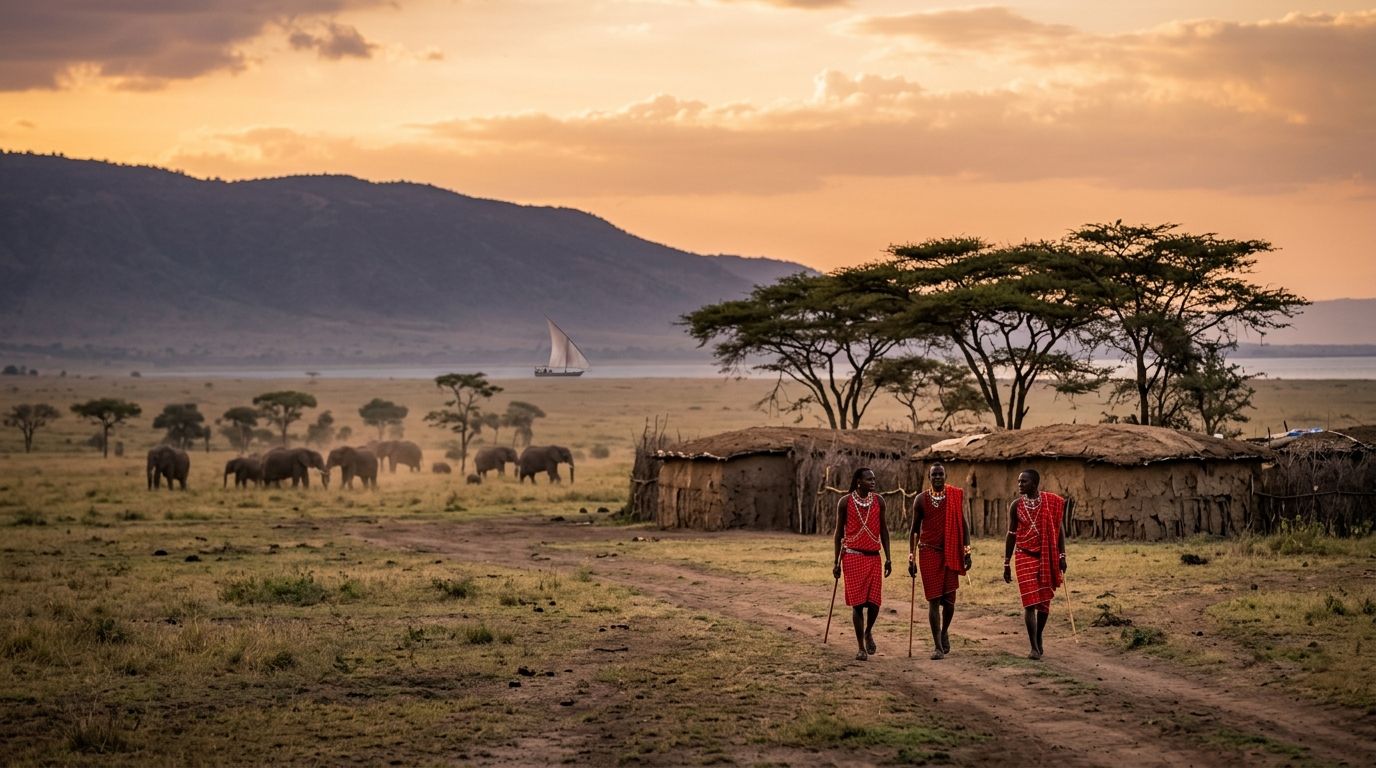
Kenya: Where the Land Still Moves Like It Did a Million Years Ago
There's a moment on the Masai Mara when you stop looking at wildlife and start feeling it. A lioness moves through shoulder-high grass, and the herd ahead scatters not from fear but from ancient knowledge. The dust rises, the acacia trees hold steady, and you understand why people come here searching for something they can't quite name—a memory their bodies seem to carry.
Kenya is not the Africa you've seen in documentaries. It's messier, more alive, and far more complicated. But it's also one of the few places on Earth where you can still witness the relationship between predator and prey, between human and landscape, exactly as it has existed for millennia.
What Makes Kenya Genuinely Different
Kenya works at multiple speeds simultaneously. In Nairobi, traffic moves like congealed honey, tech startups occupy glass buildings, and you can eat Ethiopian food one block away from a roasted meat stand selling lunch through a window. The contradiction isn't jarring—it's just Nairobi.
But step outside the capital, and you're in a different conversation entirely.
The Masai Mara game reserve sits in southwestern Kenya and operates on the calendar of migration, not tourism. Twice yearly, nearly two million wildebeest and zebras move across this land in the largest land migration on Earth. But you don't need to time this perfectly to see something extraordinary. A single morning drive yields elephant families, Cape buffalo herds, cheetahs resting in trees, and birds you've never heard of calling from acacia branches.
What makes the Mara work—why it feels different from other African reserves—is the sheer density of life and the relatively limited infrastructure. There are no safari parks here, no air-conditioned tram routes. You're moving through genuine wilderness in a Land Rover with an experienced guide who knows how to read animal behavior. The animals ignore you entirely. You're background noise to their day.
Beyond the Mara, Kenya's geography is deceptively varied. The Kenyan coast offers something completely different: Lamu Island feels like stepping into the 18th century, with narrow alleys, traditional sailing dhows, and a pace that would horrify anyone operating on city time. The Great Rift Valley splits the country vertically, creating lakes that attract flamingos in numbers so large they color the water pink. Mount Kenya, Africa's second-highest peak, rises almost 5,200 meters and offers trekking that ranges from accessible day hikes to serious mountaineering.
The people you meet matter here. Kenya has deep tourism infrastructure—not corporate-homogenized infrastructure, but genuine experience-building. Your safari guide isn't performing; he's sharing knowledge built over years of observation. Lodge owners often left other careers to live here. Local communities participate in conservation directly, seeing wildlife as livelihood rather than backdrop.
What to Expect: The Practical Reality
The Mara Experience
A typical Mara day begins before dawn. You're in a Land Rover by 6 a.m., moving slowly through grassland that looks empty until your guide points out a leopard draped across a branch you'd have missed entirely. Most safari drives run 3-4 hours. You're not exhausted by the end, but you're alert in a way that's increasingly rare—your attention fully consumed by looking, listening, and watching.
The animals don't perform. A pride of lions might lie motionless for hours. Elephants move with surprisingly little ceremony. What you're actually doing is sitting still and bearing witness to how another world operates. Some drives deliver dramatic action. Others are quiet conversations with landscape. Both matter.
Accommodation varies. Budget options exist—the famous Keekorok Lodge and similar properties offer good value—but the Mara doesn't come cheap. Expect $150-400+ per night for mid-range lodging. Higher-end camps push into thousands. The investment buys more than comfort; it buys access. Camps with experienced guides, positioned strategically around the reserve, see more and understand more.
Nairobi as a Base
The capital isn't a destination in itself, but you'll pass through. The Karen Blixen Museum (author of "Out of Africa") sits in a quiet residential area and offers context for colonial Kenya. The Giraffe Centre lets you hand-feed endangered Rothschild giraffes. The National Museum covers everything from paleontology to contemporary Kenyan culture. These aren't bucket-list spectaculars—they're ways to spend a day when weather closes the Mara or you need a break from intensive game driving.
The food scene is genuinely good. Nairobi has restaurants that matter—not fancy restaurants seeking Instagram approval, but places where chefs are working with local ingredients and actual technique. Thorn Tree Café is touristy but functional. Carnivore Restaurant does what its name suggests and has been doing it consistently for decades.
The Coast Reality
Lamu Island requires intentionality. You fly from Nairobi to a small airstrip, then boat to this UNESCO World Heritage Site. Once there, movement is by foot or traditional dhow. The culture is Swahili—Arabic, African, and Indian influences visible in architecture, food, and daily rhythm.
It's not postcard perfection. Lamu has poverty, limited sanitation in some areas, and tourist infrastructure that's basic rather than luxurious. But this is also why it hasn't been theme-parked. You're in an actual functioning community, not a heritage site designed for visitor comfort.
The beaches nearby—Shela Beach in particular—are genuine and uncrowded. The Indian Ocean is warm. The sunsets are regular, not miraculous, but they're good. Bring books. Bring patience. This place works at conversation speed, not vacation speed.
Planning Your Visit
Timing
Kenya offers wildlife year-round, but seasons matter.
The dry season (June-October) is considered prime safari time. Animals concentrate around water sources, making them more visible. The Mara Migration peaks July-September, with the famous river crossings typically occurring August. Roads are passable, and weather is generally clear.
But—and this is important—the wet seasons (November-December and March-May) aren't travel disasters. They're cheaper, less crowded, and the landscape is genuinely greener. Animals disperse more widely but are also less stressed and more active. Birdwatching improves. If crowds matter more to you than peak activity, consider the shoulder seasons.
For coastal Lamu, November-March is comfortable. April-October can be humid and occasionally rainy.
Duration
Three to four days in the Mara minimum. Ideally five to six. Less time means you're paying for access but not really living in the rhythm. A week total in Kenya gives you 3-4 Mara days plus time for Nairobi and either the coast or another region.
Getting There and Around
Nairobi's Jomo Kenyatta International Airport handles most international flights. Connections from East African hubs work well. From Nairobi, the Mara is a one-hour flight on a regional carrier (expect $150-300 return). The road drive takes 5-6 hours and is genuinely rough—worth the flight cost unless you have unlimited time.
Lamu requires flying from Nairobi to Lamu or Malindi (the latter is larger with better connections) then arranging onward transport.
Rental cars work for some travel in Kenya, but game driving requires a guide licensed specifically for reserve access. Book this through your lodge or a reputable operator. Driving yourself around national parks isn't permitted—partly for wildlife protection, partly for your safety.
Money and Practicalities
The Kenyan shilling is the currency. Exchange is favorable compared to most developed countries. Nairobi and tourist areas take cards. The coast and smaller towns run more on cash. ATMs exist in main towns.
Malaria is present in game reserves and coastal areas below 2,000 meters elevation. Consult a travel medicine professional about prophylaxis. Dengue fever and other mosquito-borne illnesses exist too—use screens and repellent seriously.
Yellow fever vaccination isn't required to enter Kenya, but many countries require proof if you're traveling onward from Kenya. Check your next destination.
Nearby Places Worth Considering
Mount Kenya (2 hours from central highlands, 4+ hours from Nairobi)
The second-highest mountain in Africa and genuinely accessible. Day hikes to Point Lenana (4,985m) are possible without technical climbing. Multi-day treks exist for various fitness levels. The forest zones support incredible bird diversity. Early morning light on the peaks is worth the pre-dawn start.
Lake Nakuru and the Rift Valley (1.5 hours from Nairobi)
The drive through the Rift Valley is dramatic in the way geology can be. Lake Nakuru itself has declined, and the famous flamingo concentrations have dispersed. But the region still works as a one-night stopover with good game driving (lion, rhino, buffalo) and without the cost of the Mara. Realistic rather than spectacular.
Lake Naivasha (1.5 hours from Nairobi)
A freshwater lake in the Rift Valley where you can boat to Hell's Gate National Park, trek through a gorge with geothermal features, and see wildlife without extreme distances. More intimate than the Mara, better for visitors with limited time or mobility constraints. The lake itself is pleasant but not remarkable.
Is It Worth Visiting?
Yes. But here's the caveat: Kenya isn't value-for-money in any traditional sense. Safari accommodation, flights, and guides cost real money. You're paying for access, expertise, and the extraordinary fact that wildlife here still exists in numbers that matter.
The question isn't whether Kenya is worth visiting—it's whether what Kenya offers is worth the money you'll spend. If you're drawn to wildlife, if you want to understand how ecosystems function beyond documentaries, if you find yourself curious about how humans and other animals negotiate shared space, then yes. The investment returns.
If you're seeking luxury resorts, gourmet dining, and comfort above all else, you'll get it, but there are cheaper and more comfortable places to find those things.
Kenya works best when you arrive with genuine curiosity—about wildlife, about culture, about landscapes that have existed this way for millennia. The moment you stop photographing and start observing is the moment Kenya becomes something beyond a trip.
Quick Facts
- Best for: Wildlife viewing, safari drives, coastal culture
- Duration: 5-7 days minimum
- Cost: $2,500-5,000+ per person for a week (accommodation, guides, park fees)
- Getting there: International flights to Nairobi; regional flights to Mara and coast
- Climate: Warm year-round; two rainy seasons
- Language: English and Swahili widely spoken
- Visa: Many nationalities receive visa on arrival or qualify for e-visa
- Tipping: Standard for guides ($10-20 per day) and lodge staff
Kenya reveals itself slowly. You won't understand what drew people here after one visit. But after a week of dawn drives, conversations with guides, and moments when the world feels as it must have for thousands of years, you'll recognize something ancient awakening in your own attention. That recognition is what keeps people returning.
Explore Kenya's routes, discover insider perspectives, and plan your journey using Touratu's interactive map. Watch real travel experiences through our video guides to see the Mara, Lamu, and surrounding regions as travelers genuinely experience them. Then book your guides, lodges, and activities directly through Touratu to support the communities and operators who make Kenya's wildlife and culture worth protecting.
Loading activities…
