
Italy Travel Guide: Routes, Activities & Videos
Italy: A Travel Guide Beyond the Postcard
The first time you walk into a piazza in Italy, something shifts. Not because of Instagram-worthy architecture or tourist guides promising life-changing moments. It's simpler than that—you realize people actually live here. Someone's washing their clothes on a balcony three stories up. A group of men in their seventies are gesturing wildly over an espresso. An elderly woman with a shopping bag is negotiating prices at the market stall like she's been doing it for fifty years. Italy isn't a museum frozen in time. It's a living, breathing place where the past sits comfortably next to the present, and most visitors spend their first few days learning to see it that way.
Italy has a reputation for overwhelming people. Too famous, too crowded, too exhausting. Which is partly fair. But that reputation comes from trying to cram twelve centuries into two weeks while dressed like you're about to run a marathon. This guide is different. It's not about hitting checkboxes. It's about understanding how to move through Italy like someone who actually belongs there.
What Makes Italy Genuinely Worth Your Time
Italy isn't valuable because it has famous buildings. It's valuable because it shaped how humans think about everything—art, food, beauty, how cities should feel. You can feel that history tangibly, not as dusty facts but as the bones of how places function.
Rome works differently when you realize the streets follow paths Romans laid down 2,000 years ago. Florence stops being "the art city" and becomes a place where a family of merchants decided to spend their fortune making beauty, and four centuries later you're standing in a church they funded, looking at a fresco created by someone obsessed with perfection. Venice makes sense when you understand it was a serious maritime empire, not just a theme park with canals.
But beyond the historical framework, Italy's real gift is teaching you how to slow down. Not in a wellness retreat way. In a practical way. The Italian lunch isn't a pause in your productivity—it's the day's actual structure. Dinner happens late because that's when people eat together. The passeggiata (evening stroll) through town isn't exercise; it's where community happens. These aren't quaint traditions. They're sensible ways of organizing life that most Western countries abandoned and are now trying to get back.
The food changes everything too, and not because Italian cuisine is "the best" or because you should have authentic pasta in a small town. It changes things because once you understand what the food actually tastes like—not the three-day-old refrigerated version you can get anywhere, but the real thing—your baseline for what food should be shifts permanently. That sounds like hyperbole until it happens to you.
What to Expect: Moving Through Italy
Rome and Central Areas
Rome demands at least three days to stop feeling like controlled chaos. The first day, you'll be disoriented. There are crowds, the streets don't make grid sense, and everything feels both urgent and confusing. By day two, you'll have found a regular café where they know your coffee preference. This is when Rome starts working.
The Colosseum is worth seeing, mainly because standing inside it makes you viscerally understand Roman engineering. Not from a historical perspective, but from a "they built this without computers" perspective. The Roman Forum is better than people expect if you spend an hour just sitting and looking at how the buildings relate to each other, rather than speed-reading plaques.
The Vatican is crowded because it contains extraordinary things. The Sistine Chapel is less transcendent in person than you'd expect (everyone's craning their necks uncomfortably), but St. Peter's Basilica's interior proportions are actually staggering. Go early, like 7 a.m., and you'll have a different experience than the 10 a.m. crowd.
Trastevere, the neighborhood across the Tiber, is where you'll find yourself eating the best food you've had in days, sitting at a plastic table with no reservations, because that's how it works. The cobblestone streets are genuinely charming without being fake about it.
Florence and Tuscany
Florence is a smaller, more manageable city, and it's worth the reduced chaos. The Uffizi Gallery contains paintings that you recognize even if you've never studied art history, and seeing them at full scale changes your relationship to them. Don't spend five hours there trying to see everything. Spend two hours seeing things you actually care about.
The Duomo with its geometric dome is worth visiting just to walk around and see how Brunelleschi's engineering solved a problem. You don't need a guide to understand that it's clever; you can see it.
Tuscany beyond Florence is where you recover from Florence. Rolling hills, Chianti wine regions, cypress-lined roads—these are real and do provide actual peaceful space. Siena is a smaller medieval town worth an afternoon. San Gimignano has character even though tourists found it years ago.
Venice
Venice requires reconsidering how a city should work. There are no cars, no noise from traffic, no rushing. Movement is determined by water and foot. This changes your pace immediately.
St. Mark's Basilica and the Doge's Palace are historically important and visually interesting, but what makes Venice valuable is the way water moves through daily life. Get lost in the residential areas. Watch how Venetians navigate their city without looking up. Sit in a café and just exist for an hour.
The crowding is real, and it's worst in St. Mark's Square. Go at 6 a.m. if you want to see it without feeling like you're in a crowd collapse. Or accept that peak times are crowded and visit anyway.
Southern Italy
Naples, Pompeii, and the Amalfi Coast are a different Italy. Naples is grittier, louder, more chaotic than Rome or Florence. The food is less refined and more instinctive. People move faster and speak more emphatically.
Pompeii isn't just ruins. It's an actual Roman city, frozen at a moment in time. Walking through shops, bakeries, and houses gives you a sense of how people actually lived. It's the closest thing to time travel that archaeology offers.
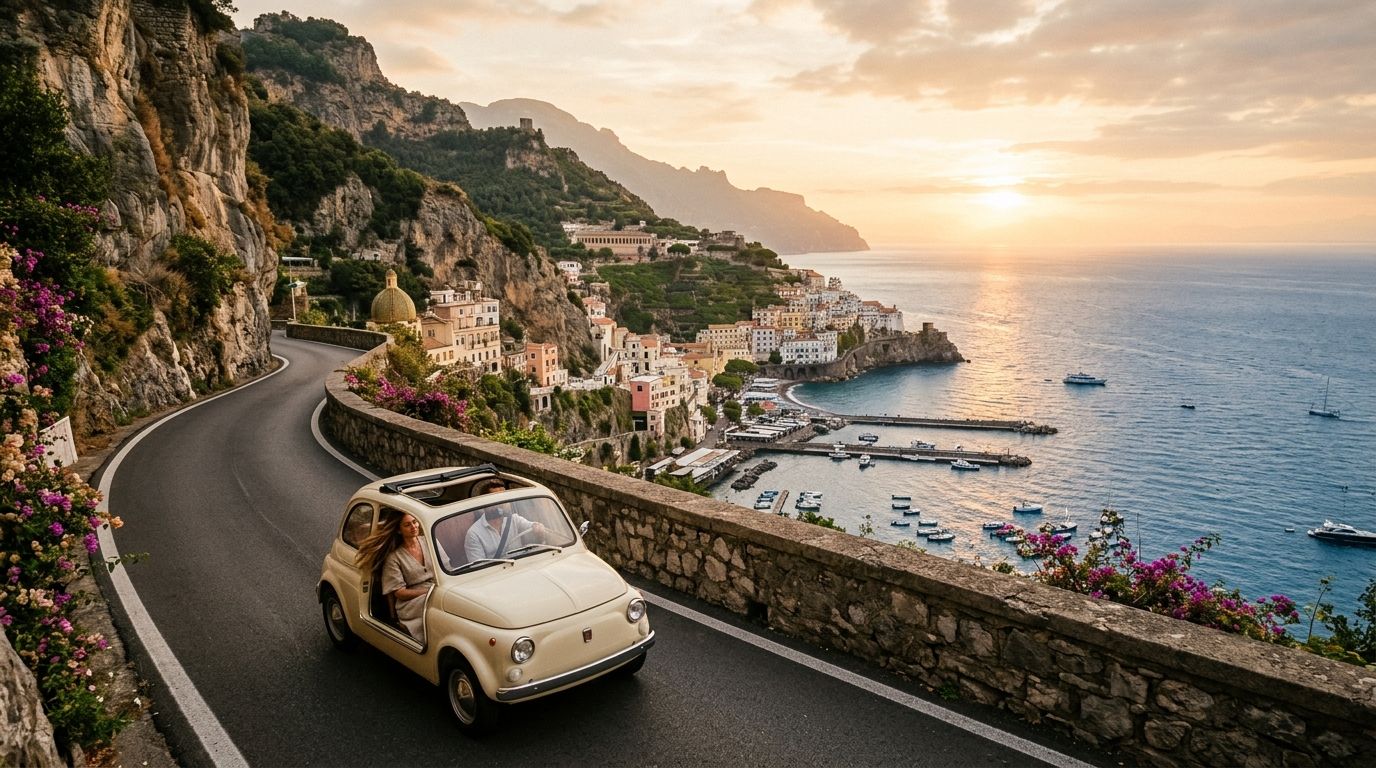
The Amalfi Coast is stunning but increasingly congested. If you go, go in May or September. In August, avoid it entirely.
Planning Your Visit: The Practical Part
When to Go
Avoid August. Just don't. Italians leave in August, and the country fills with tourists and shuts down partially. May or September are perfect—warm but not overwhelming, fewer crowds, everything's open.
April, late September, and October are also excellent. Winter (November to March) is quiet, cooler, and some smaller places reduce hours, but major cities run normally.
How Long
Ten days is the minimum for a meaningful visit. This allows you to hit Rome (3 days), Florence (2 days), maybe Tuscany or Venice (2 days), and travel time between places without feeling rushed.
If you have three weeks, add Naples, Pompeii, Amalfi Coast, and more time in smaller towns.
Getting Around
Italy's train system is genuinely good. Freccia trains between major cities are fast (Rome to Florence is 2 hours). Regional trains are slower but fine. Buses are cheaper but less comfortable. Trains run frequently, and you don't need to plan weeks ahead for decent prices.
Renting a car for Tuscany and Amalfi Coast makes sense if you want flexibility. Driving in city centers (Rome, Florence, Venice) is pointless and stressful—parking is difficult and expensive.
Crowds and Timing
Peak hours in museums: 10 a.m. to 4 p.m. Go early or late.
Peak months: June, July, August, September. If you can avoid these, do.
St. Mark's Square, the Colosseum, and the Uffizi: arrive by 8:30 a.m. or after 5 p.m.
Nearby Places Worth Your Time
Ravenna (from Rimini or Bologna) is a Byzantine mosaic treasure that nobody crowds into like Rome or Florence. A few hours here, and you'll see some of the most intricate mosaics surviving from the 5th and 6th centuries. It's worth a day trip.
Bologna (3 hours north of Florence) is a university city that feels alive in a way tourist cities don't. The food is legitimately the best in Italy—this is where tagliatelle al ragù comes from, and it tastes nothing like what you've had. The arcaded streets and red-brick buildings are beautiful without being precious.
Cinque Terre (on the coast) is five small villages connected by hiking trails. It's become touristy, but for good reason. If you go, stay overnight instead of day-tripping—you'll avoid most of the crowds and see how residents actually live there.
Is It Worth Your Time and Money?
Yes, but with conditions.
If you're expecting Italy to change your life or give you some profound spiritual awakening, you'll be disappointed. If you're looking for an Instagram aesthetic, you'll find it but probably won't enjoy the experience.
Italy is worth visiting because it's a functioning country with serious depth. The art and architecture are extraordinary, but that's not the main point. The main point is understanding how people have organized beauty, food, and daily life for centuries, and how that's still visible if you stop rushing.
It's expensive compared to many places. Budget for it. Good meals cost money. Good hotels cost money. But you don't need five-star restaurants—some of the best food is simple and affordable, if you eat where locals eat.
The crowds are real and frustrating. Accept this and plan accordingly (go early, go off-season). Don't let the crowds prevent you from going.
Quick Facts
- Best time: May, September, October
- Language: Italian (English spoken in tourist areas, but learning basics is helpful)
- Currency: Euro
- Time zone: Central European Time (GMT+1)
- Visa: EU citizens don't need visas; US, Canada, Australia, etc. get 90 days visa-free
- Internet: Good in cities, reasonable elsewhere. Get a local SIM card or eSIM
- Transport: Trains connect major cities reliably and cheaply
- Budget: €100-150/day for accommodation, €15-40 for meals (depending on style), €20-35 for museums
The Way Forward
Italy works best when you stop trying to optimize every moment and start accepting that some days will include long meals, slow walks, and not checking every box. This sounds like generic travel advice, but it's actually the only way Italy makes sense.
You'll understand Rome better sitting in a piazza with an espresso than rushing through the Colosseum. You'll appreciate Florence more by getting genuinely lost in backstreets than by planning the perfect museum route. You'll get Venice when you stop seeing it as a place to see and start seeing it as a place to move through.
The real work of Italy isn't seeing everything. It's learning to travel like an adult—with curiosity, without rushing, and with genuine interest in how places actually function.
Explore detailed routes, view travel videos, and find bookable activities on Touratu's interactive map. You can zoom into specific neighborhoods, see exactly where attractions are located relative to each other, and watch short videos of places before you visit. Plan your Italian journey with the routes others have already tested and refined.
Loading activities…
