
Israel Travel Guide: Things to Do & Routes
Israel: A Place That Refuses Easy Answers
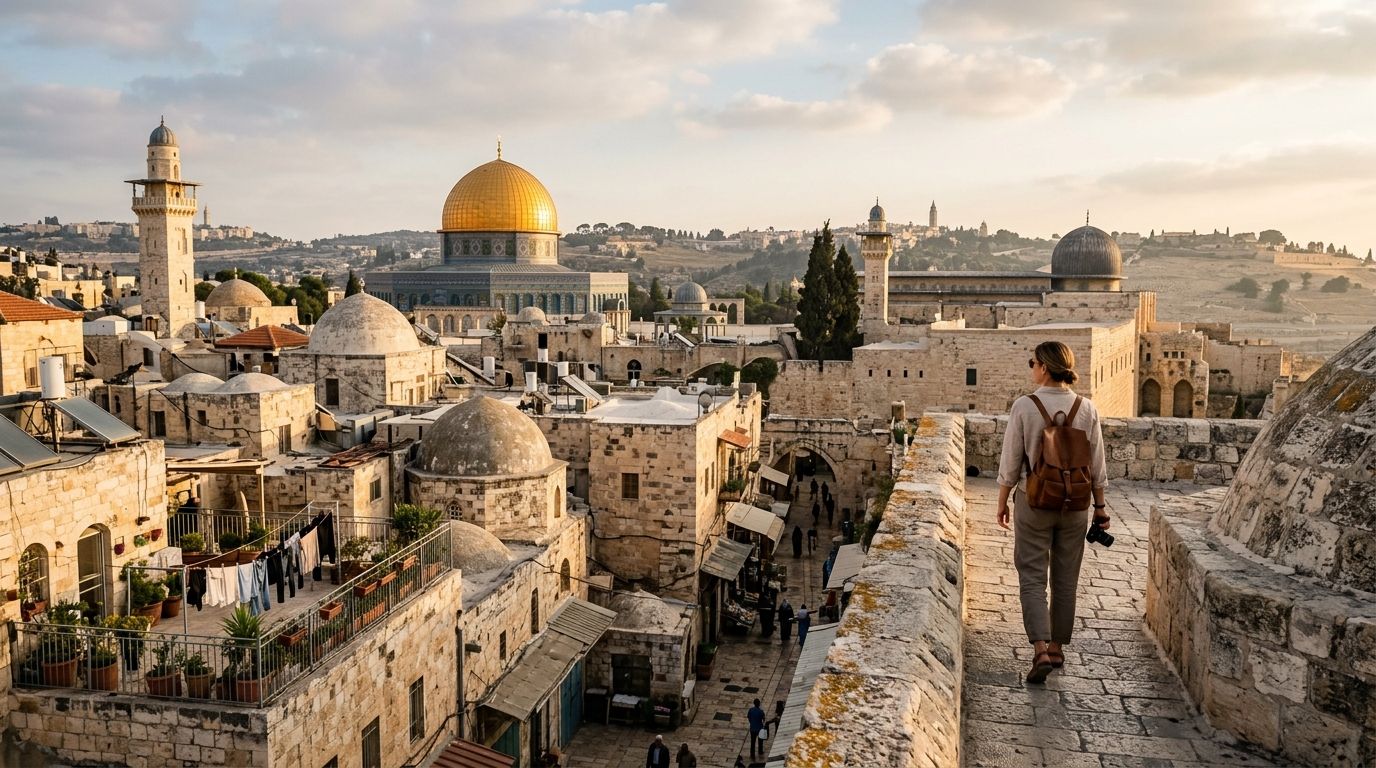
You stand at the Western Wall at dawn, before the tour groups arrive, and the light hits the ancient stone in that particular way that makes you understand why people have fought over this place for millennia. It's not because it's beautiful—though it is. It's because you can feel the weight of it. Centuries of prayer, grief, hope, and resentment are baked into those stones like sediment. This is Israel: a country where nearly every corner holds competing narratives, spiritual significance, and genuine human stories that don't fit neatly into any single frame.
Israel isn't a casual destination. It demands something from visitors—attention, openness, and a willingness to sit with complexity rather than resolve it. What makes it genuinely memorable isn't any single landmark, but the collision of the ancient and the contemporary, the sacred and the secular, the perfectly curated tourist trail and the neighborhoods where real life unfolds.
What Makes Israel Worth Your Attention
Israel works on a condensed scale. You can travel from Mediterranean beaches to the Dead Sea's lowest point on earth, from Bedouin villages to world-class restaurants, in a matter of hours. This density creates an intensity that larger countries take weeks to achieve.
The history here is layered to the point of confusion. Jerusalem, Tel Aviv, Jaffa, Akko, and Masada each contain multiple narratives—religious, political, personal. Most travelers arrive with preconceived notions shaped by news cycles and come away with something more textured. You'll meet ultra-Orthodox families who invite you to Friday Shabbat dinner. You'll eat Palestinian hummus in Jaffa that tastes like nothing you've had before. You'll walk through neighborhoods where galleries, startups, and century-old bakeries operate within blocks of each other.
The country is genuinely small—you can drive from north to south in under five hours—but the cultural differences between regions feel vast. The Negev Desert in the south has a frontier mentality. Tel Aviv feels like a Mediterranean city with serious tech industry ambitions. Jerusalem carries the weight of being one of humanity's spiritual epicenters. The Galilee has agricultural villages and hiking trails that few tourists venture to.
What to Expect: Moving Through the Country
Jerusalem is unavoidable, and it should be. The Old City is walkable but dense—narrow alleys, conflicting smells, vendors, pilgrims, and tourists occupying the same stone passages. The Western Wall area can feel overwhelming during daylight hours. The Church of the Holy Sepulchre, built over what Christians believe is the crucifixion site, is architecturally chaotic—it's actually shared between multiple denominations who control different chapels. First-time visitors often feel let down by its cramped, incense-heavy interior. But stand there and you're in the same space where people have prayed, argued, and grieved for nearly 2,000 years.
The Israel Museum houses an impressive collection, including biblical artifacts and Dead Sea Scrolls. The Yad Vashem Holocaust Memorial is emotionally devastating and essential. Many visitors spend three to four days here.
Tel Aviv is the country's pressure release valve. Mediterranean coastline, vibrant nightlife, serious restaurants, and a young population that feels less burdened by the country's historical weight. The city has an energy—cafés full of people working on laptops, galleries constantly opening, weekend beach parties, markets that feel alive. Jaffa, the historic port district attached to Tel Aviv, offers older architecture and a different demographic texture. It's worth wandering without a plan.
The Dead Sea is a specific experience: you float in water so dense with salt that your body simply will not sink. It's strange and slightly unsettling, not the blissful spa experience marketing materials suggest. The landscape is apocalyptic—the lowest point on Earth, barren, mineral-rich mud, intense heat. Masada, the fortress built by Herod overlooking the Dead Sea, offers genuine archaeological intrigue and excellent hiking (the Roman siege ramps are still visible). Most travelers cable car up and hike down.
The Galilee in the north is where you escape the tourist density. The Sea of Galilee (actually a freshwater lake) is ringed with small towns, religious sites, and hiking trails. Akko is a genuine surprise—a fortified port city from the Crusades with Ottoman architecture, a restored caravanserai, and a vibe that feels less stage-managed than Jerusalem. The northern coast near Haifa offers beaches and hiking without the crowds.
The Negev is desert travel. Beersheba is the largest city, but most visitors head to Mitzpe Ramon, a dramatic crater in the desert where you can arrange Jeep tours, hiking, and encounters with Bedouin communities. It requires more planning but feels genuinely removed from the tourist circuit.
Planning Your Visit: Timing and Logistics
Duration: Most meaningful visits are 10-14 days. You can cover the major sites in five days, but you'll feel rushed. Israel rewards slower travel in specific regions rather than racing between highlights.
Best time to visit: October-November (fall) and March-April (spring) offer moderate temperatures and fewer tourists than summer. Winter (December-February) is mild in the south but can be rainy in the north. Summer (June-September) is hot—sometimes reaching 40°C (104°F) in desert areas—but crowds are significant. Avoid traveling during Jewish holidays and Ramadan when transportation becomes chaotic and restaurants may have limited hours.
Getting around: You can rent a car and drive independently (the road infrastructure is excellent, and distances are manageable), use shared taxis (sheruts) between cities, or book local tours. Public transportation (buses and trains) is extensive but requires navigation. Most visitors combine driving with guided tours for complex sites like Masada.
Crowds: Israel attracts roughly 4 million tourists annually to a country of 9 million people. Popular sites—the Western Wall, Church of the Holy Sepulchre, Masada—can become deeply crowded, especially midday. Early morning and late afternoon visits significantly improve the experience. Mid-range hotels and restaurants are well-developed; luxury accommodations are also abundant, but budget options require more vetting.
Language and accessibility: Hebrew and Arabic are official languages; English is widely spoken in tourist areas, restaurants, and hotels. Hebrew is useful for reading signs and understanding daily culture; basic Arabic is useful if you spend time in Palestinian areas.
Currency: Israeli Shekel (ILS). Credit cards are widely accepted except in some smaller villages and Palestinian areas where cash is necessary.
Nearby Places Worth Your Time
Bethlehem/main-attractions/bethlehem) (West Bank): The birthplace of Jesus is technically in Palestinian territory, about an hour from Jerusalem. The Church of the Nativity is significant, though crowded. The separation wall and the political context require awareness before visiting. Many tours operate from Jerusalem; hiring a Palestinian guide enriches the context significantly.
The Dead Sea Salt Hotels: If you want to float in the Dead Sea but avoid the public beaches (which can be crowded and muddy), several hotels allow day-use access with proper facilities. It's a specific experience—mineral-rich water, therapeutic mud, and a landscape that looks like the moon.
Haifa: Less touristy than major destinations, Haifa is a working port city with the Baháʻí Gardens (a peaceful hillside terraced garden), a good museum, and beaches where locals actually swim.
Is It Worth Visiting?
Yes, absolutely—but with preparation. Israel isn't a destination where you can simply absorb scenery or relax passively. It demands engagement. If you're interested in history, faith traditions, how societies function under complexity, or simply experiencing a place that resists simplification, it's invaluable. If you're seeking relaxation or uncomplicated tourism, you'll find elements of it (the beaches, certain hiking areas, spa retreats), but that's not what the country primarily offers.
The food culture alone is worth the journey. Israeli cuisine blends Mediterranean and Middle Eastern traditions—hummus, falafel, shakshuka, fresh bread, grilled meats, fresh vegetables. Eating in Israel is eating seriously.
The people are direct, often blunt, and engage in conversation like you're already a friend. There's less superficial politeness than in many tourist destinations. This can feel refreshing or jarring depending on your expectations.
Quick Facts
- Capital: Jerusalem (though Tel Aviv is the seat of most government functions)
- Population: Approximately 9 million
- Area: 20,770 square kilometers (8,000 square miles)—smaller than Massachusetts
- Official Languages: Hebrew, Arabic
- Currency: Israeli Shekel (ILS)
- Best time to visit: October-November, March-April
- Time to spend: 10-14 days minimum
- Visa: Most nationalities receive 90-day tourist visas on arrival
Closing Thoughts
Israel changes how you think about tourism. It's not a place designed to make visitors comfortable or to offer neat narratives. It's a place where ancient stones coexist with cutting-edge technology, where multiple peoples claim the same land, where friendliness and political tension exist in the same breath. That friction is exactly what makes it worth visiting.
Start with the interactive map on Touratu, where you can explore routes connecting Jerusalem, Tel Aviv, the Dead Sea, and smaller regional routes. Watch travel videos that show how different regions connect and how to move between them logistically. Plan your itinerary with specific routes visible, bookmark sections for closer study, and build a realistic timeline. The Touratu platform lets you see bookable activities, accommodation options, and practical logistics all in one view—essential for a country where logistics matters.
Loading activities…
