
Ireland Travel Guide: Things to Do & Planning
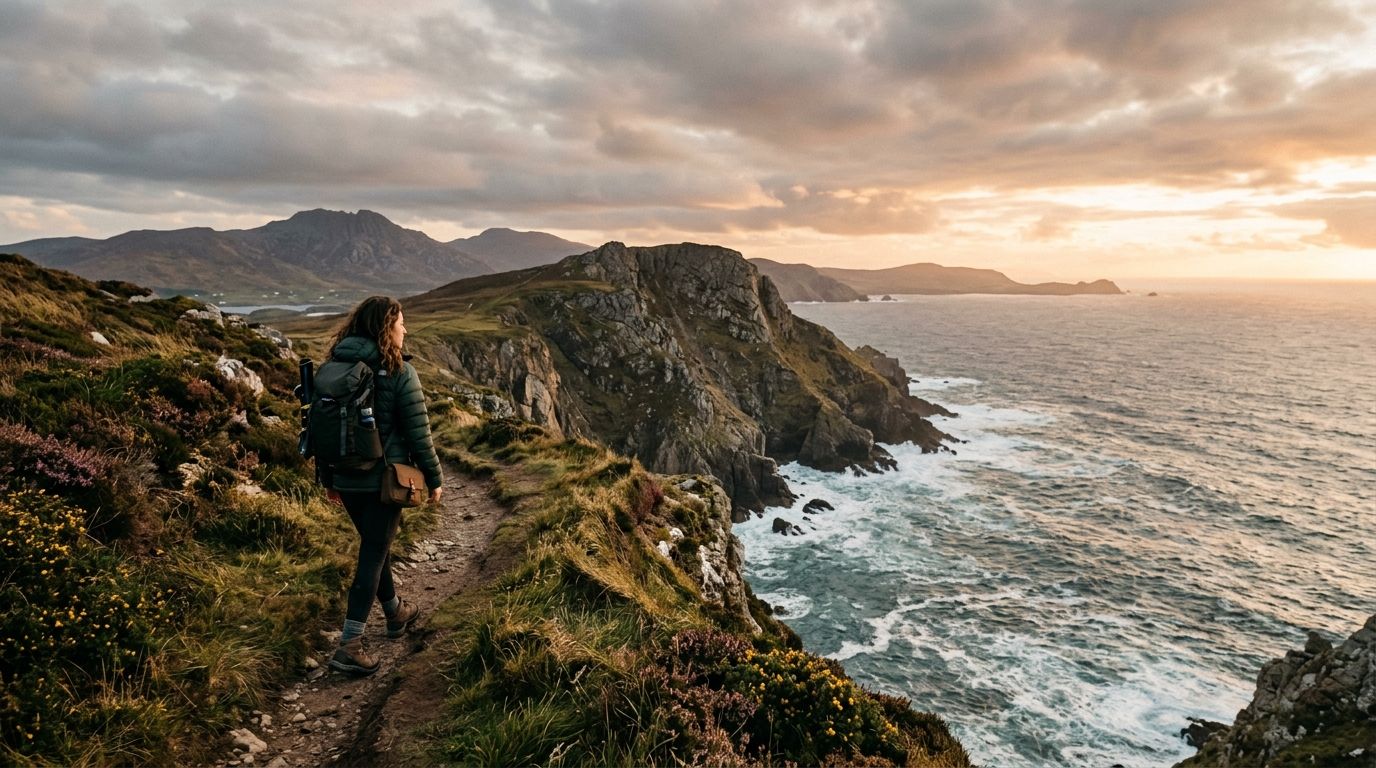
Ireland: Where Rain Tastes Like Stories
You step off the plane in Dublin and the first thing that hits you isn't the famously mild climate—it's the light. Not bright light, but a kind of diffused, almost amber-tinted softness that makes everything look like it's been filmed through old film stock. The taxi driver talks without pause while navigating streets that somehow feel both medieval and aggressively modern, and you realize within minutes that Ireland isn't a country you visit; it's a country you get talked into by people who've already won you over.
Ireland does this thing that few countries manage anymore. It hasn't completely optimized itself for tourism, despite tourism being crucial to its economy. Parts of it still feel like they're figuring out what to do with visitors. That's what makes it interesting.
Why Ireland Stays With People
I've watched Ireland affect different travelers in different ways. Some come for the literary heritage and end up obsessed with whiskey distilleries. Others arrive expecting moody, desolate landscapes and instead get emotional about the energy of Temple Bar on a Friday night. The country's actual strength isn't any single attraction—it's the way everything connects. A train journey from Cork to Dublin becomes memorable not because of a specific sight, but because you spend three hours watching the landscape change and a stranger shares their packed lunch because the train car is warm and the conversation is warm.
The Irish have perfected something pragmatists dismiss: being genuinely interested in other people. Sit in a pub for two hours, and you'll have had actual conversations, not transactional interactions. The bartender will ask where you're from, why you chose Ireland, what you think of the Guinness, and will have opinions on all of it. This extends to the entire experience. Museums have thoughtful placards that explain why things matter, not just what they are. Tour guides are usually people who actually grew up somewhere, not operators trained in hospitality script.
This matters because Ireland's attractions—while genuinely significant—are rarely the "spectacular" kind. There are no Everests or Great Walls. What you're paying for is context, story, and the Irish capacity to make you understand why something mattered enough to survive centuries.
What to Actually Expect
The Weather Reality: It will rain. Probably multiple times per day. This isn't a complication; it's part of the sensory experience. Rain in Ireland changes texture constantly—sometimes it's a fine mist you barely notice, sometimes it's aggressive. Proper waterproof jacket is non-negotiable. Also: layers. The temperature rarely hits extremes, but wind cuts through careless dressing.
Dublin: The capital is dense with history and commerce occupying the same streets. You'll find perfectly preserved medieval alleyways, then turn a corner into contemporary Irish design. The Guinness Storehouse is aggressively touristy, but the whiskey distilleries are genuinely interesting if you care about the production process. Trinity College is worth wandering through—not for the photo ops, but to get a sense of what Irish academia looks like. The Temple Bar district is authentically packed with tourists and locals drinking side-by-side, which is exactly what it's intended to be.
The West: This is where people go when they want scenery without architecture. The Cliffs of Moher are legitimately impressive, though you'll share the experience with hundreds of other visitors. The Aran Islands require actual commitment—ferry across Galway Bay, then either cycling or walking—which naturally limits crowds. The landscape here is stark: limestone, wind, minimal vegetation. It feels exposed in a way that's clarifying.
The Southwest: Cork and Kerry counties offer something different: pastoral rather than dramatic. Ring of Kerry is a circular drive through farmland that somehow never feels repetitive. Kinsale is one of the few Irish towns that actually feels like a place people want to be, rather than a destination that exists because it's obligatory.
The Southeast: Waterford, Wexford, and Tipperary are less visited than the west, which is precisely why they're worth the detour. You'll find monastic ruins, medieval towns, and landscapes that feel actively lived-in rather than preserved for viewing.
Planning Your Actual Visit
Best Time: May through September. July and August are peak season—warm (relative), long daylight, but crowded and prices climb. May and September offer better value and fewer crowds, though weather is less predictable. Winter is genuinely atmospheric if you don't mind rain and limited daylight.
Duration: Minimum three days to justify the flight. Four to five days starts to feel like you're actually experiencing something. Two weeks lets you slow down enough to notice the rhythm. Most visitors do 5-7 days and hit Dublin, the west coast, and one other region.
Getting Around: Renting a car gives you freedom but requires adapting to narrow roads and driving on the left. Trains connect major cities reliably but run on limited schedules. Buses are comprehensive and cheap but slow. Walking-based exploration of individual towns is highly effective—Irish towns reward wandering.
Crowds: Dublin is perpetually busy. Everything involving Cliffs of Moher requires arriving early or going off-season. Regional towns are often nearly empty outside summer, which is either perfect or eerie depending on your preference.
Budget Reality: Ireland is expensive by European standards, especially if you're eating and drinking in touristy areas. Accommodation outside Dublin is cheaper. Pub meals are reasonable and usually generous. Attractions charge admission—expect €12-18 for most museums, €15+ for experience-based attractions.
Close By Worth Considering
Northern Ireland: Not technically separate from the island experience, but culturally distinct. Belfast is a city that's genuinely grappling with its recent history in visible ways. The Giant's Causeway is geological oddity rather than conventional scenic beauty. The political dimensions make it feel less like "ticking boxes" and more like witnessing an actual place.
The Midlands: Athlone and surrounding areas are skipped by most tourists. They're genuinely ordinary in ways that give you insight into how Irish people actually live when they're not performing hospitality.
Dingle Peninsula: Less visited than Ring of Kerry, feels more remote, has an actual working fishing town that happens to be appealing rather than a town designed around tourism.
Is This Worth Your Time and Money?
Honestly: it depends what you're seeking. If you want dramatic landscapes, the west coast delivers on that. If you want literary history, Dublin rewards deep exploration. If you want genuine cultural immersion over two weeks, you can get it. If you want a quick three-day city break, Dublin works, though you'll feel like you've barely touched the country.
Where Ireland underperforms: it's not dramatically beautiful by world standards. Thermal activity? No. Jungles? No. Turquoise water? The coastline is rocky and Atlantic temperatures are cold. What it offers instead is completeness—you can understand an entire country, its history, its literature, its sense of humor, and its relationship with landscape and community in a focused visit. It's not a country of infinite variety; it's a country of recognizable coherence.
Go if: You like history with personality. You want pubs that function as social centers, not theme park attractions. You're interested in landscape without climbers and extreme adventure. You read Irish literature or are curious why it exists. You have time to slow down. You're willing to embrace rain.
Skip if: You're measuring experiences against social media aesthetics. You want guaranteed sunshine. You prefer crowds as entertainment. You need accessibility for mobility challenges (narrow streets and stairs are standard). You get frustrated by weather.
The Practical Details
- Language: English. Regional accents are heavy and take adjustment.
- Currency: Euro (Northern Ireland uses pounds sterling).
- Electrical: 230V, Type G plugs (UK-style three rectangular prongs).
- Getting There: Direct flights from most major cities. Budget carriers operate extensively.
- Visa: EU/US/CA/AU citizens generally get standard tourist entry.
- Best Pub Time: 9pm-11pm weekdays, 10pm-midnight weekends, but the opening time (3pm for some) through evening is when locals genuinely congregate.
Ireland rewards the traveler willing to slow down and notice details. It's not trying to be spectacular—it's just a place where people have built lives, preserved history, and developed a particular way of interacting with each other and with landscape over many centuries. That's the actual appeal.
For detailed route planning, video walkthroughs of neighborhoods, and to explore how different regions connect, check out Touratu's interactive map of Ireland. It lets you build your own journey, see actual on-ground footage, and discover bookable experiences beyond standard tourist loops.
Loading activities…
