
Ionian Islands Greece: Best Places to Visit
Ionian Islands: Where Greek Tradition Meets Authentic Slowness
The ferry cuts through water the colour of wet slate, and you're standing on the deck wondering if you've taken a wrong turn into someone else's holiday. The Ionian Sea doesn't perform like the Aegean—it doesn't glitter theatrically or demand your phone camera. Instead, it moves in quiet gradients: olive groves meeting limestone cliffs, stone villages emerging from morning mist, and the kind of light that doesn't photograph well because it exists primarily in the margin between seasons.
This is the Ionian Islands archipelago, and everything you think you know about Greek islands is incomplete.
What Makes These Islands Different
Most people arrive in Greece chasing the postcard version: whitewashed cubes, sapphire water, that particular brand of Mediterranean leisure. The Ionians exist in a different conversation entirely. Geographically separated from their Aegean cousins by mainland Greece, they inherited a different history, a different temperament, and frankly, a different kind of traveller.
The islands—primarily Corfu, Cephalonia, Zakynthos, Lefkada, Ithaca, Kefalonia, and Paxos—were under Venetian and later British rule. You notice this in the architecture: Italian arcades in old town squares, Victorian shutters, the way buildings cluster with purposeful density rather than scattered whitewashed chaos. There's a European formality mixed with Greek warmth, creating something that feels less manicured than the southern islands but more deliberate.
The second thing you notice is the greenness. The Ionians catch moisture from Atlantic weather systems. Cypress, olive, and pine forests cover the hillsides. Villages have actual gardens. Streams actually run water. After the severe bleached beauty of the Cyclades, it can feel almost lush—which is precisely why fewer cruise ships stop here and why the tourism infrastructure hasn't consumed everything.
The Islands Worth Your Time
Corfu is the northernmost and most developed, but in ways that feel organic rather than imposed. Kerkira town has genuine architecture and energy—narrow streets where locals still outnumber visitors, cafés where Greek men play backgammon without performing, tavernas where the food appears because it's dinnertime, not because they sensed a tourist. The Old Fortress offers views that settle something in your chest. The island's west coast has red cliffs and genuine isolation; villages like Paleokastritsa feel suspended between tourism and actual life.
Cephalonia is larger and quieter than Corfu, with the kind of geography that rewards getting lost. Myrtos Beach genuinely justifies its reputation—a horseshoe of limestone cliffs dropping to water so transparent you can see the seafloor at 20 metres. But the real discovery is wandering inland: villages like Assos perched impossibly on peninsulas, Melissani Cave with its underground salt lake, the wine region around Robola where family producers still use methods their grandfathers designed.
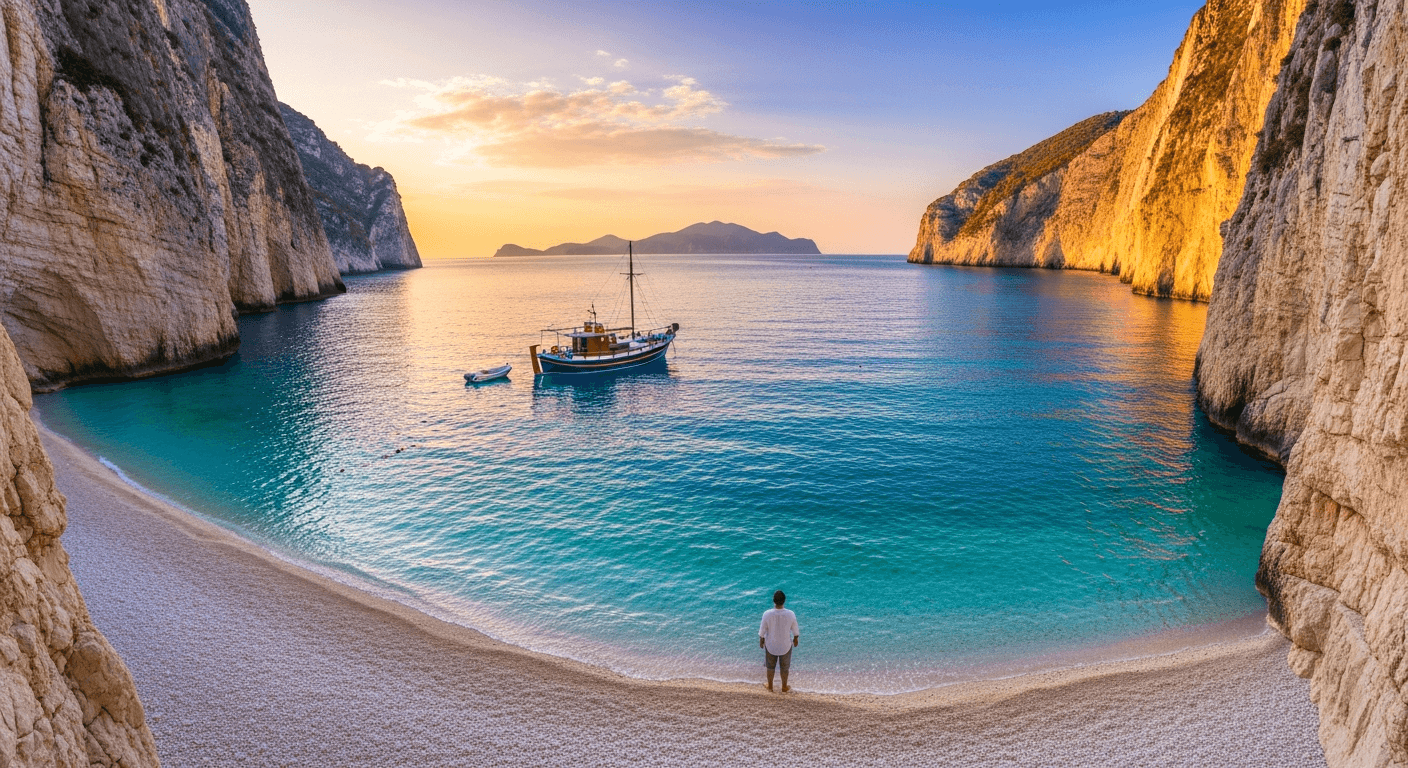
Zakynthos is where the famous loggerhead sea turtles nest—this isn't marketing copy, it's biology. The island's southern coast protects a critical breeding ground, which means restrictions on beach access during nesting season. Navagio Beach, accessible only by boat, still lives up to the hype: a shipwreck on sand between vertical cliffs. The island manages somehow to be both famous and still functional as a place where people actually live.
Lefkada is technically connected to the mainland by causeway, which explains why it feels slightly less island-like but also less precious. The west coast is dramatic—white cliffs dropping to impossible water—but the real character is in villages like Nydri and the quieter eastern shore. It's the kind of island you can move through without constantly thinking about whether you're having the correct experience.
Ithaca is small enough that you can drive across it in 45 minutes but significant enough in mythology and actual geography to deserve two or three days. It's where Odysseus was supposedly born, which explains the literary pilgrimage feeling of walking through villages where nothing much has changed since that story stopped mattering. The bay at Fiscardo is almost comically perfect. The interior roads wind through Mediterranean scrub toward views that surprise you because you weren't looking for them.
Paxos is tiny—you can walk most of it in a day—but its dimensions create intimacy rather than limitation. There's one small town, Gaios, with Venetian fortresses on islets offshore. The rest is coastal paths, olive groves, and the kind of silence that becomes noticeable.
What the Experience Actually Feels Like
You'll spend mornings not knowing exactly what day it is. This isn't a metaphor—it's a genuine feature of island time when you're moving between smaller places without rigid plans. You'll eat lunch when restaurants open (usually 1 pm) rather than when you're hungry. You'll discover that Greek hospitality isn't performed; it's structural. An elderly woman in a taverna will decide you need more olive oil on your salad and add it while you're not looking.
You'll notice the light changes differently than you expected. The landscape has actual seasons—you see brown earth, green water, grey sky—not the relentless blue-on-white of the Aegean. You'll develop opinions about which taverna makes better tzatziki. You'll understand why people return to the same island every summer for decades.
Hiking is genuinely possible here. The terrain is steep and often unmaintained, but paths exist linking villages, following coastlines, ascending to viewpoints that require actual effort. This means you see the islands as geography, not as backdrop.
Beach culture is different. Some beaches are organized with sunbeds; others are accessed by boat or difficult paths. This creates a natural sorting mechanism where serious swimmers and explorers find solitude while social swimmers gather in towns. You can usually find genuine solitude on weekday mornings, even in summer.
Planning Your Visit: The Practical Version
Timing matters more than you think. June and September are optimal—warm water, manageable crowds, and the island rhythms still functioning. July and August are crowded with good reason (the weather is stable) but everything moves slower because of congestion. May and October are genuine wildcard months: fewer people, slightly unpredictable weather, but islands that function like normal places rather than tourism operations.
Duration: Three days is the minimum for one island and feels rushed. Five to seven days lets you actually settle somewhere. Two weeks means you can island-hop reasonably without constant logistical stress.
Getting there: Fly into Corfu or Athens. From Athens, ferries run to all major islands—journeys take 8-12 hours depending on destination. This isn't fast but it's genuinely pleasant if you're not in a hurry. Corfu has its own airport with European connections. Once on an island, ferries link them, though schedules require flexibility and sometimes patience.
Transport: Renting a car or scooter is worth it for island exploration, though roads are narrow and parking requires acceptance that some villages simply aren't accessible by vehicle. Buses run between main towns but with sparse frequency outside summer. Walking is viable if you're comfortable with long sunny climbs and poor signage.
Accommodation: Stays in towns feel more authentic than isolated villas, but villas exist if you prefer privacy. Small family-run hotels vastly outnumber chains. Book ahead July-August, but May-June and September you'll find space walking in.
Cost: Less expensive than Santorini or Mykonos, more than you might expect if you're eating at tavernas consistently. Figure €60-100 daily for midrange travel (basic room, meals, transport).
What to bring: Comfortable walking shoes for variable terrain. A jacket—the sea breeze is real. Books and patience for boat delays. A willingness to ask directions repeatedly.
Nearby Worth Knowing About
The Greek mainland (Epirus region) is a ferry hop and feels completely different—dramatic mountain terrain, Byzantine monasteries, minimal tourism. Meteora (actually central Greece) is overdone but genuinely extraordinary. The Peloponnese is accessible from some islands and contains the archaeological infrastructure (Delphi, Olympia) that the Ionians deliberately lack.
Is It Actually Worth Your Time?
Yes, but with caveats. The Ionian Islands reward patience and punish rigid itineraries. You need to be comfortable with ferry delays, unpredictable restaurants, and the possibility of arriving in a village at the exact moment it closes for siesta. You need to enjoy walking, reading, and sitting in cafés without constant stimulation.
You should not come expecting undiscovered paradise—word has spread, and tourism infrastructure exists. You should come expecting Greece that functions like a place rather than a theme park. Come expecting landscapes that are beautiful without requiring you to say it. Come expecting to spend four days in one village and understand why that's valuable.
The Ionian Islands aren't transcendent. They're something quieter: they're genuinely livable, architecturally interesting, geographically varied, and respectful of visitors without performing for them. They're where Greeks go when they want to feel Greek, not where they go to feel holiday-famous.
Quick Facts
- Best time: June, September
- Language: Greek (English widely spoken in tourism areas)
- Currency: Euro
- Getting around: Ferry between islands, rental car within islands
- Water temperature: Swimmable May-October (warmest August)
- Average budget: €70-90 daily
The Ionian Islands reward showing up without perfect information and discovering what matters to you rather than what matters to photography algorithms. Use Touratu's interactive map to plot routes between islands, compare ferry schedules, and watch travel videos from visitors who've navigated these waters before you. The practical details matter less than the decision to stay curious rather than rushed.
Loading activities…
