
Hungary Travel Guide: Things to Do & Thermal Baths
Hungary: Where Thermal Waters Meet Medieval Stories
The moment the taxi pulls away from Budapest Ferenc Liszt Airport, you notice something shifts in the light. It's softer here—the sky seems to stretch differently over this flat landscape, and the Danube, when you glimpse it, looks darker and more deliberate than you expected. Hungary doesn't announce itself with dramatic geography. It whispers instead, through architecture that survived wars, through thermal baths that have been welcoming tired bodies for centuries, through the particular sadness of a culture that's been occupied, liberated, and reinvented more times than most countries.
This is the Hungary worth understanding—not as a box to tick on a Central European tour, but as a place where history isn't museum-confined. It leaks into the cafés, the streets, the way locals regard the world with a certain knowing humor.
What Actually Makes Hungary Stay With You
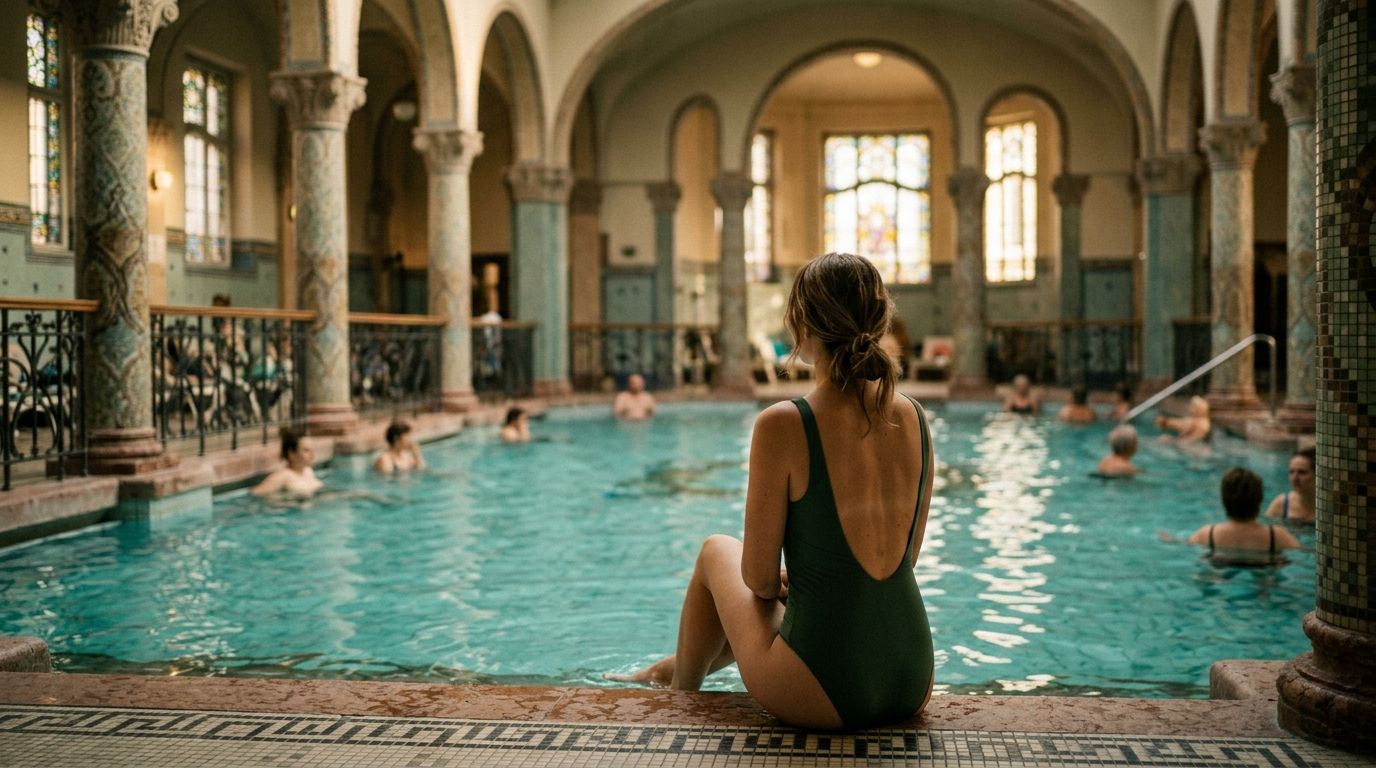
Hungary works on you slowly. You don't arrive and have everything solved by sunset. Instead, you accumulate moments: the smell of paprika in a market stall on a cold morning, the acoustic properties of a bath house at 6 AM when you're mostly alone, the view from the Fisherman's Bastion when the light turns everything across the Danube into something cinematic without trying.
What people consistently underestimate about Hungary is how much of it exists beyond Budapest. The capital gets the attention—and fair enough, it's a stunning city with genuine substance—but the country's actual character lives in smaller towns, lakeside villages, and the wine regions where people still understand production methods their grandparents used.
The thermal culture is real, not marketing. Hungarians aren't visiting these baths ironically or for Instagram content. They're actually there to soak, to think, to move bodies that ache. When you sit in Széchenyi Thermal Bath's outdoor pool in the middle of winter, steam rising around you, locals playing chess on floating boards, you're not experiencing tourism. You're experiencing a social institution that predates most modern concepts of wellness by centuries.
Walking Through the Hungarian Experience
Budapest: Most visitors start here, reasonably. The city rewards wandering more than planning. The Parliament Building is enormous and ornate—intentionally so, built during Austria-Hungary's final decades as a statement of Hungarian national identity. You can tour it, but honestly, the exterior tells you more than the interior. Walk across the Széchenyi Chain Bridge at dusk. The city lights reflecting in the Danube aren't manipulated by anyone. They're just there.
The Jewish Quarter is dense with history that feels current. The Great Synagogue is architectural excess in marble and gold, which somehow makes the Holocaust memorial in the courtyard—a willow tree made of metal leaves, each inscribed with a name—more devastating. This is where Budapest gets serious.
Ruin bars are what they are: old buildings, alcohol, young people. They're fine. If you want to drink in a stripped-back communist-era apartment with mismatched furniture, Szimpla Kert is the original. It's crowded. There are better places for drinks, but there's something honest about the concept.
The thermal baths are where the real experience lives. Széchenyi is touristy but legitimately extraordinary—the neo-baroque building is ridiculous, and the outdoor pools in winter create a sort of temporal confusion. Gellért has more elegance and fewer tourists. Rudas is oldest, smaller, and if you go early, feels like you've discovered something locals are protecting.
Lake Balaton: Two hours from Budapest, this is Central Europe's largest freshwater lake. It's not a pristine alpine mirror. It's shallow, murky in places, occasionally smells faintly of algae. Locals love it unconditionally anyway. The south shore is where Budapest residents come to decompress—resort towns, wine bars, people swimming seriously rather than posing. The north shore is hillier, with towns like Tihany that have actual architecture and quieter energy. Balaton works in summer. Winter, it's just cold and empty.
Eger: A proper small city, about two hours northeast of Budapest. This is where Hungary's wine culture actually happens. The town center has baroque buildings, a castle with views worth climbing for, and a main square where people still apparently choose to walk instead of drive. The nearby wine region produces reds (Egri Bikavér—Bull's Blood) that taste better in context than they sound in translation. The thermal bath here is smaller than Budapest's, which is precisely why it's worth visiting.
Győr: Between Budapest and Austria, this city gets overlooked. It shouldn't. The old town is genuinely walkable, the Danube actually passes through it, and there's no tourism infrastructure strangling the place. Hotels are cheaper. Restaurants serve food without tourist markup. It's what Budapest was before it became the capital everyone wanted to visit.
Planning Your Actual Visit
Timing matters, but not how you'd think: Summer is obvious—warm, the lake is swimmable, everything's open. But Hungary in May is actually better. The weather is reliable, the thermal baths are still emptier, and the light quality is exceptional. October works similarly. Winter is legitimate if you're willing to accept cold and shorter days. The thermal baths are paradoxically better in cold months—the temperature differential makes the experience more acute.
Duration: Three to four days gets you Budapest properly and one secondary destination. A week lets you understand the country's actual rhythms. Two weeks means you can move slowly enough to notice things.
Getting there: Flying into Budapest is easiest. Ryanair makes it cheap, which means crowded, but functional. The airport is 20 kilometers away—buses are reliable and cheap, taxis are predictable if you use Über or Bolt instead of hailing on the street.
Internal movement: Trains work. The rail network connects major towns logically. Buses are often faster and cheaper but more unpredictable. Renting a car makes sense if you're spending more than a week and want flexibility around smaller wine villages or smaller towns. Roads are reasonable, driving feels safe, Hungarians are surprisingly courteous drivers.
Crowds: Budapest is crowded year-round now. That's just the reality. But it's crowded in ways that feel manageable if you're not expecting solitude. The secondary towns are rarely overrun. Lake Balaton gets genuinely busy in July-August. Everything else is accessible without reservation anxiety.
Money: Hungary is cheaper than Western Europe but more expensive than when travelers used to describe it. A decent meal is 12-18 euros. Thermal baths cost 15-20 euros. Hotels range wildly—you can find reasonable places in Budapest for 40-50 euros if you're not in the center. Wine is cheap and good. Food is better value than anywhere else in Central Europe.
The Places Around Hungary Worth Knowing About
Bratislava, Slovakia: Two hours north by train. A small capital with less infrastructure than Budapest but similar architectural density. The Danube does interesting things here. A day visit is reasonable if you're curious about how similar yet distinct Central European cities feel.
Vienna, Austria: Three hours west. The obvious comparison point, and why Hungary feels less pretentious. Vienna is beautiful but mannered. Budapest is beautiful and lived-in. Vienna's worth visiting, but don't conflate grandeur with depth.
Transylvania, Romania: The longer journey (8+ hours), but the landscape changes entirely. Medieval towns, Orthodox monasteries, mountains that actually have presence. If you're committing to the region, this is where you understand Eastern Europe isn't a monolith.
Is Hungary Actually Worth Your Time?
Yes, with qualifications. Hungary won't transform you. It won't give you that particular travel high that makes you rethink your existence. It's not that kind of place.
What it will do is let you understand how a country survives cultural occupation, how communities build identity through food and ritual, how architecture tells political stories if you're paying attention. It's a place for travelers who like observation more than sensation-seeking.
The thermal baths will feel genuinely restorative, not because they're magical, but because sitting in hot water while thinking is a fundamentally human thing. Budapest will surprise you with moments of beauty that feel accidental. The wine will be better than you expected. The people will be drier and funnier than the guidebooks suggest.
It's a good country for medium-length visits where you're willing to walk around without a rigid itinerary. It's less good if you need everything organized or if you're collecting dramatic landscape photos.
Quick Facts
- Capital: Budapest
- Population: ~9.7 million
- Language: Hungarian (not Indo-European, entirely different system)
- Currency: Hungarian Forint (though many places accept euros)
- Best time to visit: May-June or September-October
- Typical daily cost: €40-60 for budget travel, €100-150 for comfortable travel
- Visa requirements: EU/Schengen area—Americans, Canadians, Australians get 90 days visa-free
- Getting around: Trains, buses, or rental car—all functional
Hungary asks you to slow down slightly, to notice details, to sit in warm water while your mind settles. It's not the loudest voice in the room, but it has something genuine to say. Start in Budapest, understand it beyond the Parliament Building and tourist routes, then venture to a smaller town where you can actually observe how people structure their time. Use Touratu's interactive map to explore different routes through the country—the platform makes it genuinely easy to see how towns connect and what the landscape between places actually looks like. Their travel videos show the thermal baths at different times of day and the actual rhythm of Hungarian life, which matters more than any static image. Once you see how the country actually moves, you'll understand what you came for.
Loading activities…
