
Germany Travel Guide: Top Things to Do
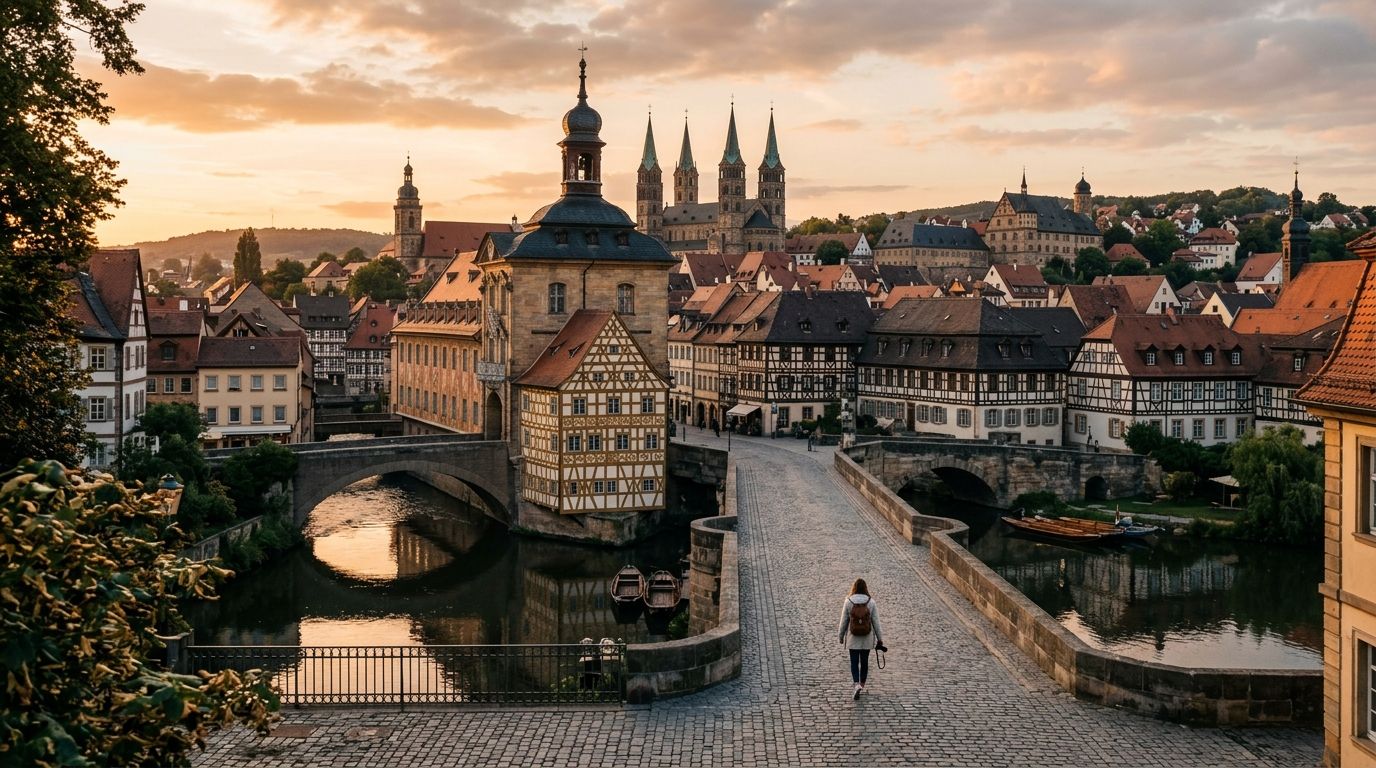
Germany: What Actually Happens When You Show Up
The first thing that hits you about Germany isn't what the guidebooks prepare you for. It's not the fairy-tale castles or the efficiency everyone romanticizes. It's the quiet. You'll be standing on a platform in Berlin at 6 AM, or walking through a Munich beer hall at 11 PM, and you'll notice people behave like they've made an agreement with each other about how to exist together. There's a directness to it. A respect. And that changes how travel feels here.
Germany doesn't whisper. It doesn't need to.
Over the past decade, I've watched Germany shift in how it presents itself to travellers. The country stopped trying to be what outsiders expected and started being what it actually is: a place of genuine contradictions. Medieval towns exist next to cutting-edge design districts. Beer gardens operate by centuries-old rules while craft cocktail bars experiment with fermentation science. This isn't a contradiction that feels forced—it's authentic to how Germans live.
What Actually Makes Germany Stick With You
Most people arrive thinking about specific landmarks. The Neuschwanstein Castle. The Brandenburg Gate. The Cologne Cathedral. These are real, and they're worth seeing, but they're not why people actually remember Germany. What stays with you is the texture of daily life.
It's the way a baker in Stuttgart knows exactly how long sourdough should proof. It's the precision of public transport that works so reliably you stop noticing it—until you leave and realize how remarkable that is. It's the conversation with a stranger at a Stammtisch (regular's table) in a Bavarian village who has opinions about everything and doesn't soften them for politeness. It's the gardens. Every German city seems designed with the assumption that people want green space, quiet corners, and places to sit without being sold something.
Beer culture gets discussed endlessly, but what's actually interesting is the philosophy behind it: beer as something to be consumed slowly, often with food and conversation, often with the same group of people in the same place every week. It's not about getting drunk. It's about ritual.
The architectural narrative is worth paying attention to as well. You'll see half-timbered medieval structures standing next to Bauhaus buildings standing next to modern glass interventions. Most cities didn't bulldoze their histories—they layered over them. Berlin is perhaps the most obvious example, but even smaller towns tell this story of interruption, destruction, and reconstruction.
What to Expect: Region by Region
Berlin is the entry point for most travellers, and the city rewards curiosity more than it rewards guidebook checking. Expect to get lost in Kreuzberg and stumble into a café that becomes your third place within an hour. The Wall remnants are unavoidable (and important), but the real Berlin is in the neighbourhoods: Charlottenburg for architectural dignity, Neukölln for experimental culture, Prenzlauer Berg for what happens when gentrification tries very hard to seem organic.
The Reichstag visit requires booking ahead. The East Side Gallery murals are genuinely moving if you go early enough to avoid the crowds and the people trying to sell you overpriced beer. The museums on Museum Island are substantial—plan half a day minimum.
Bavaria operates by different rules. Munich feels more orderly, more polished, more obviously Bavarian than Berlin feels Berliner. The Englischer Garten is the world's largest urban park, and yes, people actually surf on the Eisbach river in the middle of the city. Neuschwanstein Castle demands a day trip—go to Füssen and avoid the main tourist route if you can stomach a hike. The castle itself is surprisingly intimate inside despite its theatrical exterior.
The beer halls (Hofbräuhaus especially) are authentic institutions, not theme parks, though they've definitely become more theme-park-adjacent. Go, eat, sit with strangers, experience it. The beer is good. The food is exactly as heavy as it seems.
The Rhine Valley and Cologne exist in a different temporal layer. The cathedral in Cologne is one of those rare structures that justifies the hype—not because it's beautiful (it is) but because it represents something about human persistence. It took nearly 600 years to complete. Walking along the Rhine, through wine country in towns like Bacharach or St. Goar, feels like moving through a Romantic-era painting. People actually live here, though. It's not a museum.
Stuttgart and the Southwest rarely make traveller itineraries, which is precisely why they should. Mercedes-Benz Museum is unexpectedly excellent (it's not just cars; it's industrial philosophy). The wine regions around Stuttgart produce serious Rieslings. The Swabian culture—the food, the dialect, the attitude—feels distinctly different from Bavaria or Berlin.
Hamburg is the country's most oceanic city, with the elegance that comes from being a major port for centuries. The Speicherstadt (warehouse district) is architecturally stunning. The Reeperbahn is Europe's most famous red-light district and operates with a practical Germanic efficiency that somehow makes it less sleazy than you'd expect.
Planning Your Visit: The Practical Reality
When to go: May through September is reliable. June has the longest days (the sun doesn't set until nearly 11 PM in the north). July and August are warmest but busiest. April and October are underrated—fewer tourists, still pleasant, and you'll see local life happening more naturally.
Winter is a completely different experience. Christmas markets are genuine (not set up for tourists—Germans have celebrated this way for centuries). December is atmospheric but cold and dark by 4:30 PM. You'll need appropriate clothing.
How long: Two weeks is minimum if you want to experience more than Berlin. Ten days works if you're selective (Berlin-Munich-one secondary city). Four weeks is where Germany actually reveals itself—you stop being a tourist and start noticing the things that don't appear in descriptions.
Transportation: The rail system is genuinely excellent. Buy a German Rail pass if you're doing multiple cities, but calculate whether it's cheaper than individual tickets (it often isn't for inter-city travel). Regional trains are slower but cheaper and show you actual landscape and towns instead of highway views.
Berlin's public transport is so good you'll never need a car. Munich's is similarly solid. For the Rhine Valley and rural areas, a car becomes useful, though trains work if you're patient.
Crowds and reality check: Berlin is crowded. The major attractions have lines. Go early or accept the crowds. The Christmas markets in December are genuinely mobbed—beautiful, but mobbed. Spring and fall handle tourists much more gracefully.
Regional cities are notably less crowded but also less obviously impressive. Trier (oldest city in Germany) is lovely and quiet. Heidelberg is touristy but manages to remain functional. Dresden is recovering its grandeur and rewards a 24-hour stop.
Nearby Places Worth Your Time
Prague (4 hours from Berlin by train) is different enough that it functions as a trip extension rather than a day trip. Different country, different history, different energy. But if you're in Berlin, adding Prague is logical.
Austria (3 hours from Munich to Salzburg) operates as cultural continuation. Salzburg and Hallstatt are crowded tourist destinations that still deserve visiting. The Alpine landscape shifts register.
Polish border regions (Kraków is 7 hours from Berlin) are increasingly accessible and offer a notably different historical and cultural narrative. Worth understanding as part of Central European context.
Is It Actually Worth Visiting?
Yes, but not for the reasons the marketing materials suggest. Germany works because Germans have built a culture that functions well and asks visitors to participate in it rather than perform for it. You'll experience genuine efficiency, deliberate design, food that prioritizes flavour over novelty, and beer culture that's about something deeper than intoxication.
It's not Instagram-dramatic in most places. It's not exotic. It's remarkably comfortable, which sounds boring until you realize how rare that is in travel.
The history is unavoidable and important. The innovation (in design, engineering, food culture) is present but not advertised. The natural landscape is beautiful without being wilderness—managed, cared for, accessible.
Go if you want to understand how a culture functions at scale. Go if you want good beer, good bread, good sausage, and no apologies for any of it. Go if you're curious about how a country rebuilds itself multiple times and somehow contains all those versions simultaneously.
Skip it if you need constant excitement or visual drama. Skip it if you resent efficiency or find directness uncomfortable.
Quick Facts
- Capital: Berlin
- Language: German (English is widely spoken in major cities)
- Currency: Euro
- Best transit pass: Deutsche Bahn (German Railways)
- Visa: Schengen (check requirements for your nationality)
- Local tip: Restaurant bills don't include tip; add 5-10%. Tipping isn't obligatory but is expected.
- Cultural thing to know: Punctuality is genuinely important; being late is considered disrespectful.
Germany rewards the kind of travel where you're patient enough to let moments develop rather than rushing between photo opportunities. It's a country that reveals itself through conversation, routine, and attention to how things are made and why. The castles are there if you want them, but the real insight comes from sitting in a beer garden for two hours with the same group of people, or understanding why a German bakery has 12 types of bread, or watching how a city has chosen to remember and rebuild its difficult history.
Use Touratu's interactive map to plot your route through Germany's regions, preview travel videos that show actual daily rhythms rather than highlight reels, and find bookable activities that fit your interests rather than tourist itineraries. The map connects routes between cities and shows what's possible for different trip lengths and seasons.
Loading activities…
