
France Travel Guide: Maps, Videos & Activities
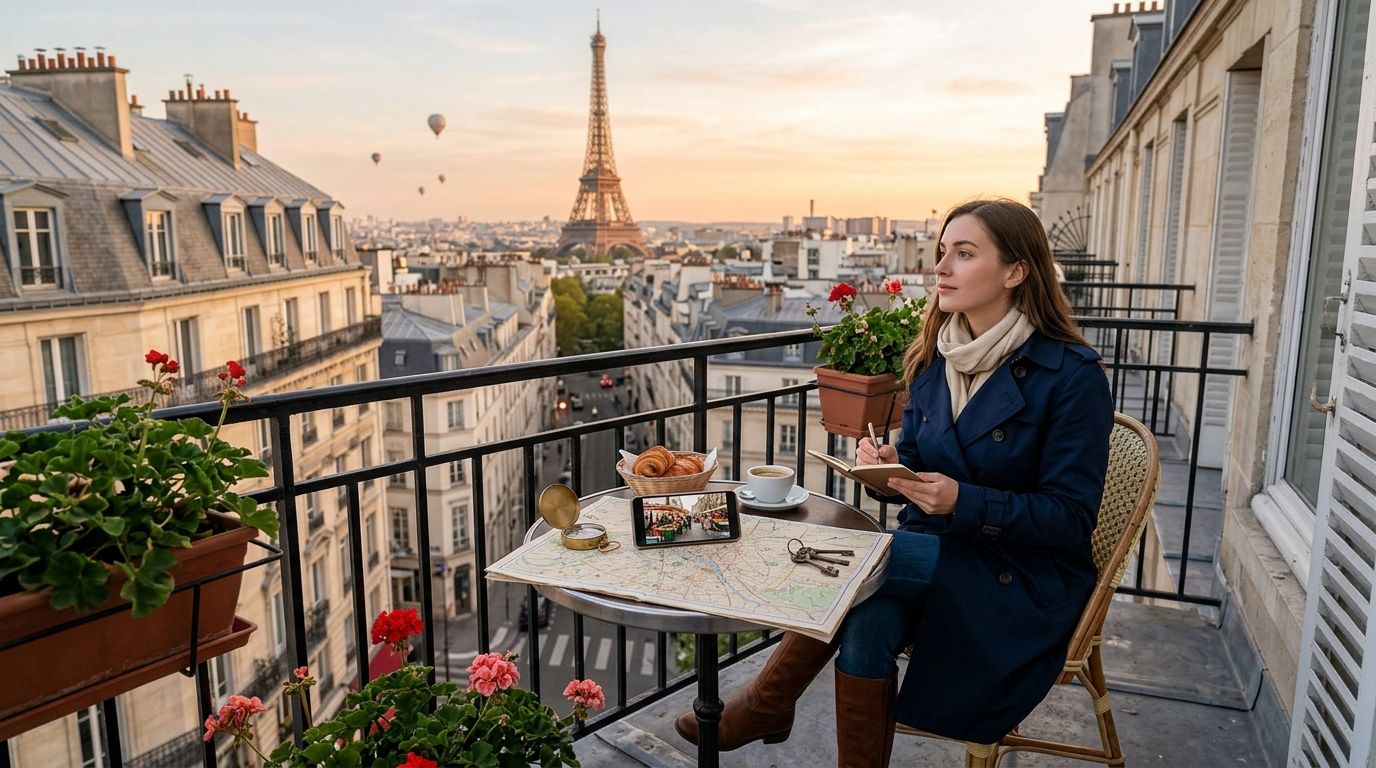
France: A Practical Guide Beyond the Postcards
There's a moment, usually around the third week in Paris, when the city stops feeling like a film set and starts feeling like home. You're sitting at a café that doesn't advertise itself, drinking coffee you've learned to order without embarrassment, and someone beside you is reading a newspaper in French. It's mundane. It's perfect. This is when you begin to understand what travel to France actually means—not the romantic fantasy you arrived with, but something more interesting: the rhythms of how people actually live.
France isn't one destination. It's a series of very different experiences separated by train rides, and how you move between them matters as much as where you end up. This guide isn't about ticking boxes. It's about understanding what you're walking into and why people keep returning.
Why France Stays in Your Head (And It's Not About the Views)
France works because of structure. The country has spent centuries developing systems for living well—not just for tourists, but for residents. The café culture, the market schedules, the way restaurants respect the act of eating, the proportion of streets to buildings. These aren't scenic backdrops. They're functional choices that happen to create beauty.
When you spend time moving through France, you're observing how a wealthy country with confident taste makes everyday decisions. The bakery opens at certain hours because the bread is made fresh. The museum closes Mondays because that's sensible. The wine list is organized by logic, not mystique. These patterns are worth studying because they're transferable—you can bring them home as ideas, not just memories.
The other reason France matters is accessibility without tourism infrastructure overkill. You can arrive in a village where your guidebook isn't useful, find a restaurant, eat well, sleep adequately, and leave having understood something about how that place functions. The English requirement isn't dramatic in major cities, but it teaches you something valuable about communication. You learn quickly to point, listen, make mistakes, and move on.
What To Expect: Moving Through France
Paris (4-6 days minimum)
You'll spend the first days disoriented. The city is denser than photographs suggest. The Eiffel Tower is visible from unexpected places and smaller in person than your brain anticipated. The Seine smells like any old urban river. This is useful information.
The actual Paris experience divides into clear zones: the right bank (commercial, busy, where tourists photograph), the Latin Quarter (student-dense, bookish, cramped), the Marais (residential, village-like despite being central), and the outer arrondissements (where ordinary people live and real cafés exist). Most visitors stick to 1-2 of these. Moving between all four gives you the data you need to understand the city.
The major sites—the Louvre, Notre-Dame, Versailles—are worth your time not because they're mandatory but because they're genuinely significant. The Louvre is badly organized and exhausting, but Delacroix's Liberty Leading the People changes how you see color in painting. Versailles is absurdly scaled and historically important. Notre-Dame is currently under reconstruction (until 2026), but the exterior work continues and the neighborhood remains compelling.
Get comfortable doing one substantial thing per day. Lunch takes two hours. Wandering takes another two. By evening, you're tired. This is normal.
The Loire Valley (2-3 days)
A short train ride from Paris, the Loire is where the French aristocracy built playground castles. Château de Chambord is extraordinary in its uselessness—it's all exterior theatre with minimal interior function. You can see why. The landscape around these castles (rolling fields, vineyard patches, small towns built around churches) is what actually makes the region work. Stay in a town like Amboise, rent a bike if you enjoy that, and visit 2-3 castles maximum. The wine here is reliable and inexpensive.
Provence and the South (4-5 days)
The landscape changes dramatically. Everything becomes drier, more Mediterranean, slower-paced. Avignon has a papal palace and a famous bridge (it doesn't connect anything important anymore). The real Provence experience happens in Arles and smaller towns like L'Isle-sur-la-Sorgue. This is where Van Gogh lived and painted recognizable landscapes. The food changes—olives, herbs, seafood, less cream. Markets burst with color because the growing season is longer.
Note: the lavender fields everyone photographs bloom for about three weeks in June. If that's your sole reason for visiting, plan carefully.
Lyon (2 days)
Criminally undervisited. It's France's second-largest city but feels provincial. There's genuine Renaissance architecture, museums worth your time, and food that's taken seriously in a way that feels different from Paris. The silk industry built the city. You can feel that history still. This is a better base than you'd expect for exploring central France.
The French Riviera (3-4 days)
Nice is a real city with grit and layers—not just a postcard beach town. Cannes is more obviously touristy but has historical weight. Smaller towns like Antibes, Villefranche, and Menton are easier to navigate and less crowded than Nice or Cannes, but require more effort to reach. The Mediterranean here is genuine—rocky, deep, clear. Swimming happens from June through September realistically. April and May are unpredictable. The light is brighter than you expect, and that's not poetic licence—the air is measurably clearer.
Planning Your Visit: The Practical Elements
Best Time
May and September are genuinely better than July and August. The weather is warm (75-80°F), attractions are open, but crowds are substantially lower. If you visit July-August, expect to share space with everyone in Europe. April and October work if you accept cooler temperatures (55-65°F) and less reliable weather. December-February is beautiful if you like quiet, empty streets and working cafés, but many smaller attractions close or have limited hours.
Duration
Minimum viable France: 10 days (5 Paris, 5 elsewhere). This teaches you the basics and shows you that France isn't monolithic.
Optimal France: 3 weeks (6 in Paris, 3 Loire, 4 Provence, 3 South Coast, rest in a region that interests you—Burgundy, Normandy, or Brittany).
More than a month: You can slow down, stay longer in places, take trains without purpose, eat repeatedly in the same restaurants. This is valuable.
Getting Around
Trains are the sensible option for longer distances. French trains are reliable, comfortable, and reasonably priced if booked ahead. Book 2-4 weeks in advance for serious savings. Driving is fine if you're comfortable with narrower roads and metric speeds. Buses are cheaper than trains but slower. Flights between Paris and the South Coast exist but are overkill for this distance.
Crowds and Logistics
Paris has queues for major attractions. Buy tickets online 1-2 days ahead. Smaller attractions rarely require advance booking. Restaurants in neighborhoods don't require reservations except on weekends. Meals are typically lunch (12-2pm) and dinner (7-10pm). Many places close between lunch and dinner, and Mondays/Tuesdays often see reduced hours or closures.
Money
France uses the euro. Expect €15-25 for a café meal, €12-18 for a small dinner, €8-15 for street food. Hotels range from €60 (decent budget) to €200+ (comfortable mid-range). Airbnb is common in Paris and expensive; regional options are better value. Budget roughly €80-120 per day for food if you're eating well and visiting regularly.
Nearby Regions Worth Understanding
Burgundy (from Paris or Lyon): Wine country that makes sense. The landscape is agricultural, quiet, and historically layered. Dijon is the central city. This requires more time to understand than passing through, but rewards slow exploration.
Normandy (from Paris): Coastal, green, has the D-Day beaches and Mont-Saint-Michel (wildly overrun but undeniably atmospheric). The food emphasizes apples, cider, and seafood. Easier to visit from Paris than many think.
Brittany (from Paris): Separate cultural identity, rugged coastline, older language, strong regional food traditions. Less visited than Provence. More honest in its tourism approach.
Is It Worth Visiting? The Honest Answer
Yes, but with conditions. France rewards effort. If you arrive expecting restaurants to cater to English, attractions to simplify themselves, or people to immediately befriend you, you'll be frustrated. If you arrive curious—willing to navigate menus uncertainly, accept that not everything needs to be explained, learn basic greetings—France opens up.
The country also works better if you adjust your pace. Moving slowly between places, repeating favorite cafés, returning to neighborhoods you find interesting, getting lost intentionally. This isn't unique to France, but France's infrastructure makes it genuinely easy to live this way, even briefly.
Is the food as good as its reputation? Yes. Is Paris as beautiful as people say? Partially—it's more complex, less uniformly pretty, but more textured. Are the French unfriendly? No, they're formal with strangers and warm with people they know. Standard human behavior applied consistently.
Quick Facts
- Best entry point: Paris (major airport, train hub)
- Language: French (English spoken in major cities, increasingly less so outside them)
- Currency: Euro (€)
- Visa: Schengen Agreement; US/Canada/Australia nationals get 90 days visa-free
- Transportation: SNCF trains are reliable; booking ahead saves money
- Tipping: Not required; 5-10% is appreciated for good service
- Electrical: Type C/E plugs; 220V standard
Closing: Begin Your Exploration
France works best when you have a plan loose enough to change it. Know which regions interest you, book trains between them, but stay flexible about the specific cafés, villages, and detours you discover. That's where France becomes more than a destination—it becomes somewhere you understand.
Explore France's regions, routes, and practical details using Touratu's interactive map. Watch travel videos showing real neighborhoods, train transitions, and meals in context. Book activities that fit your actual interests, not your fantasy of what you should do. This is how travel becomes something you can actually use.
Loading activities…
