
Estonia Travel Guide: Medieval Towns & Digital Culture
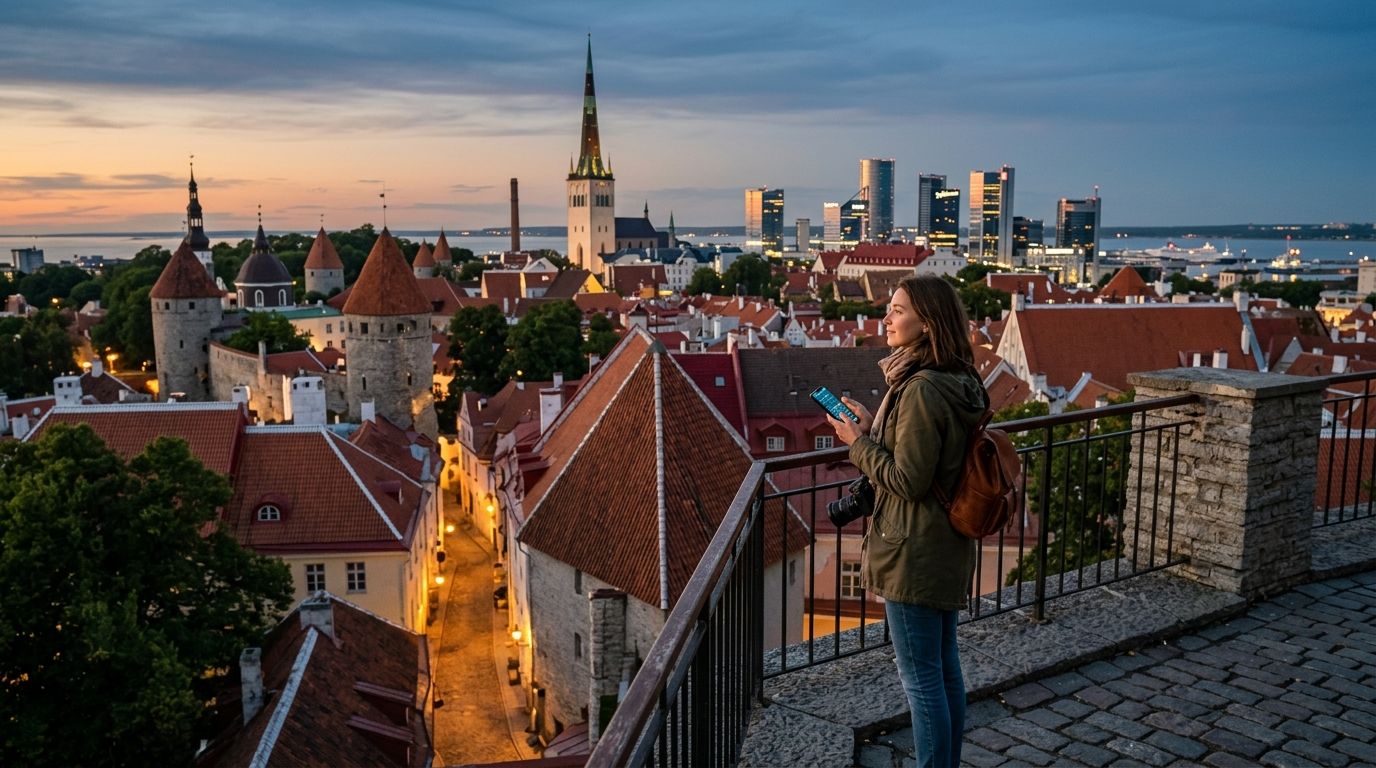
Estonia: A Digital-Age Fairytale Where Medieval Meets Modern
The train from Helsinki pulls you across a border that hardly exists anymore. One moment you're in Finland's minimalist silence, the next you're rolling through pine forests so dense they seem imaginary. Then, without warning, Tallinn appears—a 13th-century old town that looks like someone preserved a fever dream in amber. Medieval spires catch the late afternoon light. Red-tiled roofs cluster impossibly together. And somehow, beneath these cobblestone streets, one of the world's most digitally advanced societies hums quietly forward.
This is Estonia. Not what you expected, probably.
Most visitors arrive with vague notions of "Baltic states" and Soviet history. What they find instead is something harder to categorize. Estonia doesn't fit the template. It's a place where you can wander a Gothic town square at dusk, then return to your apartment and conduct business entirely through a secure digital government portal. Where saunas aren't quaint tourist experiences but genuine weekend rituals. Where the language is so linguistically odd that linguists still argue about its family tree. And where, despite a population smaller than Seattle, the country has somehow claimed a disproportionate place in your mental map.
What Actually Makes Estonia Memorable
Most countries trade on natural drama or historical weight. Estonia does something different. It trades on coherence—on the way every element, from the architecture to the attitude to the technical infrastructure, seems to reflect a deliberate choice about what matters.
Start with Tallinn's Old Town. Yes, it's medieval. Yes, it's preserved. But the preservation isn't museum-like. Locals still live and work here. A woman hangs laundry from a window in a 500-year-old building. A baker operates from a storefront that's been selling bread for three centuries. The streets aren't roped off or regulated into sterility. They're lived-in, which means they have texture—the worn stones under your feet are genuinely worn, not just aged for effect.
Walk down Pikk Street toward Alexander Nevsky Cathedral, and you'll pass through layers of centuries without a single jarring transition. The cathedral itself—all onion domes and golden crosses—shouldn't work aesthetically alongside Gothic merchant halls and Soviet-era cafes. But it does. There's something about Tallinn's refusal to curate itself into a single narrative that makes it more honest than more famous medieval towns.
Then there's what happens outside the Old Town walls. The rest of Estonia isn't background. The boggy forests around Lahemaa National Park feel less like a "nature excursion" and more like you've accidentally wandered into an older version of Europe entirely. The bayside towns like Haapsalu have genuine quietness—the kind that only emerges when a place isn't performing tourism. The tech-forward capital of Tallinn, when you leave the tourist core, reveals itself as a functional, slightly rough-edged city where people are actually building startups and living ordinary lives.
What makes Estonia genuinely memorable is that it doesn't separate the medieval from the modern into different boxes. They coexist. You move between them constantly, which is exactly how actual history works.
What to Expect: A Practical Walk-Through
If you arrive in summer—say, June or July—expect light that feels fundamentally wrong if you're from farther south. In high summer, Estonia barely gets dark. The sky goes from evening blue to predawn blue with barely a black sky between. The locals don't find this notable. Tourists photograph it obsessively.
The first hours in Tallinn Old Town feel like the opening scene of a vampire film, but the kind where nothing sinister happens. You'll walk narrow streets that bend randomly, past tourist restaurants trying too hard and actual restaurants where Estonian families eat breakfast at 10 a.m. (they're not being quaint; this is genuinely when people eat here). The cathedral looms. The spires cluster. Your phone probably stops working clearly because the streets are too narrow for consistent signal—a detail that actually adds to the atmosphere by forcing you to stop planning and navigate by instinct.
By afternoon, you'll have found your rhythm. The tourist infrastructure is polished enough to work without feeling corporate. Cafes serve proper coffee and dense rye bread. Museums—and there are dozens—are well-designed and uncrowded. The Estonian Museum of Natural History won't blow your mind, but it's genuinely interesting, and you won't feel rushed through it by crowds.
By evening, especially if you've climbed to one of the viewing platforms on the town walls, you'll understand why artists and writers keep relocating here. The light does something specific to stone and water at this latitude that you can't quite capture in photographs.
Spend a day outside the capital. Take a bus north to Lahemaa. The landscape will shift from "quaint Baltic town" to something genuinely unfamiliar—black-sand beaches, bog boardwalks, manor houses in states of romantic decay. The town of Käsmu, on Lahemaa's coast, is the kind of place that makes you understand why someone might choose to live in the middle of nowhere with conviction rather than accident.
Spend an evening in a sauna. If you're visiting between September and April, you might find a proper smoke sauna—a traditional wooden structure with no chimney where smoke accumulates and you sit in heat and darkness with strangers. This isn't wellness theater. It's just what people do. You'll likely be uncomfortable. You'll also understand something about Estonian culture that no guidebook can explain.
Planning Your Visit: The Practical Framework
Best time to visit: This depends entirely on what you want. Summer (June-August) gives you the famous light and warm weather but also crowds in Tallinn's Old Town and higher prices. Late May and early September hit a sweet spot—the light is still extraordinary, the weather is usually manageable, and tourists thin considerably. Winter (December-February) is genuinely cold, the days are short, but the light has a completely different quality, the prices drop, and the crowds vanish. Choose based on what appeals: extended daylight and warmth, or minimized tourism and crystalline winter light.
How long to stay: Three days minimum if you want Tallinn plus a day trip. Five to seven days lets you actually breathe—two days in the capital, a night in Lahemaa or another small town, time to take buses without rushing. Two weeks lets you move slowly enough to stop thinking about what to do next and actually sit in cafes.
Getting around: Tallinn's airport is 4 kilometers away and connected by bus for about €2. The bus system within Estonia is cheap and efficient. Renting a car makes sense if you're exploring beyond the capital. Ferries run regularly to Helsinki (3 hours) and to Sweden. The distances are small—nothing in Estonia feels far from anything else—but the roads are slow, so don't underestimate travel time.
Crowds: The Old Town is genuinely packed from late June through August, especially afternoons. If you want solitude, these months are difficult. Shoulder seasons (May, early September) are better. Winter is nearly empty. Weekdays are quieter than weekends year-round.
Costs: Estonia is cheaper than Finland or Scandinavia broadly but not dramatically cheaper. A decent meal costs €12-18. Accommodation ranges from €50 for basic hostels to €150+ for mid-range hotels. The major costs (transport, activities) are quite affordable. Your overall budget will be moderate, not bargain-basement.
Beyond Tallinn: Worth the Detours
Lahemaa National Park (45 minutes northeast by bus): Bogs, coastline, old manors, and genuine wilderness. Take the boardwalk through Viru Bog if you want to walk through an ecosystem that feels genuinely alien. The town of Käsmu is tiny but has surprisingly good accommodation and restaurants.
Haapsalu (two hours west by bus): A seaside town that was a resort for Russian nobility in the 19th century. It's now quiet, slightly melancholy, with castle ruins and a genuine small-town atmosphere. Visit if you want to sit by the water without crowds rather than see specific attractions.
Tartu (three hours south by bus or train): Estonia's second city and university town. It has less atmospheric charm than Tallinn but more genuine urban energy. The Tartu University Museum is excellent. The food scene is unexpectedly good. Worth a day trip if you want to see how Estonians live outside the capital.
Is It Worth Visiting?
Yes, but not for the reasons travel marketing usually claims. Estonia won't give you Instagram-perfect moments or transcendent natural drama. There are no must-see sights that will haunt your dreams.
What Estonia offers is coherence and presence. It's a place where you can walk through medieval streets, sit in a modern cafe, work from an airport that's easier to use than most, and not feel any cognitive dissonance between these elements. It's a place where the people move through their lives with quiet efficiency and genuine politeness without the performed friendliness that haunts tourist zones elsewhere.
You'll visit Tallinn's Old Town and it will be lovely. But the actual memorable part will probably be an evening you spend sitting in a sauna with strangers, or a conversation with someone in a Tartu bookshop, or the particular quality of light in a small coastal town in September, or the moment you realize that a country this small has managed to think more carefully about what it values than many much larger ones.
Estonia asks nothing from you except presence. And if you can offer that, it responds.
Quick Facts
- Official name: Republic of Estonia
- Population: 1.3 million
- Capital: Tallinn
- Language: Estonian (also German and Russian spoken by older generations; English widely spoken by people under 40)
- Currency: Euro
- Best time to visit: May-September for weather, December-February for winter light and solitude
- Getting there: Flights to Tallinn (Lennart Meri Tallinn Airport); ferries from Helsinki or Stockholm
- Visa requirements: EU/EEA citizens don't need visas; others typically need Schengen visas
Estonia doesn't market itself aggressively. It doesn't need to. What it offers—medieval coherence, digital modernity, genuine quietness, and a country that's thought carefully about how it wants to exist—speaks without noise.
Use Touratu's interactive map to explore Estonia's routes, visualize distances between regions, and discover paths that match your own pace. Watch our travel videos to see real movement through these landscapes, from Tallinn's Old Town streets to the slow rhythm of Estonia's forest towns. Then plan your journey with actual bookable activities that connect you to places and people rather than scripted experiences.
Loading activities…
