
Denmark Travel Guide: Best Things to Do
Denmark: A Country Built on Everyday Wonder
You're cycling through Copenhagen on a Tuesday afternoon, and something strikes you: no one's rushing. A man in a three-piece suit pedals leisurely beside you, briefcase balanced on the rack. A mother with two kids takes up an entire lane without apology. The traffic lights matter less than the conversation. This is your first real glimpse of how Denmark actually works—not as a postcard, but as a place where people have figured out something most countries haven't quite managed.
Denmark isn't dramatic. It won't ambush you with sudden vistas or overwhelm you with scale. What it does instead is quietly demonstrate that a good life is possible—and that good life extends to how visitors experience the country. This is a place where infrastructure serves humans rather than humans servicing infrastructure. That distinction matters more than you'd think.
What Actually Makes Denmark Worth Your Time
Most travel writing about Denmark leans heavily on the intangible: "hygge," Nordic minimalism, happiness indices. These aren't wrong, but they're incomplete. What makes Denmark genuinely worth visiting is more specific and, honestly, more useful.
The cycling culture here is the most functional urban transportation system I've experienced. Not because of the bikes themselves, but because the entire city is engineered around them. Separated lanes, intuitive traffic patterns, dedicated traffic lights—Copenhagen has solved a problem most cities are still arguing about. You can rent a bike for a week for the price of one day's car rental elsewhere, and you'll actually understand the city faster than any guided tour could teach you.
The food situation has shifted entirely. Danish cuisine spent decades in the shadow of Scandinavian neighbours, but something changed in the last fifteen years. Noma (yes, the famous one) sits in a converted warehouse with mismatched vintage chairs and serves a 20-course tasting menu that tastes like hyperlocal obsession rather than expensive theater. But beyond the Michelin-star establishments, there's honest restaurant culture: smørrebrød shops with queues, neighbourhood places serving proper Danish comfort food, and a farm-to-table movement that doesn't feel performative.
The museums and galleries are genuinely thoughtful. The National Museum of Denmark doesn't just display Viking artifacts—it contextualizes them within Nordic history in ways that actually make sense. The Thorvaldsen Museum, occupying the artist's own home and studio, feels like stepping into someone's working life rather than entering a curated retrospective. Smaller institutions like the Museum of Royal Copenhagen Porcelain approach their subjects with specialist depth rather than tourist-friendly glossing.
The countryside isn't dramatic, but it's where the actual Denmark lives. Thatched-roof villages in Møn, beech forests in North Zealand, the raw coastlines of the Faroe Islands (technically Danish territory)—these places work on subtlety. You won't photograph your way through them. You'll experience them by moving slowly through them.
What to Expect: Walking Through the Reality
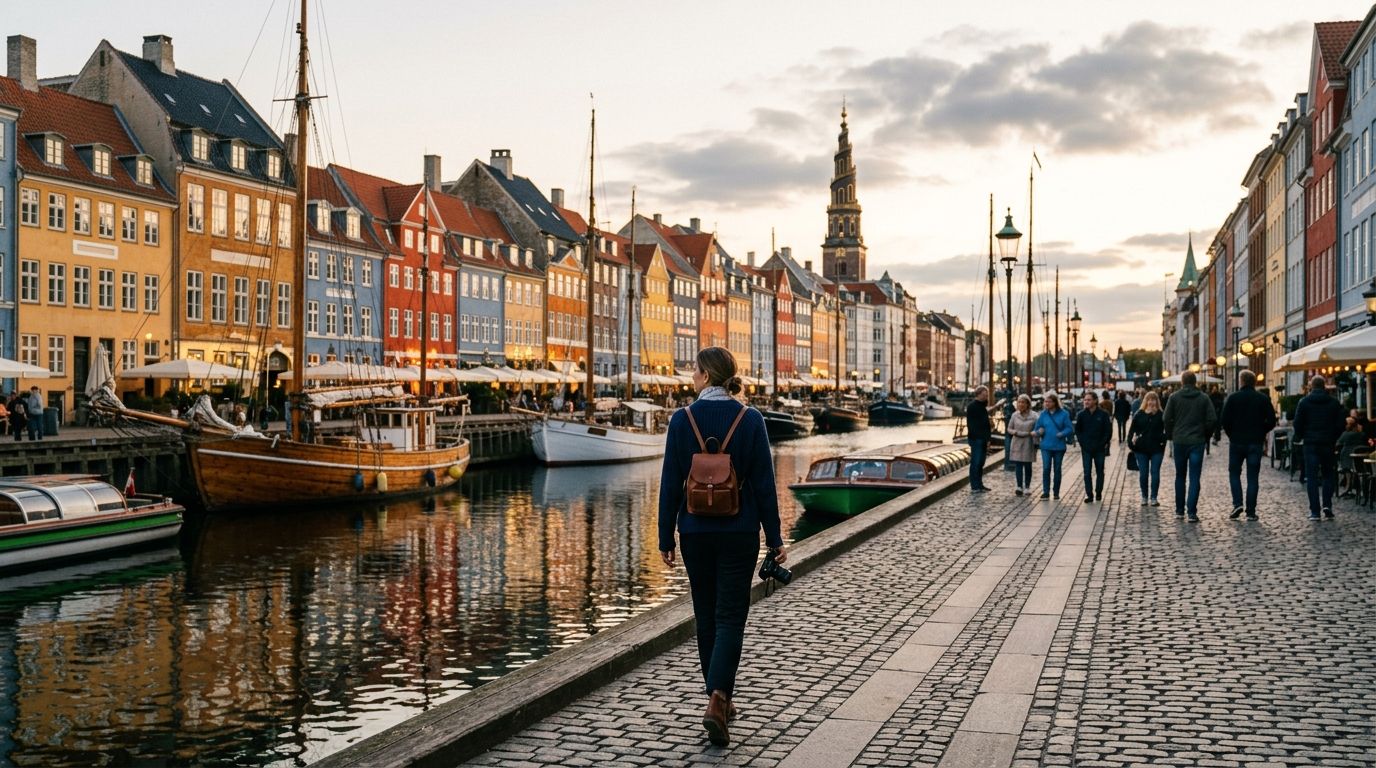
Copenhagen feels ordered but not sterile. The city planning is genuinely excellent—Nyhavn isn't a theme park simulation of an old harbour; it's an actual working waterfront where the colors are genuine because the buildings are genuine. The Tivoli Gardens are precisely what theme parks should be: focused on crafted experiences rather than technological excess. You can eat açai bowls and ride a 1914 roller coaster in the same afternoon, and neither feels out of place.
The people are friendly, though not effusive. Danes aren't cold—that's a misconception—but they don't perform warmth. A conversation with a stranger in a café will be genuine, direct, and respectful of your boundaries. They're not going to over-sell anything, including themselves.
Street food exists here, but it's different from most European cities. It's not street vendors with mediocre kebabs; it's restaurants expanding into the street. Vendor pop-ups selling single-origin coffee or fresh fish sandwiches. You'll find quality food at every price point, but nothing feels like tourist bait.
The weather is genuinely unpredictable, even in summer. I've been in Copenhagen when it's 21°C and sunny in July, and I've been there when it's 15°C and overcast. Layer. Always layer. This isn't dramatically uncomfortable—the Danes are outside in it regularly—but it requires preparation.
Planning Your Visit: The Practical Framework
Best time to visit: May through September, with September and early May offering the best combination of mild weather and fewer school holiday crowds. If you're comfortable with cold weather and don't mind short daylight hours, December is genuinely atmospheric—the Christmas markets are substantial, not tourist theater, and hotel rates drop significantly.
Duration: Three to four days in Copenhagen gives you actual time rather than a blur. Add two to four days for regions outside the capital if you want to experience Roskilde, the Faroe Islands, or the countryside properly.
Getting there: You'll likely fly into Copenhagen. The airport is 8km from the city center, and the train connection (20-minute journey) costs about 36 DKK (less than €5). It's seamless. Renting a car makes countryside exploration easier, though trains connect major towns reliably.
Transport in Copenhagen: The metro and buses are excellent, but rent a bike if you're staying more than a few days. It's the actual way Copenhageners navigate the city. A weekly bike rental costs around 60 DKK (€8). It's not novel tourism; it's practical transport that happens to also be how you see everything.
Crowds: Copenhagen gets genuinely busy June through August, with the absolute peak being July. You'll navigate crowds at major attractions, but it's manageable—this isn't Barcelona-level chaos. Everything functions smoothly, which helps.
Budget reality: Denmark is expensive. A decent meal costs 150-250 DKK (€20-35). A coffee is 40-60 DKK (€5-8). Budget hotels run 600+ DKK (€80+) for basic cleanliness. The value isn't in finding cheap experiences—it's in recognizing that prices reflect genuine quality and worker treatment. Save money by eating at smørrebrød shops (lunch plates, 60-100 DKK), using free attractions, and cycling instead of taxis.
Beyond Copenhagen: Where Else to Spend Your Time
Roskilde sits 30km west and deserves a day trip or overnight stay. The cathedral is genuinely significant—it's been the burial site of Danish royalty for nearly five centuries, and the architecture tells that history clearly. The modern Viking Ship Museum is thoughtfully designed around original vessels, with archaeologists still analyzing pieces on-site. The town itself has a functioning waterfront market and decent restaurants without feeling like it's performing tourism.
Aarhus is Denmark's second city, and it's nothing like a smaller Copenhagen replica. The street art scene is genuinely vibrant, the food culture is inventive, and the people operate without capital-city formality. If you want to see how Denmark functions outside Copenhagen's shadow, spend a night here.
The Faroe Islands require a separate commitment (ferry from Copenhagen, or flights), but they're genuinely different from mainland Denmark. Steep valleys, powerful coastlines, and distinct culture make them worth the logistics. This isn't a casual detour—it's a commitment—but it's also where you'll understand that Denmark extends beyond what most travelers experience.
Is Denmark Worth the Trip?
This depends entirely on what you're seeking. Denmark won't give you dramatic travel stories or Instagram moments that read as aspirational. It won't provide the aesthetic drama of Iceland or the historical texture of Italy.
What Denmark offers is something rarer: functional beauty, genuine quality across all price points, a culture that has genuinely figured out how to make daily life work for most people, and the chance to experience that directly. You'll understand Copenhagen faster on a bike than anywhere else in Europe you could visit. You'll eat better food here than you will in cities three times its size. You'll experience what happens when infrastructure and urban planning actually prioritize people instead of cars or profit.
Go to Denmark if you're curious about how things work. Go if you want to eat well. Go if you want to understand what a functioning society looks like. Don't go expecting dramatic landscapes or photogenic poverty or narrative redemption. Go for the actual place.
Quick Facts
- Population: 5.9 million (Denmark proper; ~50,000 in the Faroe Islands)
- Language: Danish (English widely spoken)
- Currency: Danish Krone (DKK); approximately 1 EUR = 7.5 DKK
- Best neighborhoods in Copenhagen: Vesterbro for bars and restaurants; Nørrebro for cafés and character; Christianshavn for canals and quieter walking
- Cycling rules: Respect the bike lanes; they're not suggestions. Helmets aren't required but lights are mandatory after dark
- Tipping: Not necessary; service charge is included in restaurant bills
- Public holidays: Christmas, New Year, Easter, and various religious holidays; many shops close or reduce hours
The Actual Experience
Denmark doesn't pretend. The design is minimal because minimalism works, not because it photographs well. The food is excellent because people care about what they eat, not because chefs are performing for critics. The cities are livable because someone actually planned for humans rather than automobiles or tourists.
Spend time here slowly. Cycle where you need to go. Sit in a café without ordering anything expensive. Walk through the Tivoli Gardens on an evening when families are present, not Instagram photographers. Understand that the best part of Denmark isn't something you capture—it's something you experience by being present in it.
Your trip to Denmark becomes valuable when you stop expecting it to be dramatic and start noticing how well everything simply works.
Explore Denmark's regions, discover cycling routes, and find bookable activities on Touratu's interactive map. Watch travel videos that capture the rhythm of Copenhagen and the quieter beauty of the Danish countryside. Plan your routes before you go, see where others have travelled, and find authentic experiences beyond the guidebooks.
Loading activities…
