Darwin Travel Guide: Tropical Top End Adventures
Introduction
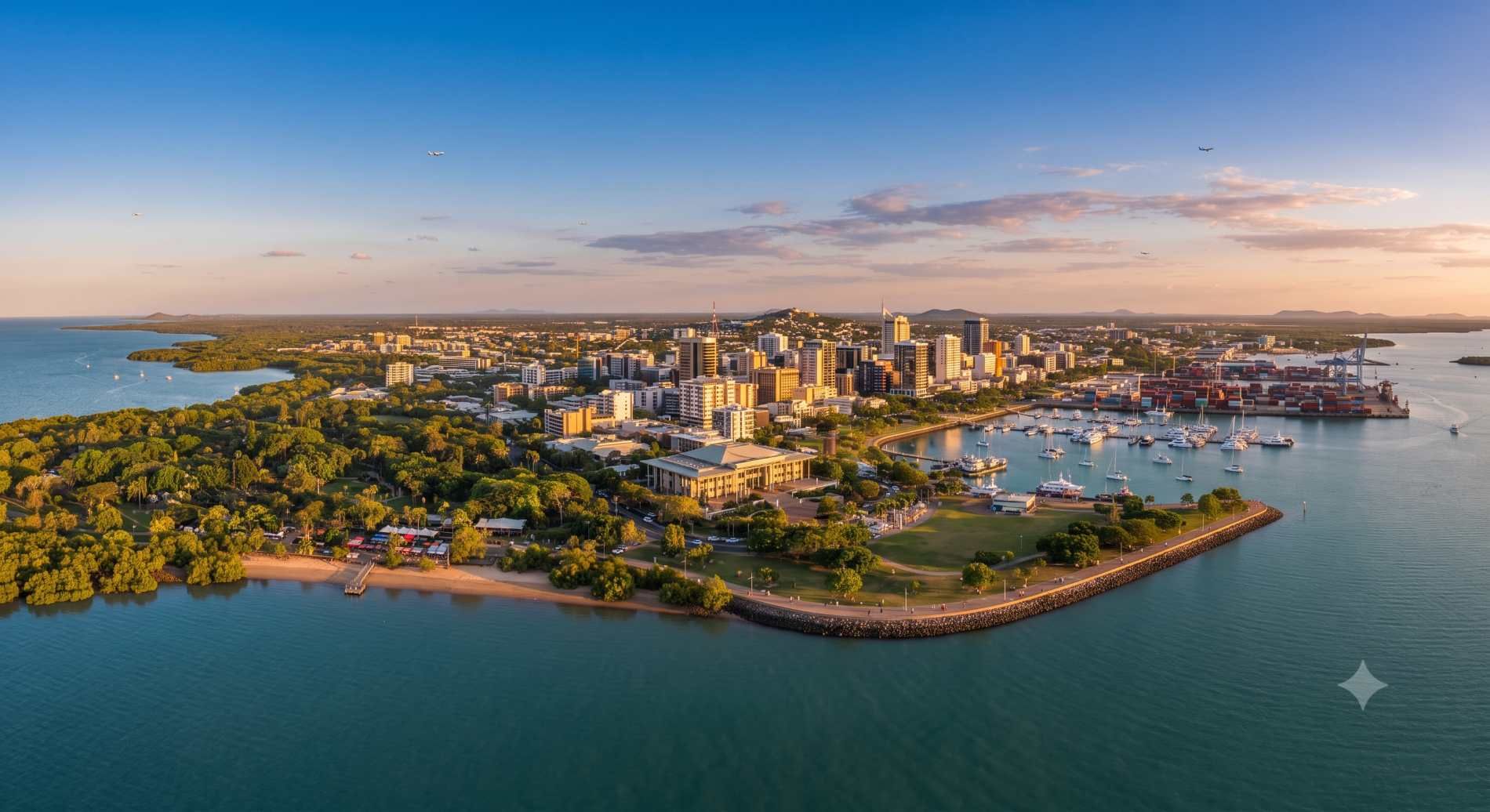
Darwin is the capital of Australia's Northern Territory and the country's tropical gateway to the Top End. Located on the Timor Sea, the city combines tropical landscapes, Aboriginal culture, multicultural food, waterfront attractions, museums, wildlife experiences, and access to some of Australia's most spectacular national parks.
Darwin is different from Australia's southern cities. Its tropical climate, monsoonal seasons, Indigenous heritage, and proximity to the wilderness of the Top End create a distinctive travel experience.
The city is an excellent base for exploring destinations such as Kakadu National Park, Litchfield National Park, and the Tiwi Islands, while Darwin itself offers enough attractions for several days of sightseeing.
Travelers visit Darwin for Aboriginal culture, tropical nature, wildlife, outdoor adventures, history, markets, sunsets, and national-park experiences.
Before booking, travelers can use Touratu's interactive maps and narrated destination guide videos to explore Darwin's attractions, neighbourhoods, national parks, cultural experiences, accommodation areas, and travel routes.
Quick Facts
| Category | Information |
|---|---|
| Country | Australia |
| Territory | Northern Territory |
| City | Darwin |
| Region | Top End |
| Currency | Australian Dollar (AUD) |
| Best Time to Visit | Dry season is generally popular for outdoor activities |
| Famous For | Tropical climate, Aboriginal culture, sunsets, markets, and Top End wilderness |
| Known For | Kakadu, Litchfield, wildlife, history, multicultural food, and outdoor experiences |
| Travel Character | Tropical, cultural, adventurous, coastal, and nature-focused |
Why Visit Darwin?
- Experience Australia's tropical Top End.
- Explore Aboriginal culture and history.
- Visit the Museum and Art Gallery of the Northern Territory.
- Watch the famous Darwin sunset.
- Explore Mindil Beach Sunset Market.
- Discover Crocosaurus Cove.
- Walk along the Darwin Waterfront.
- Visit George Brown Darwin Botanic Gardens.
- Learn about Darwin's World War II history.
- Explore nearby national parks.
- Discover Aboriginal art and cultural experiences.
- Enjoy Darwin's multicultural food scene.
- Take a day trip to Litchfield National Park.
- Explore Kakadu National Park on a longer trip.
- Experience tropical landscapes and wildlife.
Main Attractions in Darwin
Darwin Waterfront
Darwin Waterfront is one of the city's most popular areas for swimming, dining, relaxing, and enjoying the tropical atmosphere.
The precinct includes public spaces, restaurants, recreational facilities, and water-based attractions.
Best for: Families, couples, dining, swimming, and evening walks.
Mindil Beach
Mindil Beach is one of Darwin's most famous beaches and is particularly well known for its sunsets.
During the dry season, the area becomes associated with the popular Mindil Beach Sunset Market.
Best for: Sunsets, markets, photography, and evening experiences.
Museum and Art Gallery of the Northern Territory
The Museum and Art Gallery of the Northern Territory explores the region's natural history, Aboriginal culture, art, and social history.
One of its best-known exhibits focuses on Cyclone Tracy, which devastated Darwin in 1974.
Best for: History, culture, art, and educational travel.
Crocosaurus Cove
Crocosaurus Cove provides visitors with opportunities to learn about crocodiles and other Northern Territory wildlife in a central Darwin setting.
Best for: Families, wildlife enthusiasts, and adventurous travelers.
George Brown Darwin Botanic Gardens
The gardens showcase tropical plants and provide a peaceful green environment close to central Darwin.
Best for: Nature lovers, photographers, families, and relaxed walks.
Darwin Military Museum
The Darwin Military Museum explores the city's role during World War II and the bombing of Darwin.
It provides historical context for understanding Darwin's strategic importance during the war.
Best for: History enthusiasts and educational travel.
Darwin Aviation Museum
The Darwin Aviation Museum focuses on aviation history and Darwin's connection to World War II.
Visitors can see aircraft and learn about the role aviation played in the region.
Best for: Aviation enthusiasts, families, and history travelers.
East Point Reserve
East Point Reserve combines coastal scenery, walking trails, recreation areas, and natural landscapes.
Best for: Walking, cycling, photography, and outdoor activities.
Famous Areas & Neighbourhoods
Darwin City Centre
The city centre is the main commercial area, with restaurants, shops, hotels, galleries, and visitor services.
Best for: First-time visitors, accommodation, dining, and sightseeing.
Darwin Waterfront
A modern waterfront precinct offering restaurants, recreation, swimming, and evening activities.
Best for: Families, couples, and leisure.
Mindil Beach
A popular coastal area famous for sunsets and seasonal markets.
Best for: Evening experiences and photography.
Cullen Bay
Cullen Bay is a waterfront precinct with restaurants, accommodation, marina views, and access to nearby attractions.
Best for: Dining, couples, and waterfront stays.
East Point
East Point offers a combination of coastal scenery, walking paths, wildlife, and recreational areas.
Best for: Nature, walking, cycling, and outdoor activities.
Parap
Parap is known for its local markets, food, cafés, and community atmosphere.
Best for: Food, markets, and local experiences.
Cultural Attractions
Aboriginal Culture
Darwin and the wider Northern Territory have deep Aboriginal cultural connections. Visitors can explore Aboriginal art, cultural centres, guided experiences, galleries, and museums.
Travelers should respect cultural protocols and follow local guidance when visiting culturally significant places.
Museum and Art Gallery of the Northern Territory
The museum offers an important introduction to Northern Territory history, Aboriginal culture, art, science, and natural history.
Aboriginal Art Galleries
Darwin is an important centre for Aboriginal art from across the Northern Territory and northern Australia.
Visitors can discover paintings, prints, sculptures, textiles, and other works connected to different Indigenous communities.
Darwin Waterfront
The waterfront provides a modern contrast to Darwin's historic and cultural attractions and is useful for understanding the city's contemporary identity.
Nature Attractions
Mindil Beach
Mindil Beach offers a combination of tropical coastline, sunsets, and evening markets.
East Point Reserve
East Point provides walking trails, coastal scenery, and opportunities to experience Darwin's tropical environment.
George Brown Darwin Botanic Gardens
The gardens feature tropical vegetation and provide a relaxing nature experience close to the city.
Litchfield National Park
Litchfield is one of the most popular nature destinations near Darwin, known for waterfalls, swimming areas, monsoon forests, and dramatic landscapes.
Kakadu National Park
Kakadu is one of Australia's most significant national parks, combining wetlands, escarpments, Aboriginal cultural sites, wildlife, and vast landscapes.
Tiwi Islands
The Tiwi Islands are known for their distinctive Aboriginal culture, art, community traditions, and natural environment.
Travel arrangements and cultural access should be planned through appropriate local operators.
Food Experiences
Darwin's food scene reflects its location between Australia and Southeast Asia.
Southeast Asian Cuisine
Thai, Vietnamese, Indonesian, Malaysian, and other Asian influences are strongly represented in Darwin's dining scene.
Australian Cuisine
Restaurants offer contemporary Australian dishes featuring local and regional ingredients.
Seafood
Darwin's tropical coastal setting makes seafood an important part of the local food experience.
Aboriginal-Inspired Cuisine
Some restaurants and cultural experiences introduce visitors to native Australian ingredients and Indigenous food knowledge.
Markets
Darwin's markets are excellent places to explore street food, tropical produce, snacks, crafts, and international flavours.
Festivals & Events
Darwin Festival
Darwin Festival celebrates music, theatre, dance, visual arts, food, and cultural experiences.
Darwin Aboriginal Art Fair
The Darwin Aboriginal Art Fair provides an opportunity to discover and support Aboriginal and Torres Strait Islander artists and art centres.
Mindil Beach Sunset Market
The Mindil Beach Sunset Market is one of Darwin's most recognizable seasonal experiences, combining food, crafts, entertainment, and sunset views.
Event dates and schedules can change, so travelers should check current information before planning around major events.
Suggested Darwin Travel Route
Stop 1 — Darwin Waterfront
Begin with the city's modern waterfront precinct.
Stop 2 — City Centre
Explore the central area, shops, cafés, and historic locations.
Stop 3 — Museum and Art Gallery
Learn about Northern Territory history, art, Aboriginal culture, and Cyclone Tracy.
Stop 4 — East Point Reserve
Explore coastal scenery and walking paths.
Stop 5 — George Brown Darwin Botanic Gardens
Enjoy tropical gardens and native plant collections.
Stop 6 — Mindil Beach
Plan an evening around the sunset.
Stop 7 — Mindil Beach Sunset Market
If operating during your visit, explore food stalls, crafts, and entertainment.
Stop 8 — Litchfield National Park
Reserve a full day for waterfalls, swimming areas, and tropical landscapes.
Explore Darwin Before You Travel
Darwin is surrounded by attractions that can require significant driving time. Planning your route before traveling is especially useful for trips to Kakadu, Litchfield, and other Top End destinations.
With Touratu, travelers can:
- Explore Darwin through interactive maps.
- Watch narrated destination guide videos.
- Compare attractions and neighbourhoods.
- Discover beaches and waterfront areas.
- Explore Aboriginal cultural experiences.
- Find national-park routes.
- Compare accommodation areas.
- Plan day trips.
- Understand distances.
- Build a personalized itinerary before booking.
Touratu helps travelers visualize the Top End before deciding where to stay and which experiences to include.
Best Things to Do in Darwin
Watch the Sunset at Mindil Beach
Mindil Beach is one of Darwin's signature sunset locations.
Visit the Museum and Art Gallery
Learn about Aboriginal culture, Northern Territory history, natural history, and Cyclone Tracy.
Explore Darwin Waterfront
Spend time swimming, dining, walking, or relaxing around the waterfront.
Visit Crocosaurus Cove
Discover crocodiles and other wildlife in the heart of Darwin.
Explore East Point
Walk, cycle, photograph the coastline, and experience Darwin's tropical environment.
Visit the Botanic Gardens
Enjoy tropical plants and a peaceful green space close to the city.
Explore Aboriginal Art
Visit galleries and cultural spaces to discover Aboriginal artworks from the Northern Territory.
Visit Mindil Beach Sunset Market
Enjoy food, crafts, entertainment, and sunset views when the market is operating.
Take a Litchfield Day Trip
Explore waterfalls, swimming areas, forests, and rock formations.
Explore Darwin's History
Learn about World War II, the bombing of Darwin, Cyclone Tracy, and the city's development.
Cultural Experiences
Learn About Aboriginal Culture
Darwin provides access to Aboriginal art and cultural experiences from communities throughout the Northern Territory.
Explore Aboriginal Art
Visit galleries and art centres to learn about different artistic traditions and communities.
Discover Indigenous Food Knowledge
Some experiences introduce visitors to native ingredients and traditional knowledge.
Learn About Country
Guided cultural experiences can help visitors understand relationships between people, Country, plants, animals, and cultural traditions.
Nature & Outdoor Experiences
Swimming
Darwin has several water-based recreational options, although visitors should always follow local warnings about crocodiles, marine stingers, and other seasonal hazards.
Hiking
Nearby national parks provide walking opportunities ranging from short walks to longer trails.
Wildlife Watching
The Top End supports crocodiles, birds, wallabies, fish, and numerous tropical species.
Sunset Photography
Darwin's western-facing coastline provides excellent opportunities for sunset photography.
Fishing
Fishing is an important recreational activity in the Top End, with opportunities in coastal and inland environments.
National Park Adventures
Litchfield and Kakadu provide opportunities for hiking, swimming where permitted, wildlife watching, cultural exploration, and photography.
Museums & Entertainment
Museum and Art Gallery of the Northern Territory
Explore natural history, art, Aboriginal culture, and Darwin's history.
Darwin Military Museum
Discover Darwin's World War II history.
Darwin Aviation Museum
Learn about aviation and the city's wartime history.
Crocosaurus Cove
Combine wildlife education with interactive crocodile experiences.
Darwin Waterfront
Enjoy restaurants, recreational activities, and waterfront entertainment.
Food Experiences
Mindil Beach Sunset Market
Try international street food while watching the sunset.
Parap Village Markets
Explore local food, tropical produce, Asian flavours, and community stalls.
Darwin Waterfront Restaurants
Enjoy waterfront dining in a modern setting.
Seafood
Look for local and Australian seafood dishes throughout the city's restaurants and markets.
Southeast Asian Food
Darwin's proximity to Southeast Asia is reflected in its strong Thai, Vietnamese, Indonesian, Malaysian, and other Asian food influences.
Shopping Experiences
Smith Street Mall
Smith Street Mall is one of Darwin's central shopping areas.
Mindil Beach Sunset Market
Find handmade crafts, clothing, art, food, and souvenirs when the market is operating.
Parap Markets
Discover local food, artwork, crafts, and specialty products.
Aboriginal Art Galleries
Darwin offers opportunities to purchase Aboriginal artworks through reputable galleries and art centres.
Travelers should look for clear information about the artist, community, and provenance when purchasing Aboriginal art.
Day Trips from Darwin
Litchfield National Park
Litchfield is one of the easiest major nature escapes from Darwin, with waterfalls, swimming areas, forests, and dramatic rock formations.
Kakadu National Park
Kakadu is a larger destination requiring more time and planning. It offers wetlands, wildlife, Aboriginal cultural sites, rock art, and spectacular landscapes.
Tiwi Islands
The Tiwi Islands provide a distinctive cultural and artistic experience, with visits generally requiring organized arrangements.
Berry Springs
Berry Springs offers a nature-based experience with freshwater swimming areas, subject to local conditions and safety guidance.
Adelaide River
The Adelaide River region is associated with wildlife experiences and Northern Territory wartime history.
Accommodation Areas
| Traveler Type | Best Area | Experience |
|---|---|---|
| First-time visitors | Darwin City | Central attractions, restaurants, and transport |
| Families | Darwin Waterfront | Swimming, dining, and family activities |
| Couples | Cullen Bay | Waterfront atmosphere and restaurants |
| Budget travelers | City Centre / Parap | Practical accommodation and food options |
| Culture travelers | City Centre | Museums, galleries, markets, and attractions |
| Business travelers | CBD | Offices, restaurants, and central transport |
| Long-stay travelers | Parap / Northern suburbs | Local atmosphere and residential surroundings |
Transportation Tips
Darwin Airport
Darwin International Airport provides connections between Darwin and major Australian destinations.
Rental Cars
A rental car is useful for travelers planning trips to Litchfield, Kakadu, and other regional destinations.
Local Buses
Public buses connect Darwin with surrounding suburbs and major areas.
Taxis and Rideshare
Taxis and rideshare services can be useful for airport transfers and evening travel.
Walking
Central Darwin and the waterfront can be explored on foot, particularly around the CBD and major waterfront attractions.
Tours
Organized tours can be convenient for national parks and cultural experiences, especially for travelers who prefer not to drive.
Travel Tips
-
Understand Darwin's seasons before booking outdoor activities.
-
Dry season is popular for sightseeing and outdoor exploration.
-
Check crocodile warnings before entering waterways.
-
Take marine-stinger warnings seriously during relevant seasons.
-
Carry sun protection throughout outdoor activities.
-
Plan national-park trips carefully because distances can be significant.
-
Carry enough water for outdoor excursions.
-
Respect Aboriginal cultural protocols at cultural sites.
-
Check market schedules before planning around Mindil Beach Sunset Market.
-
Consider renting a car if exploring beyond Darwin.
Touratu Insight
Darwin offers a distinctive combination of tropical landscapes, Aboriginal culture, wildlife, history, multicultural food, beaches, sunsets, and access to some of Australia's most impressive national parks.
A first visit can focus on the Darwin Waterfront, Museum and Art Gallery, Mindil Beach, East Point, the Botanic Gardens, and the city's cultural attractions. Travelers with more time can explore Litchfield, Kakadu, the Tiwi Islands, and other Top End destinations.
Family Travel in Darwin, Australia
Darwin is a great family destination for travelers who want to combine wildlife, tropical nature, history, beaches, museums, and outdoor experiences. The city also provides easy access to family-friendly national-park adventures.
Best Family Experiences
1. Crocosaurus Cove
Families can learn about crocodiles, reptiles, and other Northern Territory wildlife in an interactive environment.
2. Darwin Waterfront
The waterfront offers recreational areas, dining, swimming facilities, and plenty of space for families to relax.
3. Museum and Art Gallery of the Northern Territory
The museum provides educational experiences covering Aboriginal culture, natural history, Darwin's history, and Cyclone Tracy.
4. George Brown Darwin Botanic Gardens
Families can explore tropical plants and walking paths in a peaceful environment.
5. Darwin Aviation Museum
Children interested in aircraft and history can explore aviation exhibits and learn about Darwin's wartime role.
6. Litchfield National Park
Families can explore waterfalls, forests, and natural swimming areas where conditions and local safety guidance allow.
Family Travel Tips
- Carry plenty of water during outdoor activities.
- Protect children from strong tropical sun.
- Check swimming conditions before entering any water.
- Follow crocodile and marine-stinger warnings.
- Keep insect repellent available.
- Plan national-park trips with sufficient travel time.
- Choose family-friendly walking trails.
- Keep indoor attractions available during very hot or wet weather.
- Check market opening dates before visiting.
- Follow all local park and wildlife instructions.
Couple Travel in Darwin
Darwin offers couples a relaxed tropical atmosphere combined with sunsets, waterfront dining, cultural experiences, wildlife, and adventurous day trips.
Romantic Experiences
1. Mindil Beach Sunset
Watch the sun disappear over the Timor Sea and explore the surrounding market when it is operating.
2. Darwin Waterfront Evening
Enjoy a relaxed evening around the waterfront with restaurants, walking areas, and tropical surroundings.
3. Cullen Bay Dinner
Cullen Bay provides a waterfront setting with restaurants and marina views.
4. Litchfield Road Trip
Explore waterfalls, forests, rock formations, and scenic landscapes together.
5. Aboriginal Art Experience
Visit galleries and learn about Aboriginal art from the Northern Territory.
6. Sunset Photography
Darwin's tropical coastline and western-facing beaches provide excellent opportunities for couples interested in photography.
Best Couple Areas
| Area | Experience |
|---|---|
| Cullen Bay | Waterfront dining and relaxed atmosphere |
| Darwin Waterfront | Restaurants, swimming, and evening walks |
| Mindil Beach | Sunsets, markets, and beach atmosphere |
| Darwin CBD | Dining, museums, and nightlife |
| Parap | Food, markets, and local atmosphere |
Common Mistakes to Avoid
1. Ignoring Darwin's Wet Season
Mistake: Planning every outdoor activity without considering seasonal conditions.
Solution: Check the forecast and seasonal access conditions before planning national-park trips.
2. Swimming Without Checking Warnings
Mistake: Assuming every beach, river, or waterhole is safe for swimming.
Solution: Follow crocodile, marine-stinger, and local swimming warnings.
3. Underestimating National-Park Distances
Mistake: Trying to visit multiple distant locations in one day.
Solution: Plan realistic driving times and allow enough time for stops.
4. Forgetting Sun Protection
Mistake: Spending several hours outdoors without adequate protection.
Solution: Use sunscreen, hats, suitable clothing, and plenty of water.
5. Missing Aboriginal Cultural Experiences
Mistake: Visiting Darwin only for wildlife and nature.
Solution: Include museums, Aboriginal art, cultural centres, or guided cultural experiences.
6. Planning Around Markets Without Checking Dates
Mistake: Assuming seasonal markets operate every day.
Solution: Check current operating schedules before visiting.
Touratu Pro Tips
-
Start sightseeing early — Cooler morning conditions can make outdoor activities more comfortable.
-
Explore the waterfront at sunset — Combine sightseeing with Darwin's tropical evening atmosphere.
-
Plan national parks separately — Give Litchfield and Kakadu enough time instead of rushing through them.
-
Check seasonal conditions — Access, swimming, and outdoor activities can vary throughout the year.
-
Respect wildlife warnings — Crocodiles and marine stingers are important safety considerations.
-
Explore Aboriginal art — Darwin is an excellent place to discover art from across the Northern Territory.
-
Try local Asian food — Darwin's food culture reflects its proximity to Southeast Asia.
-
Use Touratu's interactive maps — Compare attractions, routes, neighbourhoods, and nearby destinations.
-
Watch narrated destination videos — Understand the location and character of attractions before visiting.
-
Leave flexibility in your itinerary — Weather and seasonal conditions can affect Top End travel.
Frequently Asked Questions
1. What is Darwin famous for?
Darwin is famous for its tropical climate, Aboriginal culture, Mindil Beach sunsets, wildlife, multicultural food, World War II history, and access to Kakadu and Litchfield National Parks.
2. What is the best time to visit Darwin?
The dry season, generally from around May to October, is popular for outdoor sightseeing, national-park trips, markets, and other activities.
3. How many days are enough for Darwin?
Three to five days is a good starting point for exploring Darwin itself and adding a day trip. Longer stays are better for combining Darwin with Kakadu or other Top End destinations.
4. Which are the best places to visit in Darwin?
Major attractions include Darwin Waterfront, Mindil Beach, Museum and Art Gallery of the Northern Territory, Crocosaurus Cove, East Point Reserve, George Brown Darwin Botanic Gardens, and Darwin Military Museum.
5. Is Darwin good for family travel?
Yes. Families can enjoy wildlife attractions, museums, the waterfront, gardens, markets, and nearby national parks.
6. Is Darwin suitable for couples?
Yes. Couples can enjoy sunsets, waterfront dining, cultural experiences, scenic road trips, wildlife experiences, and tropical landscapes.
7. What food should I try in Darwin?
Try seafood, modern Australian cuisine, Southeast Asian food, tropical produce, and dishes featuring native Australian ingredients.
8. Is Darwin safe for tourists?
Darwin is a popular tourist destination, but visitors should follow local safety guidance, particularly regarding crocodiles, marine stingers, heat, weather, and remote-area travel.
9. Can I visit Kakadu from Darwin?
Yes. Kakadu National Park can be visited from Darwin by car or organized tour, but travelers should allow sufficient time because the park is large.
10. Is Litchfield National Park worth visiting?
Yes. Litchfield is one of the most popular nature destinations near Darwin, known for waterfalls, rock formations, forests, and swimming areas where conditions permit.
11. Why should travelers explore Darwin before booking?
Understanding the locations of attractions, national parks, accommodation areas, seasonal conditions, and travel distances helps travelers create a more realistic itinerary.
12. How can Touratu help plan a Darwin trip?
Touratu helps travelers explore Darwin through interactive maps and narrated destination guide videos, compare attractions, discover cultural experiences, plan national-park routes, understand distances, and organize an itinerary before booking.
Key Takeaways
- Darwin is the tropical capital of Australia's Northern Territory.
- The city is a gateway to the Top End.
- Mindil Beach is famous for spectacular sunsets and seasonal markets.
- Aboriginal culture and art are central to Darwin's identity.
- Crocosaurus Cove offers an accessible wildlife experience.
- Darwin Waterfront is popular with families and couples.
- Litchfield National Park makes an excellent nature day trip.
- Kakadu National Park is better suited to a longer excursion.
- Travelers should pay attention to crocodile and marine-stinger warnings.
- The dry season is generally popular for outdoor travel.
- Darwin's food scene reflects strong Southeast Asian influences.
- Touratu helps travelers explore, compare, map, and plan their Darwin trip.
Loading activities…