
Czechia Travel Guide: Experience Beyond Prague
Czechia: What Happens When You Stop Chasing Prague and Actually Stay
There's a moment—usually around day three in Prague—when you're standing in another Gothic square, surrounded by phone cameras held at identical angles, and you realize something. The city isn't small. The crowds are. Which means Czechia itself, the country surrounding all those Instagram moments, has been quietly waiting for travelers who want something closer to real life.
I spent two weeks across Czechia recently, and what struck me most wasn't the architecture or the beer or even the price of things. It was how little the country seems to insist on itself. There's no aggressive marketing, no "visit or regret it" messaging. Just centuries of unfolding landscape, towns that function first as places people live, and a food culture that treats lunch like an actual meal, not a pit stop between selfies.
What Actually Makes Czechia Worth Your Time
Let's be direct: Prague's Old Town Square is crowded. Very crowded. Touristy, even. But here's what matters—the city beneath the tourism is genuinely interesting, and once you move beyond the postcard angles, you find why people have been building here for 1,000 years.
What makes Czechia distinctive isn't any single element. It's the accumulation. The country sits at the crossroads of Central European history—Roman, Germanic, Slavic, Jewish, Ottoman influences all pressed into the same soil. You see it in the architecture, which refuses to be neatly categorized. A Gothic cathedral bleeds into Baroque styling. Art Nouveau sits comfortably next to Communist-era housing blocks. It's not always beautiful in the conventional sense, but it's honest.
The beer is genuinely exceptional—not because of marketing, but because the brewing traditions go back centuries and people actually care about the process. Pilsen (Plzeň) is where pilsner beer originated, and visiting the Pilsner Urquell Brewery is less about the tourist experience and more about understanding how industrial innovation happens in a small city. You're not taking photos of foam; you're learning why a specific brewing method created something that changed global beer culture.
The food tells a similar story. Czech cuisine isn't haute or trending. It's humble—goulash, tripe soup, fried cheese, bread dumplings—and it exists to sustain people, not impress critics. That said, there's real skill in the execution. A proper goulash should take hours. Tripe soup genuinely requires patience. When you eat these things in a local hospoda (pub), you're not experiencing "authentic dining"; you're just eating what people around you are eating.
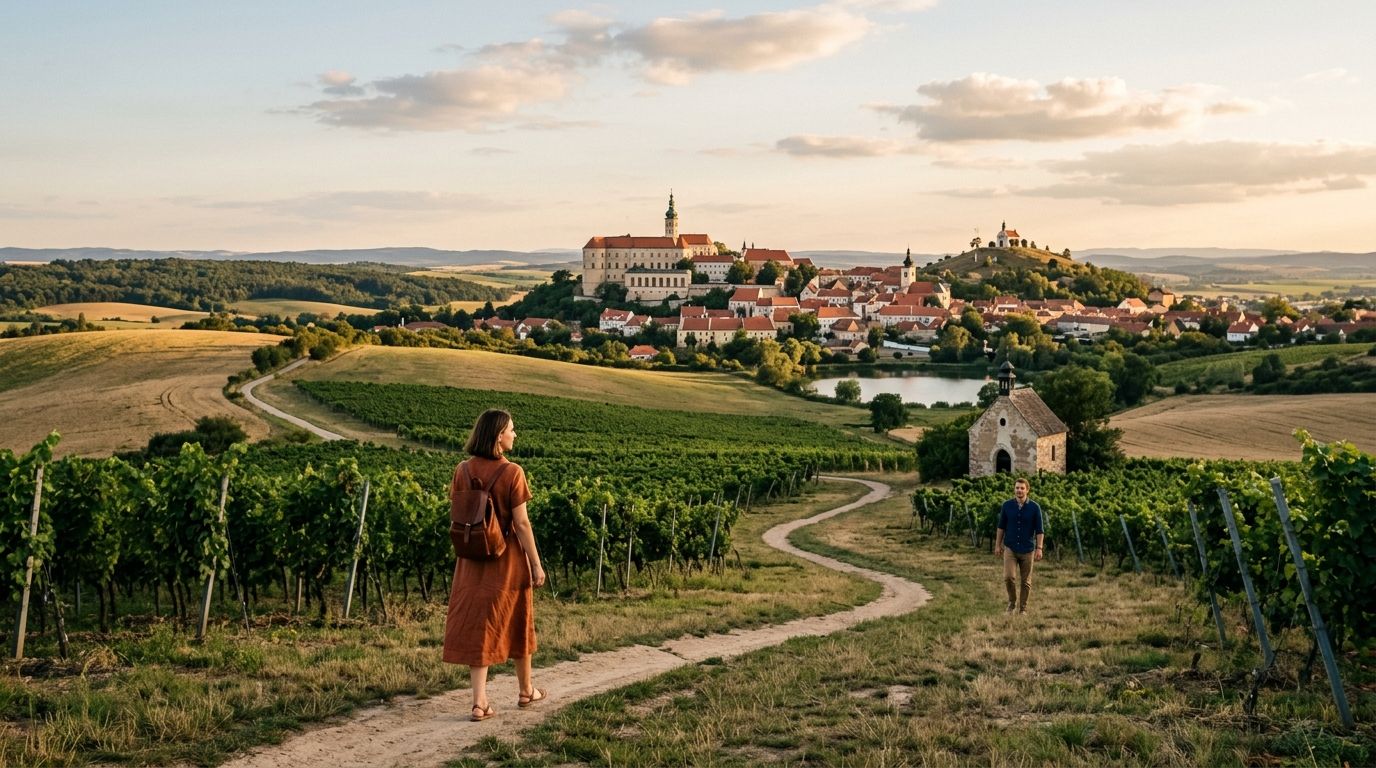
Outside the cities, the landscape is quietly beautiful. Rolling hills, dense forests, small villages with church spires as focal points. It's not dramatic—you won't find alpine peaks or Mediterranean coastlines. But there's something restful about it, something that lets your mind settle instead of constantly reaching for superlatives.
What to Expect When You're Actually There
Prague on your own terms
Most visitors spend 3-4 days in Prague, and that's reasonable. The first day is inevitably spent reorienting—finding your accommodation, getting the transport system figured out, acclimatizing to the energy. The second day can be devoted to the obvious things: Charles Bridge (yes, it's crowded, and yes, the view from it is genuinely nice), Prague Castle, and St. Vitus Cathedral.
But here's the practical part: go to these places early. 7:30 AM early. I'm not being cute. At eight in the morning, you can stand on Charles Bridge almost alone. By nine-thirty, it's a queue with a view. Similarly, Prague Castle is better visited before 9 AM when school groups haven't arrived.
The Jewish Quarter is sobering and necessary. Four synagogues, a cemetery, and a museum documenting centuries of life and incomprehensible loss. It's not pleasant—it's not meant to be—but it's important.
For your evening, skip the Old Town Square restaurants entirely. Every meal there is overpriced and mediocre. Instead, find a neighborhood hospoda—Vinohrady and Žižkov have dozens—order goulash and beer, and watch Czech people having dinner like they're not being observed.
Beyond Prague: Ceský Krumlov
About 2.5 hours south of Prague, this town shouldn't work as well as it does. The Vltava River curves around a castle, old streets spiral uphill, and tourists are genuinely everywhere. And yet.
There's something about Ceský Krumlov that resists being flattened into a postcard. Maybe it's the scale—it's small enough that you can see the entire town from the castle, but complex enough that you get lost and find real neighborhoods. Maybe it's that locals have fought hard to keep it functioning as an actual town, not just a museum. There are real shops, real residents, real rhythms.
Stay overnight if you can. Most day-trippers leave by 5 PM, and the town transforms. The crowds compress into the main square, then empty out. You can walk cobblestone streets at dusk when the light gets interesting and the town feels like it belongs to someone.
Kutná Hora and the Ossuary
About an hour from Prague, Kutná Hora is a medieval silver-mining town that got visibly wealthy from it. The main church, Chrám sv. Barbory, is astonishing—a five-spired Gothic structure that announces itself across the landscape.
But most visitors come for Sedlec Ossuary, a small chapel 20 minutes outside town that contains the skeletal remains of approximately 40,000 people. It's not graphic or gratuitous—the bones are arranged into decorative patterns and structures with a kind of morbid artistry. A chandelier made from bones. A coat of arms rendered in bone. The effect is unsettling, which is exactly the point. This isn't a horror attraction. It's a medieval statement about mortality, and it's genuinely thought-provoking in a way that most tourist experiences aren't.
Ceské Budějovice and actually understanding Czech beer
South of Prague, this city is famous as the birthplace of Budweiser (the Czech kind, not the American watering-down). The main square is one of the largest in Central Europe, surrounded by Baroque buildings. There's a brewery museum here that's actually worth visiting because it takes the history seriously.
But the real reason to come is to sit in a local beer hall and drink Budvar or Kozel while eating svíčková (marinated beef with cream and cranberry sauce) and feel like the only foreigner in a room full of locals. This is the experience that actually sticks with you, not the attractions list.
Planning Your Visit: The Practical Details
When to come
Spring (April-May) and early autumn (September-October) are genuinely pleasant. Summer is possible but crowded, and many tourists find it too hot for extensive walking.
Winter is actually interesting if you can handle cold. November through early March is fewer tourists, lower prices, and the towns feel more like themselves. Prague looks like Prague in winter—gray, a bit melancholic, but honest.
How long to spend
Minimum five days if you're coming from abroad. Three in Prague, one in Ceský Krumlov, one in Kutná Hora or the broader Bohemia region.
If you have two weeks, you can move slower. Add Brno (second-largest city, worth seeing but not must-do), spend time in smaller towns, take regional trains that go nowhere in particular. This is when you actually absorb things.
Getting around
The Czech rail system is solid and cheap. Buses are cheaper and often faster. Main routes are extremely punctual. Regional routes less so, but they're also more interesting.
In Prague, the public transport system (tram, metro, bus) is efficient and understandable. Buy a transport card for the duration of your stay. Don't rent a car unless you're doing serious countryside exploration.
Crowds and timing
Prague has genuine overtourism issues from May through September. July and August are worst. If you can visit April-May or September-October, you'll have a better experience.
Within cities, timing matters. Major sites before 9 AM. Markets in the morning (they empty out by early afternoon). Restaurants busier after 7 PM. Adjust accordingly.
Budget reality
Czechia is cheaper than Western Europe but more expensive than some Eastern European countries. Beer is 2-4 euros per large pour. Meals at casual restaurants are 6-10 euros. Accommodation ranges wildly—Prague hostels are 15-25 euros, Airbnbs 40-80 euros, mid-range hotels 50-100 euros.
Outside Prague, everything drops 20-30%. The further you move from the capital, the more your money stretches.
Nearby Places Worth Considering
Karlovy Vary (about 2 hours west of Prague) is a spa town from the Habsburg era with notable architecture and a legitimate thermal spring scene. It's worth a day trip if you're interested in 19th-century leisure culture, though the spa experience itself is pricey.
Brno (about 3 hours east) is the country's second-largest city and has an intellectual character that Prague lacks. Villa Tugendhat is an exceptional modernist building. The city itself feels more like a real place than a tourist destination. One full day is sufficient.
The Moravian countryside (southeast of Prague, around Olomouc) is genuinely rural in a way most of Czechia isn't. If you want to see traditional architecture and village life, this region delivers. It requires more time and independent travel but rewards curiosity.
Is It Worth Visiting? The Honest Answer
Yes, but with caveats. If you want dramatic landscapes or Mediterranean aesthetics, go elsewhere. If you want to photograph Instagram-perfect squares, they're here but crowded.
If you want to understand a small country with complicated history, genuinely good beer, simple but well-executed food, and towns that function first as places where people live, then yes. Czechia works.
The country doesn't insist on itself, which is its greatest strength. It lets you arrive on your own terms and discover what's actually there instead of what marketing departments claim is there. That's rare enough to notice.
Quick Facts
- Capital: Prague
- Language: Czech (English increasingly common in cities, less so elsewhere)
- Currency: Czech koruna (CZK)
- Best time to visit: April-May, September-October
- Minimum visa: Check current requirements; US/EU citizens have 90-day visa-free access
Czechia isn't a destination that photographs well in eight-second video clips. It's a place that reveals itself over days, through meal conversations and late-night pub visits and getting deliberately lost in old town streets. It requires patience and curiosity, which is exactly why it's worth going.
For exploring routes, discovering what's actually worth your time, and watching how real travelers move through this country, check out Touratu's interactive map and travel videos. You'll see the country through real experiences, not tourism board marketing.
Loading activities…
